





An exploration of the historical evolution, spiritual symbolism, and contemporary significance of Islamic prayer beads in facilitating divine connection and mindfulness
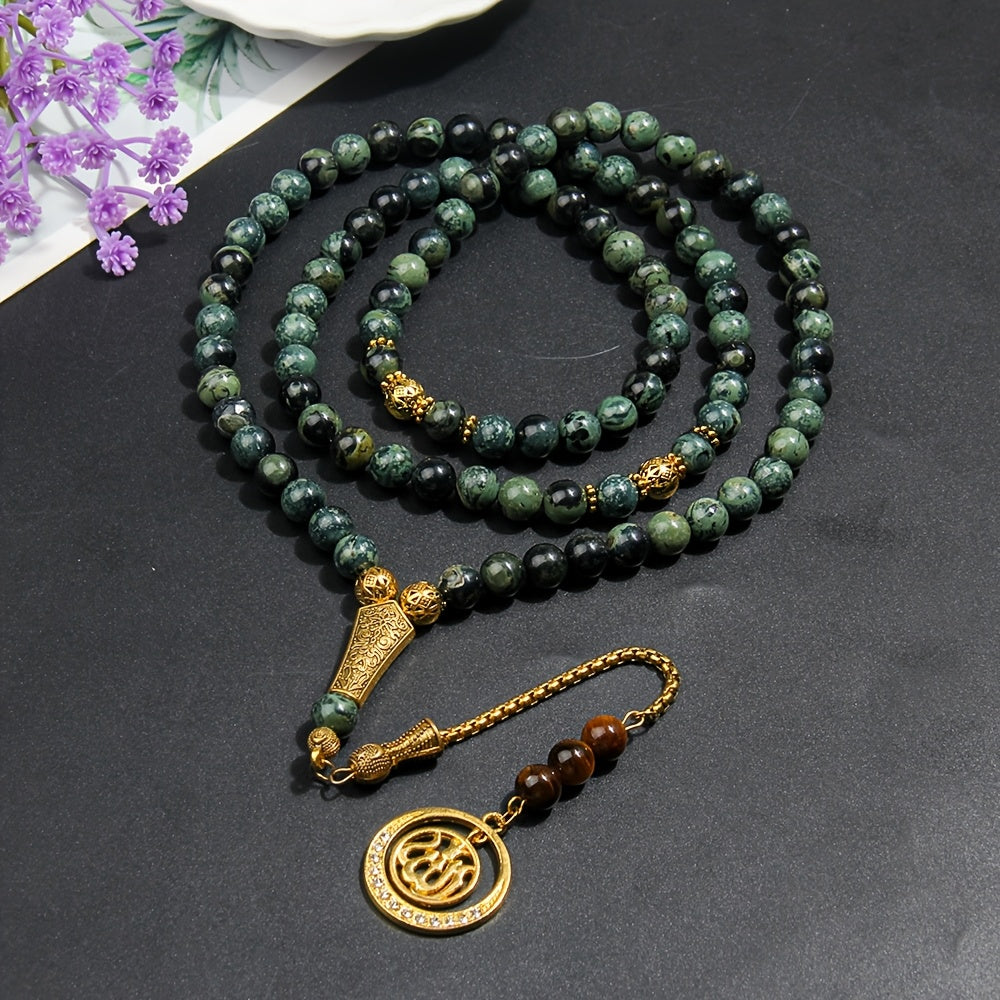
In the rich tapestry of Islamic spiritual practice, few objects carry the profound symbolic weight and functional significance of the tasbih (تَسْبِيح) or misbaha. Beyond their apparent simplicity as counting devices for dhikr (remembrance of God), these prayer beads embody centuries of theological insight, aesthetic refinement, and psychological understanding of human devotion. The modern Natural Blue-Green Agate Tasbih with Golden Accents represents both continuity with this ancient tradition and an evolution in understanding how material form facilitates spiritual experience.
This comprehensive examination explores how tasbih design—from bead count and material selection to tactile properties and visual aesthetics—creates what psychologists might call an "enacted ritual interface" that transforms abstract spiritual concepts into embodied practice. Through tracing the historical development of Islamic prayer beads, analyzing their symbolic geometry, and examining contemporary innovations in materials and design, we uncover how these seemingly simple objects facilitate profound spiritual transformation.
Historical Foundations: From Date Pits to Precious Stones
The origins of Islamic prayer beads remain somewhat debated among scholars, with evidence pointing to multiple influences converging in early Muslim practice. While the Prophet Muhammad reportedly used his fingers for counting remembrances, historical records indicate that by the 8th century, Muslims were using various materials for dhikr counting, including date pits, olive stones, and small pebbles. The transition to strung beads appears to have been influenced by interactions with Buddhist and Christian monastic traditions along the Silk Road, adapted to specifically Islamic theological needs.
Historical Transition: Early Islamic scholars debated the permissibility of using prayer beads, with some cautioning against imitation of other religious practices. However, by the 9th century, tasbih use had gained widespread acceptance, particularly among Sufi orders who recognized their value in facilitating extended dhikr sessions. The standardization to 99 beads (plus one) corresponded to systematic theological development around the 99 Beautiful Names of Allah.
The material evolution of tasbih reflects both spiritual symbolism and practical considerations. Early beads made from humble materials like clay or wood emphasized the egalitarian nature of Islamic worship—anyone could engage in dhikr regardless of wealth. As Islamic civilization flourished, more precious materials emerged: amber for its electrostatic properties (thought to attract divine blessings), agate for its grounding energy, and eventually gemstones that reflected specific spiritual qualities. Each material development represented not merely aesthetic preference but theological interpretation of how physical matter interacts with spiritual practice.
By the Ottoman period, tasbih craftsmanship had become a refined art form, with specialized workshops producing prayer beads for different social strata and spiritual purposes. The standardization of the 33-bead division (for reciting SubhanAllah, Alhamdulillah, and Allahu Akbar) became widespread during this period, creating a uniform ritual structure across the diverse Islamic world while allowing for regional variations in materials and decorative elements.
Sacred Geometry: The Symbolic Mathematics of 99 Beads
The seemingly arbitrary number of beads in a traditional Islamic tasbih—99 plus a separator—represents one of the most sophisticated applications of sacred geometry in religious practice. This number directly corresponds to the 99 Beautiful Names of Allah (Asma ul-Husna) mentioned in the Quran and Hadith, but its mathematical properties reveal deeper symbolic layers.
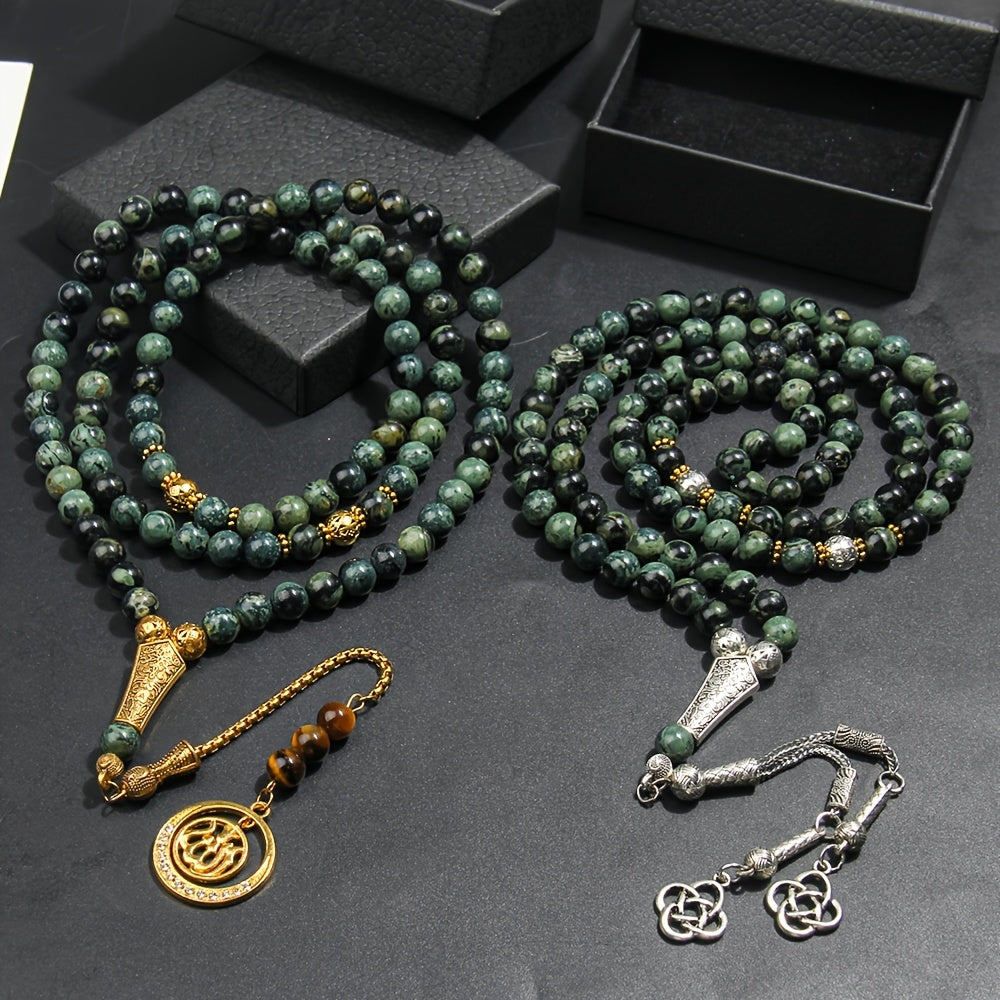
Mathematically, 99 possesses intriguing properties: it is the product of 9 and 11, both significant numbers in Islamic symbolism. Nine represents completion and divine blessings (the Quran mentions nine clear signs), while eleven symbolizes transcendence and divine grace. Additionally, 99 is one less than 100—a perfect number in decimal systems—symbolizing human imperfection before divine perfection. The "+1" bead or separator represents the unnameable essence of God beyond the 99 known attributes.
The circular arrangement of beads embodies the Islamic concept of tawhid (divine unity)—a circle has no beginning or end, representing Allah's eternal nature. Each complete rotation of the tasbih symbolizes the soul's cyclical journey: from Allah we come, to Allah we return. The physical motion of moving beads creates a microcosm of this spiritual journey, with each bead representing a moment of consciousness directed toward the Divine.
Contemporary neuroscience offers fascinating insights into why this specific configuration works so effectively for meditation and mindfulness. The 99-bead structure creates what cognitive scientists call "chunking"—breaking large amounts of information (or repetition) into manageable units. The golden accent beads every 33 units provide natural "checkpoints" that help maintain focus and prevent the mind from wandering during extended recitation.
Material Theology: How Stones and Metals Channel Spiritual Energy
The choice of materials in tasbih construction represents a sophisticated understanding of how physical substances interact with spiritual practice. Islamic tradition, particularly within Sufi circles, developed what might be called a "material theology"—the understanding that certain materials possess inherent spiritual properties that can enhance devotion.
Agate (Aqeeq) in Islamic Tradition: The blue-green agate featured in DarHai's tasbih holds particular significance in Islamic spirituality. The Prophet Muhammad reportedly wore an agate ring, and the stone is mentioned in several Hadith as beneficial for the wearer. Islamic mineralogy texts describe agate as possessing "cooling" properties that calm emotional turbulence—particularly valuable during intense spiritual practice. The stone's banded appearance symbolizes the layers of meaning in Quranic revelation, while its durability represents steadfastness in faith.
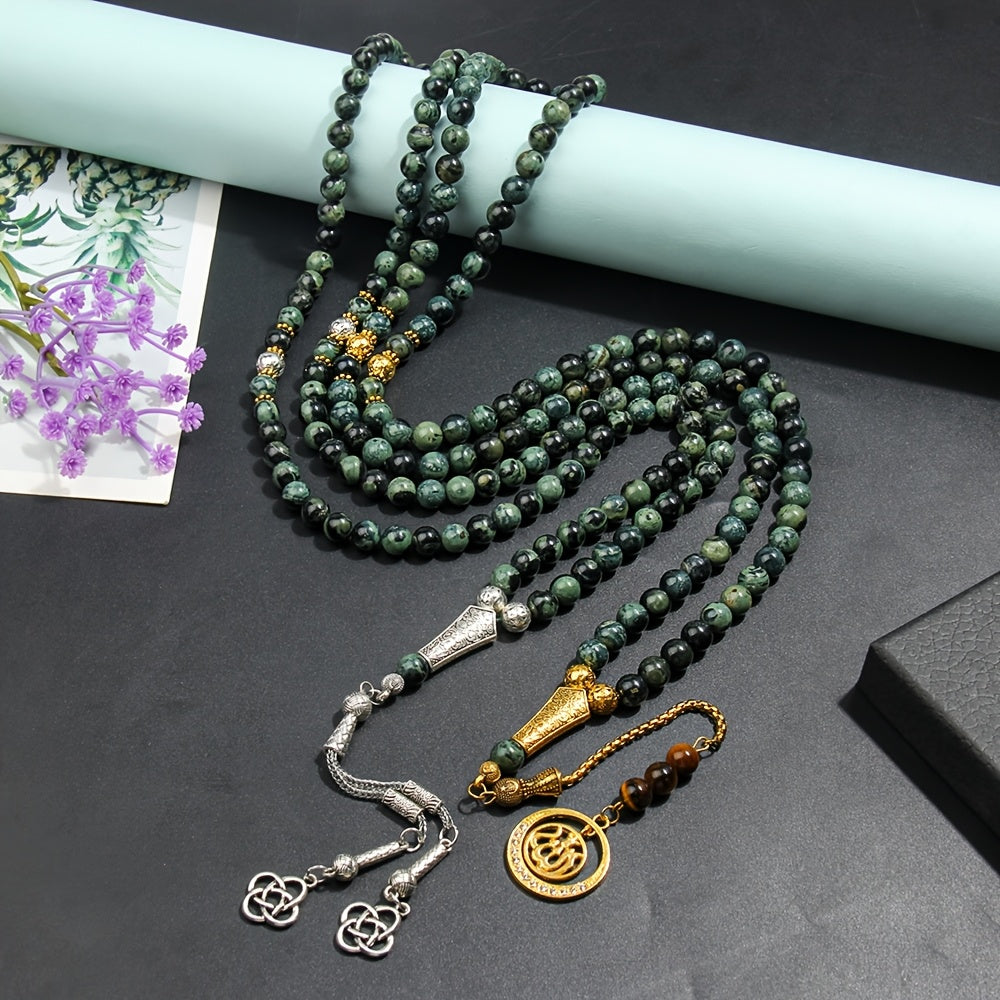
The Symbolism of Gold Accents: Gold holds complex symbolic meaning in Islamic art and spirituality. While Islamic law contains specific guidelines about gold use (particularly for men), when employed in religious objects like tasbih, gold represents divine light (nur), wisdom, and the incorruptible nature of spiritual truth. The strategic placement of gold beads every 33 units creates what might be called "spiritual punctuation"—moments of heightened awareness within the flow of remembrance.
Tactile Theology: The sensory experience of tasbih beads represents a crucial but often overlooked aspect of Islamic spirituality. The smooth, cool surface of agate beads provides gentle sensory input that anchors consciousness in the present moment—a principle recognized in contemporary mindfulness practices but understood in Islamic tradition for centuries. The slight resistance as beads move along the thread creates kinesthetic feedback that helps maintain rhythmic recitation pace.
Modern materials science offers interesting parallels to these traditional understandings. Agate's microcrystalline structure gives it unique piezoelectric properties—it generates small electrical charges when compressed. While these charges are minuscule, traditional understanding interpreted this as the stone "storing" spiritual energy from repeated recitations. Whether understood literally or metaphorically, this belief enhances the user's psychological connection to the object.
Psychological Mechanisms: How Tasbih Design Facilitates Mindfulness
The effectiveness of tasbih in facilitating deep spiritual states can be understood through several psychological mechanisms that modern research has identified in meditation practices worldwide. These mechanisms operate synergistically, creating what psychologists call a "state shift"—a transition from ordinary consciousness to meditative awareness.
Cognitive Anchoring: The physical sensation of beads moving through fingers serves as a cognitive anchor, preventing what meditation teachers call "discursive proliferation"—the tendency of the mind to chase unrelated thoughts. Each bead movement provides a gentle "reset" of attention back to the recitation.
Rhythmic Entrainment: The consistent rhythm of bead movement creates what neuroscientists call "entrainment"—the synchronization of biological rhythms with external stimuli. This rhythmic consistency helps regulate breathing and heart rate variability, creating physiological conditions conducive to meditative states. Research on repetitive prayer practices across religions shows similar physiological effects, regardless of theological content.
Progressive Deepening: The tasbih's structure facilitates what might be called "progressive deepening" of spiritual focus. The first 33 beads (SubhanAllah) often involve settling the mind, the second 33 (Alhamdulillah) involve emotional engagement, and the final 33 (Allahu Akbar) can access deeper contemplative states. This progression isn't merely traditional but reflects an intuitive understanding of how consciousness unfolds during extended meditation.
Tactile-Kinesthetic Integration: Unlike silent meditation, tasbih practice engages multiple sensory modalities simultaneously—auditory (recitation), tactile (bead movement), and often visual (beholding the beads). This multisensory engagement creates stronger neural pathways associated with the practice, making it easier to enter meditative states with repeated use. This principle, known in psychology as "encoding specificity," explains why using the same tasbih consistently enhances its effectiveness.
Contemporary Innovations: Traditional Design Meets Modern Understanding
While respecting traditional forms, contemporary tasbih design like DarHai's Natural Blue-Green Agate Tasbih incorporates subtle innovations informed by both traditional wisdom and modern understanding of ergonomics and psychology. These innovations represent not a break from tradition but its intelligent evolution.
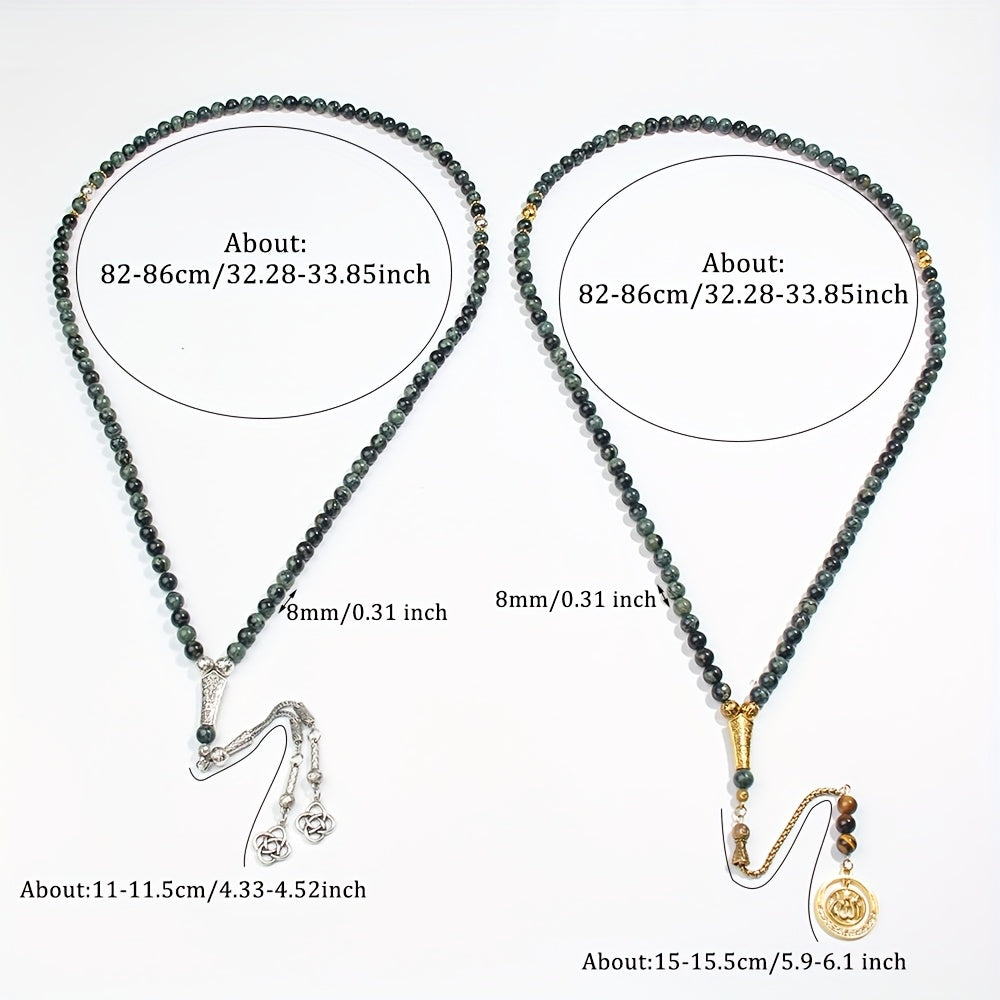
Ergonomic Refinement: Traditional tasbih were often designed with aesthetic or symbolic considerations first. Contemporary designs like this agate tasbih incorporate ergonomic principles—bead size (8mm) that fits comfortably between fingers for extended use, balanced weight distribution that prevents hand fatigue, and thread tension that allows smooth movement without being too loose or tight. These refinements may seem minor but significantly impact the user's ability to maintain practice consistency.
Color Psychology Application: The specific blue-green coloration of the agate beads represents a thoughtful application of color psychology principles within traditional parameters. Blue is associated with tranquility and spiritual depth in Islamic art, while green represents life, paradise, and spiritual vitality. The blending creates what color theorists call "harmonious contrast"—enough visual interest to maintain engagement without becoming distracting.
Modern Material Combinations: While using traditional agate, this tasbih incorporates modern understanding of material combinations. The gold-plated accents won't tarnish with regular use, the thread is durable yet flexible, and the finish on the agate beads maintains their natural energy properties while providing ideal tactile qualities for extended handling.
Packaging as Ritual Container: The elegant gift box represents a modern understanding of how object presentation influences psychological reception. In traditional contexts, tasbih were often stored in simple bags. The contemporary gift box serves multiple functions: protection during storage, visual presentation that honors the object's sacred nature, and creation of a "ritual container" that enhances the user's psychological transition into sacred space when the tasbih is removed for use.
These innovations demonstrate how traditional spiritual objects can evolve while maintaining core principles. They represent what might be called "traditional modernity"—honoring historical forms while incorporating contemporary understanding to enhance, rather than diminish, spiritual efficacy.
Cultural Significance: Tasbih as Islamic Identity Marker
Beyond their spiritual function, tasbih serve as important cultural markers within Muslim communities worldwide. Their design variations reflect regional artistic traditions, while their consistent core elements create visual continuity across the diverse Islamic world.
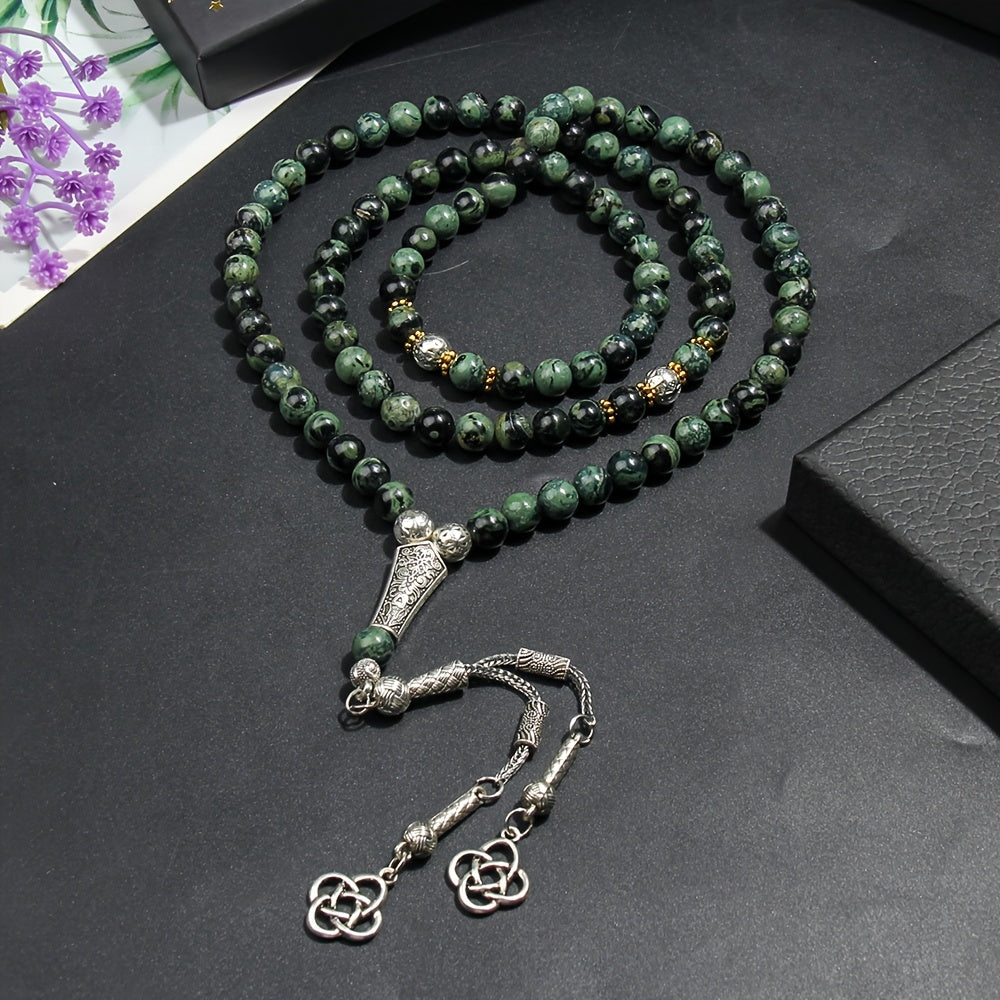
Regional Variations: While maintaining the essential 99+1 structure, tasbih designs vary significantly across the Islamic world. Ottoman tasbih often feature elaborate tassels and amber beads, South Asian designs incorporate precious stones like lapis lazuli, Southeast Asian versions might use local hardwoods, and Gulf designs often feature large, impressive beads as status markers. The blue-green agate tasbih represents what might be called a "global minimalist" style—incorporating elements appreciated across cultural boundaries while avoiding regional specificity that might limit its universal appeal.
Social Functions: Tasbih serve social functions beyond individual devotion. They're often given as gifts during significant life events—births, graduations, marriages—carrying blessings from giver to recipient. They're passed down through generations as family heirlooms, accumulating spiritual significance with each user. In some communities, specific tasbih designs indicate affiliation with particular Sufi orders or scholarly traditions.
Contemporary Identity Expression: In an increasingly globalized Muslim community, tasbih serve as portable markers of Islamic identity. For Muslims living as minorities, discreet use of tasbih during daily activities represents what scholars call "everyday Islam"—integrating religious practice into secular contexts. The elegant design of tasbih like this agate version allows for public use without appearing ostentatious, facilitating what might be called "discreet devotion" in pluralistic societies.
This cultural dimension explains why tasbih design matters beyond mere aesthetics. The object serves as what anthropologists call a "boundary object"—something that maintains core meaning across different cultural contexts while allowing for local interpretation and adaptation.
Future Directions: Tasbih Design in the Digital Age
As technology transforms every aspect of human life, including religious practice, tasbih design faces both challenges and opportunities. Digital prayer counters and smartphone apps offer convenient alternatives, yet physical tasbih continue to thrive—suggesting they fulfill needs beyond mere counting.
The Value of Analog in a Digital World: The persistence of physical tasbih in an age of digital alternatives represents what media theorists call the "revenge of the analog"—a recognition that some human experiences resist digitization. The multisensory engagement, tactile feedback, and material presence of physical beads offer psychological benefits that screens cannot replicate. This suggests that future tasbih design might emphasize these analog qualities even more strongly.
Innovation Within Tradition: Future tasbih designs might incorporate subtle technological enhancements while maintaining traditional forms. Imagine agate beads with embedded sensors that provide biofeedback on meditation quality, or tasbih that connect to apps tracking consistency of practice while maintaining the physical bead experience. The challenge lies in enhancing functionality without compromising the spiritual essence that makes tasbih effective.
Sustainable and Ethical Sourcing: As consciousness around ethical consumption grows, future tasbih design will likely emphasize transparent sourcing of materials, fair labor practices in production, and environmental sustainability. The agate in this tasbih represents a step in this direction—natural stone with minimal processing, combined with durable materials designed for longevity rather than disposability.
The Psychological Future: As research on meditation and mindfulness continues to grow, tasbih design may incorporate more evidence-based principles. Optimal bead size for tactile stimulation, specific materials that enhance focus based on individual neurotypes, or customizable lengths based on hand size—these innovations would represent a fascinating fusion of ancient wisdom and contemporary science.
Despite technological changes, the core function of tasbih—facilitating focused remembrance of the Divine—remains timeless. The most successful future designs will likely be those that honor this timeless function while intelligently adapting form to contemporary needs and understanding.
Conclusion: The Enduring Power of Tangible Devotion
The Natural Blue-Green Agate Tasbih with Golden Accents represents more than a beautiful object—it embodies centuries of Islamic spiritual wisdom about how physical form can facilitate spiritual experience. Its design reflects profound understanding of human psychology, sacred geometry, material symbolism, and ritual efficacy that modern science is only beginning to fully appreciate.
In an increasingly abstract and digital world, the tasbih offers what might be called "tangible devotion"—a physical anchor for spiritual practice that engages multiple senses and creates embodied ritual. Its circular form reminds us of eternity, its 99 beads reflect the infinite attributes of the Divine, and its material composition connects us to the earth while elevating our consciousness heavenward.
As Islamic spirituality continues to evolve in the modern world, objects like this tasbih serve as bridges—connecting traditional practice with contemporary life, historical wisdom with present understanding, and individual devotion with communal identity. They remind us that sometimes the most sophisticated spiritual technology takes the simplest physical form: beads on a string, moved by seeking fingers, counting not just repetitions but heartbeats of divine remembrance.
May your practice of remembrance be as enduring as the agate, as luminous as gold, and as continuous as the circle that has no beginning or end.
