




Meaningful Gift Lucky Fish Pendant Chinese New Year Prosperity Blessing Present
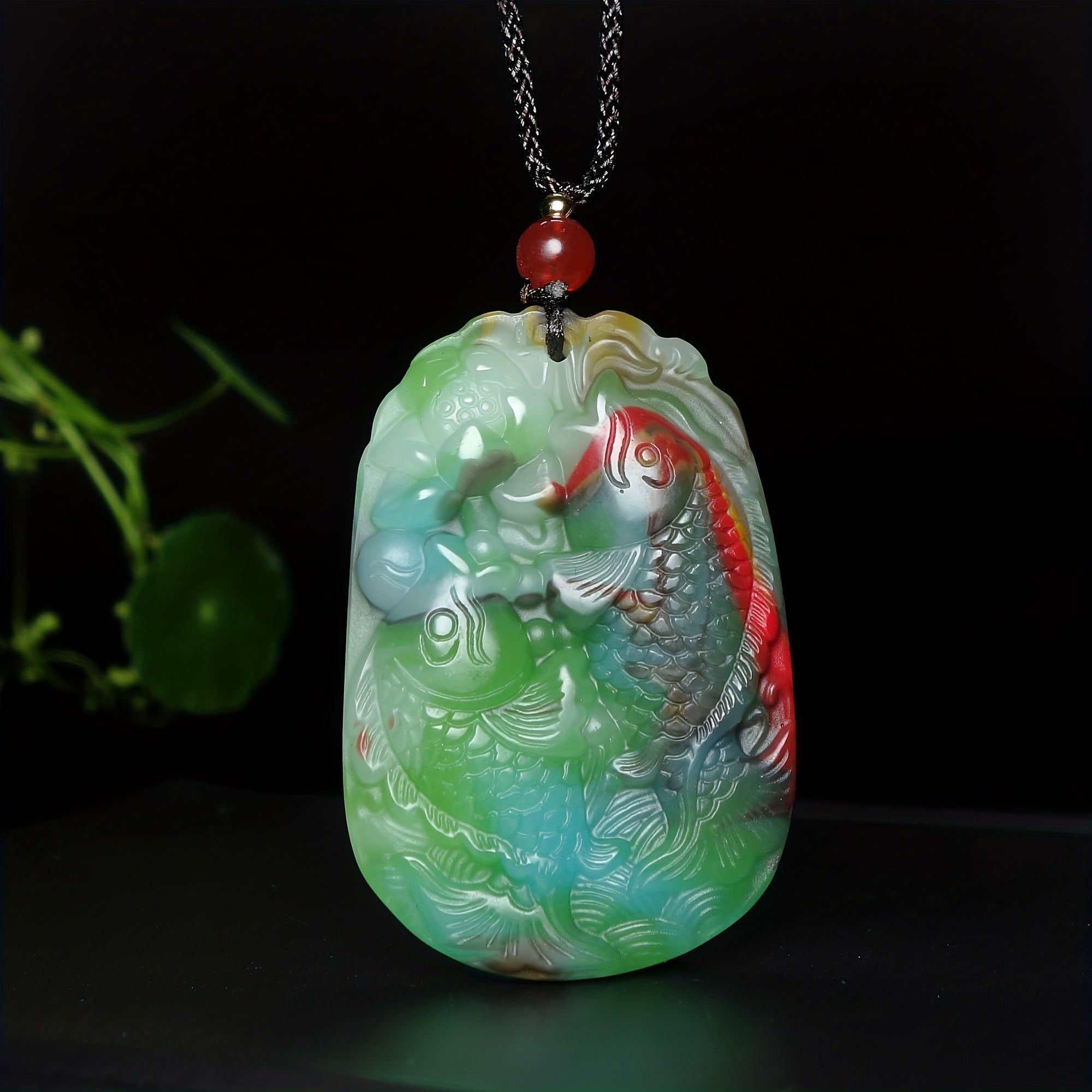
In an increasingly globalized world where fashion trends cycle with dizzying speed, a quiet counter-movement is gaining momentum: the return to meaningful adornment. Across cultures and continents, people are rediscovering the power of symbolic jewelry—pieces that do more than accessorize an outfit, but rather communicate values, invoke blessings, and connect wearers to cultural heritage. The resurgence of symbols like the Chinese "Lucky Fish" (Nian You Yu), Celtic knots, Hamsa hands, and Om symbols represents more than aesthetic preference; it signifies a deeper human need for connection, meaning, and spiritual expression in daily life.
The Psychology of Symbolic Adornment
Humans have adorned themselves with meaningful symbols for at least 100,000 years, as evidenced by shell beads found in ancient burial sites. This practice transcends mere decoration; it serves fundamental psychological and social functions. Symbols function as cognitive shortcuts—complex ideas distilled into simple forms. When we wear a fish pendant representing abundance, we're carrying centuries of cultural wisdom about prosperity in a form we can touch, feel, and be reminded of throughout our day.
From a psychological perspective, symbolic jewelry operates on multiple levels. It serves as an external anchor for internal states—a physical reminder of intentions, values, or desired qualities. It functions as non-verbal communication, signaling aspects of identity, belief systems, or cultural affiliation to others. Perhaps most importantly, it provides tactile connection to abstract concepts, making spiritual or philosophical ideas physically present in daily life. In an age where so much of our experience has become digital and disembodied, the physicality of symbolic jewelry offers a grounding counterbalance.
The Personal Dimension
On a personal level, choosing to wear a specific symbol represents a conscious decision about what we want to invite into our lives or express about ourselves. The Lucky Fish pendant, for instance, might be chosen by someone seeking to cultivate an abundance mindset, navigate career changes with grace, or honor their Chinese heritage. The act of putting it on each morning becomes a small ritual—a moment of intention-setting that frames the day ahead.
The Collective Dimension
Symbols also connect us to collective human experience. When you wear a symbol with centuries of cultural usage, you're participating in a chain of meaning that stretches back through generations. You're not just wearing a fish; you're connecting to everyone who has ever found hope in the promise of "Nian You Yu," everyone who has hung fish decorations during Lunar New Year, everyone who has understood that abundance flows like water.
Cultural Symbolism in Global Context
The Lucky Fish pendant represents just one thread in the rich tapestry of global auspicious symbols. Different cultures have developed their own symbolic languages for invoking protection, prosperity, love, and spiritual connection. What's fascinating in our interconnected world is how these symbols are being adopted, adapted, and reinterpreted across cultural boundaries.
Chinese Fish
Abundance, surplus, harmonious flow. Based on phonetic pun (鱼 yú = 余 yú).
Hamsa Hand
Protection against evil eye in Middle Eastern and North African traditions.
Celtic Knot
Eternal love, interconnectedness, and spiritual journey in Celtic culture.
Lotus
Purity, enlightenment, and spiritual awakening in Buddhist and Hindu traditions.
Yin Yang
Balance, complementary opposites, and harmonious duality in Taoist philosophy.
Om
The primordial sound of the universe in Hindu, Buddhist, and Jain traditions.
This cross-cultural exchange raises interesting questions about cultural appropriation versus appreciation. When does adopting a symbol from another culture become problematic, and when does it represent genuine intercultural connection? Most cultural commentators suggest that the distinction lies in understanding and respect—taking time to learn about a symbol's origins and meaning rather than treating it as mere decoration. The Lucky Fish pendant, when worn with understanding of its "Nian You Yu" significance, represents appreciation rather than appropriation.
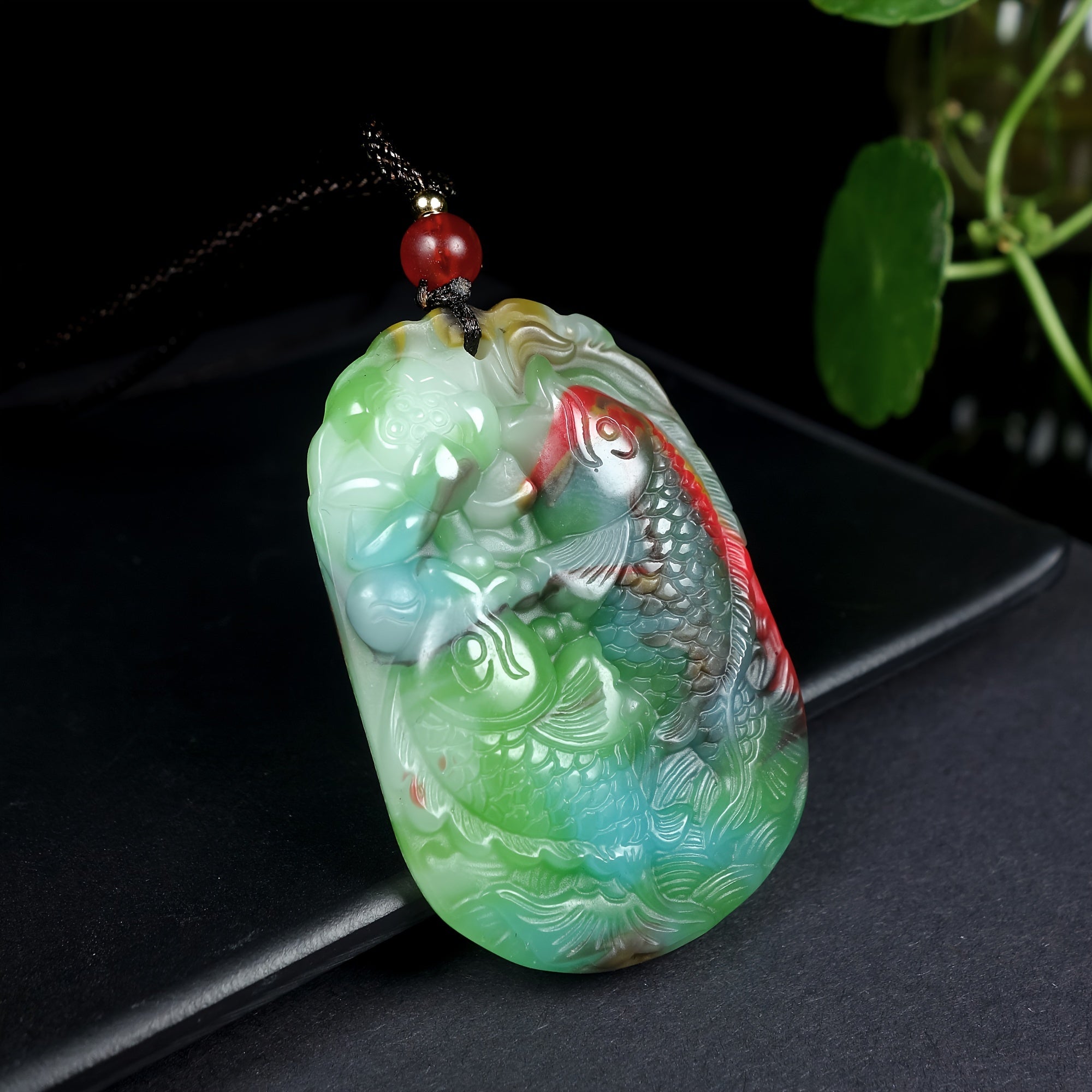
The Material Matters: Natural Stone as Symbolic Medium
The choice of material in symbolic jewelry carries its own layer of meaning. Natural stone, like that used in the Lucky Fish pendant, brings particular qualities to symbolic pieces. Unlike mass-produced metals or synthetic materials, natural stone carries the fingerprint of geological time and process. Each piece is literally unique—formed under specific conditions of pressure, temperature, and mineral composition over millennia.
This uniqueness resonates with contemporary values of authenticity and sustainability. In a world flooded with identical mass-produced items, a naturally varying stone pendant represents individuality and connection to Earth's processes. The slight imperfections—variations in color, natural veining, subtle texture differences—become virtues rather than flaws. They tell the stone's geological story and ensure that no two pendants are exactly alike.
Different stones also carry their own traditional associations that can layer with the primary symbol:
Common Symbolic Stones
Jade: Wisdom, purity, protection in Chinese culture
Turquoise: Healing, communication, spiritual attunement
Amethyst: Spiritual awareness, calm, intuition
Rose Quartz: Unconditional love, emotional healing
Lapis Lazuli: Truth, wisdom, inner vision
The Earth Connection
Beyond specific stone properties, all natural minerals connect wearers to the Earth itself. In an increasingly urbanized and digital world, this connection holds particular value. Wearing a piece of the Earth serves as a physical reminder of our planetary home and the natural processes that sustain life. It grounds abstract spiritual concepts in material reality, creating a bridge between the metaphysical and the physical.
Expert Insight: Cultural Anthropologist Dr. Lin Wei
"What we're seeing in the resurgence of symbolic jewelry is not mere nostalgia or exoticism. It's part of a broader search for meaning in late modernity. As traditional religious observance declines in many societies, people are creating personalized spiritual practices that draw from multiple traditions. Symbolic jewelry serves as both personal talisman and cultural bridge. The key is approaching these symbols with respect—understanding their origins, their traditional contexts, and the living cultures that continue to find meaning in them."
— Dr. Lin Wei, Cultural Anthropology Department, University of Hong Kong
From Ritual Object to Everyday Wear: The Democratization of Symbolism
Historically, many symbolic objects were reserved for specific ritual contexts or special occasions. Jade bi discs in ancient China, for instance, were ceremonial objects rather than everyday wear. What's particularly interesting about contemporary symbolic jewelry is how it brings these meaningful forms into daily life. The Lucky Fish pendant transitions from being solely a Lunar New Year decoration to becoming a year-round accessory.
This democratization of symbolism reflects several social shifts. First, the breakdown of strict boundaries between sacred and secular spaces. Second, the increasing personalization of spiritual practice. Third, the desire to integrate meaning into all aspects of life rather than compartmentalizing it. When someone wears a prosperity symbol to a business meeting or a protection symbol on their commute, they're asserting that these concerns—spiritual, practical, emotional—are interconnected aspects of holistic living.
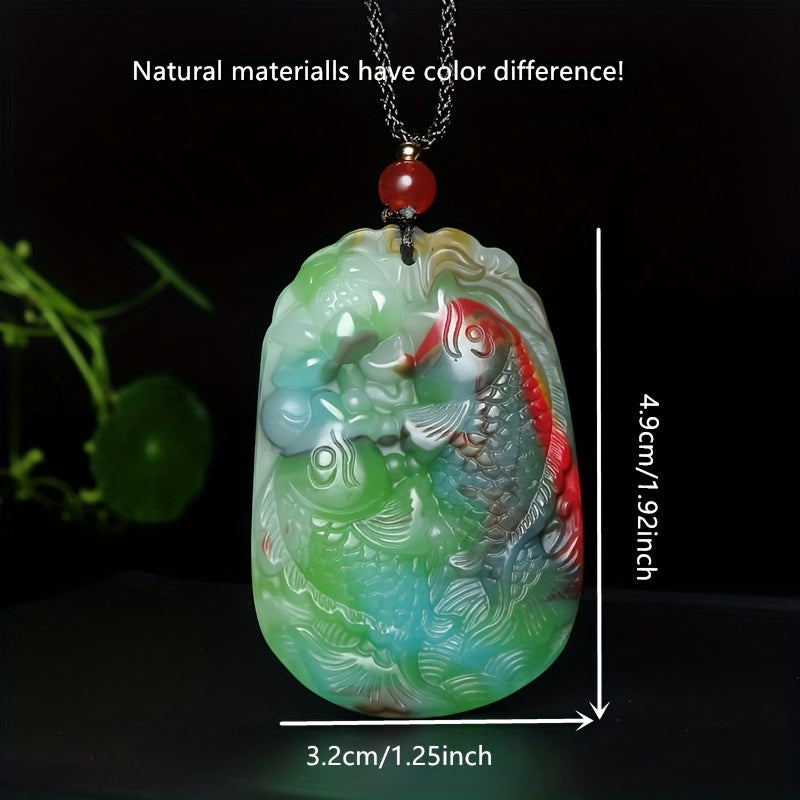
The design of contemporary symbolic jewelry facilitates this integration. Pieces like the Lucky Fish pendant are created with both symbolic authenticity and wearability in mind. The chain is designed to layer well with other necklaces. The size is substantial enough to notice but not overwhelming. The color palette works with various clothing styles. This thoughtful design allows the symbolic function and the fashion function to coexist harmoniously.
The Future of Symbolic Jewelry: Trends and Transformations
Looking forward, several trends suggest symbolic jewelry will continue evolving in interesting directions. First, we're seeing increased interest in hyper-local symbols—motifs specific to particular regions, indigenous traditions, or even family histories. As globalization homogenizes many aspects of culture, people are seeking symbols that speak to specific rather than generic identity.
Second, there's growing experimentation with combining symbols from different traditions in respectful, thoughtful ways. A pendant might feature a Celtic knot on one side and a Hamsa hand on the other, representing the wearer's mixed heritage or multifaceted spiritual practice. The key, as always, is doing so with understanding rather than superficial mixing.
Third, technology is enabling new forms of symbolic expression. 3D printing allows for intricate custom symbols, while smart jewelry can incorporate symbolic forms with functional technology. Imagine a fish pendant that also tracks water intake as a reminder to stay hydrated and "go with the flow," creating literal and metaphorical connections.
Finally, there's increasing attention to the ethical dimensions of symbolic jewelry—not just what symbols mean, but how they're made, who makes them, and what materials are used. The Lucky Fish pendant's use of natural stone and attention to craftsmanship reflects this ethical consciousness. Consumers increasingly want to know that their meaningful objects are created with respect for people and planet as well as cultural traditions.
Why Symbolic Jewelry Resonates in Modern Life
In a world dominated by mass-produced products, natural stone symbolic jewelry stands out because it addresses fundamental human needs that industrial consumerism often overlooks:
Meaning in a Meaning-Saturated Yet Meaning-Depleted World: We're surrounded by information and stimulation, yet genuine meaning can feel elusive. Symbolic jewelry provides condensed meaning that we can carry with us—a touchstone of what matters most.
Connection in an Age of Disconnection: Despite digital hyper-connection, many experience profound social and spiritual disconnection. Wearing symbols connects us to cultural traditions, communities of meaning, and sometimes to ancestors who valued the same symbols.
Authenticity Amid Artificiality: Natural materials and handcraftsmanship provide authenticity in a world of synthetic materials and automated production. The variations in natural stone become metaphors for authentic human individuality.
Continuity in Times of Change: Symbols provide continuity—they've meant similar things across generations. In rapidly changing times, this continuity offers psychological stability and a sense of being part of something enduring.
Holistic Integration: Symbolic jewelry allows us to integrate spiritual, emotional, and aesthetic dimensions of life. We don't have to choose between looking good and feeling connected to meaning—we can have both in the same object.
Tactile Spirituality: In increasingly virtual experiences, the physicality of jewelry provides grounding. We can feel the weight of the stone, trace the carving with our fingers, experience the symbol through multiple senses.
Final Thoughts: More Than Decoration, Less Than Dogma
Symbolic jewelry like the Lucky Fish pendant occupies a fascinating middle ground between mere decoration and rigid dogma. It doesn't require specific belief or membership in a particular tradition, yet it offers more meaning than fashion-only accessories. This flexibility is precisely what makes it so relevant to contemporary spiritual seekers.
Whether someone wears the fish pendant because they fully believe in its power to attract abundance, because they appreciate its cultural significance, because it reminds them of personal goals, or simply because they find it beautiful and meaningful in ways they can't fully articulate—all these relationships with the symbol are valid. The pendant becomes what the wearer needs it to be: a connection to heritage, a tool for mindfulness, a statement of values, or all of these simultaneously.
As we move forward into an increasingly complex global future, such symbolic bridges—between cultures, between tradition and innovation, between spiritual seeking and daily living—may become ever more valuable. They remind us that while technology advances and societies transform, certain human needs remain constant: the need for meaning, for connection, for beauty that speaks to more than surface appearance. In meeting these needs, a simple fish carved from stone can become a surprisingly powerful companion on life's journey.
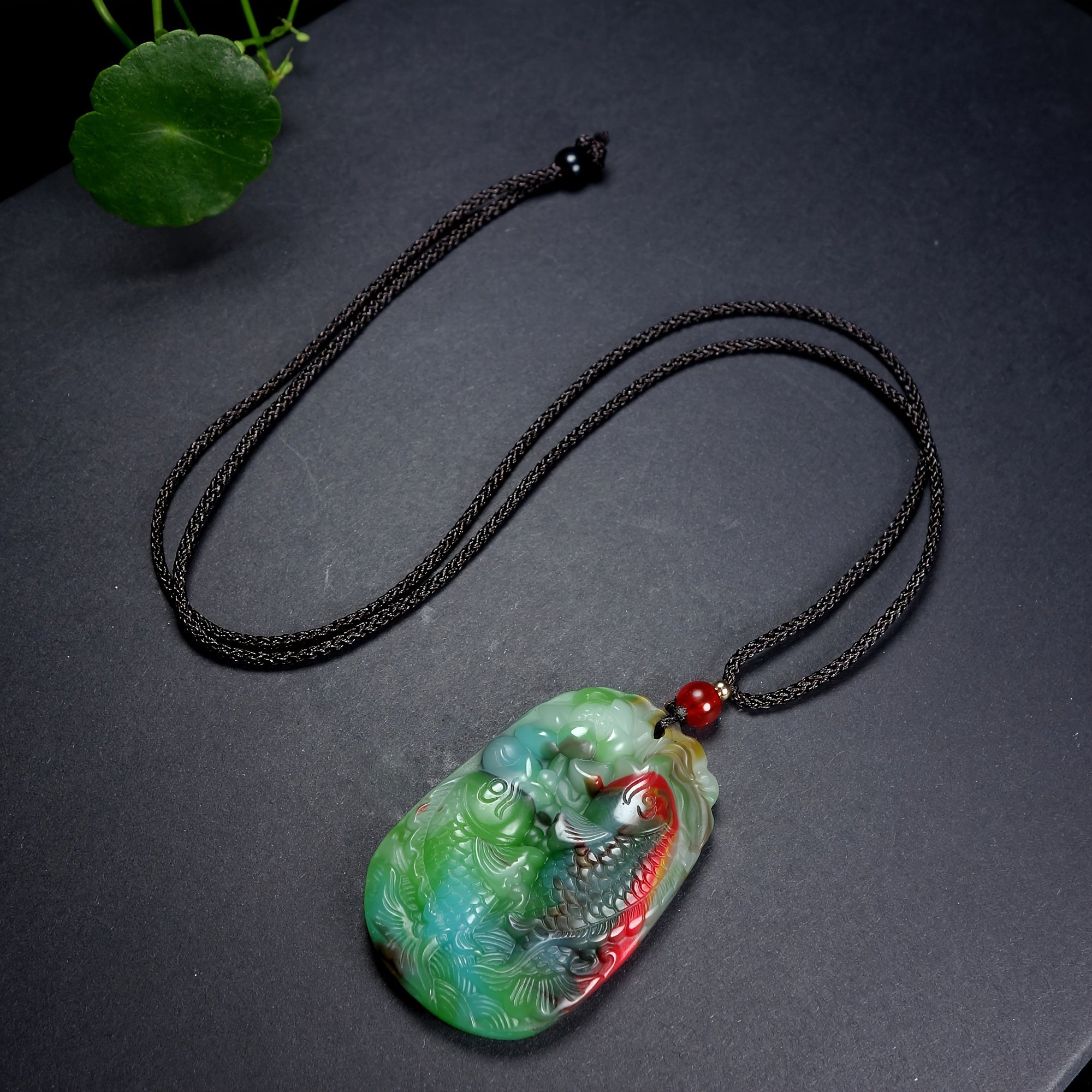
This exploration of symbolic jewelry reveals how ancient forms of meaning-making adapt to contemporary life, creating bridges between cultures, generations, and the various dimensions of human experience.
