





Exploring the aesthetic revolution that's transforming traditional Eastern symbolism into universally relevant design language for modern wearers worldwide
In the global landscape of contemporary design, a quiet revolution is underway—one that reimagines centuries-old cultural symbols through the lens of modern minimalism and universal aesthetics. The New Chinese Style movement represents this transformative approach, particularly in the realm of jewelry design, where traditional motifs are being reinterpreted for global audiences while maintaining their essential cultural DNA. This movement isn't about cultural dilution but rather cultural evolution—the intelligent adaptation of heritage forms to contemporary contexts and universal human expressions.
The Natural Round Pendant discussed here serves as a perfect case study in this design revolution. At first glance, it appears as a simple, elegant piece of contemporary jewelry. Yet upon closer examination, it reveals layers of cultural meaning, traditional symbolism, and design intelligence that speak to both Eastern heritage and global modernity. This pendant represents more than an accessory; it represents a design philosophy that bridges cultural divides while honoring traditional wisdom.
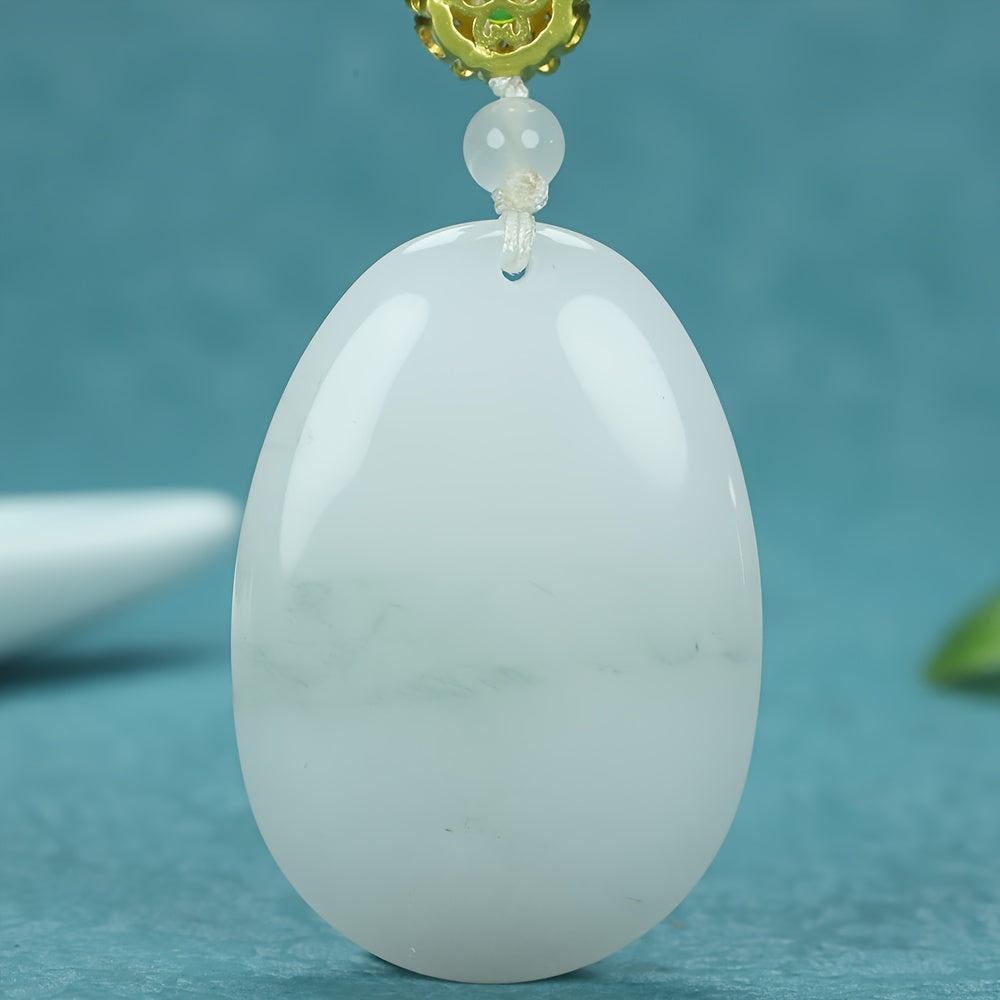
The Natural Round Pendant: A contemporary interpretation of traditional Chinese circular symbolism through New Chinese Style aesthetics
Experience the harmonious blend of traditional symbolism and contemporary design in this New Chinese Style pendant.
View Product Details & Buy NowDefining New Chinese Style: Beyond Orientalism
New Chinese Style represents a fundamental shift from traditional Orientalism—where Eastern cultures were often presented through Western romanticized lenses—toward authentic self-representation and contemporary reinterpretation. This movement emerged in the early 21st century as Chinese designers began reclaiming their cultural heritage while simultaneously engaging with global design conversations.
Characterized by intricate detailing, symbolic motifs (dragons, phoenixes, clouds), rich colors (imperial yellow, vermilion), and clear hierarchical structures. Jewelry often featured jade, gold filigree, and elaborate symbolic narratives with clear cultural codes understood within specific contexts.
Emphasizes minimalism, abstraction of traditional forms, universal aesthetics, material authenticity, and cultural essence rather than literal representation. Designs prioritize wearability across cultural contexts while maintaining subtle nods to traditional symbolism through shape, proportion, and material choices.
The movement represents what cultural theorists call "glocalization"—the ability to be simultaneously globally relevant and locally resonant. New Chinese Style jewelry speaks an international design language while whispering cultural specifics to those who know how to listen. The circular pendant, for instance, communicates harmony and balance universally while specifically referencing Chinese cosmological principles to those familiar with the tradition.

Abstracted geometric patterns: Traditional Chinese lattice designs reinterpreted through contemporary minimalist aesthetics
Historical Evolution: From Imperial Court to Global Runway
The journey of Chinese jewelry design from imperial exclusivity to global accessibility reflects broader cultural transformations:
Jewelry served as social markers indicating status, rank, and regional identity. Designs were heavily symbolic, with strict protocols governing who could wear what. Materials like jade, gold, and pearls were reserved for aristocracy, while commoners wore simpler materials like copper or wood.
Western influences began mixing with traditional designs. The emergence of Shanghai style created fusion pieces that combined Art Deco elements with Chinese motifs. Jewelry became more accessible to emerging middle classes.
Traditional jewelry largely disappeared as symbols of bourgeois decadence. Simple, functional designs prevailed, though some traditional craftsmanship continued in limited contexts as cultural preservation.
Traditional jewelry revived alongside economic growth, often as ostentatious displays of new wealth. Both traditional and Western styles coexisted, sometimes awkwardly, as China reengaged with global fashion.
A generation of globally educated Chinese designers began creating work that confidently blended traditional elements with contemporary design principles. This movement represents cultural maturity—neither rejecting tradition nor slavishly copying it, but intelligently evolving it.
What makes the current moment particularly significant is the global reception of New Chinese Style. Unlike previous periods where Chinese design was either exoticized or ignored in Western contexts, contemporary pieces are being appreciated for their design merit first, with cultural context adding depth rather than defining perception.
Design Principles: The Language of New Chinese Style
New Chinese Style operates according to several key design principles that distinguish it from both traditional Chinese design and generic contemporary minimalism:
Rather than directly copying traditional motifs, designers extract their essential qualities. The circular pendant doesn't feature literal yin-yang symbols but embodies the concept of harmonious balance through its perfect circular form and balanced geometric patterns.
Natural materials are celebrated for their inherent qualities rather than merely their symbolic associations. The natural stone in the pendant is valued for its unique variations and tactile qualities, connecting wearers to material authenticity while referencing traditional appreciation for natural materials.
Designs operate on multiple interpretive levels. The geometric patterns might be appreciated simply as attractive design elements by some viewers, while those familiar with Chinese lattice designs recognize the cultural reference. This creates inclusive designs that welcome diverse interpretations.
The 3.3cm diameter and 4.5cm total height represent careful proportional thinking that references traditional Chinese concepts of balanced proportion while meeting contemporary standards of wearable elegance.
Discover how these design principles create jewelry that's both culturally meaningful and universally wearable.
View Product Details & Buy NowCultural Symbolism in Contemporary Context
The reinterpretation of traditional symbolism represents one of the most sophisticated aspects of New Chinese Style. Traditional symbols that once carried specific cultural meanings are being transformed into more universal expressions:
The Circle: In traditional Chinese cosmology, the circle represents heaven, perfection, and cyclical continuity. In New Chinese Style, this becomes a more universal symbol of wholeness, balance, and harmony—concepts that resonate across cultural boundaries while maintaining their Chinese philosophical roots.
Geometric Patterns: Traditional lattice designs (窗花) originally served both decorative and symbolic purposes in architecture—creating patterns that represented specific blessings while allowing energy (qi) to flow. In contemporary jewelry, these become abstracted geometric patterns that suggest order, interconnectedness, and visual rhythm without requiring specific cultural literacy to appreciate.
Natural Materials: Traditional Chinese appreciation for natural materials like jade and wood reflected philosophical concepts about humanity's relationship with nature. In New Chinese Style, natural materials connect wearers to material authenticity and environmental consciousness—values with global contemporary relevance.

Precise proportions: The 3.3cm diameter reflects traditional concepts of harmonious measurement adapted for contemporary wearability
"What fascinates me about New Chinese Style is how it navigates the complex space between cultural specificity and universal appeal. Designers are creating what I call 'culturally legible' rather than 'culturally literal' pieces. The circular pendant, for instance, doesn't scream 'Chinese' to someone unfamiliar with the culture, but to those who know, it speaks volumes about cosmological principles, and to everyone, it speaks of balance and harmony—universal human concerns."
Market Perspective: Global Reception and Economic Impact
The New Chinese Style movement has created significant market opportunities while challenging traditional market categories:
Demographic Appeal: New Chinese Style jewelry particularly resonates with three key demographics: 1) Globally-minded Chinese millennials and Gen Z seeking to connect with their heritage in contemporary ways, 2) International consumers interested in cultural design that feels relevant rather than costume-like, and 3) Design-conscious consumers across cultures who appreciate minimalist aesthetics with depth.
Price Positioning: These pieces typically occupy the "accessible luxury" or "design-forward contemporary" price points—substantial enough to feel meaningful but accessible enough for regular purchase. This positioning reflects the movement's democratic ideals—making culturally meaningful design available beyond elite circles.
Retail Context: New Chinese Style jewelry performs well in both specialized cultural boutiques and mainstream fashion retailers, demonstrating its crossover appeal. Online, it often appears in searches for both "minimalist jewelry" and "cultural jewelry," capturing diverse search intents.
Perhaps most significantly, New Chinese Style has created economic opportunities for artisan communities while introducing traditional craftsmanship to new audiences. Many pieces combine traditional techniques (like stone carving or metal filigree) with contemporary design, preserving craft knowledge while ensuring its economic viability in modern markets.

Energy and aesthetics: The pendant functions as both cultural symbol and personal energy anchor in daily life
Social Impact: Identity, Representation, and Cultural Dialogue
Beyond market considerations, New Chinese Style carries significant social implications:
Cultural Identity in Global Context: For Chinese diaspora communities, these pieces offer ways to maintain cultural connection without appearing "traditional" in Western social contexts. The jewelry becomes what sociologists call "strategic essentialism"—enough cultural signaling to maintain identity without triggering othering or exoticization.
Cross-Cultural Understanding: For non-Chinese wearers, these pieces facilitate what anthropologists call "cultural appreciation without appropriation"—engaging with another culture's aesthetic traditions respectfully and knowledgeably. The designs invite curiosity and learning rather than superficial borrowing.
Gender Fluidity: The unisex nature of much New Chinese Style jewelry challenges traditional gender norms in both Eastern and Western contexts. By creating pieces designed for "humans" rather than "men" or "women," designers participate in broader conversations about gender fluidity in fashion.
Participate in this cultural dialogue through a piece that honors tradition while embracing contemporary values.
View Product Details & Buy NowFuture Outlook: Sustainability and Technological Integration
Looking forward, several trends suggest where New Chinese Style might evolve:
Sustainable Practices: As environmental consciousness grows globally, New Chinese Style's emphasis on natural materials and quality craftsmanship aligns well with sustainability values. Future developments may include greater transparency about material sourcing, carbon-neutral production, and circular design principles that allow pieces to be repaired, recycled, or repurposed.
Technological Integration: While currently focused on physical craftsmanship, New Chinese Style could incorporate smart jewelry elements—perhaps pieces that change appearance based on environmental conditions or personal biometrics, creating living designs that reference traditional concepts of change and adaptation.
Expanded Material Innovation: Beyond traditional stones and metals, designers might explore sustainable alternatives, lab-grown materials, or innovative composites that reference traditional materials while addressing contemporary environmental concerns.
"The future of New Chinese Style lies in what I call 'techno-traditionalism'—the intelligent fusion of cutting-edge technology with traditional design philosophy. Imagine a pendant that maintains the circular symbolism of harmony but incorporates responsive materials that change with your energy state, or uses sustainable production methods that honor traditional respect for nature. The philosophy remains constant while the expression evolves."
Conclusion: Cultural Evolution as Design Innovation
The Natural Round Pendant and the broader New Chinese Style movement represent something profoundly hopeful about cultural evolution in a globalized world. Rather than presenting a binary choice between "traditional" and "modern," "Eastern" and "Western," this approach demonstrates that cultural heritage can evolve intelligently—retaining its essential wisdom while adapting to new contexts and audiences.
This pendant, in its elegant simplicity, carries forward thousands of years of cultural thought about harmony, balance, and humanity's place in the cosmos. Yet it does so in a language that speaks to contemporary concerns about authenticity, mindfulness, and global citizenship. It demonstrates that tradition isn't something to be preserved in amber but rather something to be carried forward—respectfully but adaptively.
As we move further into the 21st century, such intelligent cultural evolution becomes increasingly important. In a world often divided by cultural misunderstandings and identity politics, design that bridges cultural divides while honoring heritage offers a model for more nuanced cultural engagement. The New Chinese Style movement, through pieces like this pendant, suggests that we can honor where we come from while embracing where we're going—that cultural identity can be both rooted and evolving, specific and universal.
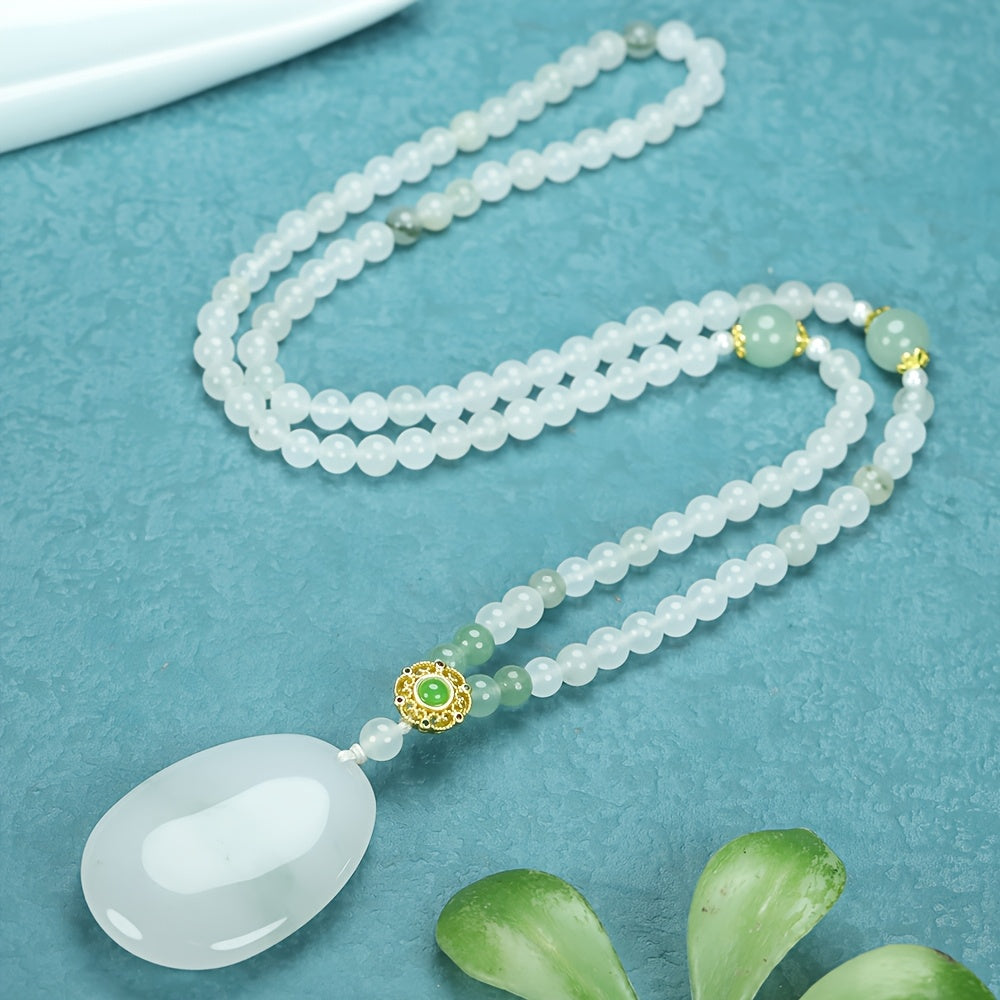
Cultural evolution in wearable form: A piece that honors tradition while embracing contemporary global aesthetics
Carry forward this tradition of intelligent cultural evolution with a piece that bridges heritage and modernity.
View Product Details & Buy Now