




How ancient East Asian folklore transforms into wearable talismans for contemporary spiritual practice and personal transformation
In the intersection where ancient mythology meets contemporary spirituality, a fascinating transformation occurs. Cultural symbols that once adorned temple walls and illuminated ancient texts now find new life as wearable art—bridging millennia of tradition with modern personal expression. Among these enduring symbols, few captivate the imagination quite like the nine-tailed fox, a creature of profound mystery and layered meaning that has leapt from folklore to fashion, becoming a powerful talisman for today's spiritual seekers.
The nine-tailed fox, known as Huli Jing in Chinese, Kitsune in Japanese, and Gumiho in Korean mythology, represents one of the most complex and enduring archetypes in East Asian folklore. Unlike Western depictions of foxes as merely clever or sly, the nine-tailed fox embodies transformation, wisdom accumulation, and supernatural power—qualities that resonate deeply with contemporary spiritual movements focused on personal evolution and energetic awareness.
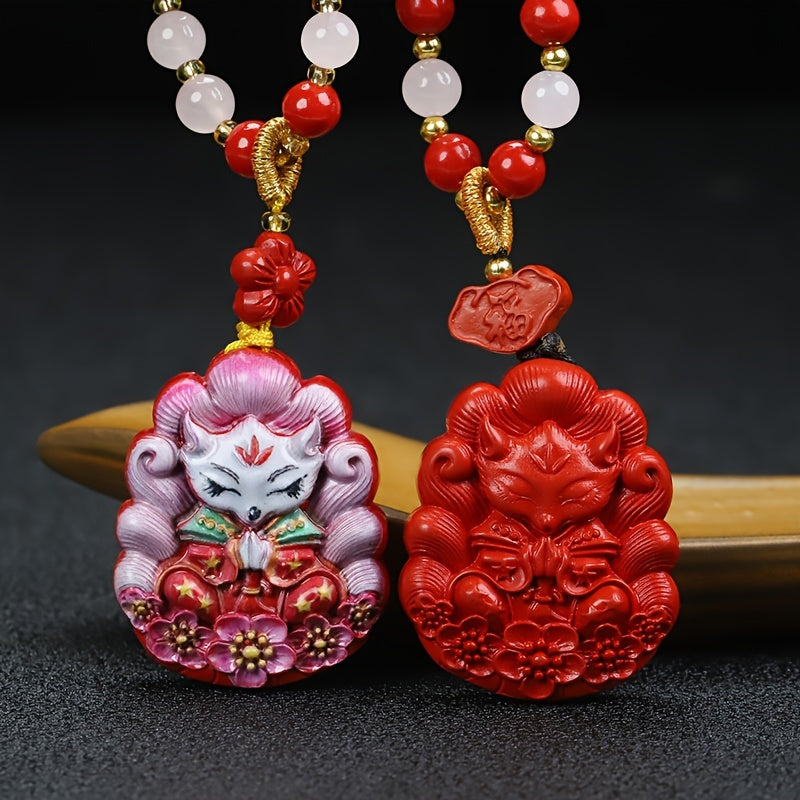
The Elegant Cinnabar Nine-Tailed Fox Pendant: A modern interpretation of ancient mythological symbolism
Explore the detailed craftsmanship and spiritual significance of this mythological symbol transformed into wearable art.
View Product Details & Buy NowHistorical Roots: The Fox Spirit Across Millennia
The earliest recorded mentions of fox spirits in Chinese literature date back to the Zhou Dynasty (1046–256 BCE), where they appeared in texts as both auspicious omens and shapeshifting tricksters. By the Han Dynasty (206 BCE–220 CE), fox worship had become more formalized, with foxes believed to possess the ability to transform into beautiful humans after reaching a certain age and wisdom level.
Earliest references to fox spirits in Chinese literature, primarily as celestial messengers and omens. Foxes were associated with the west and the autumn season.
Formalization of fox worship and mythology. Fox spirits begin to appear in official records and popular folklore as shapeshifters with both benevolent and mischievous qualities.
Proliferation of fox spirit tales in literature. The concept of tails representing centuries of life becomes more established, with nine tails representing the ultimate spiritual achievement.
Japanese Kitsune mythology develops distinct characteristics, with emphasis on Inari fox messengers and more complex classifications of fox spirits.
Revival of fox symbolism in spiritual jewelry and new age practices, blending traditional mythology with contemporary spiritual concepts.
What makes the nine-tailed fox particularly fascinating is its dual nature throughout history. In some traditions, particularly Chinese, the fox spirit could be either benevolent or malevolent—a guardian of families and villages or a seductive trickster draining life energy. This duality reflects the complex understanding of spiritual power in traditional Eastern thought: energy itself is neutral, and its application determines its moral character.

The intricate hand-painted details capture the mystical essence of the fox spirit
Symbolic Dimensions: Beyond the Literal Representation
The nine-tailed fox symbolism operates on multiple levels, each offering different insights for contemporary spiritual practice:
The fox's ability to shapeshift represents personal evolution and adaptability. In spiritual terms, this symbolizes the soul's journey through different states of consciousness and the ability to transform challenges into wisdom.
Each tail represents 100 years of life experience, making the nine-tailed fox a living library of accumulated knowledge. This speaks to the value of lived experience over theoretical knowledge in spiritual development.
The number nine holds particular significance in Eastern numerology as the ultimate yang number, representing completion and celestial power. Nine tails thus signify mastery over spiritual energies and the material world.
This multidimensional symbolism makes the nine-tailed fox an ideal focus for meditation and intention-setting in contemporary spiritual practice. When worn as jewelry, it serves as a constant reminder of these principles, anchoring spiritual concepts in physical form.
Experience the transformative symbolism of the nine-tailed fox in this meticulously crafted pendant.
View Product Details & Buy NowMaterial Alchemy: Cinnabar's Spiritual Significance
The choice of cinnabar as the base material for nine-tailed fox pendants is deeply intentional, representing another layer of symbolic meaning. Known as zhūshā (朱砂) in Chinese, cinnabar has been revered for millennia not just as a pigment but as a substance of spiritual potency.
In traditional Chinese alchemy, cinnabar was considered the most important substance for creating the Elixir of Life. Alchemists believed that through proper preparation and spiritual attunement, cinnabar could transform base consciousness into enlightened awareness—a process mirroring the fox's own transformation through centuries of life.
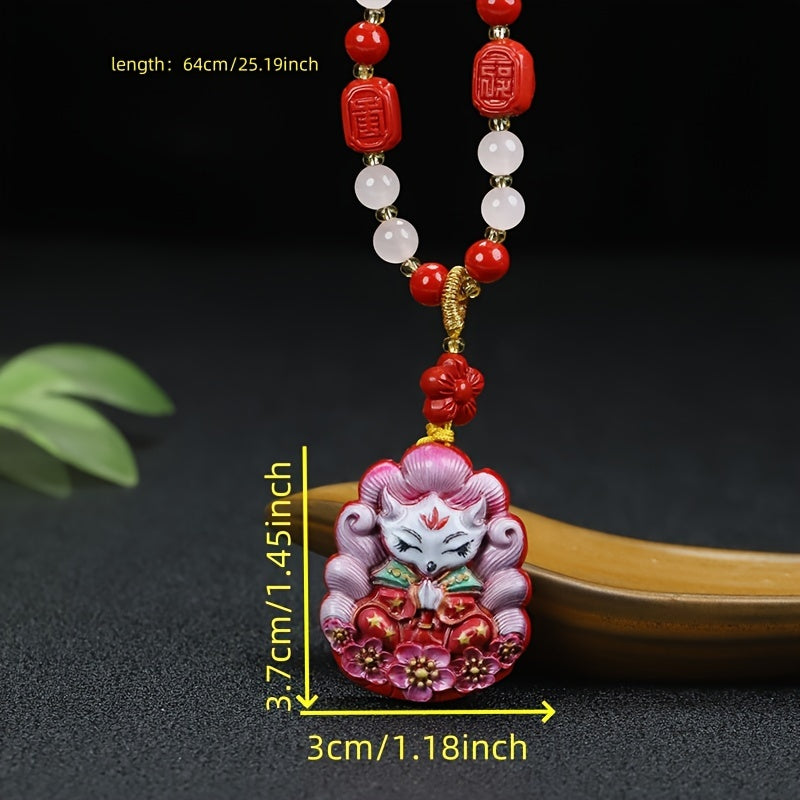
The vibrant cinnabar stone: A historically significant material in Eastern spiritual traditions
The vibrant vermilion color of cinnabar holds additional symbolic weight. In Chinese culture, red represents luck, joy, and vitality—but also protection. This is why cinnabar was traditionally used in protective amulets and seals. The combination of the protective cinnabar with the transformative fox symbolism creates a talisman that both shields and evolves the wearer.
"When we examine the material choices in spiritually significant jewelry, we're looking at layers of intentionality. Cinnabar isn't selected merely for its aesthetic appeal—it carries millennia of cultural memory and energetic programming. Its use in nine-tailed fox pendants creates what I call 'symbolic resonance,' where material, form, and mythology vibrate at complementary frequencies."
Contemporary Spiritual Applications
In today's spiritual landscape, nine-tailed fox jewelry serves multiple functions beyond mere adornment:
Meditation Focus: The pendant provides a tangible focus point during meditation, with different elements (the nine tails, the fox form, the cinnabar base) offering different layers for contemplation. Practitioners might focus on one tail per meditation session, contemplating the wisdom accumulated during nine metaphorical centuries of life experience.
Energy Work Tool: Many energy workers use the pendant in chakra balancing practices, particularly for the sacral and solar plexus chakras which govern personal power and transformation. The cinnabar's grounding properties help anchor spiritual work in physical reality.
Intention Amplifier: When programmed with specific intentions, the pendant serves as a constant reminder and energetic amplifier for personal goals related to wisdom, transformation, or protection.
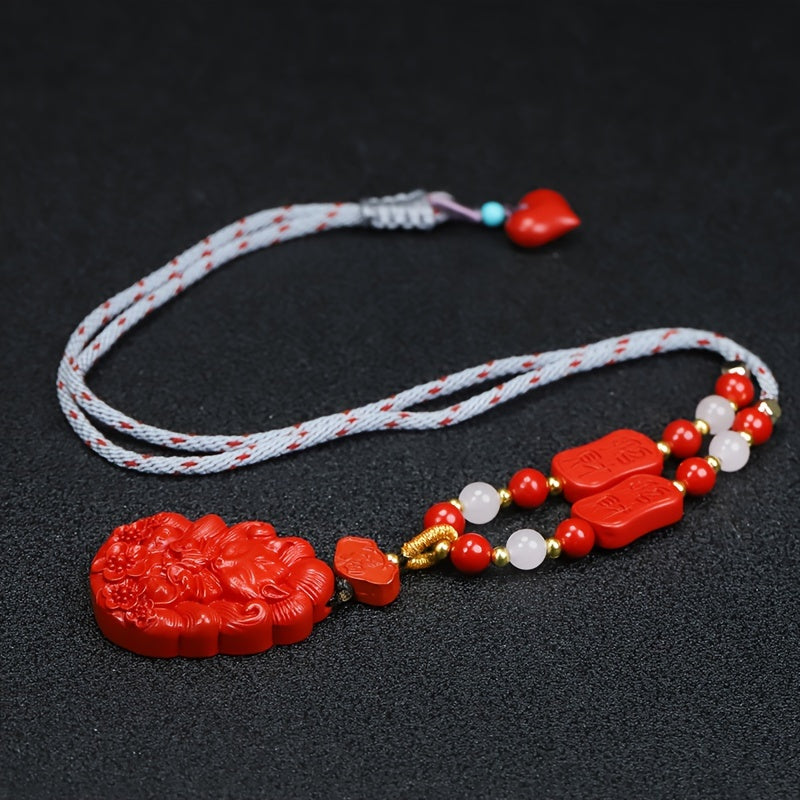
Worn as spiritual armor: The pendant aligns with energy centers for holistic benefits
Cultural Preservation Through Wearable Art
An important dimension of nine-tailed fox jewelry is its role in cultural preservation. As globalization accelerates, traditional symbols risk dilution or appropriation. However, when these symbols are translated into jewelry with respect for their original context and meaning, they become vehicles for cultural education and appreciation.
Each time someone asks about a nine-tailed fox pendant, it creates an opportunity to share a fragment of East Asian mythology and spiritual philosophy. This transforms the jewelry from personal adornment to cultural ambassador—a small but significant act of preserving and sharing ancient wisdom in a modern context.
Carry ancient wisdom with you through this beautifully crafted representation of mythological transformation.
View Product Details & Buy NowThe Psychology of Mythological Symbols in Daily Life
From a psychological perspective, wearing mythological symbols like the nine-tailed fox engages what Carl Jung called "active imagination"—a process of dialoguing with archetypal images to access deeper layers of the psyche. The pendant serves as a physical anchor for this process, making abstract psychological work more tangible and integrated into daily life.
The fox archetype specifically connects to what Jung might call the "trickster-sage" complex—the part of the psyche that challenges rigid structures, finds creative solutions, and accumulates wisdom through experience rather than dogma. By wearing this symbol, individuals subtly reinforce these psychological qualities in themselves.
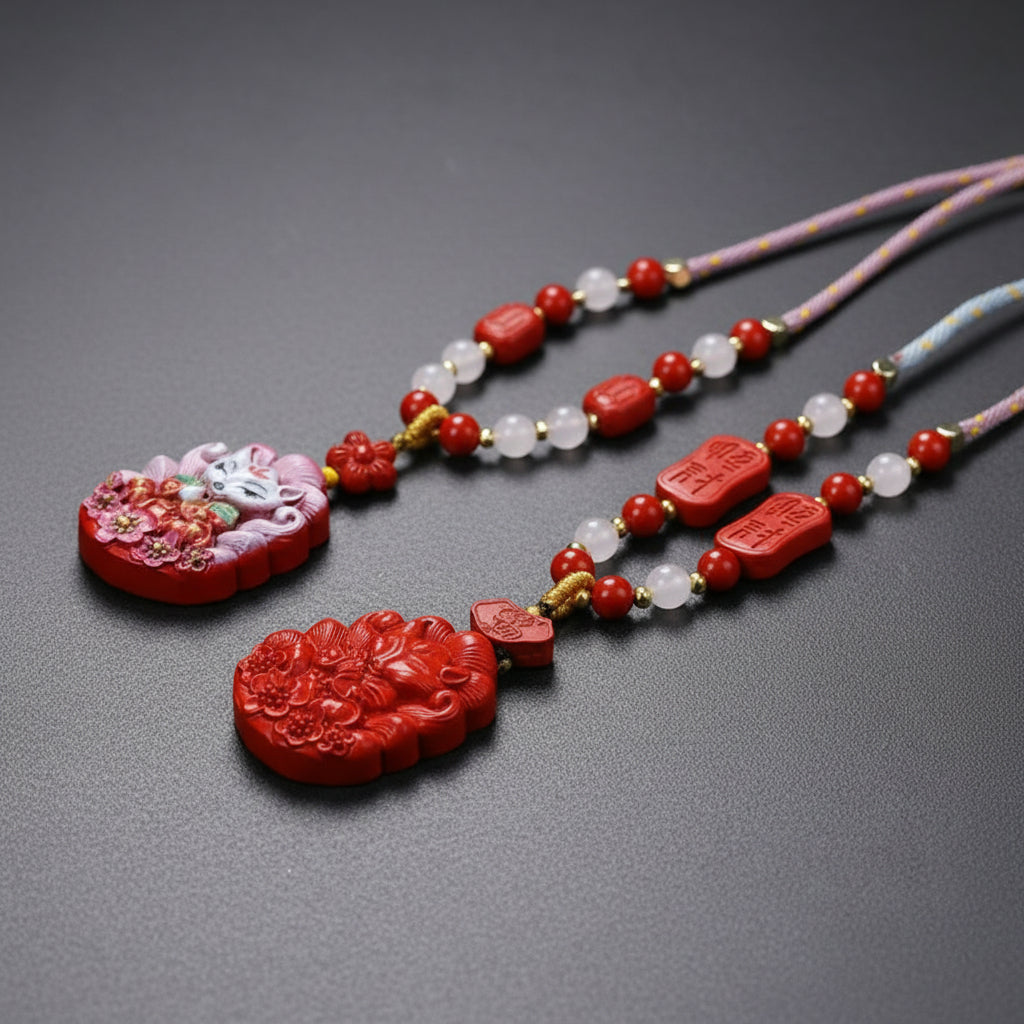
Gold accents symbolizing illuminated wisdom gained through transformation
Future Directions: Mythology in Modern Spirituality
As we move further into the 21st century, the intersection of ancient mythology and contemporary spirituality appears to be strengthening rather than fading. Several trends suggest why:
Digital Detox and Tangible Spirituality: In an increasingly digital world, physical objects with spiritual significance provide grounding and tangible connection to meaning systems.
Cultural Hybridization: Modern spiritual practitioners often draw from multiple traditions, creating personalized practices that honor ancient wisdom while addressing contemporary needs.
Symbolic Literacy: There's growing interest in understanding the deeper meanings behind cultural symbols rather than using them superficially.
The nine-tailed fox pendant represents these trends perfectly—it's a physical object carrying deep cultural symbolism, adaptable to individual spiritual paths, and requiring some knowledge to fully appreciate.
"We're witnessing what I term 'the re-enchantment of everyday objects.' In previous centuries, spiritual power was located primarily in specialized ritual objects. Today, we're seeing a democratization of spiritual technology, where everyday items like jewelry become carriers of meaning and transformation. The nine-tailed fox pendant exemplifies this perfectly—it's both beautiful adornment and sophisticated spiritual tool."
Conclusion: Carrying Ancient Wisdom Forward
The journey of the nine-tailed fox from ancient folklore to contemporary spiritual jewelry illustrates a profound human tendency: to seek meaning in symbolic forms and to carry that meaning with us in our daily lives. This transformation from myth to metal (or in this case, cinnabar) represents more than artistic adaptation—it represents the living nature of cultural symbols.
When someone chooses to wear a nine-tailed fox pendant, they're not merely selecting a piece of jewelry. They're engaging with centuries of mythological development, aligning themselves with archetypes of transformation and wisdom, and participating in the ongoing evolution of spiritual symbolism. They become, in a small but meaningful way, part of the story—the latest chapter in the long tale of the nine-tailed fox's journey through human consciousness.
In an age where so much feels transient and disposable, such connections to enduring symbols and stories provide psychological and spiritual ballast. The pendant serves as a reminder that while individual lives are brief, the stories we tell—and the wisdom they contain—can span centuries, even millennia, continually finding new forms and new bearers.
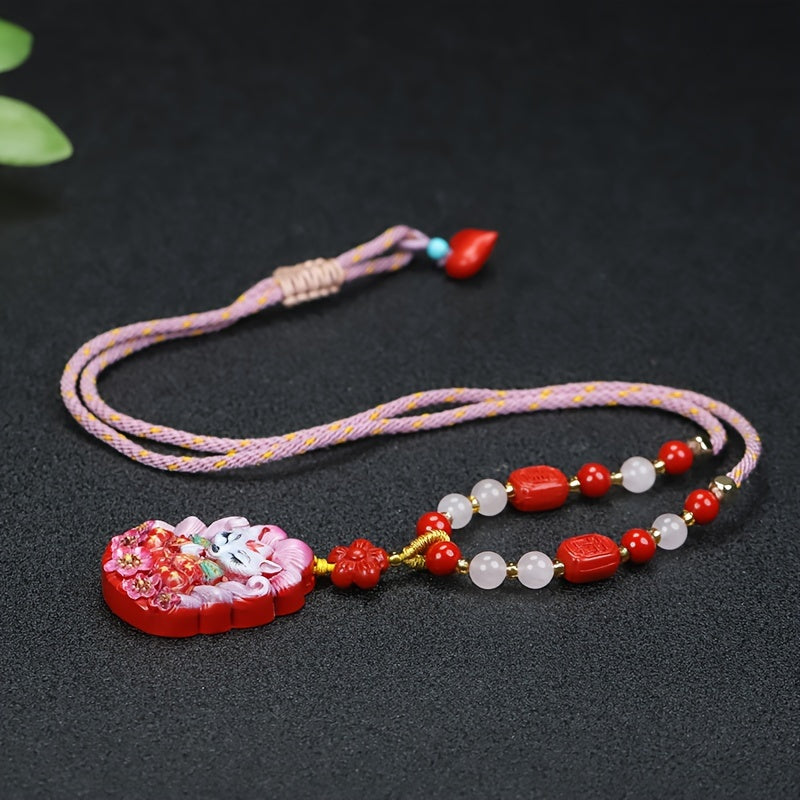
The complete piece: Ancient symbolism reimagined for contemporary spiritual practice
Embrace this powerful symbol of transformation and wisdom in your spiritual practice.
View Product Details & Buy Now