




In the landscape of healing crystals and gemstone jewelry, certain stones capture public imagination through dramatic beauty or intense metaphysical claims. Yet quietly, steadily, another category has been gaining prominence: stones of the mind. At the forefront of this cognitive jewelry movement is yellow chalcedony—a gem that doesn't shout but rather speaks in clear, warm tones. This article explores how jewelry featuring this sunny quartz variety has evolved from ancient talisman to modern accessory, serving as both a tool for mental wellness and a statement of sophisticated, understated style.
I. The Intellectual Gemstone: A Unique Design & Symbolism
Yellow chalcedony occupies a distinctive niche in mineral symbolism. Unlike fiery carnelian or mysterious amethyst, its significance is cerebral and communicative. Historically, chalcedony in its various forms was known as the "Speaker's Stone." Roman orators placed it under their tongues to enhance eloquence, while medieval scholars kept it on their desks to aid study. The yellow variety specifically connects this communicative power with solar energy—illumination, clarity, and intellectual warmth.
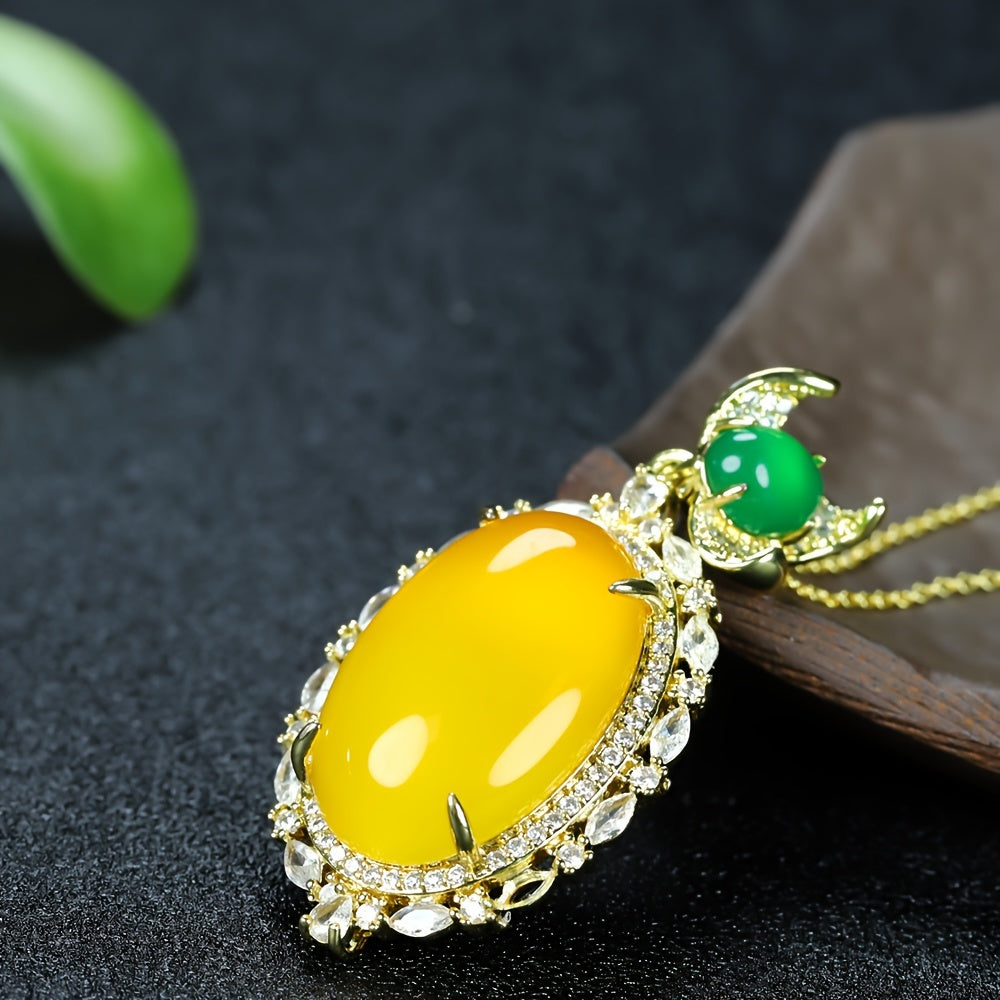
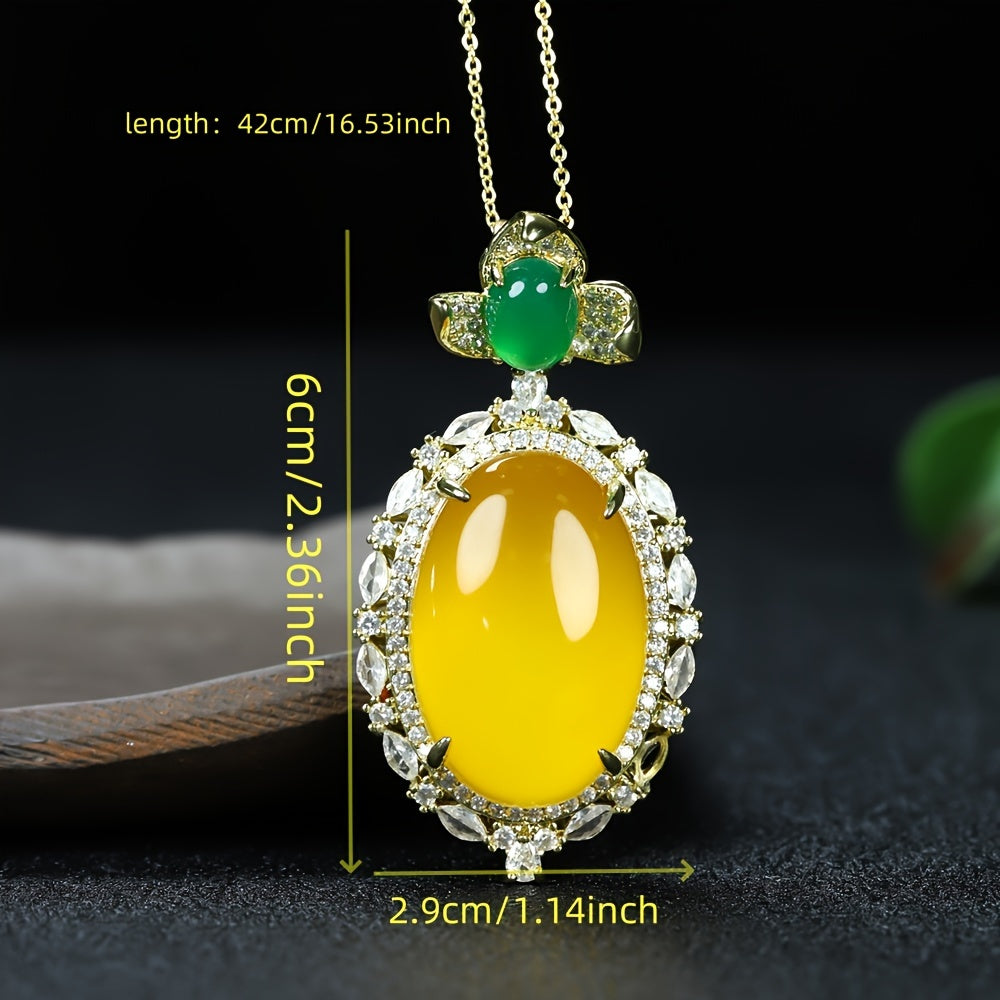
Modern designs featuring yellow chalcedony, like the Casual Style Pendant, leverage this symbolism through intentional minimalism. The design isn't trying to be mystical or ornate; it's clean, approachable, and functional. This reflects a contemporary understanding of spirituality and self-care: not as esoteric escape, but as practical support for navigating daily life. The pendant's simple form allows the stone's natural beauty and symbolic weight to take center stage, creating jewelry that feels both grounding and enlightening.
II. Material & Craftsmanship: The Science of Softness
Geological Uniqueness
Chalcedony is a cryptocrystalline form of quartz, meaning its crystals are too small to be seen without extreme magnification. This microcrystalline structure gives it a waxy luster and translucent quality distinct from transparent quartz crystals. Yellow coloration typically comes from trace amounts of iron compounds. Unlike dyed stones, natural yellow chalcedony's color is distributed unevenly, creating gentle gradients and depth that artificial coloring cannot replicate.
This geological formation process—slow deposition from silica-rich waters in rock cavities—results in a stone that is remarkably stable and durable (6.5-7 on the Mohs scale), yet possesses a visual softness. This paradoxical combination of durability and gentle appearance perfectly mirrors its energetic reputation: strong enough to provide consistent support, gentle enough for sensitive individuals and daily wear.

Technical Craftsmanship Details
Working with chalcedony requires specific lapidary skills. Its microcrystalline structure means it doesn't fracture along clean lines like larger-crystal quartzes. Craftsmen must use diamond-tipped tools for cutting and shaping, followed by progressively finer abrasives for polishing—often starting with 80-grit silicon carbide and moving through to 3000-grit diamond paste or tin oxide for the final shine.
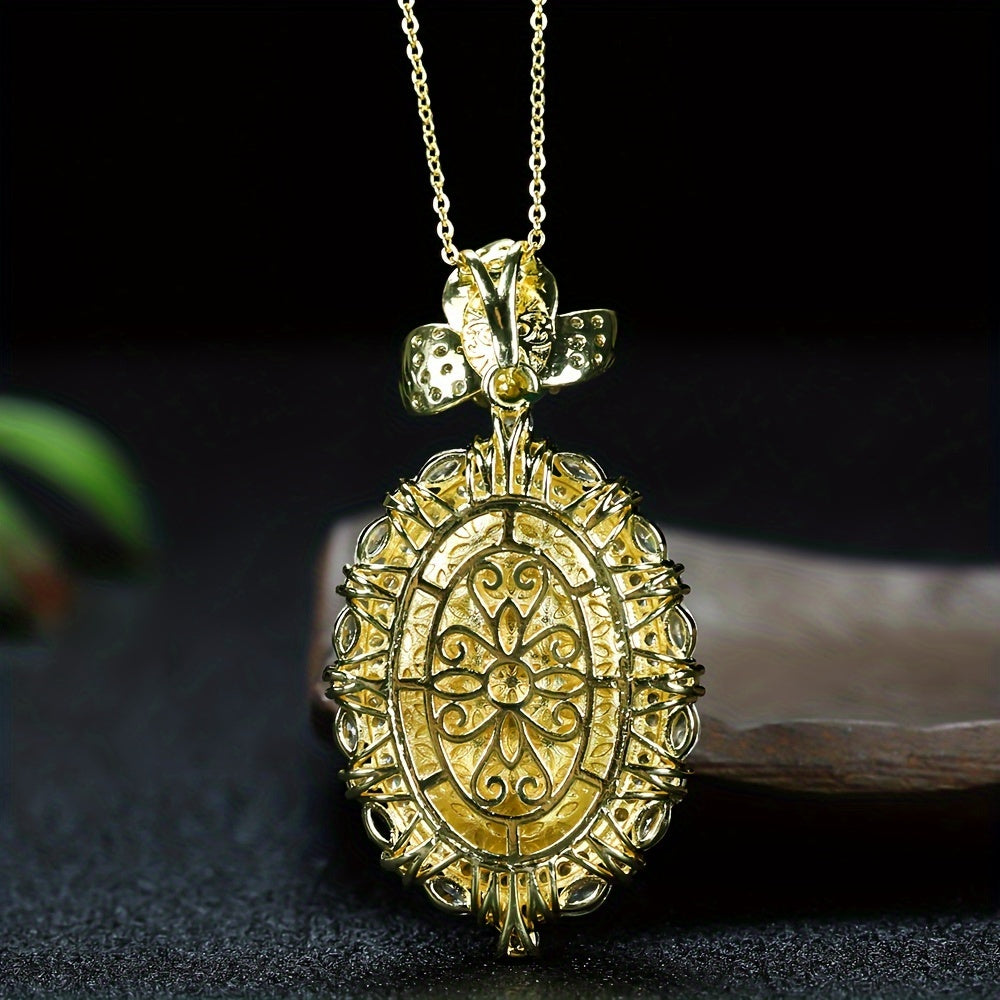
The "unplated" aspect is crucial. Many commercial gemstone pendants have a thin metal coating to enhance color or provide a uniform finish. Authentic chalcedony jewelry maintains the stone's natural surface, which not only ensures energetic purity but also creates a tactile experience unique to the material. The final polish brings out the stone's inherent waxy luster, creating a glow that comes from within the material rather than from an applied surface treatment.
III. Cultural & Symbolic Meaning: A Cross-Historical Companion
The cultural journey of chalcedony is remarkably consistent across civilizations. In Ancient Mesopotamia, cylinder seals were carved from chalcedony for their durability and fine detail capability. In Classical Greece and Rome, it was associated with Mercury/Hermes, gods of communication, commerce, and intellectual travel. During the Renaissance, chalcedony cameos were prized for their ability to hold intricate detail, often depicting philosophical or literary themes.
Yellow chalcedony's specific connection to intellectual pursuits finds expression in multiple traditions. In Eastern practices, yellow stones often correlate with the Solar Plexus Chakra (Manipura), the energy center of personal power, will, and mental clarity. In Western elemental correspondences, yellow represents Air—the element of intellect, communication, and objectivity. Thus, wearing yellow chalcedony becomes an act of aligning with these cross-cultural streams of thought that value clarity, expression, and enlightened understanding.
"What we're seeing with the popularity of stones like yellow chalcedony is a democratization of intellectual self-care. People are recognizing that mental clarity isn't just a cognitive state—it's an embodied experience that can be supported through material means." — Dr. Anya Sharma, Cultural Anthropologist.
IV. Historical Background: From Royal Seals to Everyday Wear
The historical use of chalcedony reveals its transition from elite object to accessible accessory. For centuries, fine chalcedony was the domain of the wealthy and powerful. Byzantine emperors used chalcedony intaglios for official seals. Renaissance nobility wore chalcedony rings as symbols of education and refinement. The stone's ability to hold fine carved detail made it a favorite for portraits and commemorative pieces among European aristocracy.
The 20th century brought geological exploration that revealed more abundant sources, particularly in Brazil, India, and Madagascar. This increased availability, combined with modern lapidary technology, transformed chalcedony from a luxury item into a material for wider artistic expression. The late 20th century's New Age movement first popularized its metaphysical properties, while 21st-century minimalist aesthetics embraced its subtle beauty. Today's yellow chalcedony jewelry represents the culmination of this journey: maintaining symbolic and material integrity while being accessible enough for everyday wear.
The Cognitive Jewelry Movement: Why Now?
Digital Age Overload: In an era of constant notifications and information saturation, tools that support mental focus and clarity have become precious. Yellow chalcedony jewelry offers a tangible, non-digital anchor in this overwhelming landscape.
The Mainstreaming of Mindfulness: As meditation and mindfulness enter mainstream wellness, people seek objects that support these practices throughout the day, not just during dedicated sessions. Wearable stones serve as constant reminders and supports.
Fashion as Function: The growing trend of "functional fashion"—clothing and accessories that serve practical purposes beyond aesthetics—aligns perfectly with jewelry that offers both style and cognitive support.
V. Artistic & Aesthetic Interpretation
From an artistic perspective, yellow chalcedony presents unique opportunities and challenges. Its color palette ranges from pale lemon to deep golden amber, often within the same stone. This natural variation means that each piece has a unique color story. Designers working with this material must decide whether to highlight these variations or create pieces from carefully matched stones.
The aesthetic of contemporary yellow chalcedony jewelry leans toward what might be called "warm minimalism." It combines clean lines and simple forms (minimalism) with organic shapes and sunny coloration (warmth). This creates jewelry that feels both modern and comforting, structured yet natural. The aesthetic communicates that mental clarity and positive energy aren't about complexity or intensity, but about simplicity, warmth, and natural flow.
VI. Emotional & Social Significance
Emotionally, yellow chalcedony jewelry serves multiple functions. For the wearer, it can act as a tactile grounding tool during moments of anxiety or overwhelm—a physical object to focus on when thoughts become scattered. Its warm color has been shown in color psychology studies to stimulate mental activity and evoke feelings of optimism.
Socially, such jewelry occupies an interesting space. Unlike overtly religious or spiritual symbols, it's subtle enough to be workplace-appropriate while still signaling certain values to those who understand mineral symbolism. It can serve as a conversation starter about mindfulness, self-care, or natural materials. In social settings, it might subtly influence interactions by helping the wearer communicate more clearly and listen more attentively.
VII. Market Perspective & Future Outlook
The market for intentional jewelry like yellow chalcedony pieces is experiencing compound growth. Industry analyses indicate several converging trends: increased consumer interest in natural materials, growing awareness of mental wellness, and demand for products with authentic stories. Yellow chalcedony sits at the intersection of these trends.
| Market Segment | Traditional Jewelry | Yellow Chalcedony Jewelry |
|---|---|---|
| Primary Appeal | Aesthetic beauty, status, investment | Beauty + function, personal meaning, wellness support |
| Material Value | Rarity, carat weight, perfection | Natural authenticity, energetic properties, craftsmanship |
| Consumer Motivation | Gifting, celebration, self-reward | Daily self-care, intention-setting, personal growth |
Looking forward, we can expect to see increased innovation in how intellectual gemstones are incorporated into jewelry. Potential developments include:
- Tech Integration: Pendants that combine natural stones with subtle wearable technology for biofeedback or focus training.
- Modular Designs: Systems allowing wearers to interchange different stones for different cognitive or emotional needs.
- Scientific Validation: More research into the psychological effects of wearing intentional jewelry, moving beyond anecdotal evidence.
- Sustainable Mining Initiatives: Greater transparency and ethics in sourcing, with stones tracing back to specific, responsibly managed mines.
VIII. Environmental Sustainability & Social Impact
Natural stone jewelry occupies a complex position in sustainability discussions. On one hand, mining has environmental impacts. On the other, natural stones are inherently more sustainable than plastics or heavily processed materials. Yellow chalcedony offers particular advantages:
Abundance: As a form of quartz, chalcedony is one of the most common minerals on Earth, reducing pressure on rare gemstone sources.
Durability: Its hardness means pieces last for generations with proper care, contrasting with fast fashion accessories designed for temporary use.
Low Processing: High-quality chalcedony requires minimal processing compared to stones that need heat treatment, irradiation, or extensive enhancement.
The social impact extends to supporting traditional lapidary arts and small-scale mining communities when sourced ethically. Each piece represents not just geological time but human skill and cultural continuity.
IX. Conclusion: The Future of Mindful Adornment
Yellow chalcedony jewelry represents more than a passing trend in accessories. It signifies a deeper cultural shift toward integrating wellness, intention, and authenticity into all aspects of life, including what we wear. As we navigate increasingly complex cognitive landscapes, tools that support mental clarity become not just luxuries but necessities.
The simplicity of a well-crafted yellow chalcedony pendant belies its sophisticated symbolism and function. It connects wearers to ancient traditions of intellectual pursuit, to the natural world through its geological origins, and to contemporary values of mindfulness and authentic self-expression. In a world that often prizes intensity and drama, it offers a different model: clarity through calm, strength through softness, illumination through gentle, persistent warmth.
Wear your clarity. Carry your light. Think with warmth.
