




From ancient myths to modern expressions of self-love, discover how this timeless floral motif captivates the human heart.
In the vast lexicon of symbols, few are as universally recognized or as deeply resonant as the rose. It is the poet's muse, the lover's offering, the artist's challenge, and the spiritual seeker's guide. Its petals unfurl not just in gardens but in the annals of history, in the verses of sacred texts, and on the canvases of our most profound emotions. When this powerful symbol is translated into a wearable form—a piece of jewelry—it becomes more than an adornment. It becomes a talisman, a statement, a silent story worn close to the skin. This article explores the rich, multi-layered symbolism of the rose in jewelry, tracing its journey from ancient origins to its contemporary significance as a tool for personal wellness and spiritual expression.
An Overview of Unique Design and Symbolism
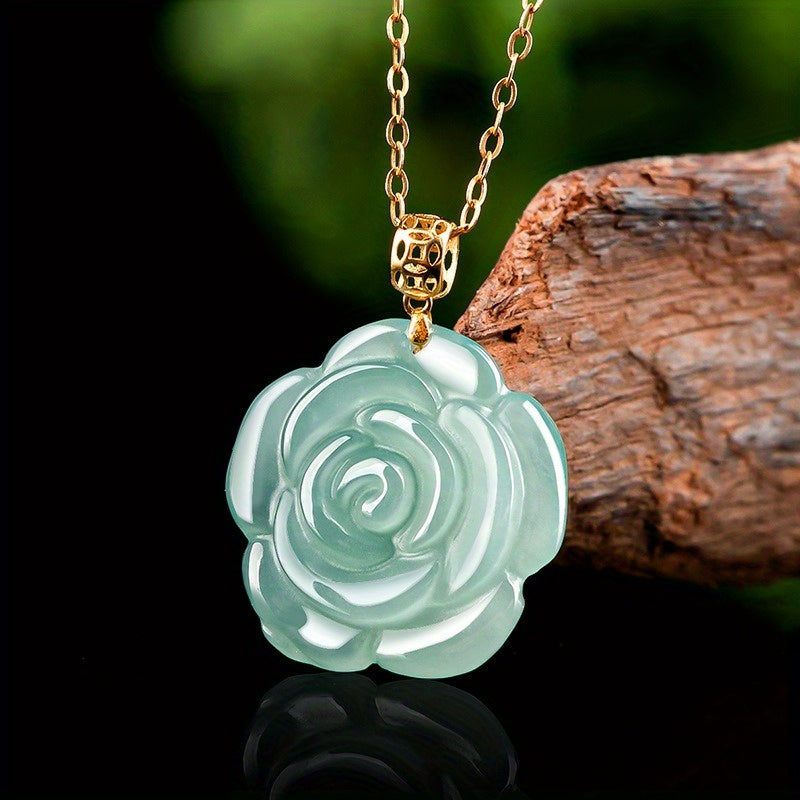
The rose is not a static symbol; its meaning is as varied as its colors and forms. At its core, the rose represents love in its myriad forms—romantic, familial, platonic, and, most crucially, self-love. The unfolding of its bud into a full bloom is a potent metaphor for the soul's journey toward enlightenment, the opening of the heart to give and receive love, and the revelation of inner beauty. In jewelry, this symbolism is amplified. A rose pendant is not merely a depiction of a flower; it is an invocation of these qualities. It serves as a constant, gentle reminder to the wearer to remain open-hearted, to cultivate compassion, and to recognize their own inherent beauty. The choice of material further refines this message. A rose carved in passionate red garnet speaks of romance, while one crafted from serene light blue jade, like our Hand-Carved Light Blue Jade Rose Pendant, channels energies of tranquility, emotional healing, and spiritual clarity.
Material and Craftsmanship: The Soul of the Bloom
The transformation of a rose from a living plant to a piece of enduring jewelry is an act of alchemy. The choice of material is paramount. Precious metals like gold and silver carry their own energetic properties—gold resonating with divine wisdom and prosperity, silver with the intuitive energy of the moon. When paired with a gemstone, the synergy creates a specific energetic signature. A rose carved from rose quartz, the stone of universal love, becomes a powerful magnet for affection. A rose of deep red jasper grounds passionate love in stability and security. The craftsmanship itself is a vital part of the narrative. A hand-carved rose, as opposed to a mass-produced, cast version, carries the intention and energy of the artisan. Each delicate petal, each subtle curve, is a testament to skill and patience, imbuing the final piece with a life force that a machine simply cannot replicate. This handcrafted quality makes each piece unique, a singular bloom in a garden of one.
Cultural and Historical Resonance
The rose's story is interwoven with the history of humanity itself. In ancient Greece, the rose was sacred to Aphrodite, the goddess of love, and was believed to have been created from her tears and the blood of her lover, Adonis. For the Romans, it was a symbol of luxury and was used in celebrations and as a confidential emblem (the term "sub rosa," or "under the rose," meaning to keep something secret). In Christian symbolism, the rose is associated with the Virgin Mary, representing her virtues and sorrows—a white rose for her purity and a red rose for her compassion. In Islamic mysticism, the rose is the symbol of God, with its petals representing the stages of spiritual unfolding. The 19th-century Victorian era saw the rise of "floriography," a complex language of flowers where different roses and their colors conveyed specific, often secret, messages. A red rose declared passionate love, a pink rose spoke of admiration, and a yellow rose (in some interpretations) signified jealousy or a decrease in love. This rich history provides a deep well of meaning for anyone who chooses to wear a rose pendant today.
"The rose is a rose from the time it is a bud. It has no self-consciousness, no ambition, no anxiety. It is simply what it is, and that is enough." - Osho
Artistic and Aesthetic Interpretation
Beyond its symbolic weight, the rose is a subject of profound aesthetic beauty. Artists throughout history, from the Dutch masters to the Impressionists, have struggled to capture its perfect form and velvety texture. In jewelry design, the rose presents a challenge of translating three-dimensional, organic beauty into a wearable object. A minimalist design might use a single, smooth gold curve to suggest a rosebud, emphasizing potential and new beginnings. A more intricate, filigree design might use interwoven metal to create a lattice of petals, symbolizing the complexity of love and relationships. The style of the rose—a tightly closed bud, a half-opened bloom, or a fully unfurled flower—also changes its meaning, representing stages of growth, secrecy, or full expression, respectively. This artistic diversity ensures that there is a rose design to match every personality and intention.
Emotional and Social Significance in Modern Times
Today, the rose pendant has evolved beyond its traditional romantic connotations. While it remains a classic and cherished gift for anniversaries, Valentine's Day, and birthdays, its meaning has broadened significantly. It has become a powerful symbol of self-love and empowerment. A woman gifting a rose pendant to herself is making a statement of self-worth and independence. It is a celebration of her own beauty, strength, and capacity to love. Furthermore, it has become a popular gift between friends, symbolizing platonic love and deep appreciation. In the context of wellness and spirituality, the rose pendant is used as a tool for healing. It serves as a focal point for meditation, a reminder to open the heart chakra, and a talisman to attract loving energy and release emotional pain. It is a quiet, personal symbol that communicates complex emotional states without a single word.
Why People Choose Natural Stone Jewelry Today
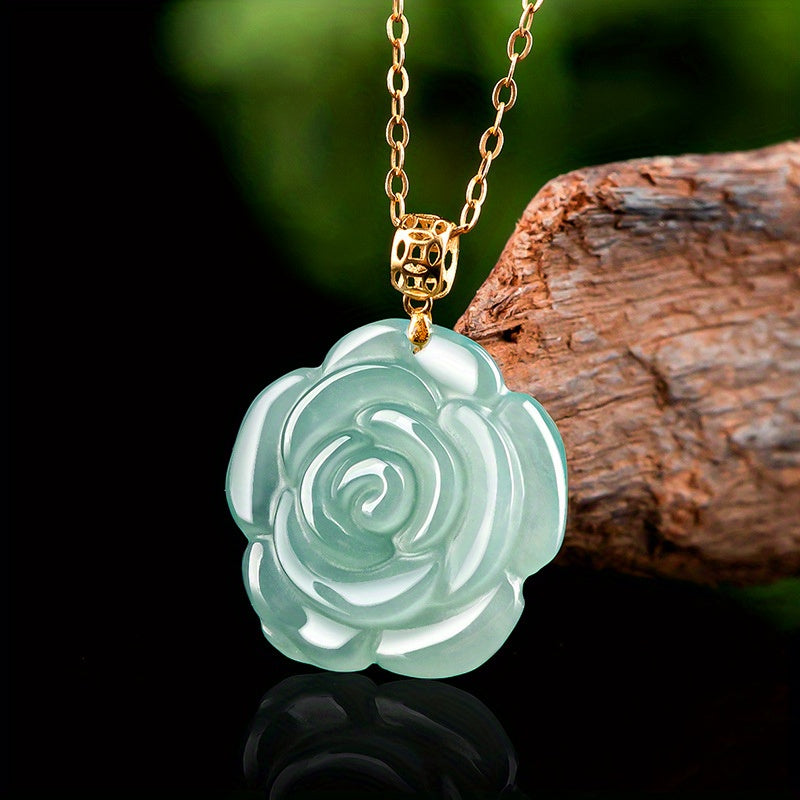
In a world increasingly dominated by mass production and digital detachment, the allure of natural stone jewelry is stronger than ever. People are drawn to these pieces for reasons that go far beyond simple aesthetics. A piece like the light blue jade rose pendant offers a tangible connection to the Earth, a reminder of nature's enduring beauty and power. It is a choice for meaning over mere decoration. Each stone is unique, with its own inclusions, patterns, and energy signature, making the jewelry deeply personal. This is the opposite of a uniform, factory-made item. Furthermore, the handcrafted element connects the wearer to the artisan and the tradition of skilled craftsmanship. Most importantly, natural stone jewelry is often imbued with a purpose. It is a tool for wellness, a source of spiritual support, and a wearable affirmation. It is a way to carry a specific intention—be it love, peace, courage, or healing—with you throughout your day.
Final Thoughts: A Jewelry Piece With Soul
A rose pendant, particularly one crafted from a natural stone like light blue jade, is far more than a simple accessory. It is a convergence of art, history, and energy. It is a symbol of love's many facets, a marker of personal growth, and a tool for emotional and spiritual well-being. It is a piece of cultural heritage, a testament to artisanal skill, and a deeply personal talisman. To wear a rose is to wear a story—a story of love, of life, of unfolding potential, and of the timeless, enduring beauty that resides both in the world around us and within our own hearts. It is, in every sense, a jewelry piece with a soul.
