





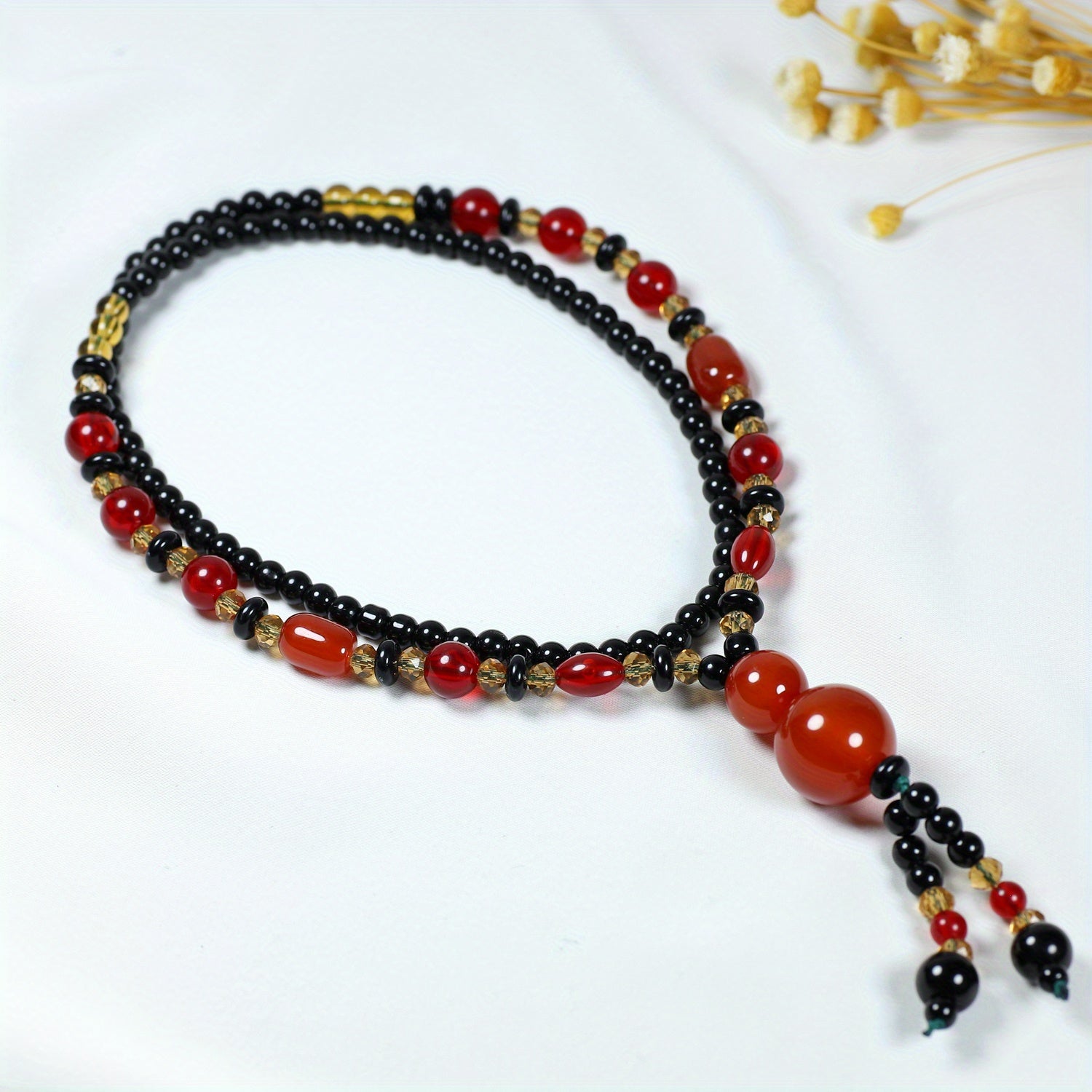
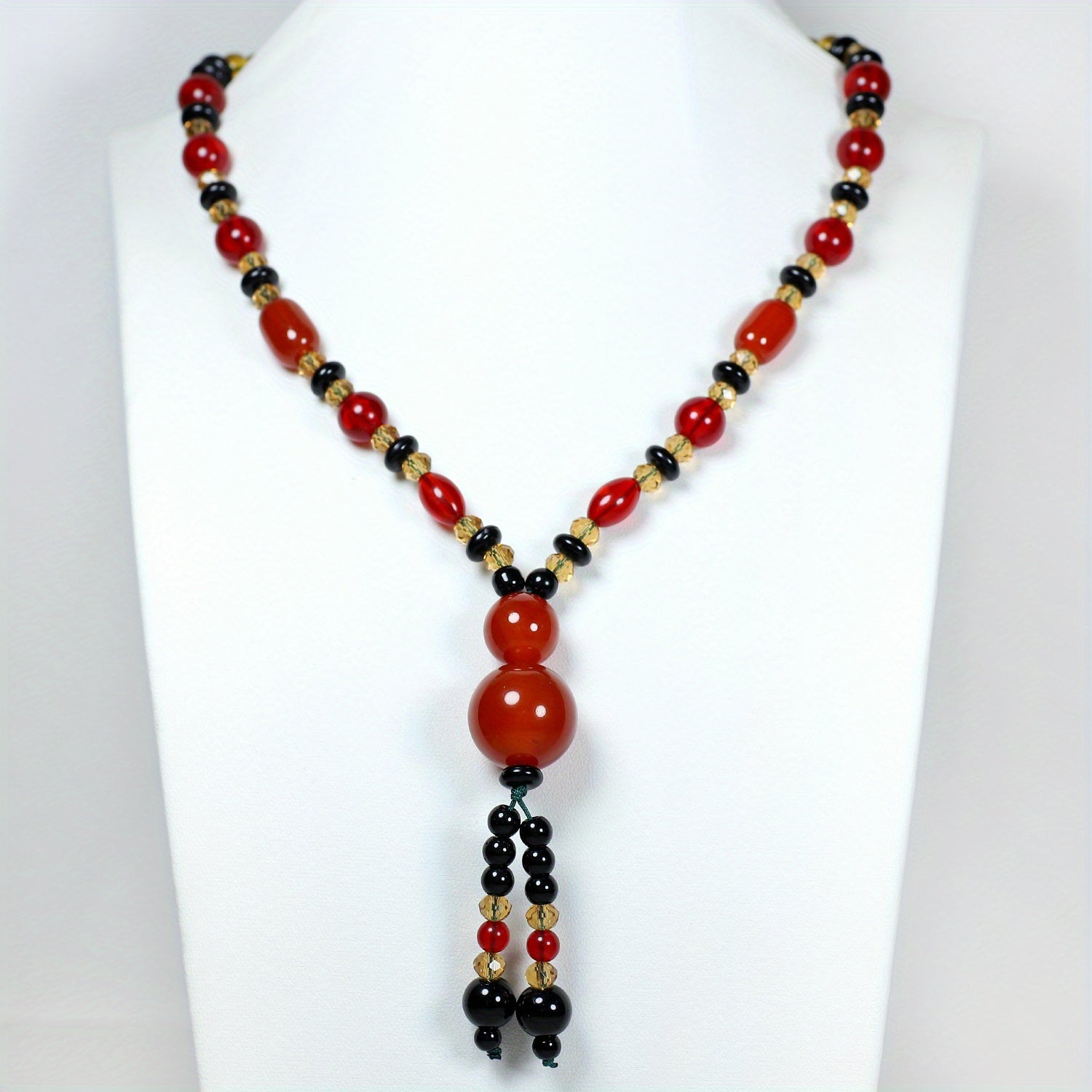
In an increasingly digital and urbanized world, a quiet revolution is taking place in how we adorn ourselves—a return to earth, to authenticity, to the bohemian spirit that values natural materials, handcrafted beauty, and spiritual connection. This bohemian-inspired spiritual jewelry, exemplified by pieces like the Bohemian Agate Necklace with Red & Black Beads, represents more than fashion: it embodies a philosophical stance, a spiritual practice, and a tangible connection to the natural world in our increasingly synthetic lives.
Historical Roots: From Romani Travelers to Modern Boho Chic
The term "bohemian" originally referred to Romani people mistakenly thought to come from Bohemia (now part of the Czech Republic). These traveling communities developed a distinct aesthetic characterized by layered textiles, natural materials, and eclectic combinations that reflected their nomadic lifestyle and connection to multiple cultures. By the 19th century, the term expanded to describe artists, writers, and intellectuals who rejected bourgeois conventions in favor of creative freedom, unconventional lifestyles, and often, spiritual exploration outside mainstream religious institutions.
This historical trajectory reveals a consistent thread: bohemian style has always been about more than aesthetics—it's been a visual language expressing values of freedom, creativity, multicultural appreciation, and often, spiritual exploration. Contemporary bohemian spiritual jewelry continues this tradition, serving as wearable philosophy that communicates the wearer's values and spiritual orientation.
The Material Language: Earth Elements as Spiritual Vocabulary
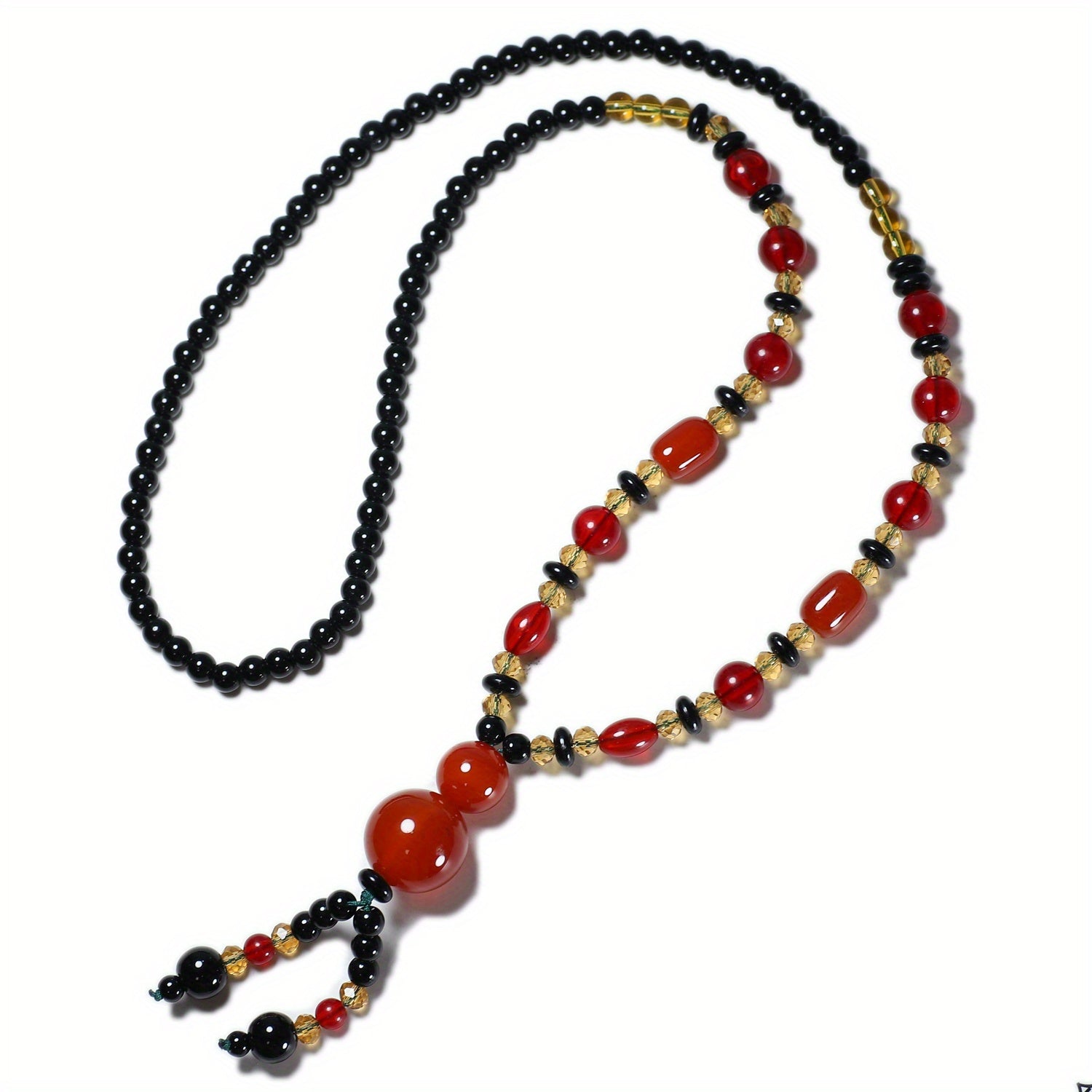
Bohemian spiritual jewelry communicates through a specific material vocabulary. Natural stones like agate, obsidian, turquoise, and amber aren't merely decorative—they're chosen for their energetic properties, geological histories, and cultural associations. The Bohemian Agate Necklace exemplifies this material language with its deliberate selection of red agate and black obsidian.
Agate: Formed in volcanic cavities over millions of years, agate carries the memory of earth's fiery beginnings. Its banded patterns record geological time, making each piece unique. Metaphysically, agate is considered stabilizing and grounding, with specific colors addressing different chakras—red agate connecting to the root chakra and physical vitality.
Obsidian: Born from rapidly cooled lava, obsidian represents transformation—fiery liquid becoming solid glass. Its volcanic origin links it to primal earth energy and protective properties. In many indigenous traditions, black obsidian serves as a mirror for shadow work and spiritual protection.
The combination creates what material culture scholars call a "dialogic relationship" between stones—their geological origins (volcanic), physical properties (hardness, texture), and cultural meanings interact to create layered significance beyond any single element.
Color Symbolism in Bohemian Spiritual Context
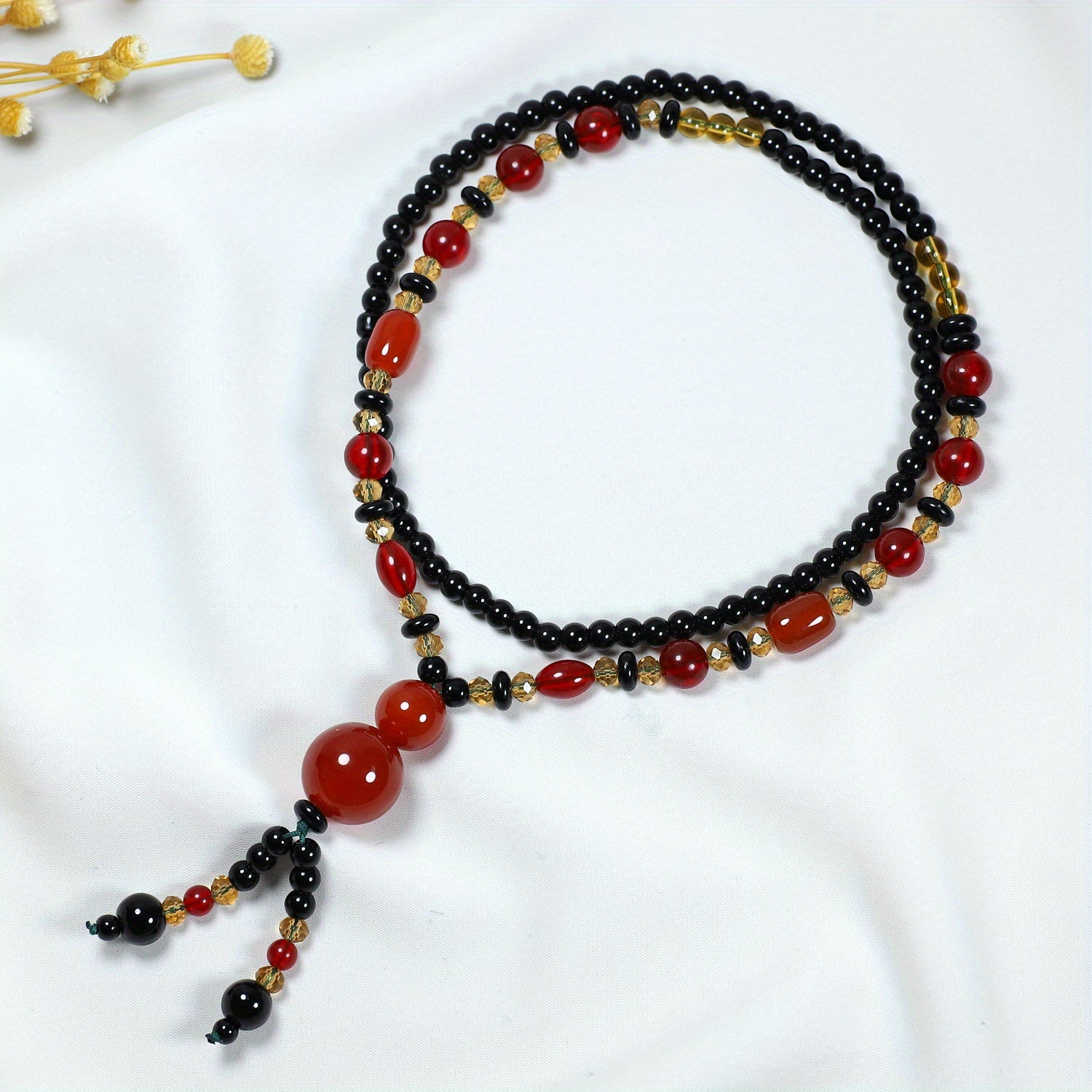
The red-and-black color scheme in bohemian jewelry carries deep symbolic resonance that transcends cultural boundaries while maintaining specific spiritual meanings:
Red: The Color of Life Force
Across cultures, red represents blood, life, passion, and connection to the physical realm. In spiritual contexts, it activates the root chakra (survival, grounding) and sacral chakra (creativity, emotion). In bohemian aesthetics, red often appears as coral, carnelian, or red agate—materials that are literally of the earth rather than synthetic dyes.
Black: The Color of Potential and Protection
Black represents the void, the unknown, and protective darkness. In many spiritual traditions, black stones are used for grounding and protection against negative energies. In bohemian design, black provides visual weight and contrast while symbolically representing the fertile darkness from which creation emerges.
Golden Accents: The Alchemical Bridge
The golden metal elements in bohemian jewelry serve as alchemical symbols—representing the sun, divine wisdom, and the transformation of base materials into something precious. Gold bridges earthly and spiritual realms, much as bohemian spirituality seeks to find the sacred in the material world.
The Spherical Form: Sacred Geometry in Wearable Form
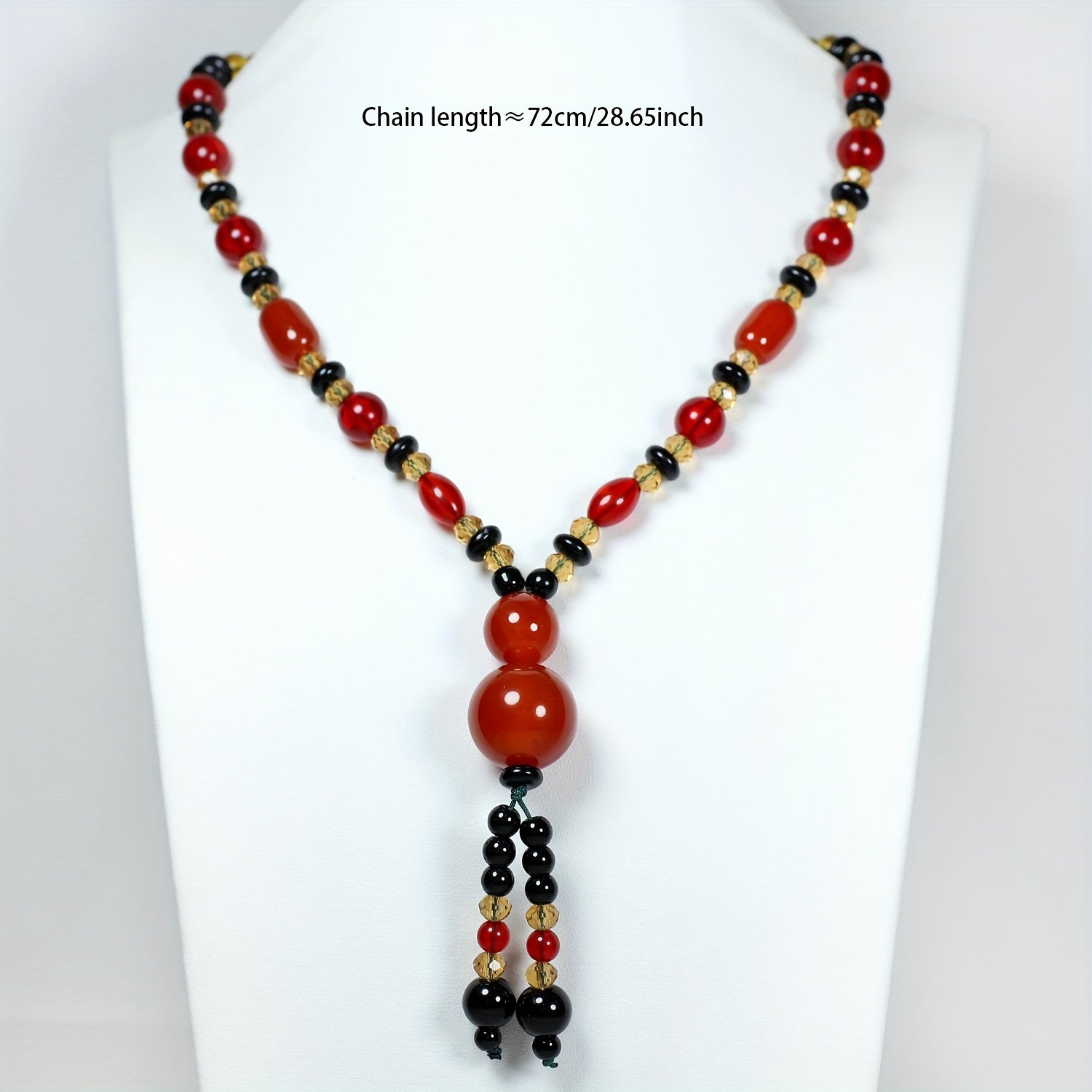
The spherical pendant central to many bohemian necklaces represents one of sacred geometry's most potent forms. The sphere is the most efficient shape in nature (requiring the least surface area for volume), appears throughout the cosmos (planets, stars, bubbles), and symbolizes:
Unity and Wholeness: A sphere has no beginning or end, representing the cyclic nature of existence and the interconnectedness of all things.
Cosmic Mirror: In many spiritual traditions, spherical objects serve as microcosms of the macrocosm—the world in miniature.
Energy Distribution: From an energetic perspective, spheres radiate energy equally in all directions, creating balanced energy fields.
When worn as jewelry, spherical pendants literally place sacred geometry at the body's center, creating what geomancers might call an "energy vortex" at the heart chakra—the junction point between upper (spiritual) and lower (physical) energy centers.
Craftsmanship as Spiritual Practice
In authentic bohemian jewelry, craftsmanship itself becomes a spiritual practice. The process of selecting stones, drilling beads, stringing patterns, and finishing pieces involves mindfulness, intention, and often ritual elements. This contrasts with mass-produced jewelry where human connection to the creative process is lost.
Contemporary artisans creating bohemian spiritual jewelry often report entering meditative states during creation, consciously infusing pieces with positive intentions, or following lunar cycles in their work (creating during waxing moons for growth-oriented pieces, waning moons for releasing pieces). This intentional craftsmanship adds what anthropologists call "biographical value"—the story of the piece's creation becomes part of its significance.
Psychological and Social Dimensions
Beyond spiritual beliefs, bohemian jewelry serves important psychological and social functions:
Identity Expression
Wearing bohemian spiritual jewelry signals membership in a cultural community that values nature, spirituality, creativity, and non-conformity. It serves as visual shorthand for a particular worldview.
Tactile Comfort
The weight and texture of natural stone beads provide tactile stimulation that can reduce anxiety—a phenomenon supported by occupational therapy research on sensory objects.
Conversation Starter
Unique bohemian pieces often prompt questions about materials and meanings, creating opportunities for spiritual and philosophical conversation in everyday social interactions.
The Market for Bohemian Spiritual Jewelry
The market for bohemian spiritual jewelry has grown significantly in recent years, driven by several factors:
Wellness Culture: As wellness expands beyond physical health to include mental and spiritual wellbeing, jewelry becomes part of self-care rituals.
Sustainable Fashion: Bohemian jewelry's emphasis on natural materials and artisanal production aligns with growing consumer interest in sustainable, ethical fashion.
Digital Detox: In reaction to screen-dominated lives, people seek tangible connections to the physical world through natural materials.
Spiritual But Not Religious: The "spiritual but not religious" demographic finds in bohemian jewelry a way to express spirituality without institutional affiliation.
Cultural Appropriation vs. Appreciation
As bohemian style draws from multiple cultural traditions (Native American, Middle Eastern, South Asian, Romani), ethical questions about cultural appropriation arise. Responsible bohemian jewelry addresses this by:
Attribution: Acknowledging cultural origins of designs and techniques.
Collaboration: Working with artisans from source cultures in equitable partnerships.
Education: Providing context about cultural symbols rather than treating them as mere decoration.
Innovation: Creating new designs inspired by rather than copied from traditional forms.
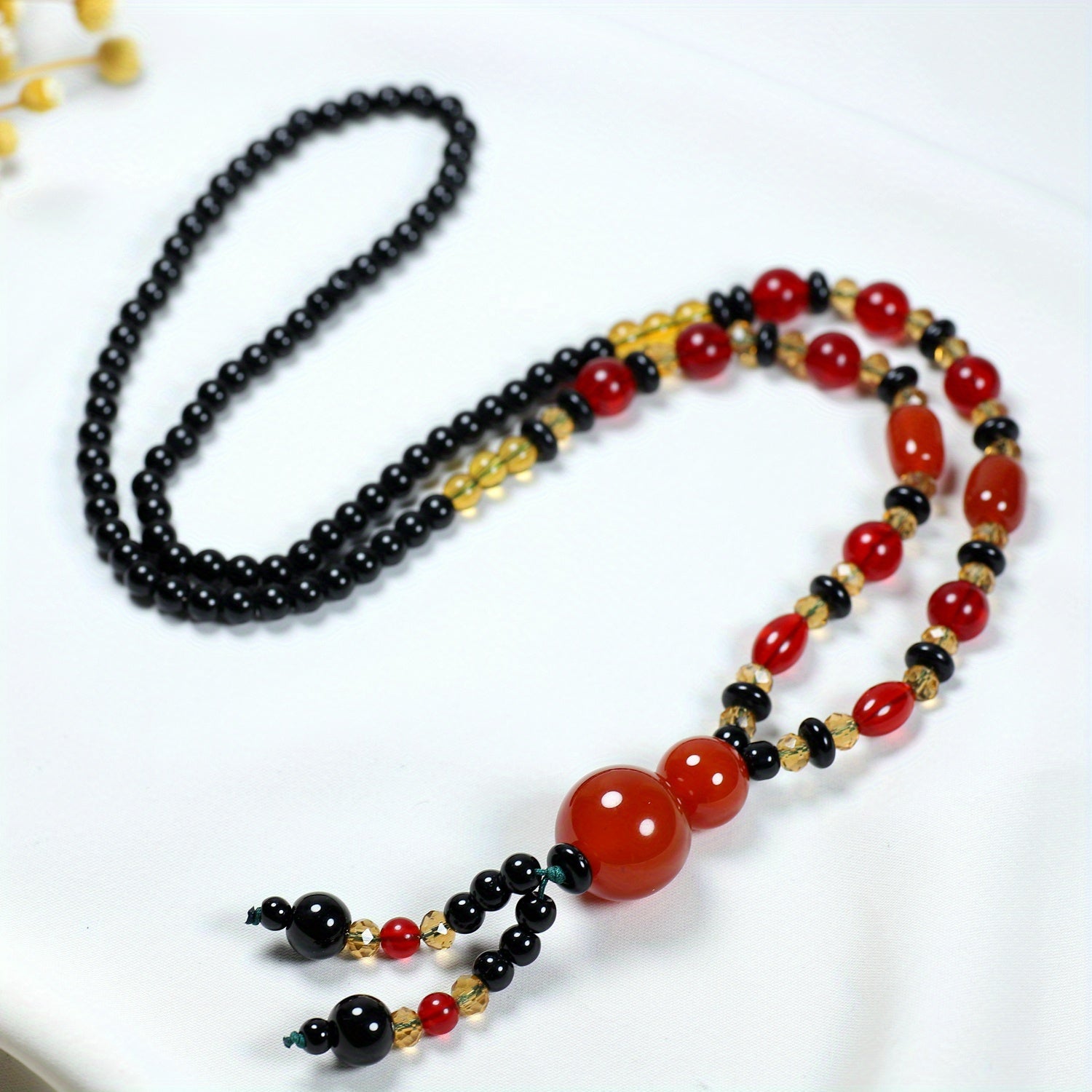
The Bohemian Agate Necklace represents what might be called "transcultural" rather than appropriative design—it uses universal elements (spheres, red/black contrast, natural materials) found in many traditions without claiming specific cultural ownership.
Scientific Perspectives on Stone Energy
While metaphysical traditions attribute specific energies to stones, scientific perspectives offer complementary explanations:
Piezoelectric Effect: Some crystalline structures (like quartz found in agate) generate electrical charges under mechanical stress—potentially creating subtle energy fields.
Color Psychology: Red stimulates physiological responses (increased heart rate, attention) that could be interpreted as "energy" or "vitality."
Placebo/Nocebo Effects: Belief in a stone's properties can produce real psychological and even physiological effects through expectation mechanisms.
Tactile Grounding: The weight and coolness of stones provide sensory input that can calm the nervous system—a documented effect in anxiety management.
Future Directions in Bohemian Spiritual Jewelry
As technology and spirituality increasingly intersect, bohemian jewelry may evolve in fascinating directions:
Smart Integration: Subtle technology (NFC chips, biometric sensors) embedded in natural stone settings could create hybrid pieces that track meditation states or respond to energy fluctuations.
Bio-Materials: Incorporation of ethically sourced organic materials (plant resins, sustainably harvested woods) alongside traditional stones.
Custom Energetic Profiling: Jewelry customized based on individual energy readings or specific spiritual goals.
Virtual-Physical Hybrids: Digital twins of physical jewelry in virtual reality spaces, allowing energetic connection even when not physically wearing pieces.
Environmental and Ethical Considerations
The growing popularity of natural stone jewelry raises important environmental questions:
Mining Impacts: Responsible sourcing requires attention to mining practices, land reclamation, and community impacts.
Water Usage: Stone cutting and polishing can be water-intensive processes requiring responsible water management.
Artisanal Livelihoods: Supporting small-scale miners and artisans rather than industrial extraction.
Circular Design: Creating jewelry that can be disassembled and reconfigured extends product life and reduces waste.
Conscious consumers increasingly seek transparency about material origins, making ethical sourcing not just morally right but commercially necessary.
Conclusion: Jewelry as Spiritual Companion
The Bohemian Agate Necklace with Red & Black Beads represents more than an accessory—it embodies a contemporary spiritual philosophy that finds the sacred in the material, values craftsmanship over mass production, and uses earth's gifts as tools for personal transformation. In wearing such pieces, modern individuals participate in an ancient human practice: adorning the body with meaningful materials that connect them to larger cosmic stories.
As we navigate an increasingly complex world, bohemian spiritual jewelry offers something precious: tangible reminders of earth's beauty, symbols of inner balance, and wearable expressions of values that prioritize connection over consumption, authenticity over conformity, and spiritual depth over superficial appearance.
Whether approached as fashion statement, spiritual tool, cultural expression, or simply beautiful object, bohemian jewelry invites us to consider how what we wear reflects who we are and who we aspire to become—not just aesthetically, but spiritually, ethically, and philosophically. In this sense, each piece becomes not just an accessory, but a companion on the journey toward more conscious, connected, and authentic living.
Article References & Further Reading: This analysis draws upon cultural history of bohemianism, material culture studies, gemological research, spiritual practice literature, and market analysis of the wellness industry. Recommended resources include "Bohemians: The Glamorous Outcasts" by Elizabeth Wilson and "The Material Culture of Religion" edited by David Morgan.
Ethical Note: This article advocates for responsible sourcing of natural materials and respectful engagement with cultural traditions that inspire bohemian design.
