




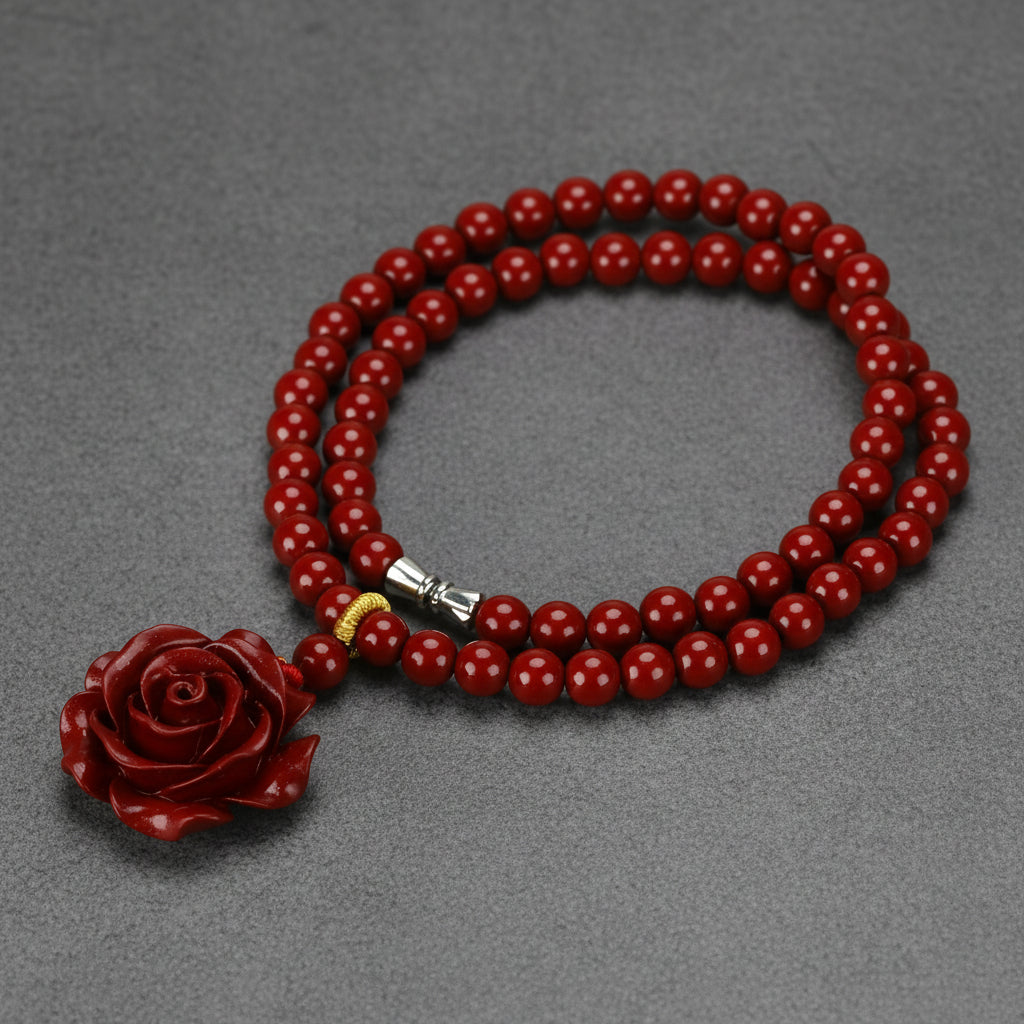
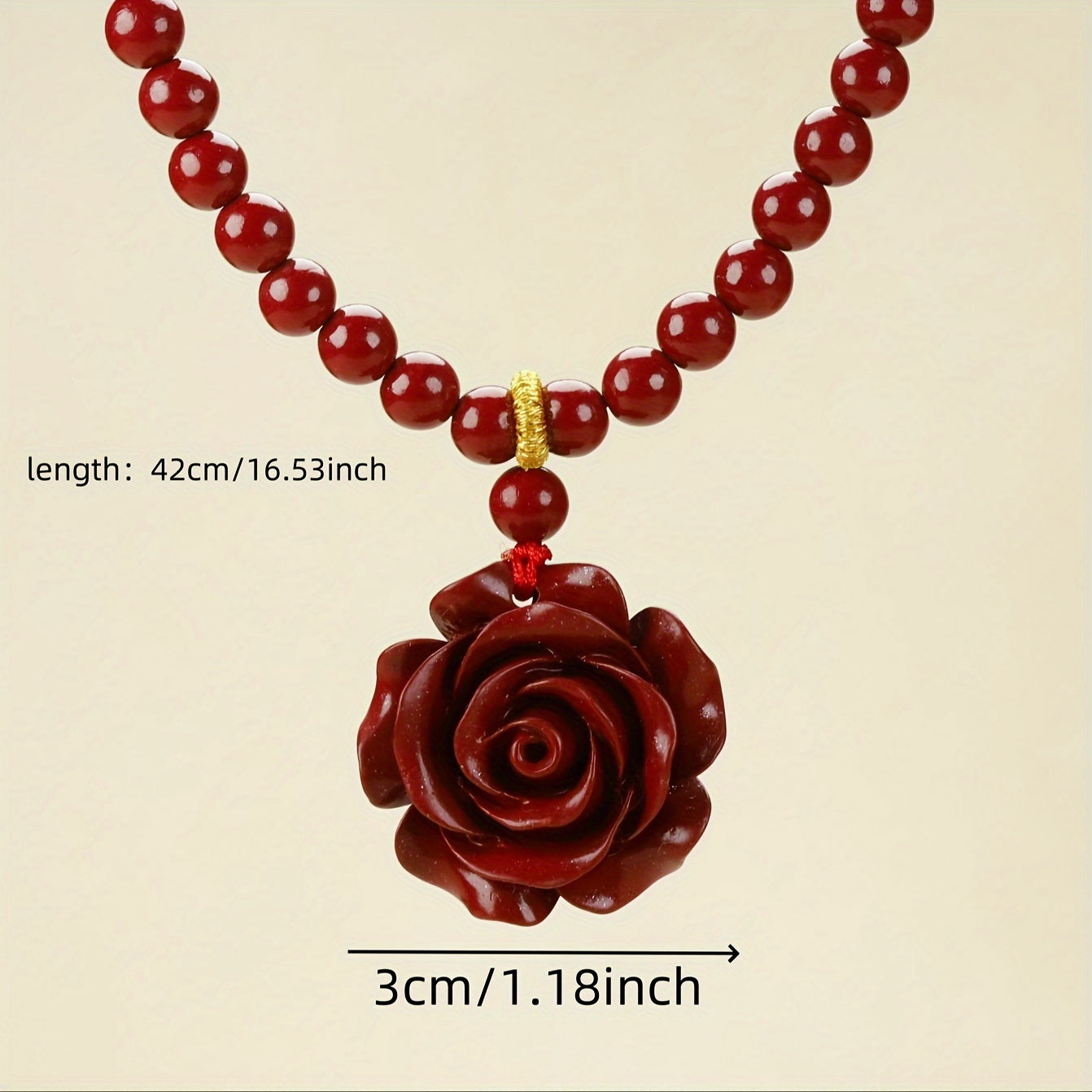
In the vibrant crimson depths of cinnabar lies a story that spans millennia—a tale of alchemical quests, imperial power, healing traditions, and spiritual transformation. This exploration traces the remarkable journey of cinnabar from its origins in ancient Chinese medicine and alchemy to its contemporary incarnation as spiritual jewelry, exemplified by pieces like the Cinnabar Rose Pendant Necklace. We examine how this once-sacred mineral has been reimagined for modern spiritual seekers, blending historical significance with contemporary aesthetic and energetic needs.
Historical Foundations: Cinnabar in Ancient Chinese Culture
The story of cinnabar begins in the mist-shrouded mountains of China, where this striking red mineral (mercury sulfide, HgS) was discovered and revered as early as the Neolithic period (around 5000 BCE). Known as "zhusha" (朱砂) in Chinese, meaning "vermilion sand," cinnabar's brilliant red color immediately associated it with blood, life force, and—by extension—immortality in the Chinese cosmological imagination.
During the Han Dynasty, cinnabar became central to Taoist alchemical practices. Alchemists believed that through careful processing and ritual, they could transform cinnabar into an elixir of immortality. The famous Taoist text "Baopuzi" (抱朴子), written by Ge Hong in 320 CE, contains detailed recipes for cinnabar-based elixirs. This alchemical tradition represented one of humanity's earliest systematic attempts to transform matter for spiritual purposes—a literal embodiment of the belief that physical substances could bridge earthly and divine realms.
Imperial Symbolism and Material Culture
Beyond alchemy, cinnabar permeated Chinese material culture at the highest levels. Emperors used cinnabar-red ink for official seals and documents, believing the color would impart authority and protection. The Forbidden City's walls were painted with cinnabar-based pigments, creating the iconic red that still defines Chinese imperial architecture today. In lacquerware, cinnabar was mixed with resin to create exquisite boxes, screens, and furniture for the nobility.
This imperial association created a cultural memory linking cinnabar with power, protection, and elite status—associations that subtly persist in contemporary cinnabar jewelry. When modern wearers choose a cinnabar piece, they unconsciously tap into this historical narrative of authority and protection, even if they don't know the specific historical details.
The Rose: A Cross-Cultural Symbol Reimagined
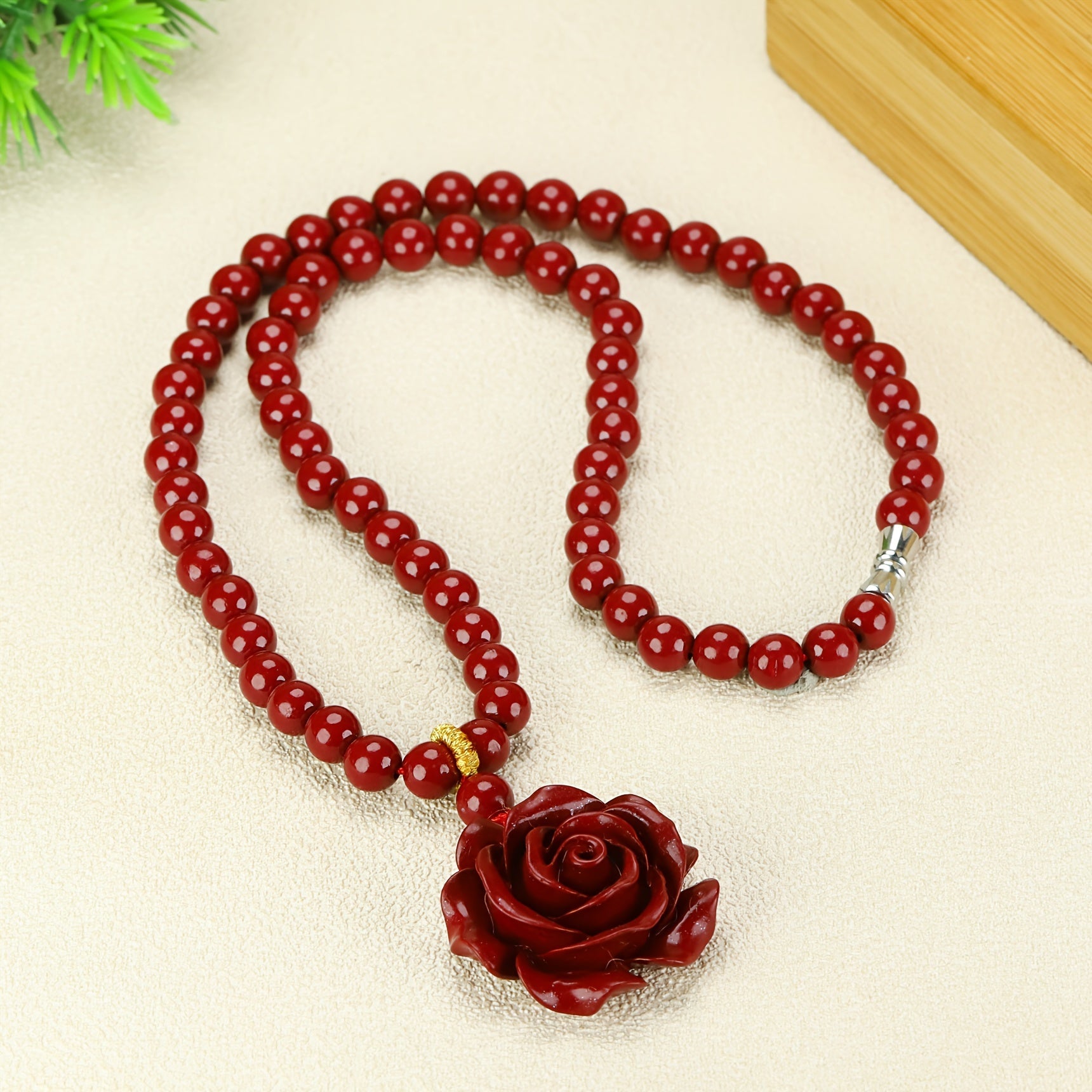
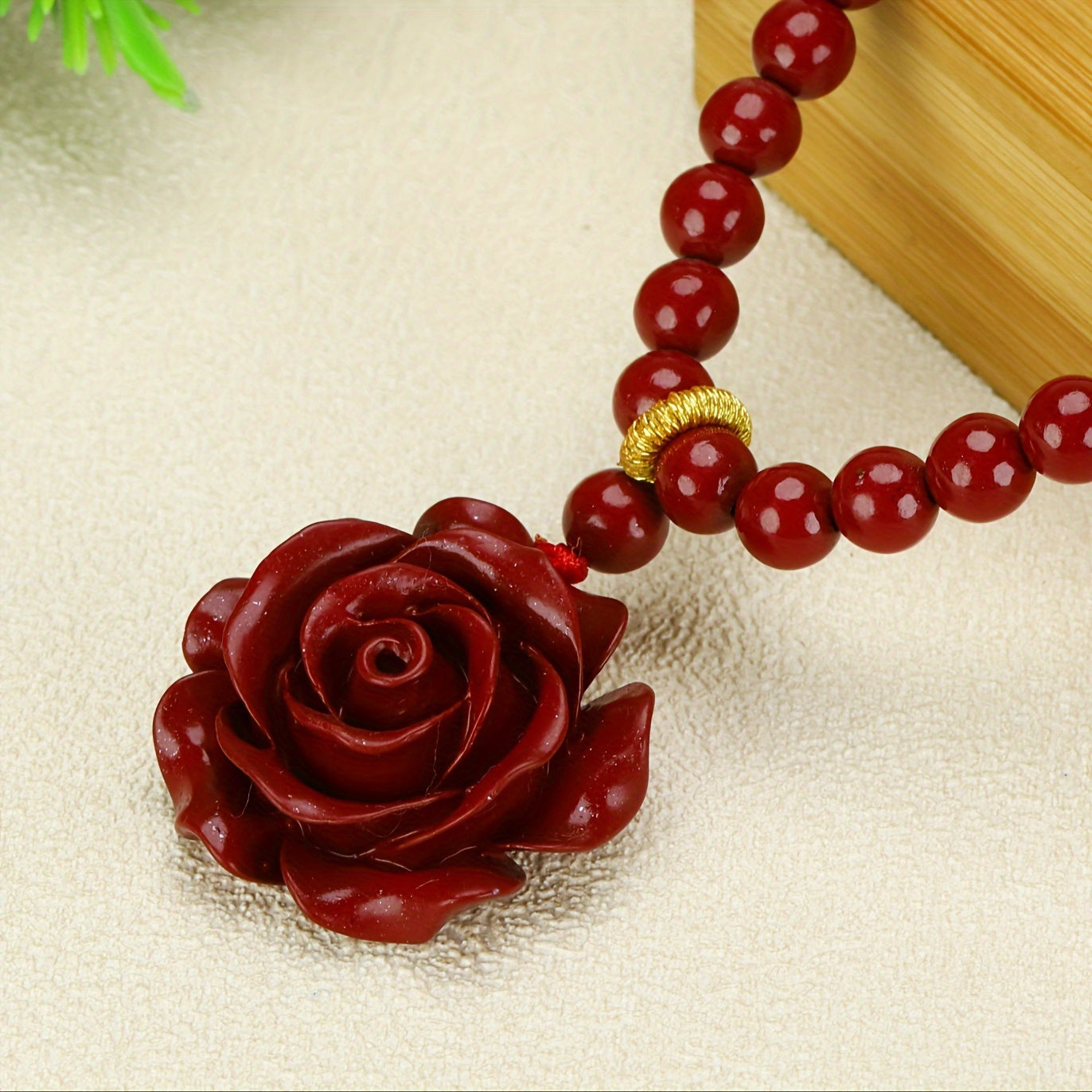
While cinnabar carries distinctly Chinese historical weight, the rose shape of contemporary pendants introduces a fascinating cross-cultural dialogue. The rose as a symbolic form has its own complex history in Western traditions—representing everything from divine love in Christian iconography to secrecy in Rosicrucian traditions ("sub rosa"—under the rose).
In modern cinnabar jewelry, the rose shape serves multiple functions:
Aesthetic Bridging
The familiar rose form makes traditional cinnabar accessible to global audiences unfamiliar with Chinese mineral symbolism. It creates an immediate emotional connection through universally recognized beauty.
Symbolic Layering
The rose adds layers of meaning—romantic love, spiritual unfolding, beauty balanced with thorns (protection)—that complement cinnabar's existing associations with protection and vitality.
Feminine Reinterpretation
Historically, cinnabar was associated with masculine imperial power. The rose shape feminizes this energy, making it appealing to contemporary women seeking both empowerment and connection to feminine spiritual traditions.
Material Science Meets Metaphysics
From a scientific perspective, cinnabar presents fascinating properties that may help explain its enduring mystical reputation:
Color Psychology: The deep red of cinnabar falls within the spectrum that human vision perceives as most attention-grabbing. Red increases heart rate and stimulates the adrenal system—physiological responses that could be interpreted as "energy" or "vitality" in spiritual contexts.
Crystalline Structure: Cinnabar crystallizes in a trigonal system, forming beautiful hexagonal crystals when found in nature. In crystal healing traditions, different crystal structures are believed to emit different energy patterns, though this remains scientifically unverified.
Historical Associations: The placebo effect and cultural conditioning are powerful psychological forces. Knowing a stone has been revered for millennia for protective properties may genuinely make wearers feel more protected through psychological mechanisms.
Contemporary Spiritual Applications
In modern spiritual practice, cinnabar jewelry serves multiple functions that bridge its historical significance with contemporary needs:
Chakra Balancing
Most contemporary spiritual practitioners associate red stones with the root chakra (Muladhara), located at the base of the spine. This energy center governs survival instincts, grounding, and physical identity. Cinnabar pendants worn at chest level are believed to influence both the heart and root chakras, creating a unique energetic blend of grounding and heart-opening.
Intentional Jewelry Practice
Modern wearers often use cinnabar jewelry as part of intentional dressing—choosing pieces based on the energetic support needed for specific days or situations. A cinnabar rose might be selected for dates (romantic intention), important meetings (confidence and protection), or creative work (passion stimulation).
Cultural Connection
For Chinese diaspora communities and others interested in Chinese culture, wearing cinnabar represents a tangible connection to ancestral traditions. This represents what anthropologists call "material heritage"—using objects to maintain cultural identity across geographical and generational distances.
Craftsmanship and Sustainability
The creation of cinnabar jewelry like the rose pendant involves careful consideration of material sourcing and artisanal skill:
Ethical Mining: Responsible cinnabar sourcing requires attention to mining conditions and environmental impact. Major cinnabar deposits exist in China, Spain, Italy, and the United States, with varying regulatory standards.
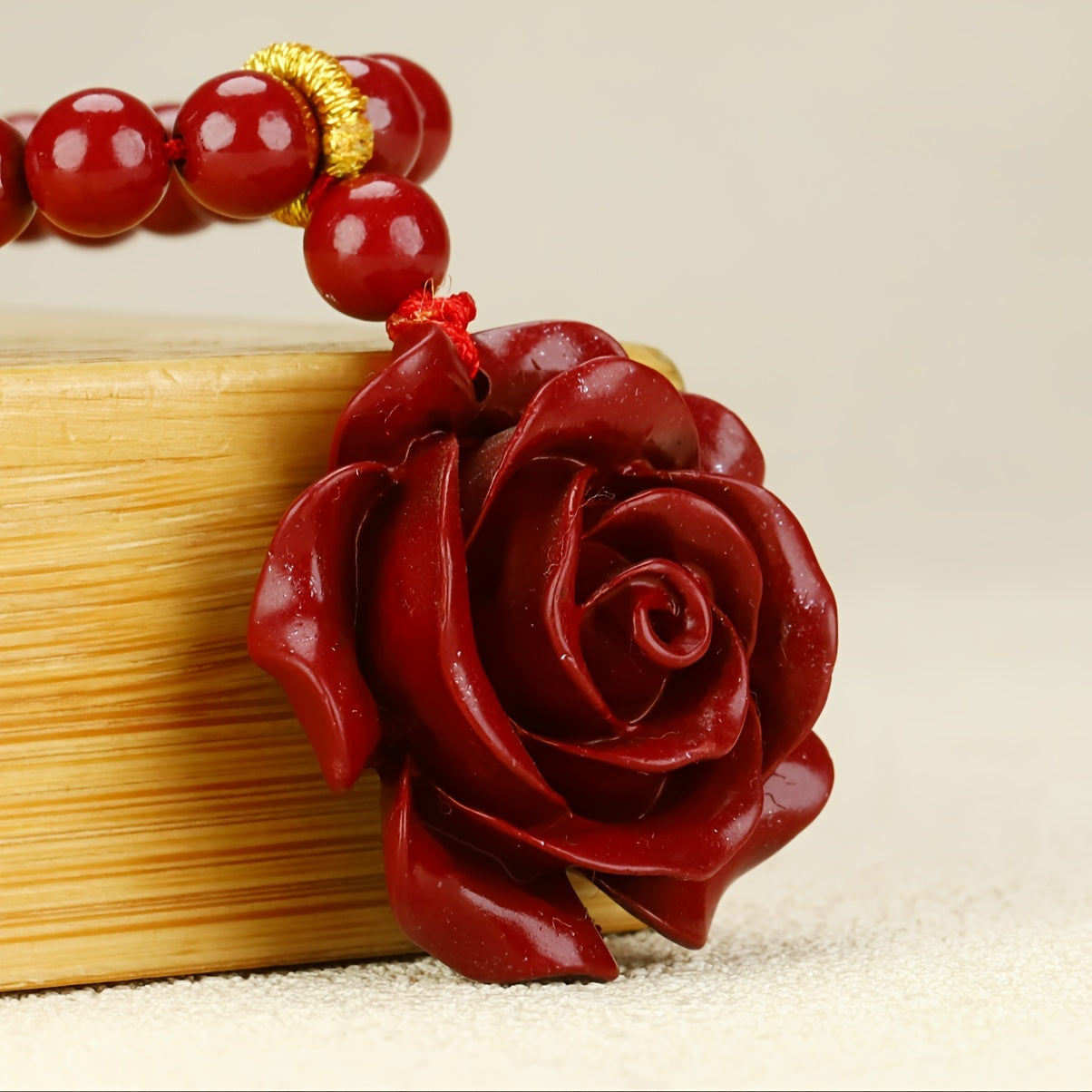
Carving Techniques: Traditional cinnabar carving is a specialized skill. The material is relatively soft (2-2.5 on the Mohs scale) but can be brittle. Master carvers develop techniques to create detailed shapes like roses without fracturing the stone.
Modern Adaptations: Some contemporary "cinnabar" jewelry actually uses reconstituted cinnabar powder in resin—a more affordable and consistent material that raises questions about authenticity but allows for more intricate designs.
Market Perspectives and Cultural Commodification
The popularity of cinnabar jewelry exists within broader trends in the spiritual wellness market, valued at over $4.5 trillion globally. Several factors drive this market:
Experiential Consumption: Modern consumers increasingly seek products that offer experiences and meaning beyond mere utility. Spiritual jewelry satisfies this desire through layered symbolism and perceived energetic benefits.
Cultural Hybridity: Globalization has created appetite for culturally hybrid products that blend traditions. Cinnabar (Chinese) + rose shape (Western) represents this hybridity perfectly.
Digital Spirituality: Social media platforms like Instagram and Pinterest have created visual cultures where aesthetically pleasing spiritual objects gain traction through shares and likes, creating demand for photogenic spiritual jewelry.
Psychological Dimensions of Wearing Spiritual Jewelry
Beyond metaphysical beliefs, psychological factors contribute to the appeal of cinnabar jewelry:
Anchoring Effect: Physical objects can serve as psychological anchors, reminding wearers of intentions, values, or desired states. A cinnabar rose pendant might anchor feelings of love, protection, or confidence throughout the day.
Self-Signaling: The jewelry we choose signals identity to ourselves. Wearing spiritual jewelry reinforces a spiritual self-concept, which can influence behavior and emotional states.
Placebo and Nocebo: If someone believes their cinnabar pendant offers protection, they may experience reduced anxiety (placebo effect). Conversely, if they lose the pendant, they might feel vulnerable (nocebo effect).
Future Directions and Evolution
As spiritual practices continue evolving, cinnabar jewelry will likely adapt in several directions:
Technological Integration: Future pieces might incorporate subtle technology—embedded NFC chips linking to meditation apps, or materials engineered for enhanced energetic properties based on emerging scientific understanding of mineral interactions with human energy fields.
Sustainable Innovations: As ethical consumption grows, we may see increased use of recycled cinnabar or lab-created alternatives that mimic cinnabar's properties without mining impacts.
Personalization: Advances in 3D scanning and printing could allow for cinnabar jewelry customized to individual energy readings or specific intentional configurations.
Cultural Preservation and Innovation
The transformation of cinnabar from alchemical substance to fashion accessory raises important questions about cultural preservation:
Authenticity vs. Adaptation: How much should traditional materials and symbols be preserved in original forms versus adapted for contemporary markets? The cinnabar rose pendant represents a middle path—maintaining the material's significance while adapting its form.
Educational Opportunities: Jewelry becomes a conversation starter about cultural heritage. Wearers of cinnabar pieces often research their history, creating informal education about Chinese alchemy and mineral traditions.
Economic Support: When ethically produced, cinnabar jewelry can support traditional carving arts and mining communities, providing economic incentives to preserve these skills and knowledge.
Conclusion: The Living Mineral Tradition
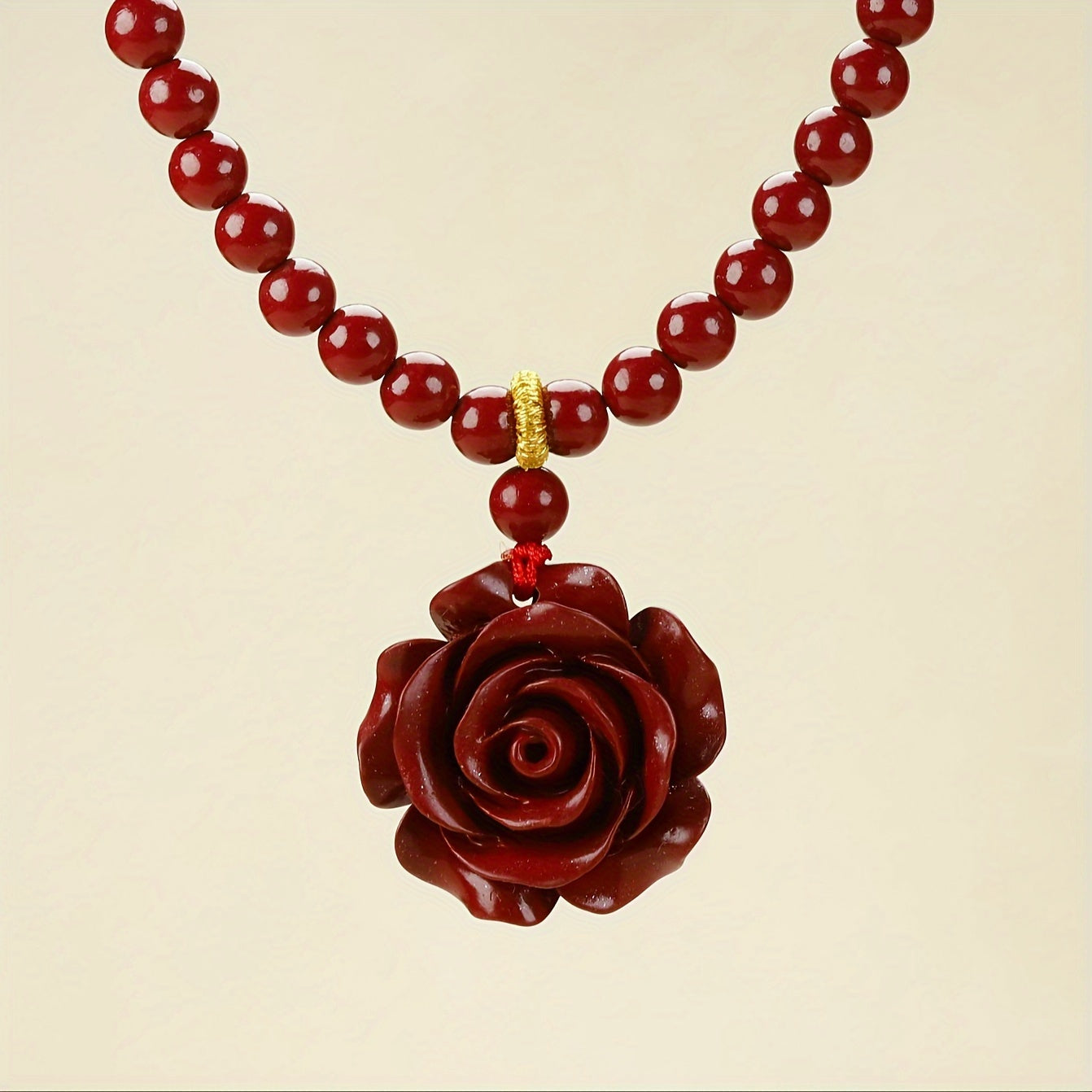
The Cinnabar Rose Pendant Necklace represents more than aesthetic beauty—it embodies a living mineral tradition that has successfully navigated centuries of cultural transformation. From Taoist immortality elixirs to imperial seals to contemporary spiritual fashion, cinnabar has demonstrated remarkable adaptability while maintaining its core associations with protection, vitality, and transformation.
This journey mirrors broader patterns in human engagement with the mineral world—our enduring desire to find meaning in matter, to bridge physical and spiritual realms through material objects, and to carry fragments of the earth's history as personal adornment and empowerment.
As we face an increasingly digital and disembodied world, the tangible weight of a cinnabar pendant around one's neck represents a grounding counterbalance—a connection to earthly minerals, ancient traditions, and the persistent human quest for meaning that transcends time and culture. Whether approached as cultural heritage, spiritual tool, psychological aid, or simply beautiful object, the cinnabar rose pendant invites us to consider how materials carry memory, how traditions transform, and how even in our hyper-modern age, we still seek connection through the alchemy of earth's precious stones.
Article References & Further Reading: This analysis draws upon historical Chinese alchemical texts, mineralogical studies, cultural anthropology research, and contemporary spiritual practice literature. Recommended resources include "Chinese Alchemy: Preliminary Studies" by Nathan Sivin and "The Materiality of Magic" edited by Dietrich Boschung and Jan N. Bremmer.
Safety Note: Natural cinnabar contains mercury and should not be ingested or used in powder form. Finished jewelry pieces are safe for external wear.
