





The Threshold Object — Using a Ring to Mark Transitions
Practice & Daily Perception through intentional ritual-making.
 Your hand is on the doorknob. Behind you, the house is quiet, the remains of breakfast on the counter. Ahead, the commute, the office, the day's first interaction. In this suspended moment—hand on cold metal, body in the doorway—you feel it. The familiar, heavy warmth of the gold ring on your right hand. Without thinking, your thumb rotates it once, a full circle. The action takes two seconds. But in those two seconds, something shifts. You're not just leaving the house; you're crossing a threshold. And you've just marked it. Where in daily life is perception most easily lost? In these transitions. The spaces between. And that's exactly where to place a practice.
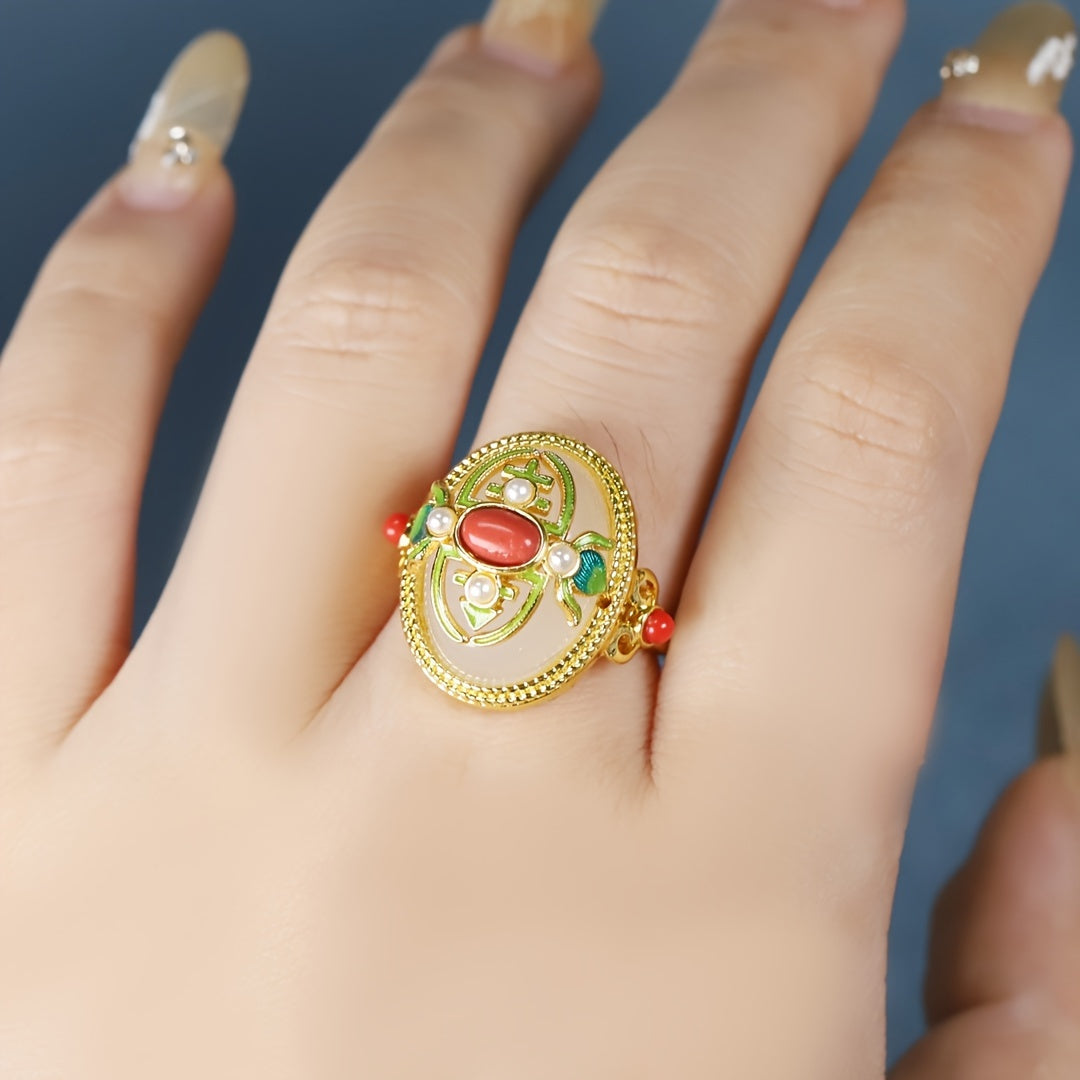
The moment of transition: between home and world.
We think of ritual as something grand: meditation cushions, altars, scheduled hours. But the most powerful rituals are the tiny ones that hijack existing moments. The threshold practice uses something you do dozens of times a day—transition from one space, role, or mental state to another—and turns it into a micro-opportunity for awareness. You don't need more time. You need to re-purpose the gaps you already have.
This ring, with its distinct weight and divided stone, is an ideal "threshold object." Its job isn't to look pretty (though it does). Its job is to be felt at specific moments. To become a tactile anchor that turns passive transitions into conscious ones.
The Practice: Three Breaths at the Threshold
Here's a simple, verifiable practice you can begin today. It requires no extra time. It simply uses the ring to mark three specific daily thresholds.
Threshold 1: The Physical Doorway (Home/World)
Every time you pass through your front door—leaving or returning—let your hand find the ring. Don't just touch it. Perform a specific action: rotate it once clockwise. As you do, take one conscious breath. That's it. The action says: "I am now crossing from private self to public self (or vice versa)." The breath grounds the transition in your body, not just your schedule.
Threshold 2: The Digital Portal (Work/Not Work)
When you open your laptop in the morning, or close it at night, do the same. Hand on ring. One rotation. One breath. This marks the shift from personal time to productive time, or the release from it. It creates a buffer against the bleed of work into life.
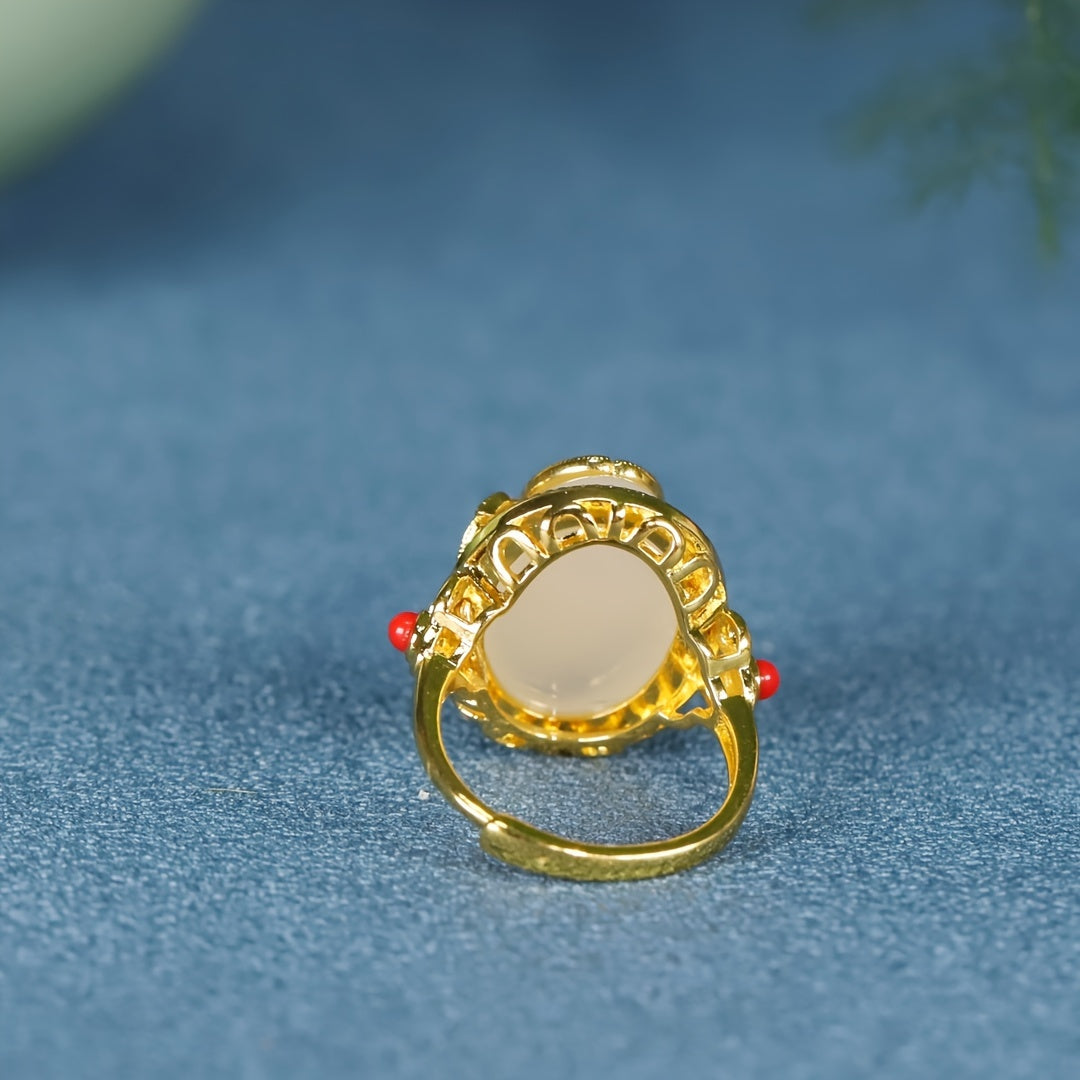
Marking the transition into and out of digital work space.
Threshold 3: The Internal Shift (Emotion/Response)
This one is subtler. When you feel a strong emotional reaction rising—frustration, anxiety, excitement—before you speak or act, let your thumb find the cool stone of the ring. Press gently. Feel the solidity. Take one breath. This creates a tiny gap between feeling and reaction. The ring becomes a "pause button."
The practice isn't about the ring having magic powers. It's about using a consistent physical cue to interrupt autopilot. The brain loves patterns. By consistently pairing a specific action (touching/rotating the ring) with a specific intention (marking a transition), you train your nervous system to recognize these moments as significant. Over time, the ring itself becomes a trigger for a more present state of mind.
Why This Works: The Neuroscience of Anchoring
From a cognitive science perspective, this practice works through associative learning and interoception (awareness of internal bodily states). The ring is a neutral stimulus. By consistently pairing it with a moment of conscious breathing and intentional transition, you create a neural link. Eventually, just feeling the ring during a transition can trigger a slight calming of the nervous system and a shift in attention.
More importantly, it leverages our brain's tendency to categorize. Life feels chaotic because we experience it as one continuous stream. By deliberately marking thresholds, we create mental "chapters." This reduces the cognitive load of constant context-switching. The ring becomes a bookmark. "Chapter 1: Home. Chapter 2: Commute. Chapter 3: Work." This simple act of structuring time can significantly reduce background anxiety.
The divided stone adds another layer. At the home/work threshold, you might glance at it and think: "Now I'm in 'green' (peridot) clear-thinking mode." At the return threshold: "Now I'm returning to 'red' (garnet) feeling/being mode." The visual cue reinforces the mental shift.
Beyond the Three: Finding Your Personal Thresholds
After a week of practicing with the three core thresholds, you'll start to notice others. The moment after you send a difficult email. The pause before you enter a social gathering. The instant you hang up the phone with a certain relative. These are all unmarked thresholds where we often lose ourselves.
You can expand the practice. The rule is simple: If you can feel a shift coming, you can mark it with the ring.
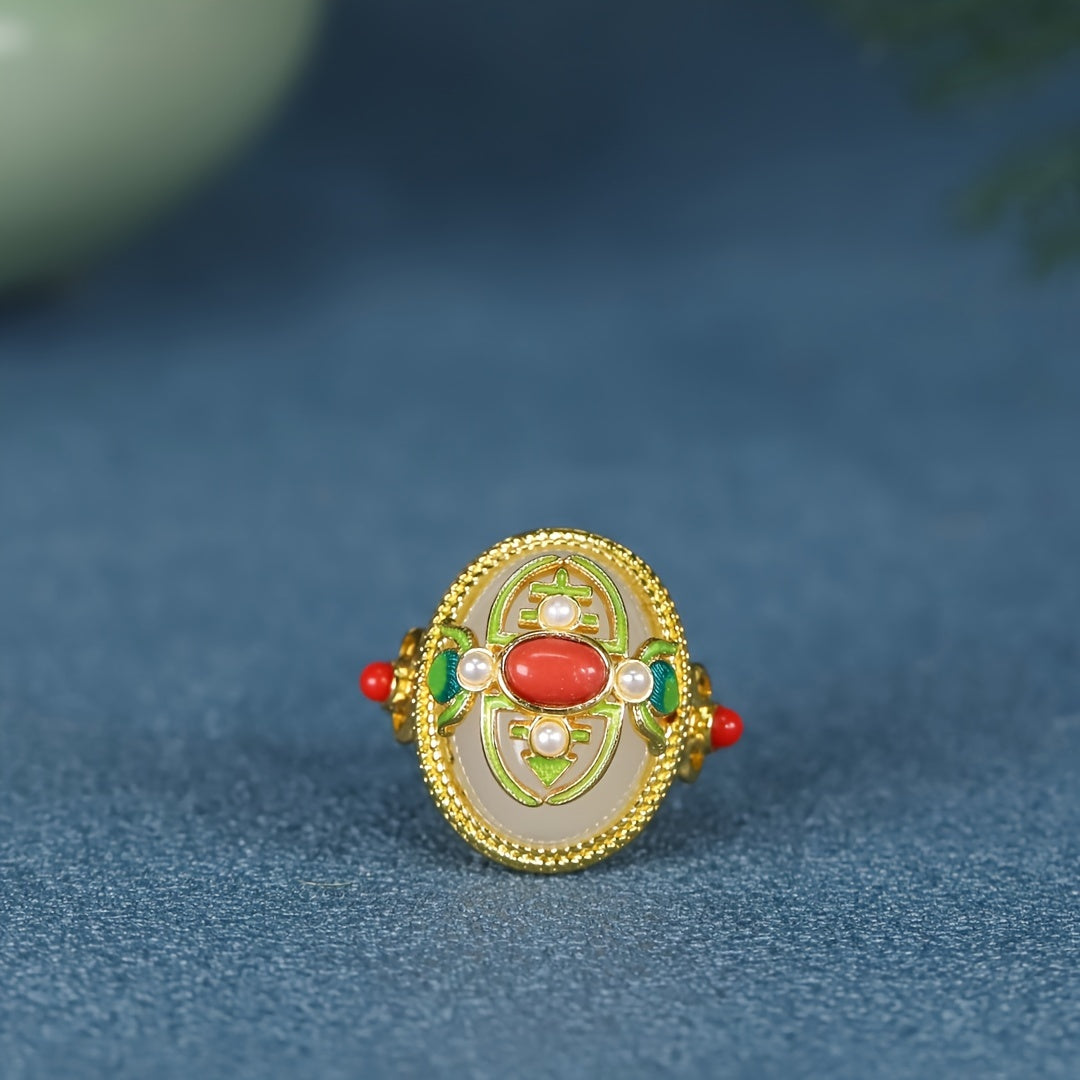
A moment of hesitation transformed into a conscious threshold.
Some people develop a personal sign language with their ring. One rotation for entering a space. Two rotations for leaving. Pressing the garnet side when needing courage. Pressing the peridot side when needing clarity. The meanings are personal, not prescribed. The power is in the consistency of the gesture, not the symbolism of the stone.
This turns daily life into a subtle, ongoing dialogue with your own awareness. You're not adding mindfulness practice to your day; you're weaving it into the fabric of your existing movements. The ring is the thread.
Common Challenges & Gentle Corrections
Challenge 1: "I forget."
Perfect. Forgetting is part of the practice. The goal isn't perfection; it's noticing when you forget. When you realize you blew through the doorway without the ritual, just smile. The noticing itself is awareness. You can even do the ring-touch right then, in the middle of the street, as a way of saying, "I'm back."
Challenge 2: "It feels silly/mechanical."
It will, at first. All rituals do. The meaning seeps in through repetition, not through initial feeling. Stick with the mechanical action for two weeks. Let the meaning catch up. Or don't worry about meaning at all. Let it just be a curious experiment: "What happens if I do this tiny, consistent thing?"
Challenge 3: "I'm not 'spiritual' enough for this."
This practice has nothing to do with spirituality in the traditional sense. It's behavioral psychology. It's about using conditioning to create pockets of choice in an automatic life. Think of it as a user interface hack for your brain.
The Unseen Benefit: Reclaiming Agency
The deepest benefit of the threshold practice isn't calm or clarity, though those may come. It's the subtle, cumulative reclaiming of agency. Most of our transitions happen to us. The alarm rings, we get up. The meeting pops up, we join. The phone buzzes, we answer. We're passengers.
By deliberately marking a transition, however small, you switch seats. You become the one who authorizes the shift. "I am now choosing to move from rest to work." "I am now choosing to leave work behind." Even if the choice itself isn't free (you have to go to work), the recognition of the choice is.
This tiny shift in perspective—from passive experiencer to active authorizer—can ripple out. It can make you more likely to question other automatic transitions in your life. Why do I always check my phone here? Why do I always feel anxious at this time of day? The ring becomes a tool for inquiry, not just a trigger for breath.
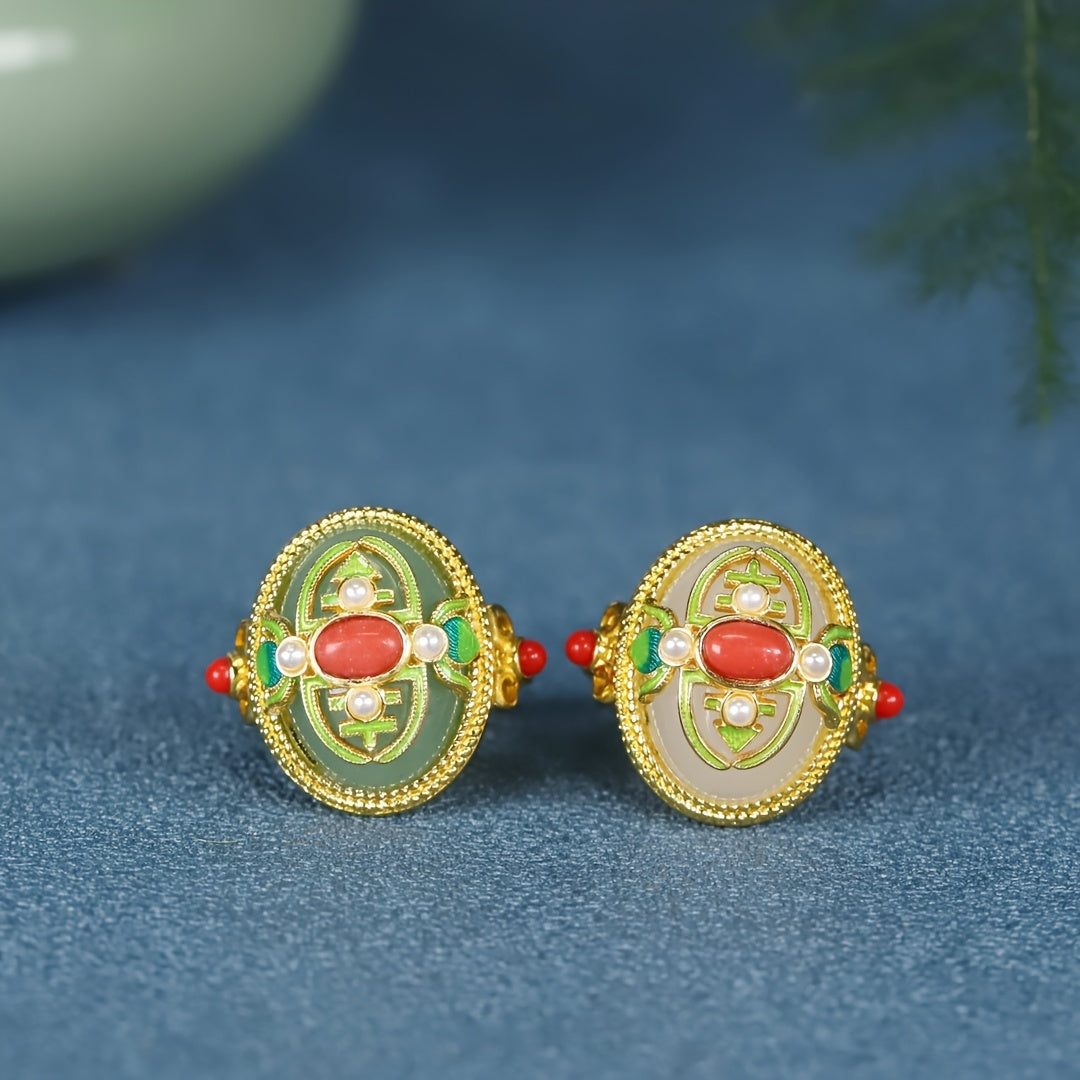
An object that marks not just time, but intention.
Over months, the ring becomes layered with these moments. It's no longer just a piece of jewelry. It's a physical record of thousands of conscious breaths, thousands of tiny choices to be present at the doorway. Its weight feels different. It carries the weight of your attention.
So start tomorrow. Pick one threshold. The front door. Put on the ring. And when your hand touches the knob, let your other hand find the gold. Rotate. Breathe. Cross. That's all. Do it again when you return. Do it for a week. Notice what, if anything, changes. Not in the world. In the quality of the crossing.
The threshold was always there. The practice just gives you a way to feel it under your fingers, and in doing so, feel yourself moving through your own life, one conscious step at a time.
Begin the Practice
The Vintage Gold Oval Ring can serve as a tangible threshold object for this practice.
View the Jewelry Piece →