





The Three-Second Pause
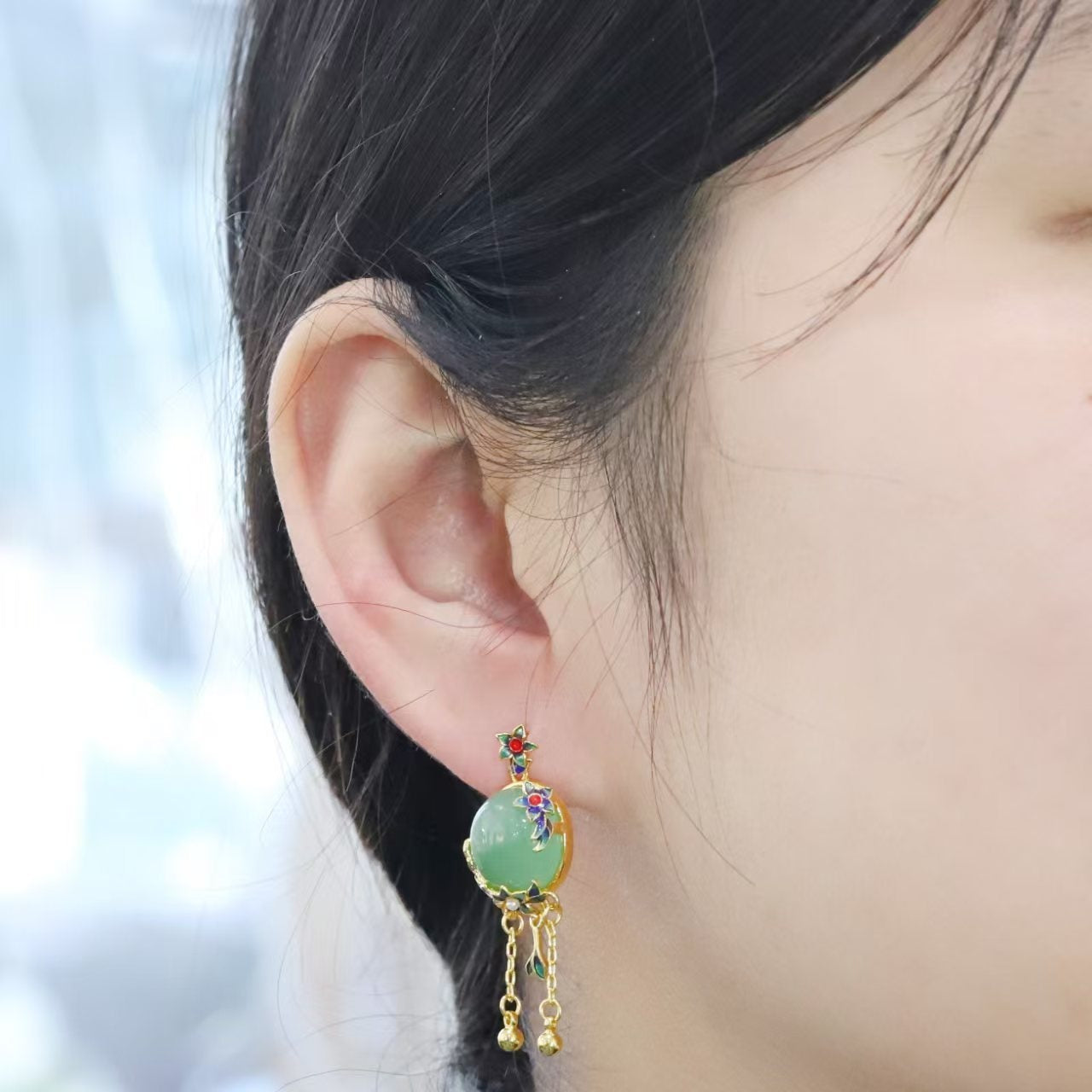
Put them on in the morning. Feel the hook settle behind your ear, the cool metal against your skin. Then the weight arrives—a gentle pull, about 3.9 centimeters of downward attention. For three seconds, don’t think about your to-do list. Don’t plan your day. Just notice.
Notice the cool spot on your neck where the stone will eventually rest. Notice the slight swing when you turn your head to check yourself in the mirror. Notice how your earlobe feels—not strained, but acknowledged.
That’s the practice. Not meditation, not manifestation—just noticing. A tiny reclamation of your own sensory reality before the day claims you. Three seconds is nothing in the grand scheme of a busy life, but it’s enough to create a crack in the automaticity. Enough to remember you have a body, not just a mind with a to-do list attached.
Some days you’ll forget. You’ll put them on while already thinking about your first meeting, and the three-second pause won’t happen. That’s okay. The practice isn’t about perfection; it’s about intention. The earrings will still be there, waiting for you to notice them later.
The Breath Anchor
You’re in a difficult conversation. Your heart rate is up. Your thoughts are racing ahead, preparing defenses, crafting responses. You feel yourself leaving your body, becoming pure reaction.
This is when your hand might go to your ear, not to fiddle nervously, but to find the stone. Your fingers brush against it. It’s cool. Smooth. Solid. You take a breath, and as you exhale, you focus on that point of contact—the cool stone against your skin, the weight pulling gently downward.
One breath. That’s all. In through the nose, out through the mouth, attention on the tactile sensation at your neck. The conversation continues around you, but for that one breath, you’re grounded. You remember you’re not just a collection of reactions; you’re a physical presence in space.
This isn’t about escaping the conversation. It’s about returning to yourself within it. The green stone becomes a breath anchor—a physical point of focus that brings you back to your center when you’re pulled into emotional turbulence.
You can do this anywhere, anytime. On a crowded train. In a tense meeting. Waiting in line. The earrings are always there, a portable anchor point for your attention.
The Decision Pause
You’re about to make a decision—reply to that difficult email, have that hard conversation, commit to that new project. Your hand hovers over the keyboard, over the phone, over the signature line.
Pause. Touch the earring. Feel its weight. Notice its temperature. Is it still cool from the morning air, or has it warmed to your body heat? This tactile check-in creates a space between stimulus and response. It’s not a long space—maybe two seconds—but it’s enough to ask yourself one quiet question: “Am I responding from fear or from clarity?”
The green color might register in your peripheral vision. Green—the color of growth, of balance, of the heart center. It’s not telling you what to decide. It’s just reminding you that decisions can be made from a centered place, not just a reactive one.
This practice works for small decisions too. What to eat for lunch. Whether to say yes to that social invitation. The earrings become a physical reminder that even small choices are opportunities to practice presence, to choose consciously rather than automatically.
Over time, this creates a subtle shift. You start to notice when you’re about to make decisions from autopilot. The earrings become a gentle alarm bell for your own consciousness.
The Sensory Reset
You’ve been staring at a screen for hours. Your eyes feel dry. Your shoulders are tight. Your brain feels like static—overloaded with information but understanding none of it deeply.
Take off the earrings. Hold one in each palm. Close your eyes. Feel the weight. The left one might feel slightly different from the right—that’s normal; your body isn’t perfectly symmetrical, and the earrings will have adjusted to you.
Roll them gently in your palms. Notice the texture contrast—the smooth stone, the slightly textured enamel, the cool metal of the hook. Don’t think about what they mean. Just feel what they feel like.
This is a sensory reset. When your mind is overwhelmed with abstract information (emails, messages, news), returning to simple tactile sensation can be profoundly grounding. It reminds your nervous system that there’s a physical world beyond the digital one.
After a minute or two, put them back on. Notice how they feel different now that you’ve paid direct attention to them. They’re not just accessories anymore; they’re conscious companions.
This practice takes less than five minutes, but it can shift your entire state of being. It’s a way of hitting the reset button on your nervous system using objects you’re already wearing.
The Evening Reflection
The day is done. You’re taking them off before bed. Instead of just dropping them into a jewelry box, hold them for a moment. Look at them in the soft evening light.
Notice how they’ve changed through the day. Are they warmer now? Has the light caught them differently in this room than it did this morning? Is there a tiny fleck of lint caught in the chain that you didn’t notice before?
As you hold them, let your mind wander over the day. Not analyzing, not judging—just noticing what comes up. The difficult conversation at 11am. The moment of unexpected kindness at 3pm. The frustration, the joy, the ordinary moments in between.
The earrings were there for all of it. They witnessed your day without commentary. Holding them now is like holding a silent witness to your own life.
This isn’t a deep meditation practice. It’s just a moment of acknowledgment. A way of bookending your day with the same object, creating a sense of continuity amidst the fragmentation of modern life.
When you place them in their box or on their tray, it’s not just putting away jewelry. It’s a gentle closing ritual. A way of saying, “The day is complete. I am complete, with all my imperfections. Tomorrow, we begin again.”
Integrating Practice into the Fabric of Daily Life
The beauty of these practices is their simplicity. They don’t require special equipment, designated time, or particular expertise. They weave mindfulness into the existing fabric of your day, using an object you’re already wearing.
This is the opposite of the “30-day meditation challenge” approach. There’s no success or failure, no streak to maintain. Some days you’ll remember to practice; some days you won’t. The earrings don’t care. They’re not keeping score.
Over weeks and months, something subtle happens. The practices become less deliberate and more automatic. You find yourself touching the stone when stressed without consciously deciding to. You notice the weight during difficult moments without being told to. The object teaches your body its own language of calm.
This is the true purpose of practice jewelry: not to be a symbol of spirituality you display to others, but to be a tool for presence you use for yourself. A gentle, persistent reminder that you can return to center anytime, anywhere, with something as simple as a breath and a touch.
The green stone earrings are particularly suited for this because of their quiet nature. They don’t demand attention; they simply offer it. They’re not trying to change you; they’re just there, steady and present, inviting you to join them in the present moment.
A Practice Worn, Not Performed
The simplest rituals are the ones that become part of you. Not something you do, but something you are. These earrings offer a gentle path back to presence—through touch, through weight, through the quiet companionship of an object that asks nothing but your occasional attention.
 Begin Your Practice →
