





Finding the Gap — Using an Object to Notice Your Own Rhythm
Practice & Daily Perception through a single, worn anchor.
It starts with the friction. You're rushing to type a reply, your mind already three sentences ahead. Your fingers fly, and one of them—the one with the ring—catches lightly on the edge of the laptop. Just a tiny tug, a slight cool pressure. For a half-second, you're pulled out of the mental sprint. You feel the ring. You see it. The blue clouds, the stone. That's it. That's the practice. Not meditation, not deep breathing in that moment, but the noticing of the interruption itself.
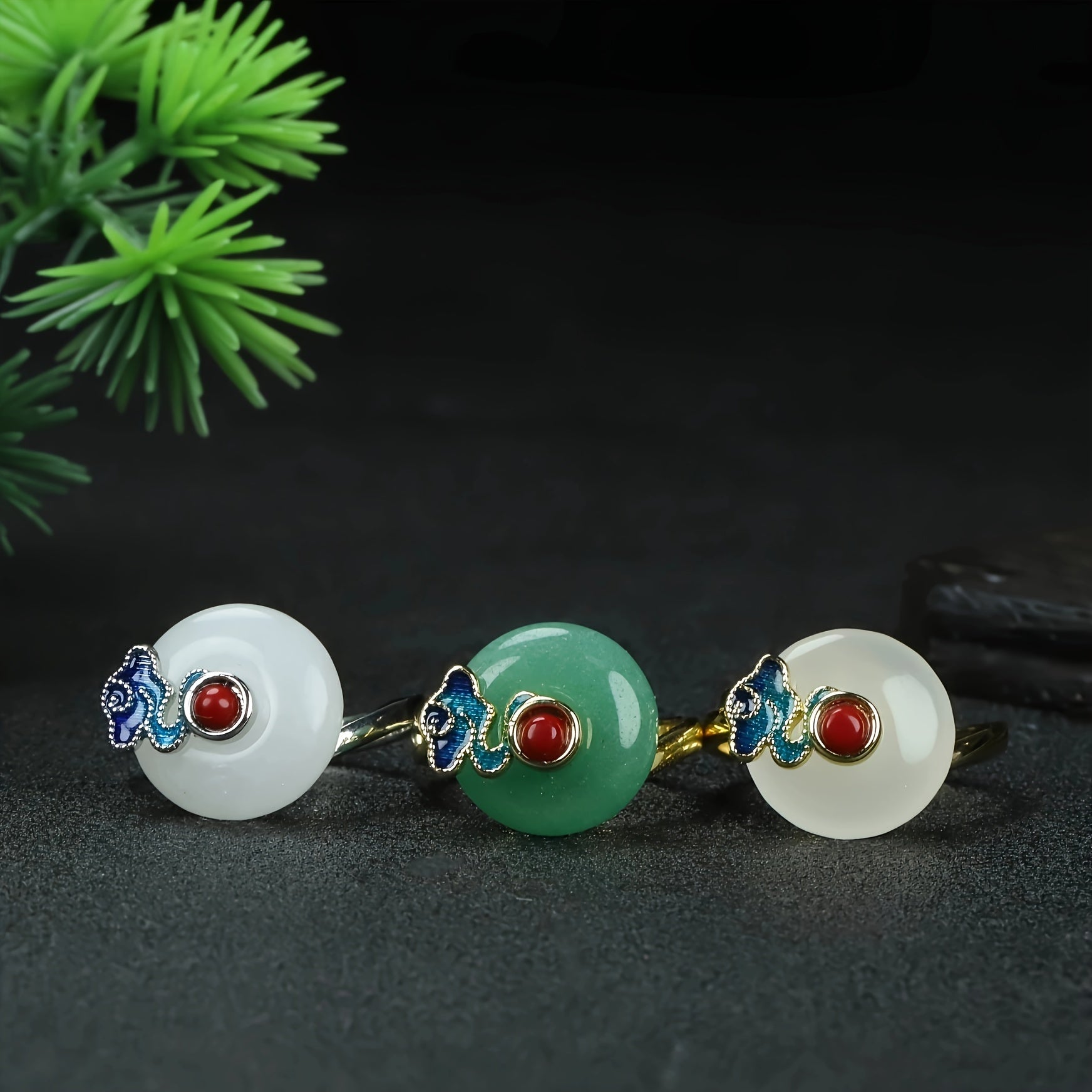
An object can create a visual or tactile pause in the flow of doing.
We think of practice as something we add. Morning meditation, journaling, breathwork—all valuable, all requiring us to carve out time. But what if the most accessible practice isn't about addition, but interception? What if it's about learning to recognize the tiny fractures that already exist in your day—the moments between tasks, the breath before speaking, the slight hesitation at a doorway—and using them as footholds?
This is where an object worn daily becomes something more than ornament. It becomes a sensor. Not for spiritual energy, but for your own rhythm. Its weight, its texture, its temperature against your skin—these become data points. But not data to analyze. Data to feel. The practice is in allowing that feeling to briefly interrupt the automatic stream of doing.
The Rush Pattern & The Anchor
Most of us have rush patterns we don't even recognize. It's not just moving quickly. It's a quality of attention: skimming emails while thinking about lunch, planning a response while someone is still talking, brushing teeth while mentally reviewing the day. The body is here, but the mind is already three steps ahead, or behind, or elsewhere entirely.
In these states, we're not really perceiving. We're reacting. The world becomes a series of tasks to complete, obstacles to navigate. The sensory richness of life—the feel of air on skin, the play of light, the texture of things—fades to background noise.
An object like this ring can serve as an anchor. But not an anchor that holds you still (that would be another task). An anchor that gives you something to bump against. When your hand moves in that rushed, automatic way and you feel the cool stone, or see the flash of blue enamel, it creates a micro-pause. It's like a gentle tap on the shoulder from your own nervous system: "Hey. You're here. In a body. Holding something."
The beauty of using a worn object is that it's passive. You don't have to remember to do it. You just have to wear it. The interruptions happen on their own. Your job is simply to notice when they do.
The Three-Second Check-In: A Practical Framework
Here's a simple, verifiable practice you can try for a week. It requires no extra time. It uses the ring (or any object you wear consistently) as a tool.
Step 1: The Trigger
The trigger is the object itself, but specifically its unexpected appearance in your awareness. Not when you look at it deliberately, but when it announces itself: when it catches the light oddly, when it feels unusually cool or warm, when it gently knocks against something, when you glance at your hand and really see it for the first time in hours.
Step 2: The Pause (The Gap)
When triggered, stop whatever you're doing with your hands for exactly three seconds. That's it. Don't change your breathing. Don't close your eyes. Don't try to feel peaceful. Just let your hands be still. If you're typing, stop. If you're holding a phone, lower it. If you're gesturing, let your hands come to rest. For three seconds.
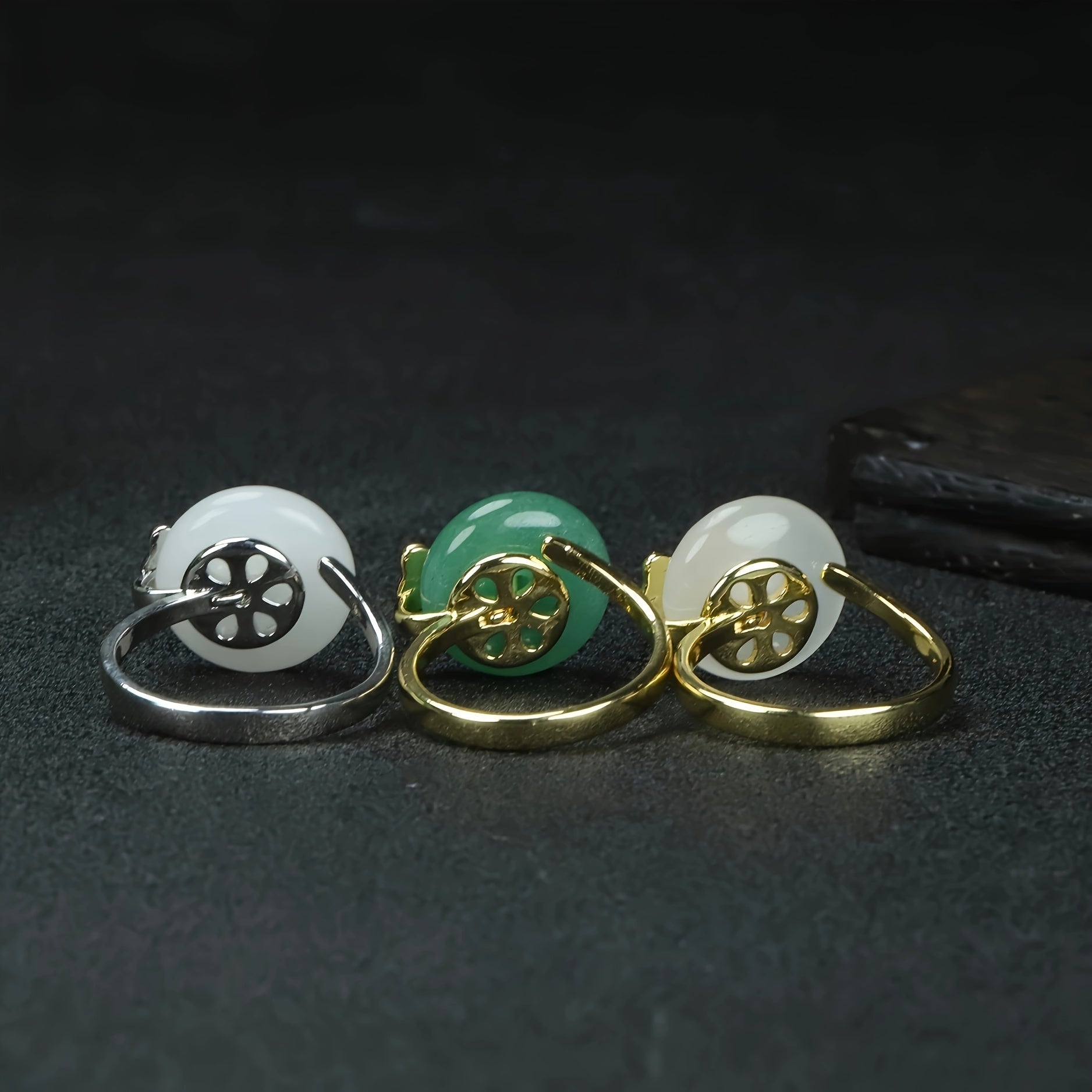
The pause: hands still, attention resting on the object.
Step 3: The Sensation Focus
During those three seconds, direct your attention to one physical sensation from the object. Just one. The weight on your finger. The coolness of the stone. The smooth curve of the silver band. The slight ridge of the cloisonné wire. Pick one. Feel it as precisely as you can. Is the coolness sharp or dull? Is the weight centered or leaning? Is the texture completely smooth, or can you feel microscopic variations?
Step 4: The Release
After three seconds, release. Go back to what you were doing. That's the entire practice.
The magic isn't in the three seconds of stillness. It's in what that stillness reveals: the gap. The gap between stimulus and reaction. The gap between one thought and the next. The gap between being lost in doing and briefly inhabiting your senses. The object didn't create the gap; it helped you find one that was already there.
Building Your Library of Pauses
Over days and weeks, these three-second check-ins accumulate. You begin to build what I call a "library of pauses." You'll notice patterns. Maybe you're most likely to "wake up" to the ring when you're stressed—your hands move more jerkily, increasing the chance of feeling it. Maybe it happens most often in transitions: between meetings, before leaving the house, after sending a difficult email.
This data is invaluable, not for judgment ("I'm always rushed!"), but for recognition. You start to map the contours of your own inner rhythm. You learn where the friction points are in your day. You discover the moments when you naturally slip out of presence.
The ring becomes a gentle cartographer of your attention. Its occasional coolness against your skin is like a pin on a map: "You are here. And 'here' feels like this."
When Symbolism Becomes Secondary
An interesting shift happens when you use a symbolic object in this way. The meaning of the symbol—the auspicious clouds, the cultural heritage—often recedes into the background. What comes forward is its function. The clouds are no longer primarily a symbol of harmony; they become a specific, recognizable visual pattern that catches your eye. The stone isn't first a symbol of grounding; it's a particular cool, smooth sensation.
This isn't a loss. It's a deepening. The symbol becomes yours through use, not through understanding. Its meaning is no longer something you think about; it's something you experience in flashes. The "harmony" of the clouds might one day feel, in a three-second pause, like the visual equivalent of a deep breath. The "grounding" of the stone might simply be the relief of feeling something solid and real when your thoughts are scattered.
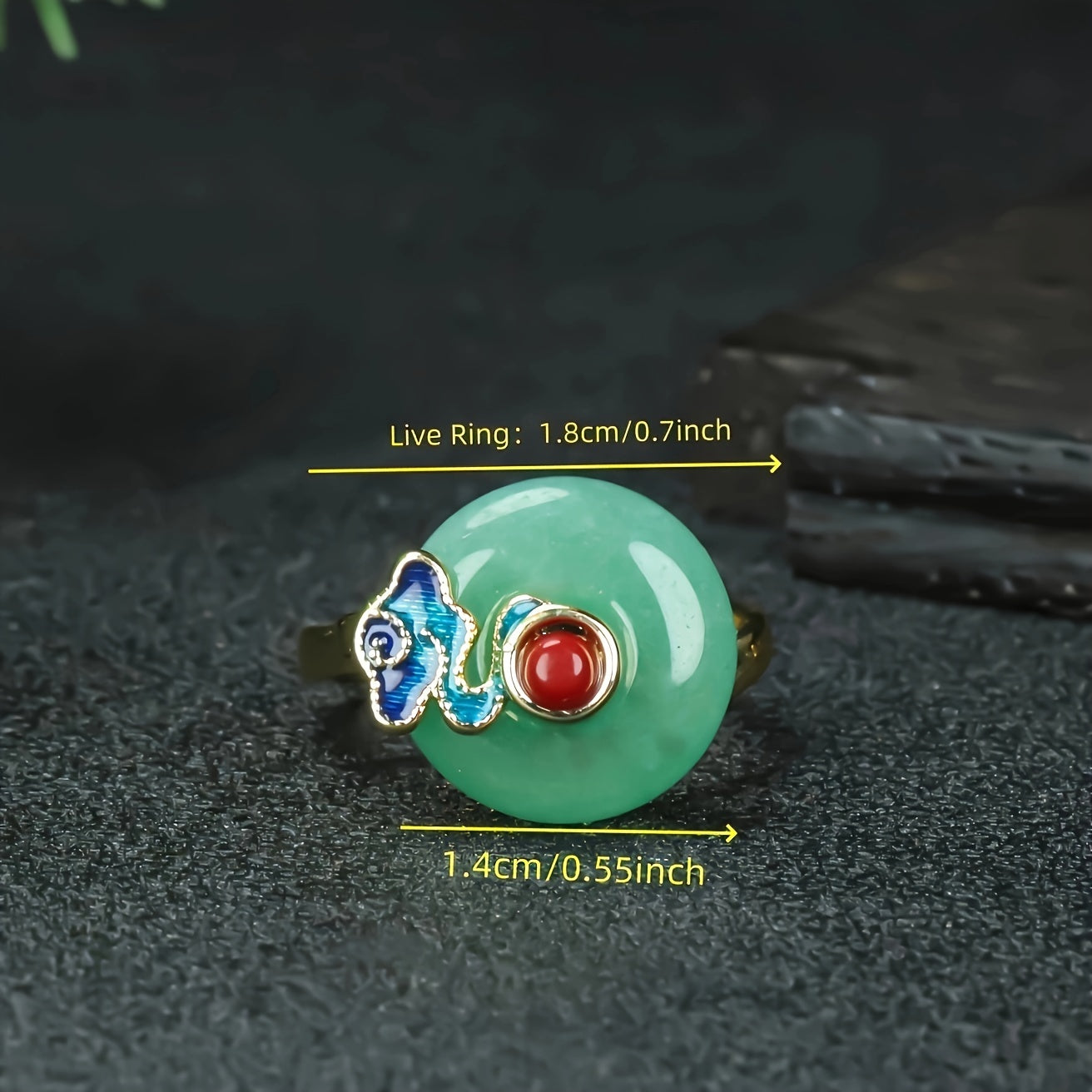
The object as a functional anchor, its symbolism felt rather than analyzed.
The practice, then, liberates the symbol from the burden of having to mean something specific all the time. It allows it to just be—a cool, textured, weighty presence that occasionally interrupts your stream of thought with a gentle, sensory "ping."
Beyond the Ring: Scaling the Practice
Once you become adept at using the ring as an anchor, you can expand the practice. The principle is the same: use reliable sensory inputs as triggers for micro-pauses.
Environmental Anchors: The feel of a specific doorknob you touch every day. The sound of a particular bird outside your window. The quality of light at your desk at 4 PM. Choose one reliable sensory event and decide that it, too, will be a three-second pause trigger.
Body Anchors: The feeling of your feet touching the floor when you stand up. The sensation of water on your hands when washing. The breath just after you sigh. These are natural pauses waiting to be noticed.
The ring is simply a training wheel. It's consistent, tangible, and always with you. It teaches you the pattern: sensation → pause → attention → release. Once that pattern is engraved in your nervous system, you can apply it to anything.
You're not building a fortress of mindfulness against the chaos of life. You're learning to spot the doorways that already exist in the walls of your daily routine, and stepping through them for just three seconds at a time.
The Quiet Accumulation
People ask what the "outcome" of such a practice might be. There is no promised outcome. But there are common observations.
Some people find that their relationship with time softens. The day feels less like a linear race and more like a series of moments, some rushed, some still. The pauses don't slow you down; they change your perception of speed.
Others notice a subtle increase in sensory pleasure. Food tastes slightly more vivid. Colors seem richer. The warmth of sunlight on skin becomes a distinct event, not just background information. This isn't because the world changes; it's because you're giving your senses brief, regular opportunities to report in without being shouted down by thought.
Perhaps the most valuable result is the development of a gentle, observational relationship with your own mind. You start to notice the early signs of tension—the clenched jaw, the shallow breath, the frantic thinking—not as failures to be fixed, but as weather patterns to be acknowledged. The ring's touch becomes a gentle weather report: "Tension building." And sometimes, just that report is enough to create a shift.
The practice, in the end, is incredibly modest. It makes no grand claims. It requires no special knowledge or belief. It simply suggests that within the relentless flow of your day, there are countless tiny eddies and still points. And that a simple object, worn without agenda, can help you find them.
You might start tomorrow. Put on the ring. Go about your day. Wait for it to call to you—through a flash of blue, a sudden coolness, an unexpected weight. When it does, give it three seconds. Feel what's there. Then let it go.
That's all. That's the gap. And in that gap, everything else—meaning, presence, peace—either happens or it doesn't. But the noticing? That, you can practice.
Begin the Practice
The Vintage Cloisonné Ring can serve as a simple, beautiful anchor for this practice of noticing your own rhythm.
View the Jewelry Piece →