





Finding the Pause: A Simple Practice of Noticing Your Own Breath
Where in daily life is perception most easily lost?
Between the alarm and the first sip of coffee. In the hallway between classes, when everyone's movement becomes a blur of color and sound. Right before you hit "send" on a message you'll regret. In the moment someone asks "How are you?" and you give the automatic answer instead of the true one. Perception—the actual noticing of what's happening, both inside and out—slips away not in dramatic collapses, but in these tiny cracks between activities. We fall out of ourselves incrementally, breath by held breath.
This isn't about meditation. Not the sitting-on-a-cushion-for-twenty-minutes kind. That's wonderful if you can do it. But what about the rest of the day? The seventeen hours when you're not on the cushion? Where do you find yourself then? Probably lost in thought, on autopilot, reacting rather than responding. Perception has left the building, and you didn't even notice it go.
Here's a different approach. What if instead of trying to be mindful all the time, you just tried to remember you have a body, say, three times today? Not for long. Just for the duration of one breath. And what if you didn't have to remember on your own? What if something on your body could remind you?
Let's walk through a day with this practice:
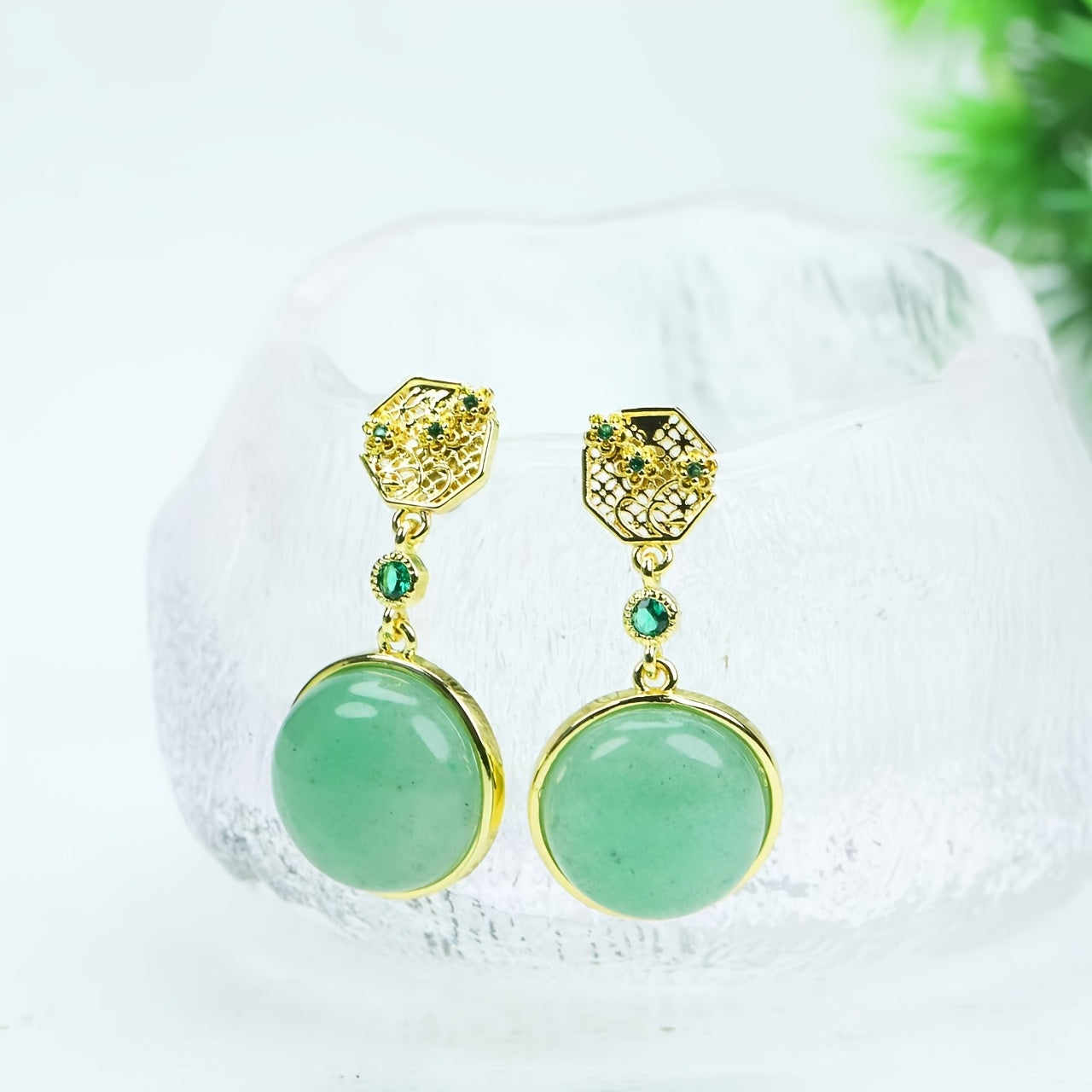
7:42 AM — You're rushing to get ready. Your mind is already at school, already worrying about the test, already replaying yesterday's awkward conversation. You reach for your earrings on the dresser. As you put the first one in, you feel the cool post against your warm earlobe. The contrast is sharp. Instead of moving immediately to the second earring, you pause. You feel that cool spot. You take one breath—in through the nose, out through the mouth—and just notice the air moving. The whole thing takes three seconds. Then you put in the second earring and continue getting ready. Nothing has changed, except you've marked the beginning of the day with a moment of actual presence rather than anticipatory anxiety.
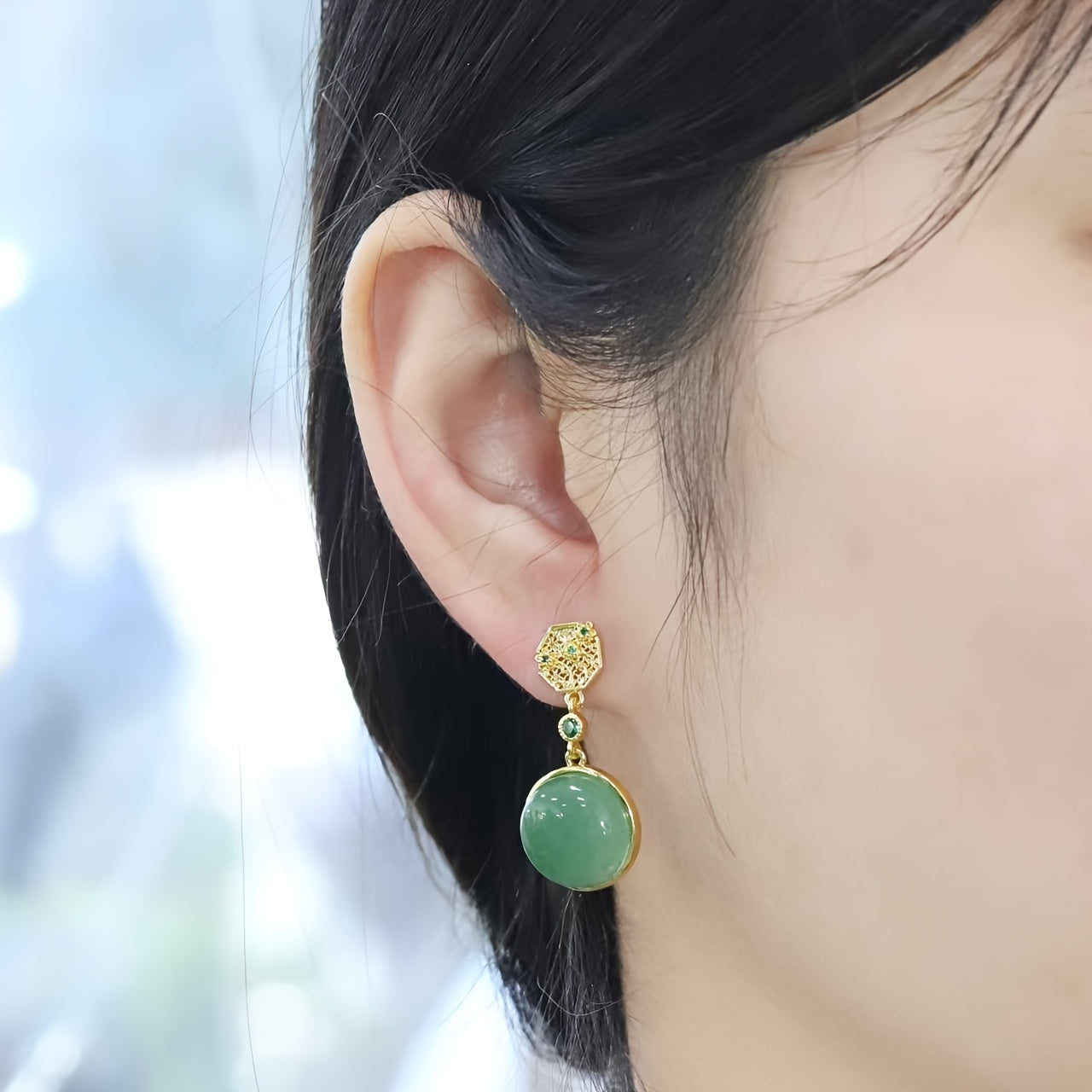
10:15 AM — In class, the teacher is explaining something complicated. You feel yourself zoning out, the words becoming a distant hum. Your head tilts slightly as you try to refocus, and the earring swings, brushing the side of your neck. The touch is light, almost ticklish. Instead of brushing it away, you let it be the reminder. You notice your breath. Is it shallow? Probably. You take one slightly deeper breath. Just one. The teacher's words don't suddenly become clear, but your relationship to your own confusion softens. You're no longer fighting it; you're just noticing it, and breathing anyway.
Can something remain meaningful without being intense?
We think meaning has to be big. Epiphanies! Transformations! Breakthroughs! But what about the meaning of consistency? The meaning of a tiny, repeatable return to yourself? The earring brushing your neck at 10:15 AM isn't intense. It's subtle. Almost nothing. And that's precisely its power. It doesn't demand a spiritual experience. It just suggests: hey, you're breathing. Remember that.
The whole practice is built on the assumption that small things, done repeatedly, accumulate. Not into a grand revelation, but into a different quality of daily experience. You're not trying to achieve enlightenment by lunchtime. You're just trying to interrupt the autopilot a few times a day, using a physical sensation as your gentle alarm clock.
12:30 PM — Lunchroom. Noise. So much noise. You're trying to listen to your friend, but the cacophony is overwhelming. Your hand goes to your earlobe—a self-soothing gesture you've done since childhood. Today, you notice you're doing it. You feel the smooth stone under your thumb. You let that touch be the cue. One breath. This time, you notice the breath going all the way down to your belly. The noise is still there, but you're breathing inside it rather than holding your breath against it. Your friend is still talking. You're still listening. Nothing has changed externally. Everything has changed internally, for about four seconds.
The Architecture of Tiny Returns
Why does this work? Because it uses what's already happening. You're already wearing the earrings. They're already occasionally brushing your neck or being touched by your hand. You're already breathing. The practice doesn't add anything new to your day. It simply creates a connection between two things that are already occurring: sensory input and breath awareness.
This is crucial. Any practice that requires you to stop your life, find a quiet room, assume a special posture, is fighting against the current of modern existence. It sets up a binary: spiritual practice over here, real life over there. This practice erases that boundary. Spiritual practice becomes what happens in the cracks of real life. The boundary itself becomes the site of awareness.
3:20 PM — Walking home. Your mind is full of the day's residue—things said, things unsaid, assignments piling up. The wind picks up, and the earrings swing more vigorously. You feel their movement as small weights dancing. Instead of getting annoyed, you let the motion be the cue. One breath. This time, you notice the breath and the wind at the same time. Air moving inside you, air moving around you. For a second, you're not separate from the environment; you're part of its movement. Then you keep walking.
How does repetition deepen meaning?
Meaning doesn't come from a single profound moment. It comes from the pattern. The first time you use the earring as a breath cue, it might feel artificial. The tenth time, it's a habit. The hundredth time, it's a reflex. But more importantly, the repetition creates a narrative: "Throughout this day, I kept returning to myself." Not in a dramatic way. In a gentle, persistent way. The meaning is in the pattern of return, not in any individual return.
The earrings become charged with this pattern. They're no longer just jewelry. They're the physical nodes in your network of self-remembering. Their coolness, their weight, their movement—all become associated with the micro-moment of breath awareness. This association isn't magical; it's classical conditioning. Pavlov's dog, but for presence. Bell rings, dog salivates. Earring moves, you breathe consciously.
6:45 PM — Homework. Stuck on a problem. Frustration building. You lean your head on your hand, and your finger brushes the earring. Cue. One breath. This time, the breath is a sigh. You acknowledge the frustration instead of fighting it. The problem is still there, unsolved. But you're no longer at war with your own inability to solve it. You're just a person, breathing, facing a difficult thing. The shift is subtle but real.
9:30 PM — Getting ready for bed. You take the earrings off. This is the final cue of the day. As you remove each one, you take one conscious breath. You acknowledge the day that was. Not judging it, not evaluating it. Just breathing it in and breathing it out. Then you place the earrings in their dish. The ritual is complete. The circle of the day is closed with awareness.
What have you accomplished? Nothing measurable. No grades improved, no problems solved, no relationships mended. But you have, in tiny increments, inhabited your day rather than merely passing through it. You have used a physical object as a bridge between the external world and your internal experience. You have practiced the art of the pause.
Why This Works When Other Practices Fail
Most mindfulness practices fail because they're disconnected from daily life. They require special time, special place, special mindset. This creates resistance. "I don't have time." "I can't quiet my mind." "I'm not good at this." The earring practice bypasses all that. It's embedded in life. It uses the interruptions of life as the very material of practice.
The earring brushing your neck during a stressful conversation isn't an interruption to your mindfulness; it's the invitation to mindfulness. The frustration of homework isn't an obstacle to practice; it's the occasion for practice. This reframes everything. The difficulties become the curriculum.
Also, it's permission-based, not discipline-based. You're not failing if you miss a cue. There's no tally. No goal of ten breaths per day. If you notice one cue and take one breath today, that's the practice. If you notice twenty, that's also the practice. The practice is the noticing, not the accumulation.
This makes it sustainable. It doesn't drain willpower; it rides on existing habits. You're going to wear earrings anyway. They're going to move anyway. You're going to breathe anyway. The practice just links these inevitable events together.
Over time, something interesting happens. You start to notice the cues even when you're not wearing the earrings. The feeling of wind on your face becomes a breath cue. The sound of a door closing becomes a breath cue. Your own sigh becomes a breath cue. The practice generalizes. The earrings were the training wheels. Once you learn the motion of return, you can use anything—any sensory input—as your reminder.
But you keep wearing the earrings. Why? Because they're familiar. Because they hold the history of all those tiny returns. Because their weight has become the weight of your attention, and their coolness has become the freshness of each new breath. They're not necessary anymore, but they're cherished. They've become partners in the quiet work of being present.
So tomorrow, when you put them on, don't think about balance or energy or healing. Think about this: you are putting on a device for remembering. A simple, beautiful, tactile device that will gently nudge you, throughout the day, to inhabit the life you're already living. Not to improve it. Not to transcend it. Just to actually live it, one breath at a time.
And if you forget? That's fine. The earrings will still be there, swinging gently, waiting for the next time you're ready to notice.
The Object of Contemplation
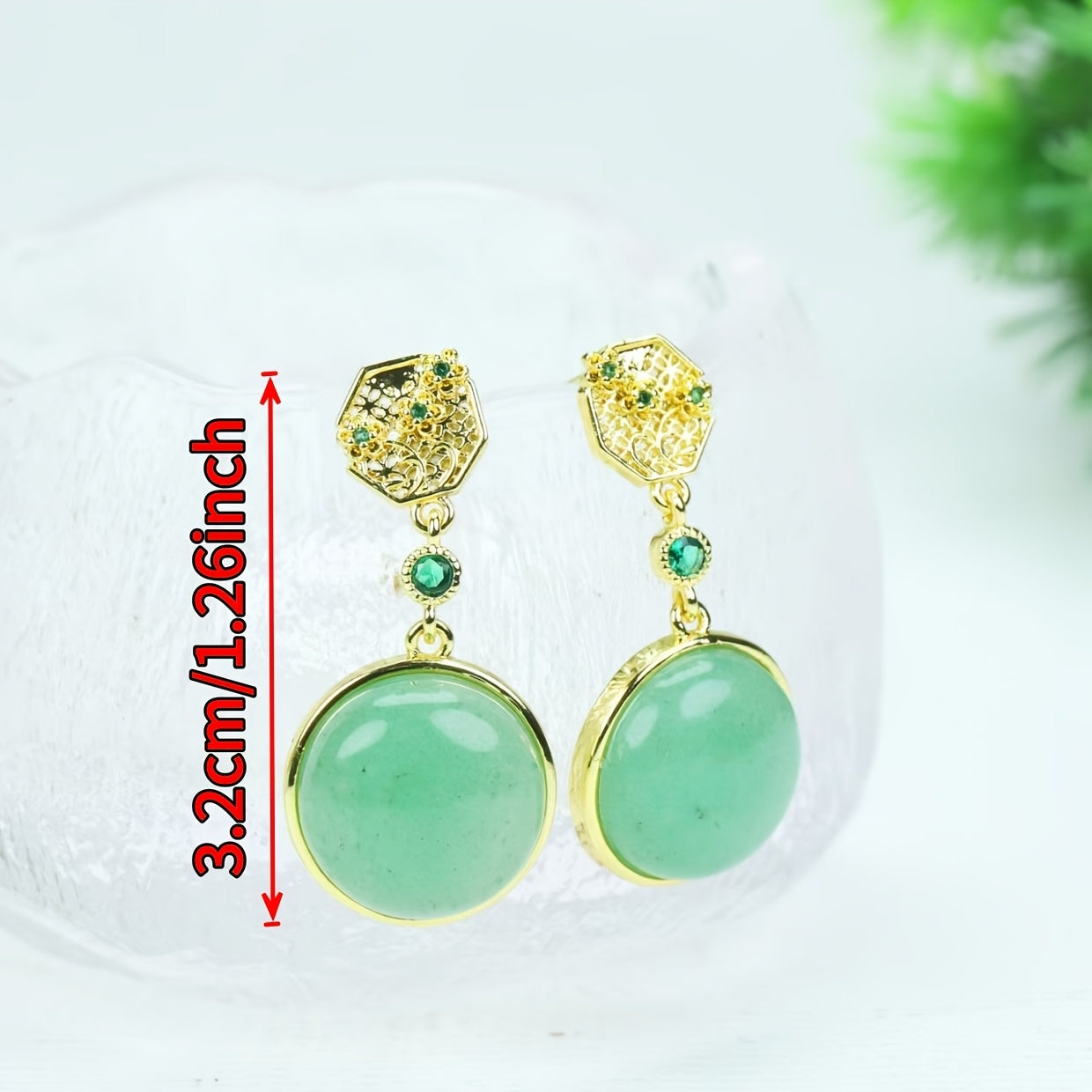
The Elegant Green Natural Stone Drop Earrings featured in this practice.
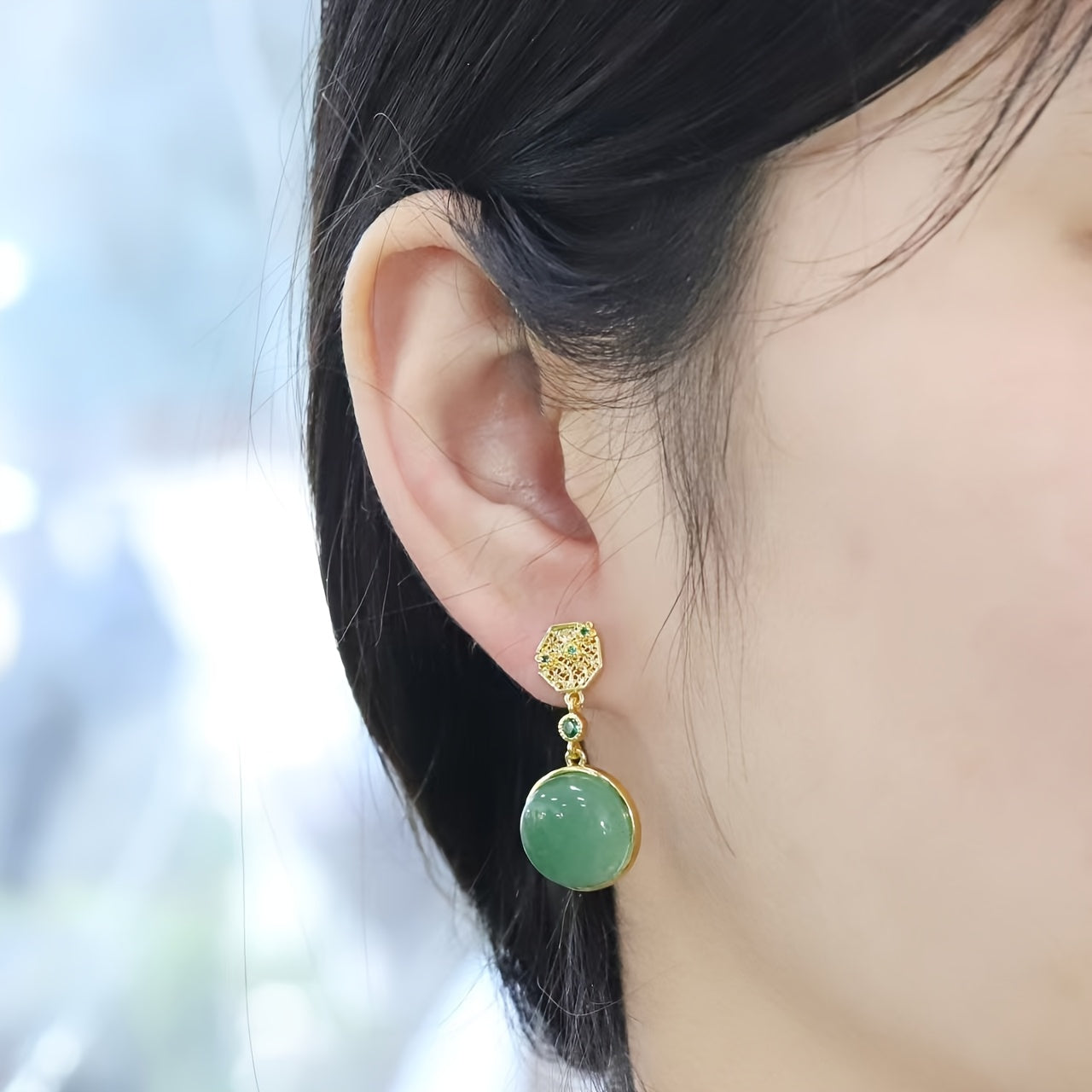 View the Jewelry Piece →