





The Nine-Tailed Fox — Symbol of Accumulated Wisdom, Patient Observation, and the Clarity That Transcends Time
I. The Western Misreading
In Western imagination, the fox is typically associated with cunning, deception, and trickery. The sly fox. The clever fox.
When the nine-tailed fox appears in Western retellings of Eastern folklore, it is usually portrayed as a supernatural trickster—a being that deceives through illusion, that manipulates through magical disguise.
This interpretation is not entirely wrong. But it is profoundly incomplete.
The nine-tailed fox in East Asian tradition is not primarily a trickster. It is a keeper of accumulated wisdom. It does not deceive reality. It outlasts reality.
II. What Each Tail Represents
In the traditional cosmology, the nine-tailed fox does not begin as a nine-tailed fox. It begins as a wild fox—alert, intelligent, but fundamentally driven by instinct and survival.
Through centuries of life and observation, the fox develops capacities that culminate in additional tails. Each tail is not a magical acquisition. Each tail represents a completed cycle of observation and integration.
The Journey of Tails
- First Tail: The fox learns to survive through perception, not strength. Intelligence substitutes for power.
- Second Tail: The fox understands human nature. It observes desire, betrayal, and the contradiction between what humans claim and what they do.
- Third Tail: The fox perceives how power operates—its rise, its cycles, its inevitable decline.
- Fourth Tail: The fox refines understanding of desire itself. How desire blinds. How ambition corrupts.
- Fifth Tail: The fox develops wisdom about consequence. Every action ripples outward in unforeseen ways.
- Sixth Tail: The fox cultivates compassion born from witnessing suffering caused by human blindness.
- Seventh Tail: The fox penetrates illusions that bind most beings. Status, identity, possessions—all temporary constructs.
- Eighth Tail: The fox integrates all previous learning into unified seeing. Wisdom is no longer intellectual knowledge. It is lived.
- Ninth Tail: The final tail represents the ability to embody clarity itself. Not to possess wisdom, but to be wisdom.

The nine-tailed fox represents centuries of accumulated perception, not trickery
View the Jewelry Piece →III. The Nine-Tailed Fox as Teacher of Non-Interference
One of the most important aspects of the nine-tailed fox in classical Buddhist texts is what it does not do: it does not rush to intervene.
The common folk story shows a nine-tailed fox observing human drama—two people in conflict, kingdoms at war, a ruler making catastrophic decisions. The fox sees what will happen. The fox perceives the consequence before it manifests.
But the nine-tailed fox does not immediately rush to prevent disaster. It does not reveal its wisdom. It does not offer unsolicited guidance.
Instead, the fox waits.
It observes the unfolding of events as it has already perceived they must unfold. It witnesses the suffering that comes from human blindness. And only when the moment is right does the fox reveal what it has seen.
This quality runs counter to our modern instinct to fix, to warn, to prevent disaster. But it embodies a profound understanding: wisdom cannot be forced onto those not ready to receive it. Understanding cannot be implanted.
IV. The Nine-Tailed Fox and the Concept of "Maya"
In both Hindu and Buddhist philosophy exists the concept often translated as "illusion"—that what appears as solid reality is actually a kind of veil.
The Western reading makes the nine-tailed fox a creator of illusion—a being that creates illusion to deceive.
But the Eastern reading is more subtle: The nine-tailed fox is not a creator of illusion. The nine-tailed fox is someone who has penetrated illusion.
Common beings live within the veil of maya. They take their perceptions as absolute reality. The nine-tailed fox has looked long enough to see the filters themselves. It perceives how maya works. It understands that what most beings take as absolutely true is actually constructed by their own limitations of perception.
V. The Nine-Tailed Fox in Taoist Philosophy
In Taoism, the highest good is to move in accord with the Tao—the fundamental nature of reality—rather than to impose human will against it.
The nine-tailed fox embodies this principle perfectly.
The fox does not accumulate wisdom through force of will or aggressive discipline. It accumulates wisdom through patient observation of what is. It sees the patterns that nature follows. It aligns with these patterns rather than against them.
In Taoist texts, the nine-tailed fox is sometimes described as having achieved a kind of immortality—not through magical potion or supernatural intervention, but through having aligned so completely with the patterns of nature that it transcends the ordinary cycle of birth and death.
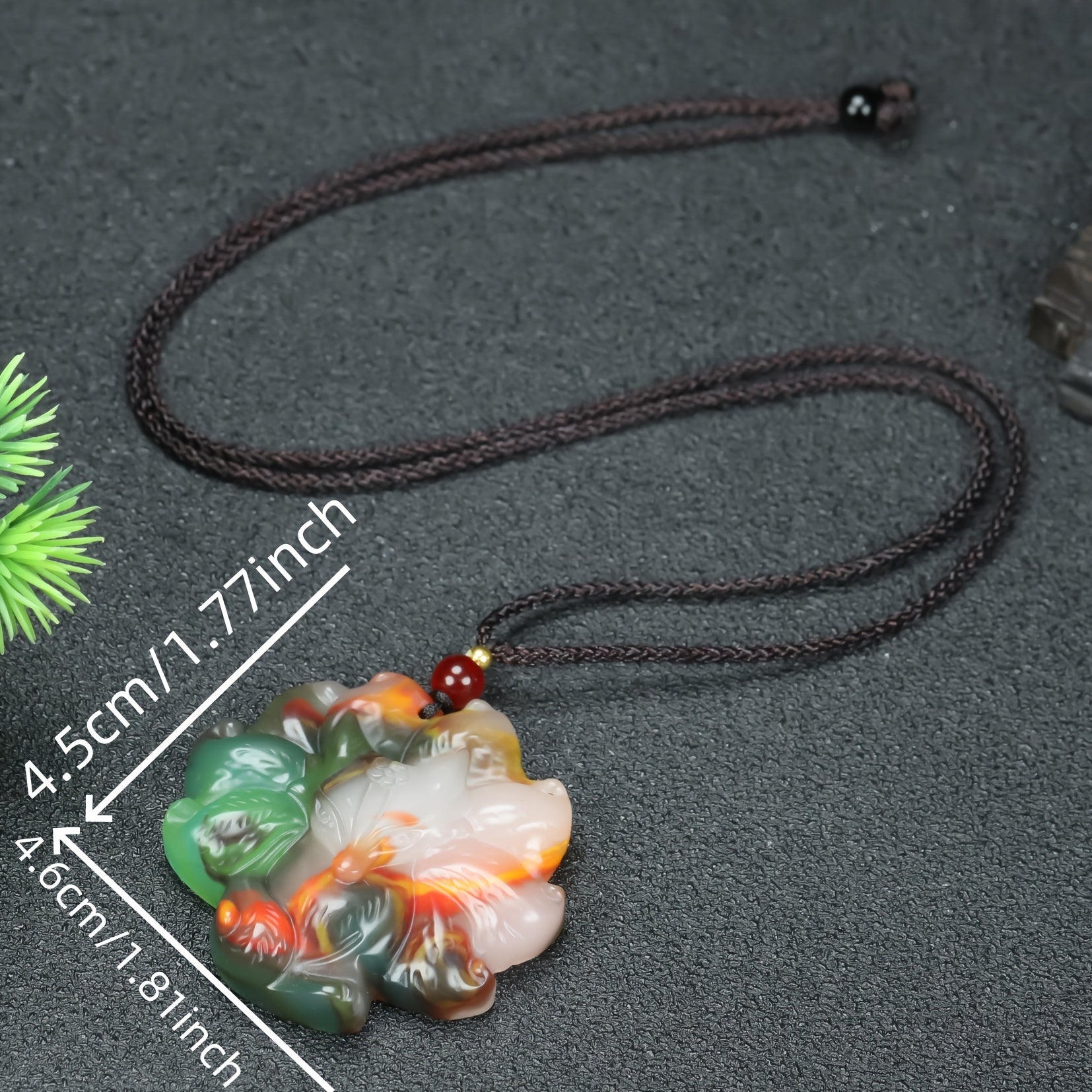
The red agate accent grounds spiritual wisdom in embodied action and life force
View the Jewelry Piece →VI. The Fox in Buddhist Symbolism
In Buddhism, the nine-tailed fox appears as a being on the path to enlightenment. The fox has not yet achieved full Buddha-nature, but it is far along the path.
What makes the fox a Buddhist symbol is this: the fox understands that suffering originates in misperception.
The fox has watched humans suffer because they cling to what is impermanent, because they resist what is inevitable, because they fail to see the actual nature of phenomena.
The fox's centuries of observation have taught it the Four Noble Truths of Buddhism, and when it acts, it acts from clarity about these truths.
VII. The Colors and Elements of the Fox
In many depictions, the nine-tailed fox is shown with coloring that shifts—sometimes appearing as pure white, sometimes tinged with gold or crimson, sometimes wearing the colors of the forest.
This coloring is significant. White represents purity in Buddhist and Taoist symbolism—not innocence, but clarity. The white fox is a fox that has burned away the obscurations that cloud perception.
But the fox is not pure white alone. It carries other colors—the gold of life force, the green of connection to nature, the amber and red of warmth and vitality.
This mixing of colors represents something crucial: the nine-tailed fox is not pure spirit detached from the world. It is fully alive, fully embodied, fully engaged with the living world. But it has achieved clarity while remaining in the world.
VIII. Why the Fox Still Matters Today
We live in a time of unprecedented information overload. We have access to more data, more opinions, more perspectives than any previous era.
And yet, in many ways, we are less able to perceive clearly than ever.
The constant stream of stimulus, the algorithmic amplification of outrage, the reward structures that favor speed over accuracy—these all work to prevent the very clarity that the nine-tailed fox embodies.
We mistake fast reactions for perception. We mistake having many opinions for having actual understanding. We mistake motion for progress.
The nine-tailed fox says something radically different: true clarity requires time. Real perception requires patient observation. Genuine wisdom is slow.
