





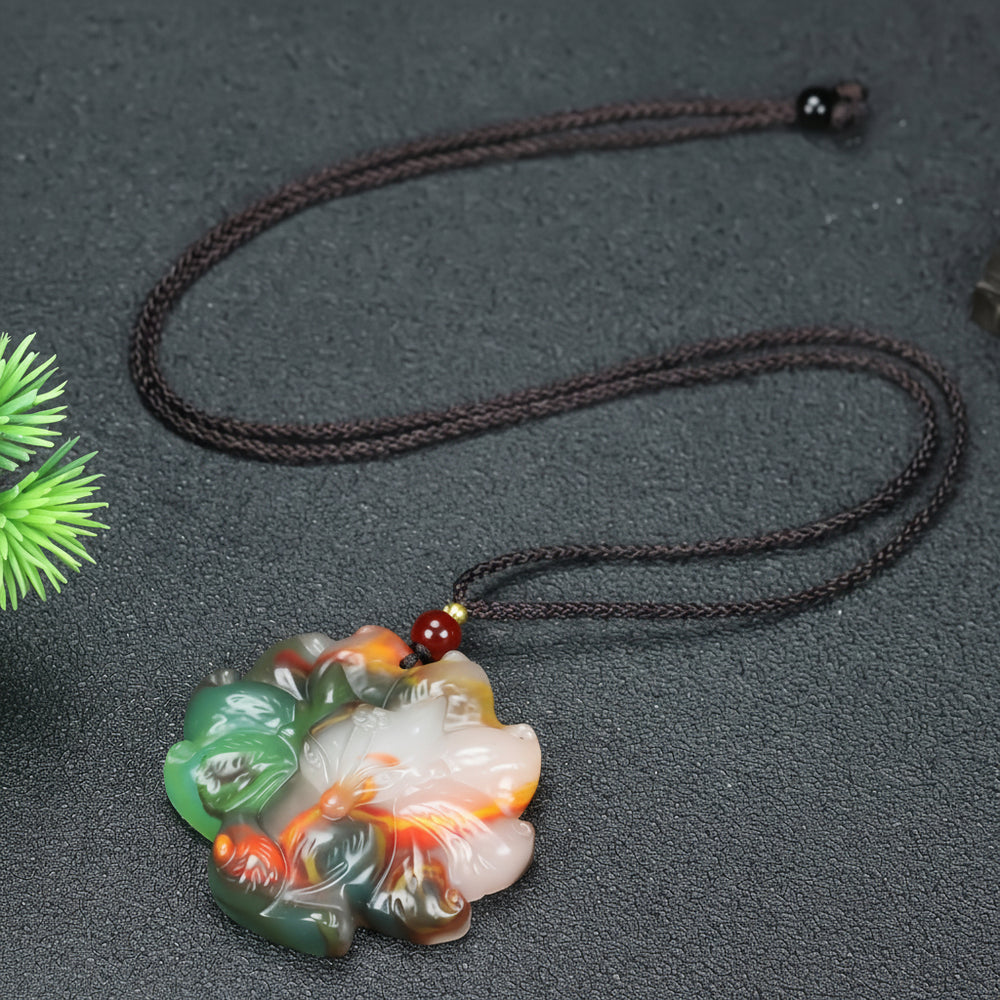
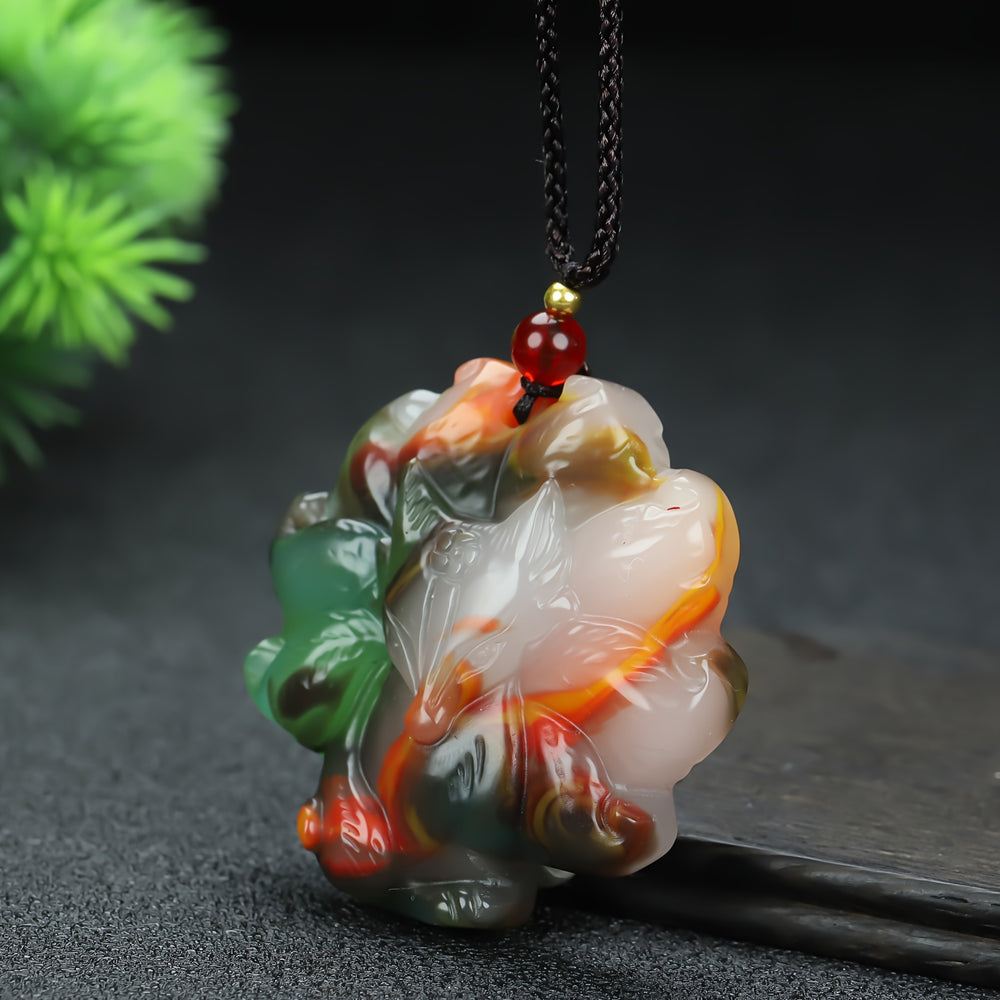
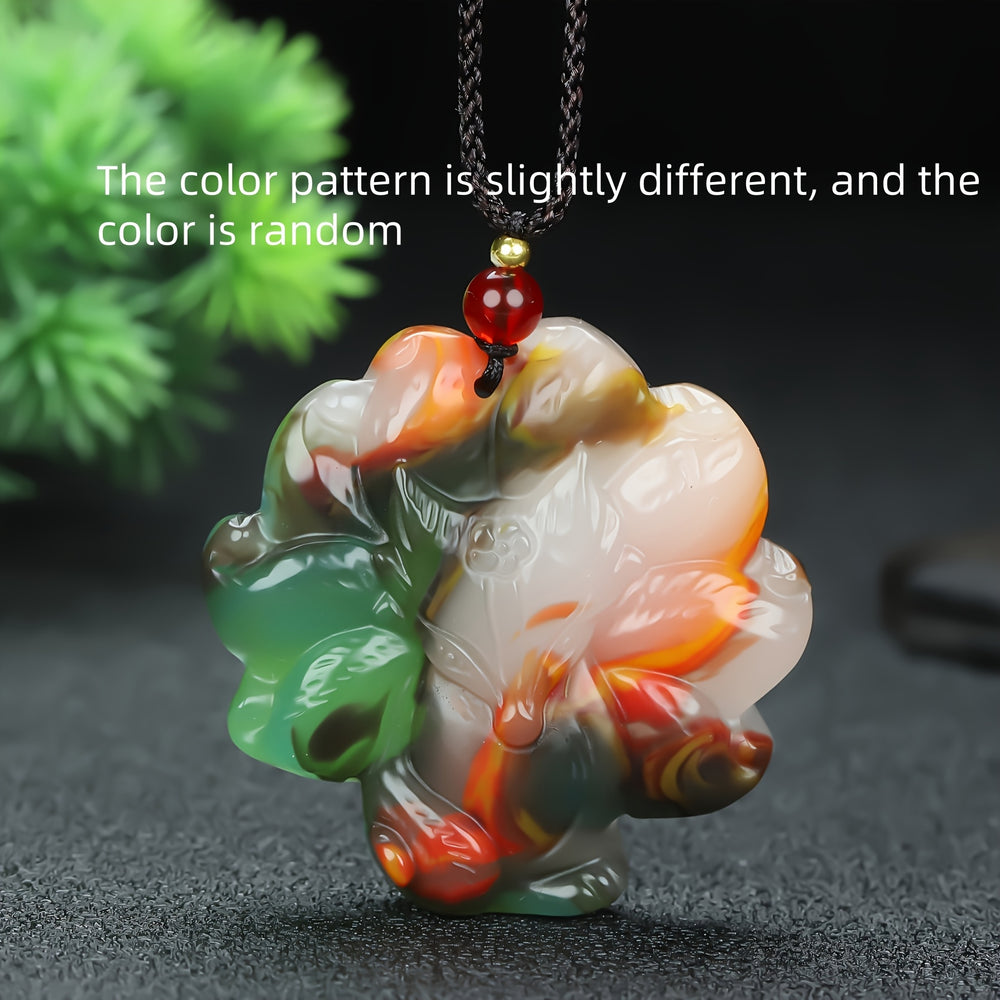
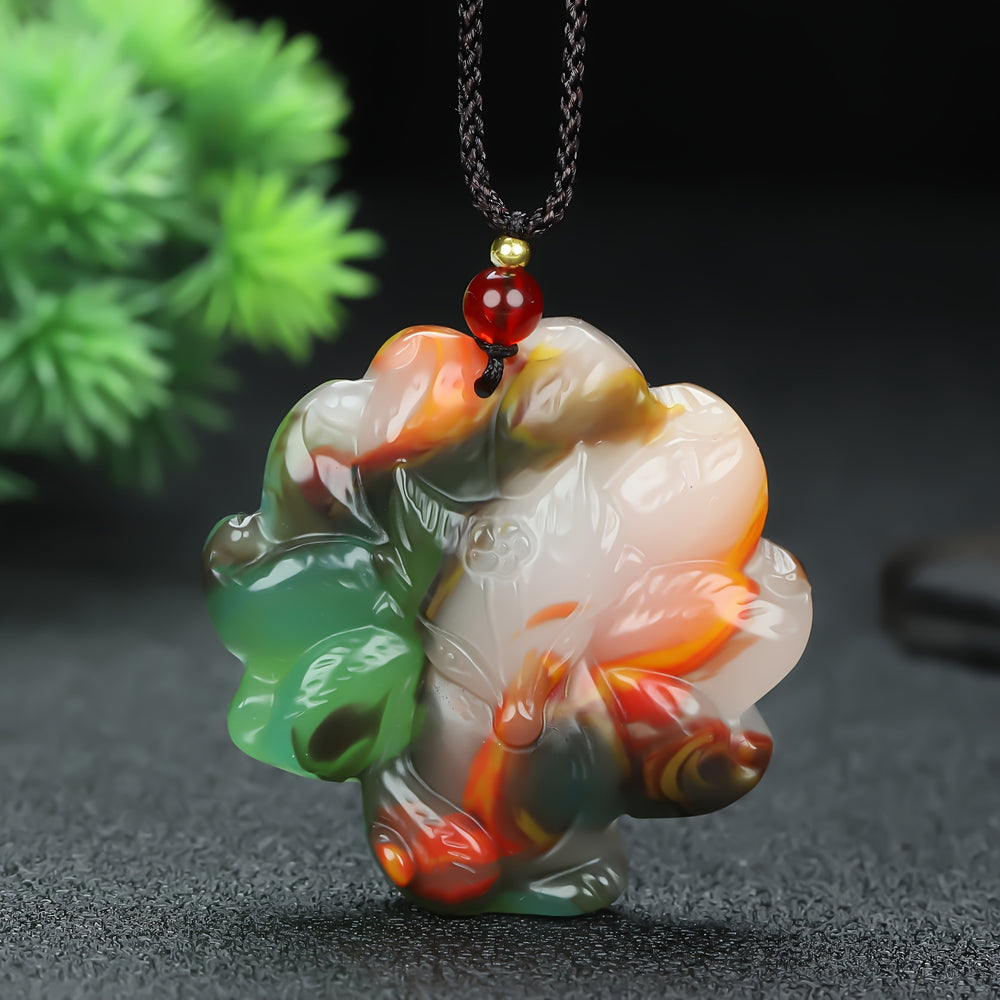
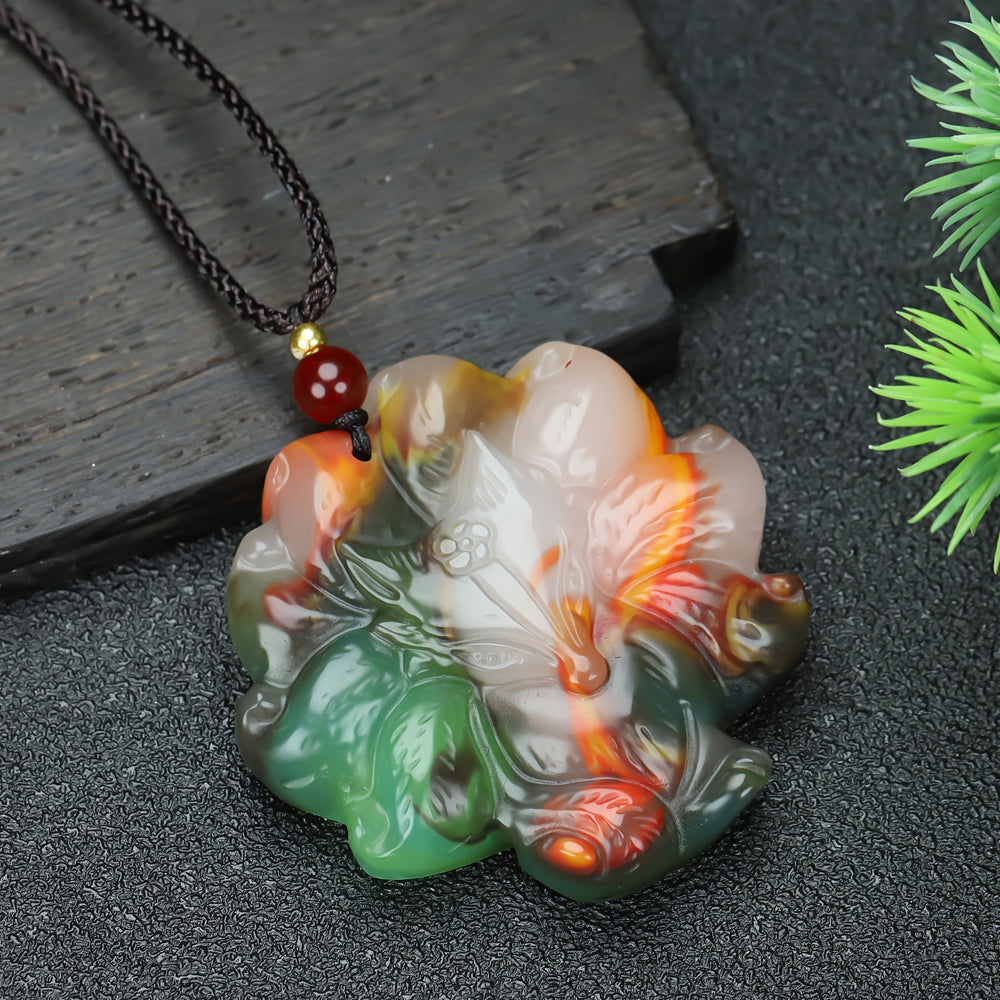
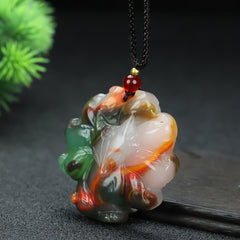
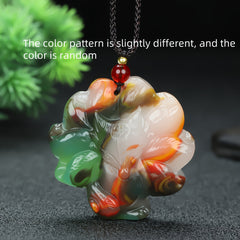

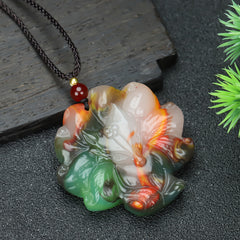
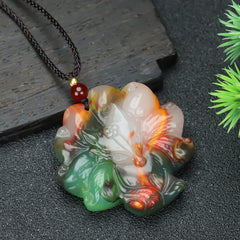
Obsidian Fox Pendant Necklace for Insight and Perceptive Awareness
Product Identity — The Archetype of the Seer For those who understand that true sight is cultivated through restraint, not reaction. Archetype The Seer — one who...
- $26.63
$59.00- $26.63
- Unit price
- per
Please hurry! Only 281 left in stock
Limited-Time Offers, End in:
151D
8H
23M
0S
Subtotal:
$26.63
Couldn't load pickup availability


Product Identity — The Archetype of the Seer
For those who understand that true sight is cultivated through restraint, not reaction.
Archetype
The Seer — one who perceives structure, pattern, and truth through patient observation, resisting the pull of immediate reaction in favor of deep understanding.
Core Themes
This piece embodies the cultivation of insight, disciplined perception, pattern recognition, quiet observation, and the power of understanding before action.
Life Stage
For those in a stage of integration or mastery, where learning moves from accumulation of information to the discernment of underlying truth. It supports the transition from impulsive response to considered understanding.
Elemental Essence
Deep earth for grounding and stability, and reflective water for depth and penetration. The obsidian, born of fire and earth, holds the memory of both transformation and solidity.
Primary Use
A daily-worn anchor for mindful awareness, a focal point in moments requiring discernment, a tool for breaking cycles of reactivity, and a companion for cultivating patience in observation.
Spiritual Positioning
This is not a charm for quick wit or social cleverness. It is a training device for perception, a physical reminder to pause, to look again, and to seek the structure beneath the surface of events.
A Note on Its Nature
This object is not an ornament of cunning or cleverness. It does not promise sharper debate skills or social advantage.
If you seek an accessory for display, an amulet for quick answers, or a token of mystical prediction, you will find this pendant too quiet, too still, perhaps too severe in its simplicity.
It is made for the opposite: for those who wish to slow down interpretation, to question the first reaction, to build a capacity for seeing what is actually there, rather than what is most loudly presented.
The Nine-Tailed Fox: A Misunderstood Oracle
In the folklore of China, Korea, and Japan, the fox with nine tails is often hastily labeled a trickster, a shape-shifter, a dealer in illusions. This is a superficial reading, born from the human tendency to fear what it does not immediately comprehend.
The deeper tradition tells a different story. The Nine-Tailed Fox, or Huli Jing, Kumiho, or Kitsune, earns each tail through a century of life. This is not merely longevity, but a century of observation. It witnesses empires rise on hubris and fall from it. It watches human passions repeat in predictable cycles. It sees how fear distorts judgment and how desire clouds vision.
Its final, ninth tail is not a weapon of magic, but a marker of completed perception. The fox no longer needs to trick or manipulate; it simply understands the mechanics of a situation so thoroughly that it can navigate them with minimal effort. It becomes an oracle not by predicting the future, but by recognizing the inevitable outcomes of present patterns.
The symbol, therefore, is not about deception, but about the patience required to see truth. It represents the wisdom that comes from withholding judgment until the full picture has emerged.
The Shape of Restraint
The design is a reduction. The fox is rendered not in playful detail, but as a sleek, minimalist silhouette. Its form is all implied movement held in perfect stillness—a body coiled in potential observation, ears pricked to listen, not to the loudest sound, but to the quietest one.
This minimalism is intentional. A realistic, detailed fox would tell a story of a specific animal. This abstracted form tells the story of a principle: the principle of seeing. The negative space around it is as important as the stone itself; it is the field of attention, the open awareness into which understanding unfolds.
Carved from obsidian, its surface is a dark mirror. It reflects light, but dimly. It does not offer a clear image of your face, but a shadowy impression of your outline. In this, it performs its first function: it turns your gaze back upon yourself. It asks, quietly, what are you reacting to? What are you seeing, and what are you missing?
The design decision to forgo color, gem inlay, or intricate texture is a commitment to this core idea. There is nothing here to distract. The object’s sole purpose is to focus attention, not to capture it.
Wearing & Relationship
When worn daily, the cool, smooth stone against the skin becomes a familiar presence. Its weight is slight but perceptible—a gentle, constant reminder of a different mode of engagement with the world.
In moments of friction—a frustrating conversation, a pressured decision, a surge of defensive feeling—the hand may find its way to the pendant. This touch is not superstitious. It is a physiological interrupt. It marks a pause. In that pause, the symbol’s meaning is recalled: see first. Understand the pattern. Do not react to the surface.
Over time, this simple action begins to rewire habit. The pendant becomes less an object and more of a personal landmark in one’s internal landscape. It signifies the space between stimulus and response, a space that grows wider and more habitable with practice.
It is not worn to be seen by others, but to be felt by the wearer. Its value accumulates not through external admiration, but through the internal quiet it helps to cultivate.
Why the Seer Now
We live immersed in a culture of reaction. Opinions are formed at the speed of a scroll. Algorithms thrive on our immediate emotional responses. To be slow, to be considered, to be patient is often misread as indecision or lack of intelligence.
The Nine-Tailed Fox, and this pendant that carries its essence, proposes a radical counter-narrative. It suggests that in an age of overwhelming stimulus, the most powerful stance is one of disciplined perception.
It matters now because the cost of unexamined reaction is higher than ever—in personal relationships, in civic life, in our own mental peace. This piece is for those who feel that cost and wish to build an inner capacity that is not swept away by the current of immediacy.
It is an anchor in the stream. It does not stop the flow, but it gives you a place to stand within it, to observe the water’s true direction before deciding how to move.
Specifications & Dimensions
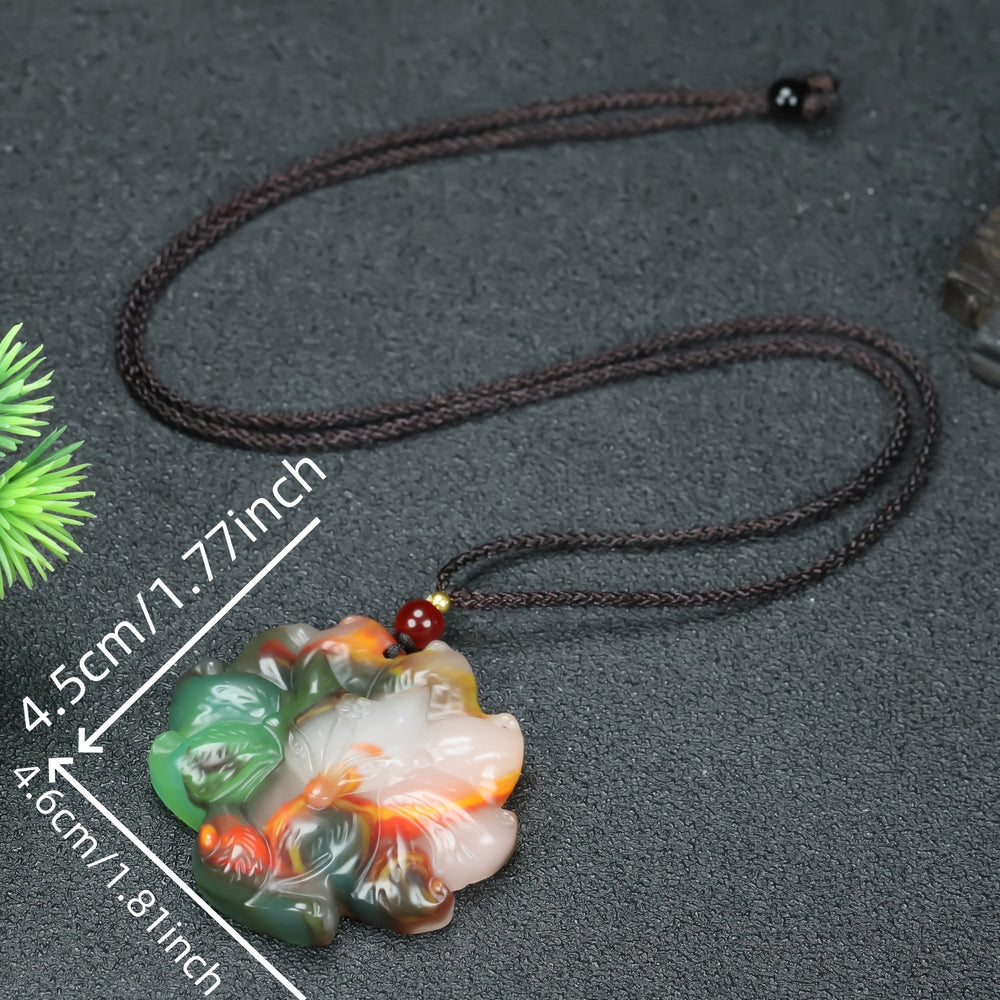
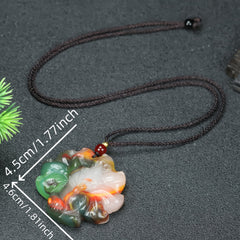
- Pendant Dimensions: 45mm (4.5cm / 1.7-1.8 inches) in length. A size that is present without being imposing.
- Pendant Width: Approximately 18mm at its widest point (the body of the fox).
- Material: Hand-polished natural obsidian. The cord is a durable, adjustable black twisted cotton cord.
- Weight: Approximately 10-12 grams. Light enough for constant wear.
- Finish: Satin polish, highlighting the natural deep luster of the obsidian without being overly glossy.
- Closure: Secure sliding knot for an adjustable fit from approximately 18 to 24 inches.
- Care: Wipe clean with a soft, dry cloth. Avoid harsh chemicals and sharp impacts.
Darhai Inner Library — Deepen Your Understanding
Compare color
Recently Viewed Products
Example product title
- $26.63
$59.00- $26.63
- Unit price
- per
Example product title
- $26.63
$59.00- $26.63
- Unit price
- per
Example product title
- $26.63
$59.00- $26.63
- Unit price
- per
Example product title
- $26.63
$59.00- $26.63
- Unit price
- per
Example product title
- $26.63
$59.00- $26.63
- Unit price
- per
Example product title
- $26.63
$59.00- $26.63
- Unit price
- per
Example product title
- $26.63
$59.00- $26.63
- Unit price
- per
Example product title
- $26.63
$59.00- $26.63
- Unit price
- per
Example product title
- $26.63
$59.00- $26.63
- Unit price
- per
Example product title
- $26.63
$59.00- $26.63
- Unit price
- per
- Choosing a selection results in a full page refresh.
