





Ancient Origins: The Smile as Sacred Symbol
The smiling face motif in jewelry represents one of humanity's oldest and most universal symbols, with archaeological evidence dating back over 20,000 years. From the enigmatic smiles of Neolithic Venus figurines to the beatific expressions of Buddhist and Hindu deities, the smile has consistently represented more than mere emotion—it has symbolized enlightenment, contentment, and connection to the divine. Ancient civilizations understood the smile's power not as a passive expression but as an active spiritual practice, a facial posture believed to influence both internal state and external reality.
In ancient Mesoamerican cultures, smiling sun deities represented cosmic joy and life-giving energy. Egyptian tomb paintings frequently depicted the deceased with slight smiles, symbolizing their peaceful transition to the afterlife and contentment in the presence of the gods. Greek philosophers, particularly the Stoics and Epicureans, explored the smile as an expression of eudaimonia—human flourishing and the highest good. These philosophical traditions understood that smiling imagery, when worn as amulets or carved into personal items, could serve as constant reminders of philosophical ideals and spiritual aspirations.
 View Product Details & Buy Now
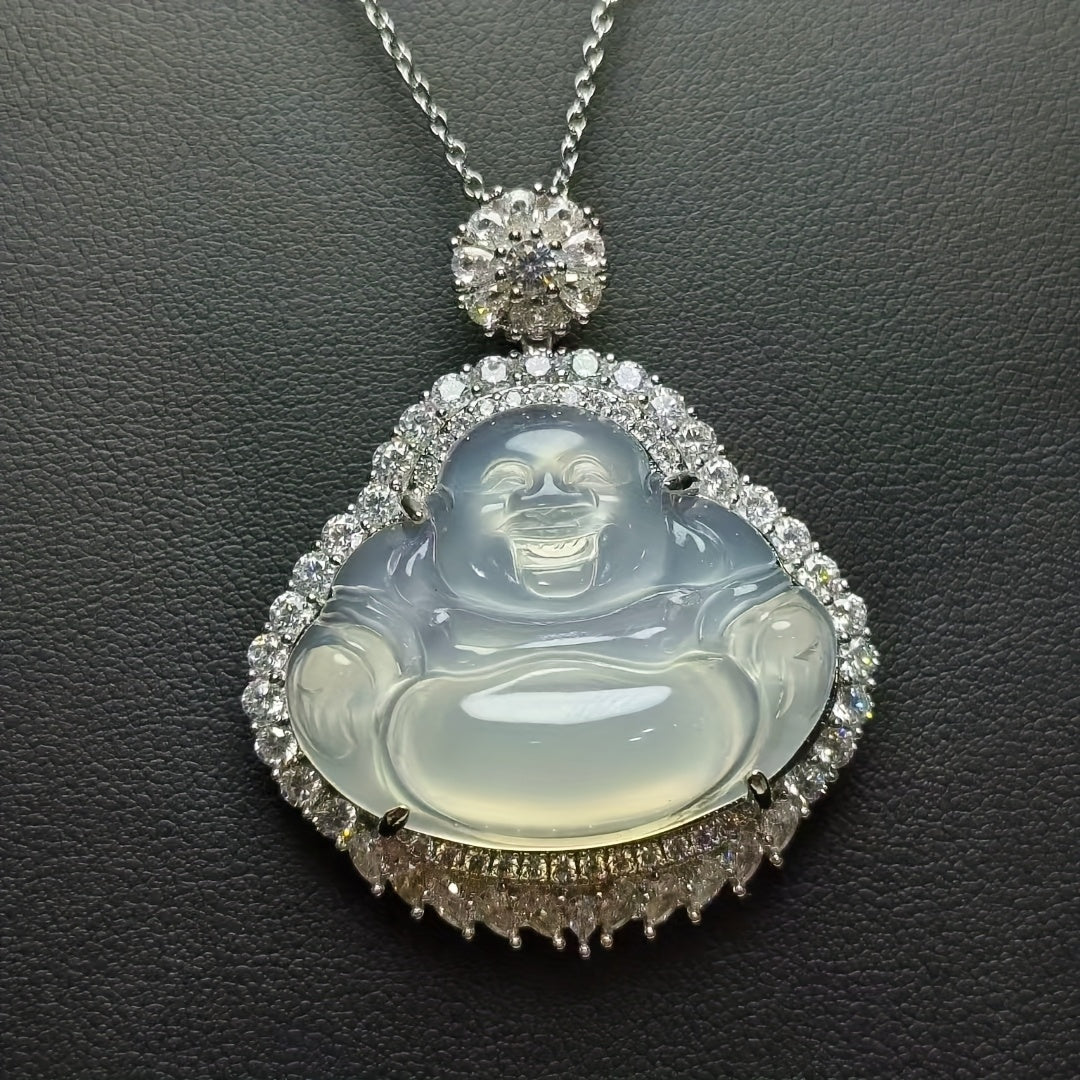
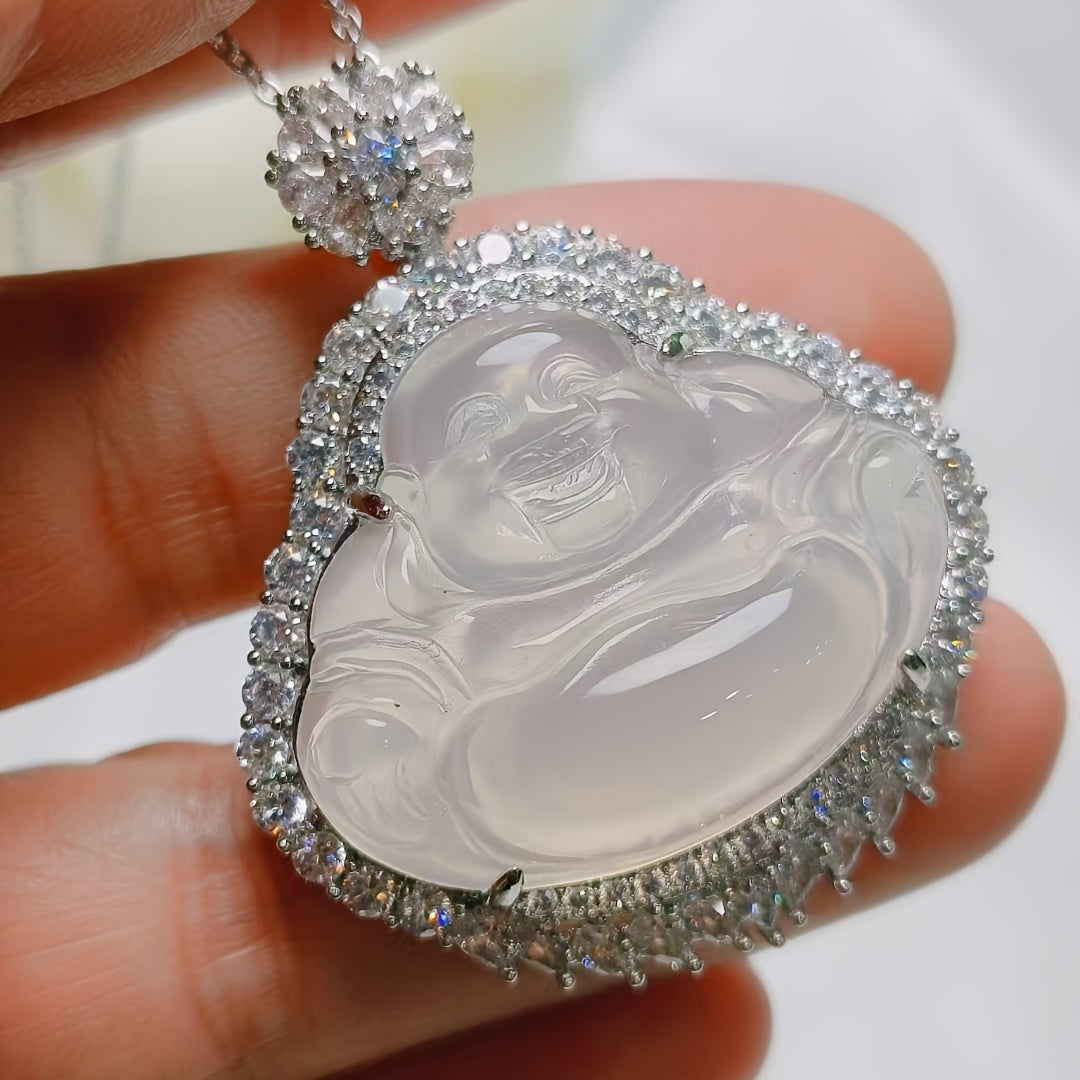
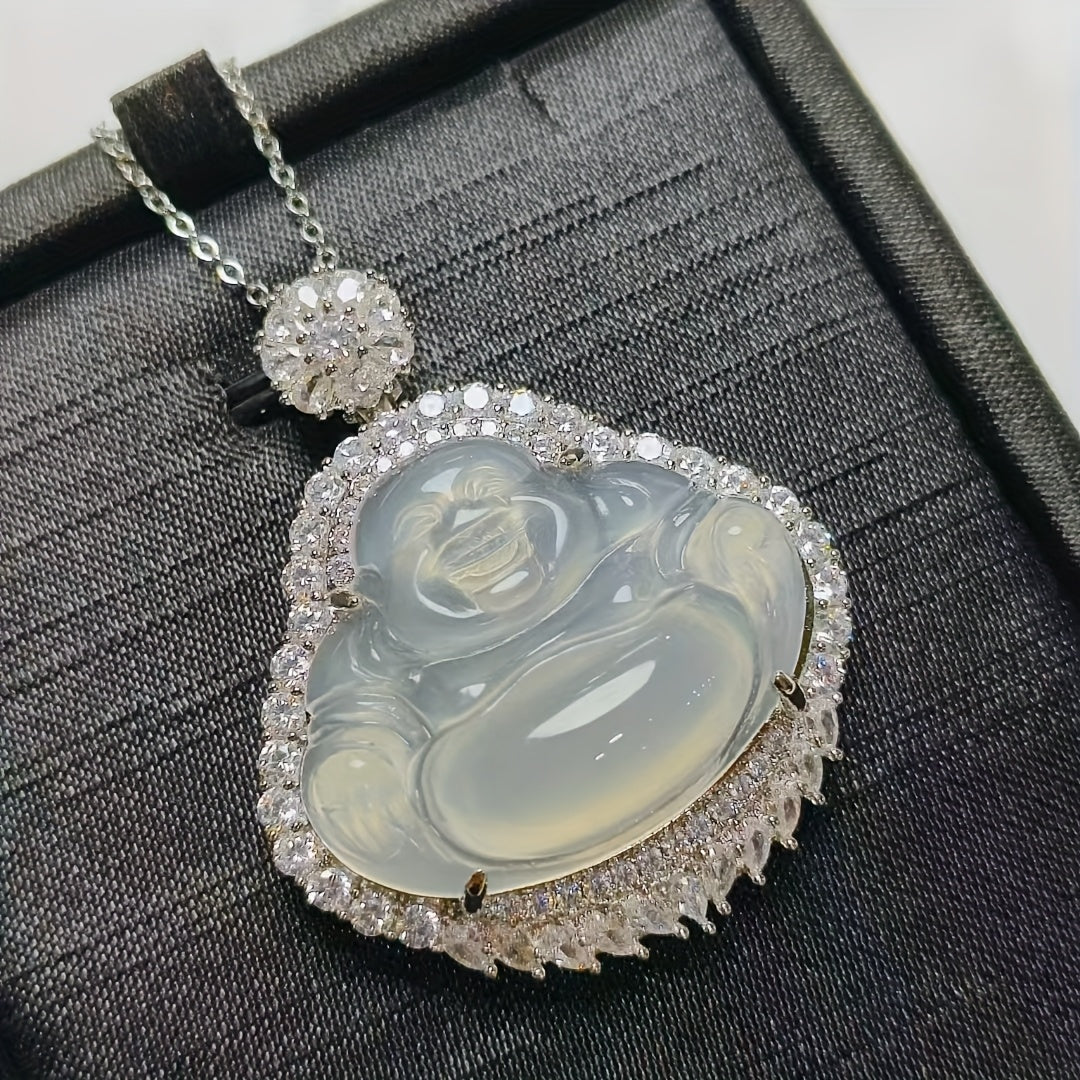
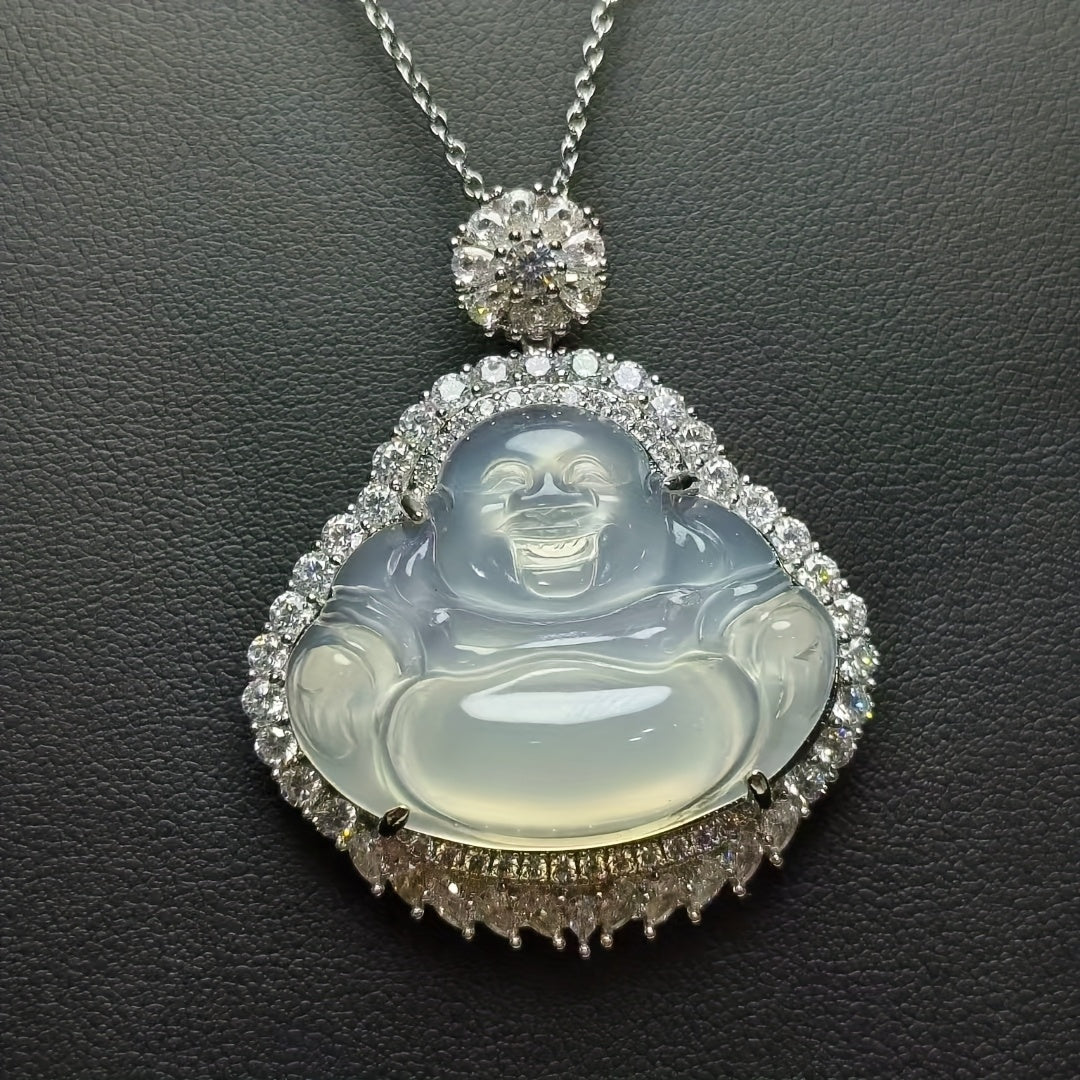
The cultural transmission of smiling symbolism through jewelry represents a fascinating case study in human universals. Despite geographical isolation, diverse cultures independently developed smiling amulets and talismans with remarkably similar meanings. This suggests that the smile's symbolic power emerges from fundamental human psychology—our hardwired response to facial expressions and our innate understanding that smiling represents safety, approachability, and positive social connection. Contemporary spiritual jewelry featuring smiling motifs, such as the Men's Natural Agate Smiling Character Pendant, represents the latest evolution in this millennia-long tradition of wearing positive expression as personal adornment.
Cross-Cultural Interpretations: The Smile in Global Spiritual Traditions
Different spiritual traditions have developed unique interpretations of smiling symbolism, each contributing distinct layers of meaning to contemporary spiritual jewelry. In Buddhism, particularly in Mahayana traditions, the smiling face represents the Bodhisattva ideal—the enlightened being who remains in the world to alleviate suffering while radiating compassionate joy. The famous "smiling Buddha" (often mistakenly identified as the historical Buddha but actually representing the future Buddha Maitreya or the folk deity Budai) embodies this concept, with his joyful expression symbolizing contentment, abundance, and the happiness found in simple existence.
In Hindu tradition, deities like Ganesha and Lakshmi are frequently depicted with gentle smiles representing divine grace and benevolent power. The smile here symbolizes the deity's compassionate nature and their willingness to assist devotees. In indigenous traditions worldwide, smiling masks and carvings often represent ancestral spirits in states of contentment or nature spirits expressing the joy of existence. These varied interpretations share a common thread: the smile as bridge between human and divine, as expression of harmonious relationship with the cosmos.
Western esoteric traditions have similarly valued smiling symbolism, though with different emphases. In Renaissance alchemical texts, the "philosopher's smile" represented the joyful recognition of hidden truths and the culmination of spiritual transformation. Hermetic traditions used smiling sun motifs to symbolize the illuminated mind and the joyful reception of divine wisdom. These varied cultural interpretations collectively enrich the symbolic vocabulary available to contemporary jewelry designers, allowing them to create pieces that resonate across cultural boundaries while honoring specific traditional meanings.
 View Product Details & Buy Now
Psychological Foundations: Why Smiling Imagery Affects Consciousness
The power of smiling motifs in spiritual jewelry finds solid foundation in contemporary psychological research. The facial feedback hypothesis, supported by numerous studies, demonstrates that facial expressions don't merely reflect emotional states but actively contribute to them. When we view smiling imagery—or even unconsciously touch jewelry featuring smiling motifs—we engage neural pathways associated with positive emotion. This creates a subtle but measurable shift toward more optimistic thinking patterns and emotional states.
Mirror neuron research further illuminates why smiling symbols affect us deeply. Our brains contain specialized cells that activate both when we perform an action and when we observe that action performed by others. This neural mirroring extends to facial expressions—when we see a smiling face (even in stylized form on jewelry), our mirror neurons partially activate the facial muscles and neural patterns associated with smiling. This creates a micro-expression response that begins shifting our physiological state toward the emotional correlate of that expression. Jewelry featuring smiling motifs essentially provides continuous, subtle priming for positive emotional states.
From a cognitive psychology perspective, smiling imagery functions as an "affective prime"—a stimulus that predisposes us toward positive interpretations of subsequent experiences. Wearing such imagery creates what psychologists call an "attentional bias" toward positive aspects of our environment. This doesn't mean ignoring challenges or difficulties, but rather approaching them from a resourceful, optimistic framework. The Men's Natural Agate Smiling Character Pendant exemplifies this psychological principle in material form—the smiling face serves as constant visual reminder and neural trigger for positive cognitive patterns.
 View Product Details & Buy Now
Material Synergy: Combining Symbolism with Stone Energy
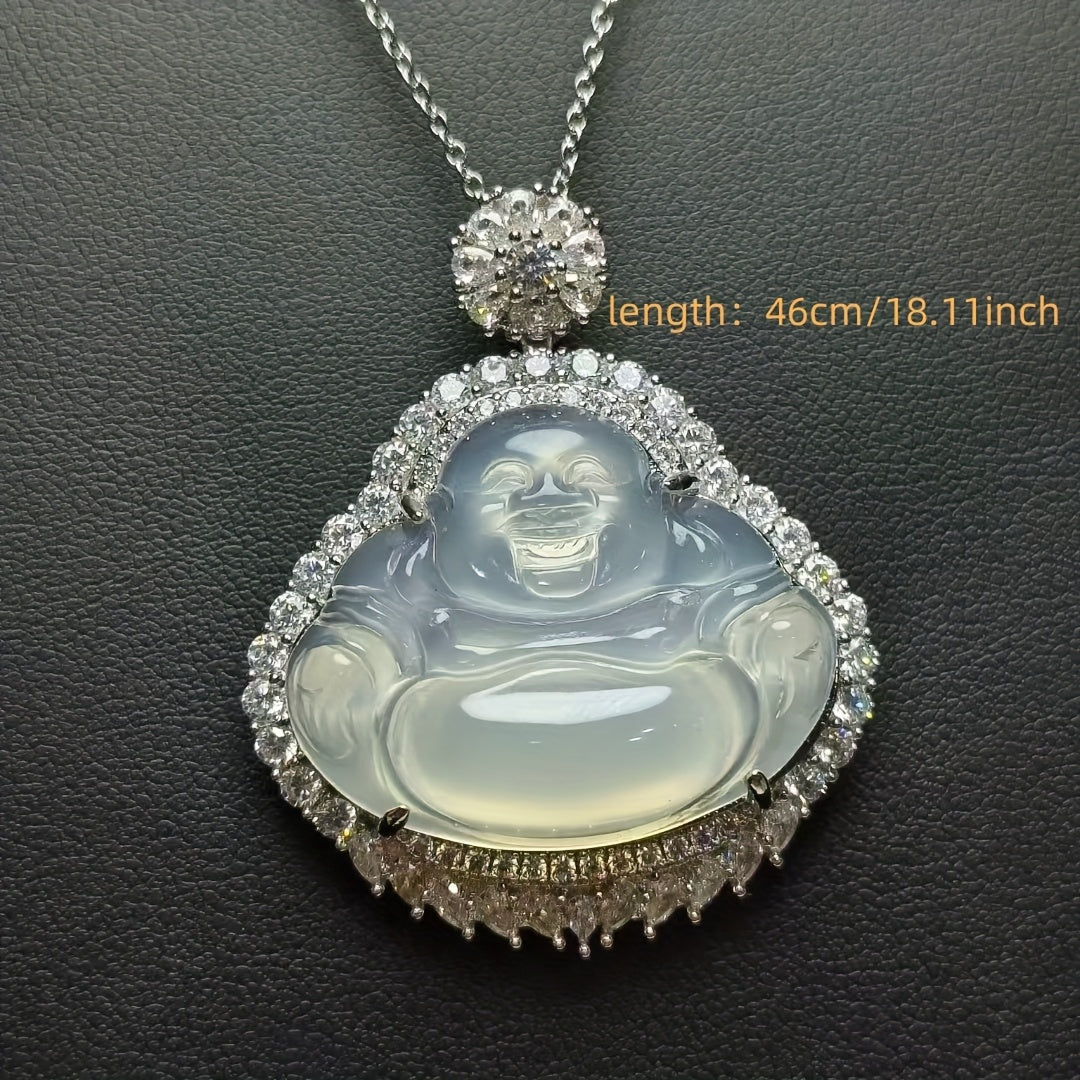
The effectiveness of smiling motifs in spiritual jewelry amplifies significantly when combined with appropriate mineral energies. Different stones carry distinct vibrational properties that complement and enhance symbolic meanings. Agate, featured in the Men's Natural Agate Smiling Character Pendant, represents a particularly synergistic pairing. As a stabilizing stone known for its grounding properties and ability to enhance mental function, agate provides the energetic foundation upon which the smiling symbol's emotional effects can securely build.
Stone selection in symbolic jewelry follows ancient principles of sympathetic magic and contemporary understanding of mineral energies. Translucent stones like agate are traditionally associated with clarity, transparency, and mental illumination—qualities that align perfectly with the smiling symbol's representation of enlightened consciousness. The stone's natural banding patterns, formed through geological processes over millennia, symbolize life's layered complexity and the beauty that emerges through natural growth processes. When carved with a smiling motif, these geological narratives merge with human symbolic meaning, creating multidimensional spiritual tools.
Different minerals would carry the smiling symbol with slightly different energetic emphases. Carnelian might emphasize the symbol's connection to vitality and creative expression. Amethyst could highlight spiritual wisdom and transcendent joy. Jade might emphasize harmony and long-lasting happiness. The choice of agate specifically emphasizes mental clarity and emotional stability—foundational qualities that support sustainable positive outlook rather than temporary emotional highs. This thoughtful material selection demonstrates the sophistication possible in contemporary spiritual jewelry design, where every element contributes intentionally to the piece's overall energetic function.
 View Product Details & Buy Now
Gender and Symbolism: Masculine Expressions of Spiritual Joy
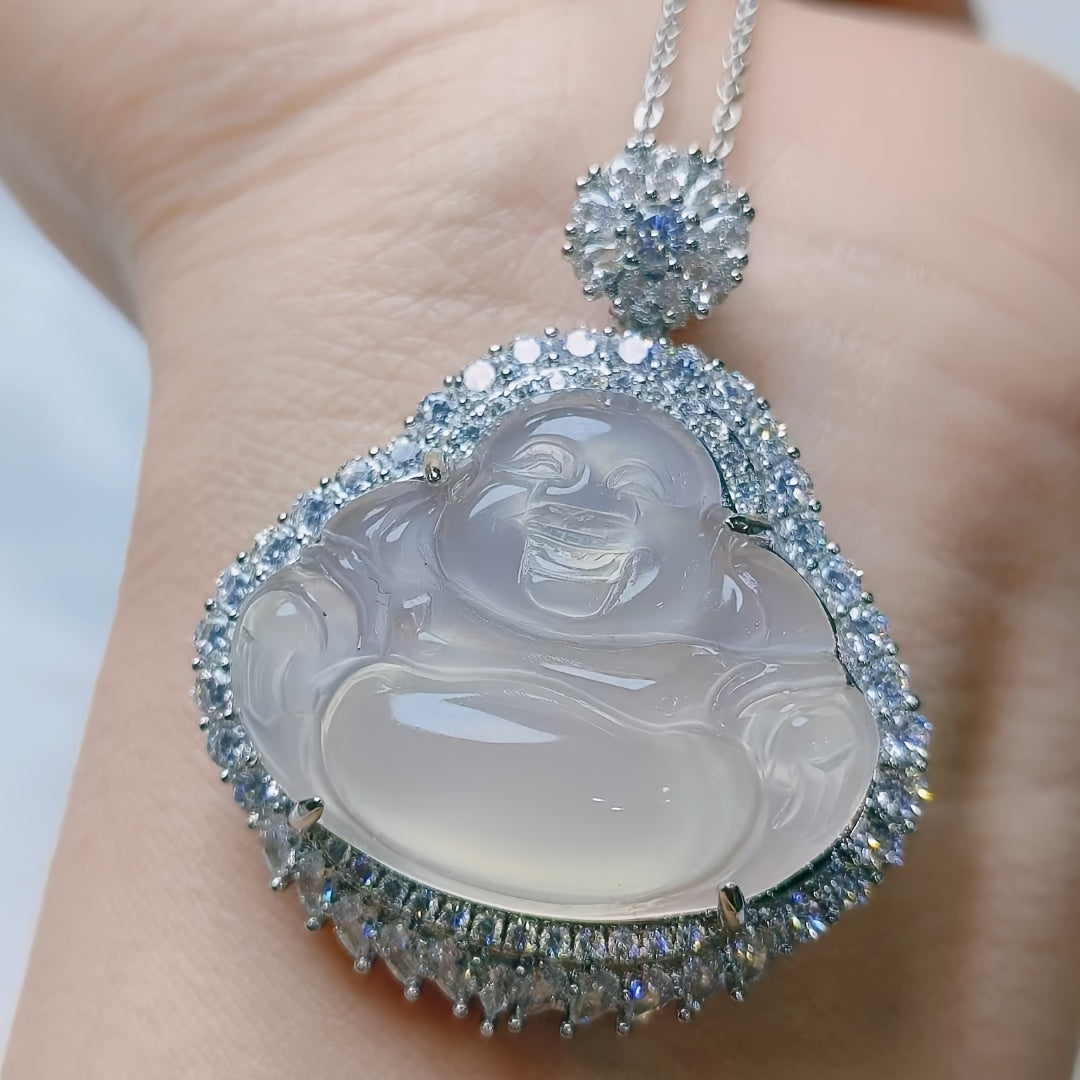
The emergence of smiling motif jewelry specifically designed for men represents a significant development in spiritual adornment. Historically, smiling imagery in jewelry has been disproportionately associated with feminine presentation, often appearing in delicate forms with traditionally feminine design elements. The creation of masculine pieces featuring smiling symbols, like the Men's Natural Agate Smiling Character Pendant, challenges this historical pattern while expanding possibilities for male engagement with symbolic adornment.
Design elements that masculinize smiling motifs include substantial proportions, earthy material choices, geometric framing, and subtle rather than exaggerated expressions. The smiling character in masculine jewelry often appears more as enlightened contentment than exuberant joy—a distinction that aligns with traditional masculine expressions of positive emotion across many cultures. The substantial agate stone and antiqued metal setting in our featured pendant exemplify this masculine design approach, creating a piece that feels authentically masculine while carrying the smiling symbol's spiritual potency.
This development responds to growing recognition that men benefit equally from spiritual practices and emotional awareness tools. Research in men's mental health increasingly highlights the importance of positive symbolic engagement and emotional expression. Jewelry featuring smiling motifs provides a socially acceptable, aesthetically pleasing means for men to engage with positive emotional symbolism—serving both as personal reminder and public statement about values and priorities. As cultural norms around masculinity continue evolving, such pieces play valuable roles in expanding emotional vocabulary and spiritual engagement for men.
 View Product Details & Buy Now
Contemporary Applications: Smiling Symbols in Modern Spiritual Practice
In contemporary spiritual practice, jewelry featuring smiling motifs serves multiple functions beyond mere adornment. These pieces function as meditation aids, mindfulness reminders, energetic tools, and social signals about personal values and spiritual orientation. The practical applications demonstrate how ancient symbolic traditions adapt to modern lifestyles while maintaining their core transformative potential.
As meditation aids, smiling motif jewelry provides visual and tactile focal points. During seated practice, the wearer might hold the pendant or focus visually on its smiling symbol, using it as anchor for cultivating specific emotional states. The symbol serves as representation of the meditative goal—contentment, peace, or enlightened awareness. Between formal meditation sessions, the jewelry serves as continuous mindfulness reminder, with each incidental contact or glance serving as prompt to return to conscious presence and positive perspective.
Energetically, these pieces function according to principles of sympathetic magic and energy psychology. The smiling symbol, when consciously charged with intention, serves as energetic pattern holder—maintaining vibrational frequency that influences both wearer and immediate environment. Many practitioners program their smiling motif jewelry with specific intentions related to emotional balance, social harmony, or spiritual awakening. The physical object then serves as constant energetic reminder and amplifier for these intentions, creating subtle shifts in personal energy field and environmental atmosphere.
Socially, wearing smiling symbol jewelry communicates values and spiritual orientation without verbal declaration. In professional environments where overt religious symbols might be inappropriate, smiling motifs provide subtle yet meaningful expression of personal philosophy. They signal approachability, positive outlook, and values alignment—qualities increasingly valued in collaborative settings. This social function demonstrates how spiritual jewelry bridges personal practice and social interaction, creating opportunities for meaningful connection based on shared values rather than specific religious affiliation.
 View Product Details & Buy Now
Future Directions: The Evolution of Symbolic Spiritual Jewelry
As interest in meaningful adornment continues growing, smiling motif jewelry and similar symbolic pieces will likely evolve in several directions. Technological integration represents one fascinating frontier—imagine jewelry with smiling motifs that incorporate subtle lighting elements activated by physiological markers of positive emotion, or pieces that connect to mindfulness apps to track wearing patterns and emotional correlations. Such developments would blend ancient symbolic wisdom with contemporary technology, creating hybrid tools for spiritual development.
Personalization represents another significant trend. Future symbolic jewelry may feature customizable smiling expressions or combine smiling motifs with personally significant symbols. Advances in 3D printing and digital design already enable such customization at accessible price points. This personalization doesn't dilute traditional meanings but rather extends the living tradition of symbolic adornment into contemporary expressions of individual spiritual paths.
Perhaps most importantly, the continued development of symbolic spiritual jewelry reflects broader cultural shifts toward meaning-centered consumption and emotional intelligence cultivation. In a world increasingly recognizing the importance of mental health and spiritual wellbeing, objects that support these dimensions offer profound value beyond their material worth. The smiling motif, in its elegant simplicity and psychological potency, represents particularly powerful symbolic vocabulary for this emerging consciousness—a visual language that speaks directly to our shared human capacity for joy, connection, and enlightened awareness.
As this evolution continues, pieces like the Men's Natural Agate Smiling Character Pendant will likely be recognized not merely as fashion accessories but as important tools in the broader project of human flourishing. They represent material manifestations of ancient wisdom adapted for contemporary life—reminders that spiritual practice need not be separate from daily existence, and that the tools for transformation can be as beautiful as they are functional. In wearing such symbols, we participate in millennia-long human traditions of seeking meaning, connection, and joy through the objects we choose to carry close to our bodies and consciousness.
