





In an age characterized by digital distraction and emotional disconnection, ancient spiritual symbols like Guanyin are finding new relevance as wearable tools for cultivating empathy. This exploration examines how contemporary jewelry featuring the Bodhisattva of Compassion serves as both aesthetic statement and psychological technology for developing what neuroscience calls "empathetic resonance."
Historical Evolution of Guanyin Iconography
The transformation of Guanyin (from the Sanskrit Avalokiteśvara) represents one of the most fascinating journeys in religious iconography. Originally depicted as a male princely figure in Indian Buddhism around the 1st century CE, the Bodhisattva of Compassion gradually transformed as the teachings traveled along the Silk Road. By the time Buddhism reached China during the Han Dynasty (206 BCE–220 CE), Avalokiteśvara had begun acquiring feminine characteristics that would fully blossom during the Tang Dynasty (618–907 CE).
This gender transformation wasn't arbitrary but reflected deep cultural currents. In Chinese spirituality, compassion (ci 慈) and mercy (bei 悲) were increasingly associated with feminine qualities of nurturing and unconditional love. The Lotus Sutra's description of Guanyin's ability to appear in whatever form necessary to relieve suffering provided theological justification for this adaptation. By the Song Dynasty (960–1279 CE), Guanyin had become predominantly represented as female in East Asian Buddhism, often depicted as the "Goddess of Mercy" holding a vase containing the nectar of compassion.
Contemporary Reinterpretation
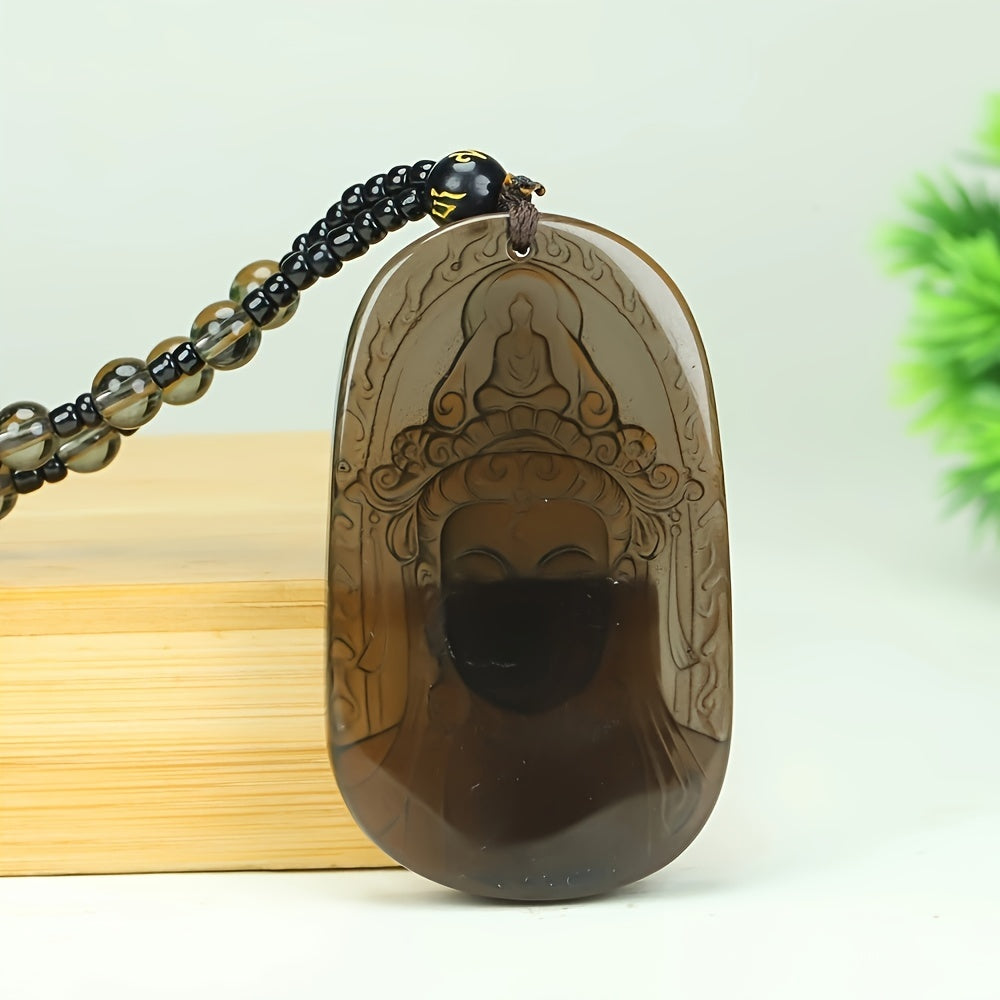
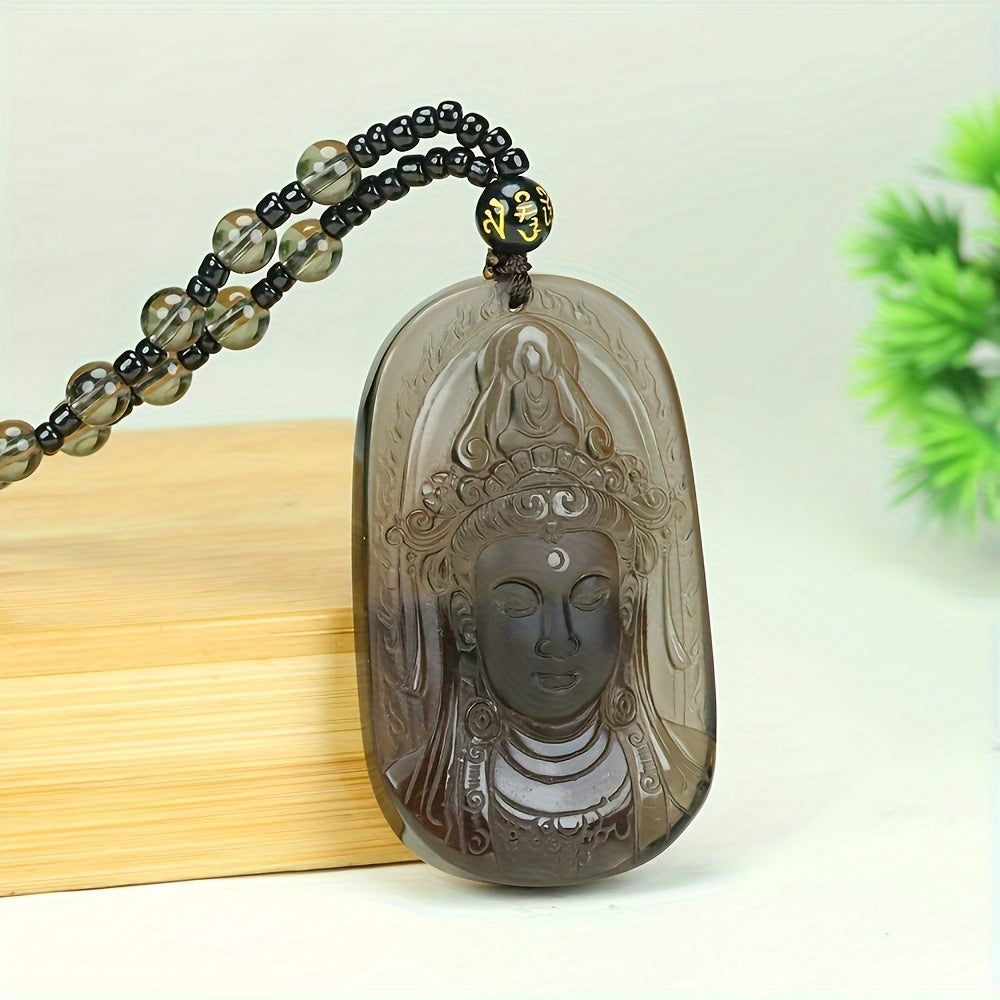
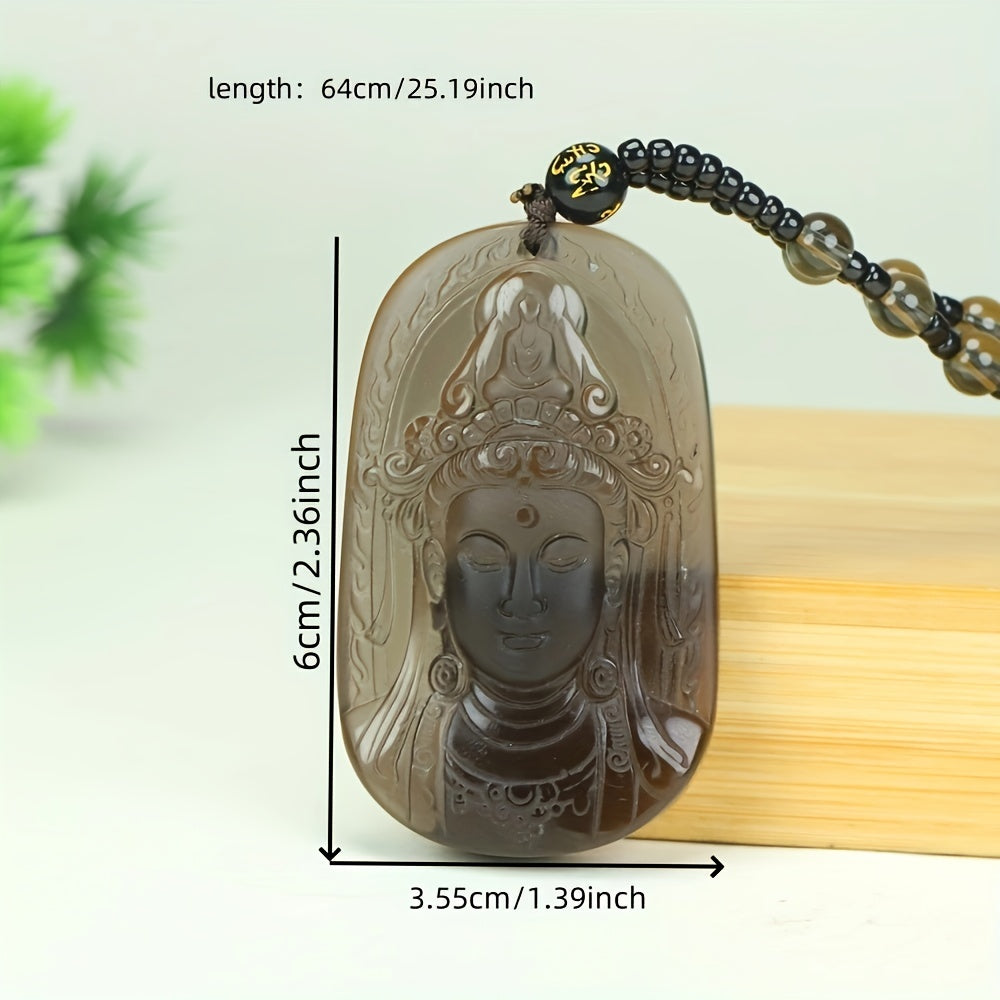
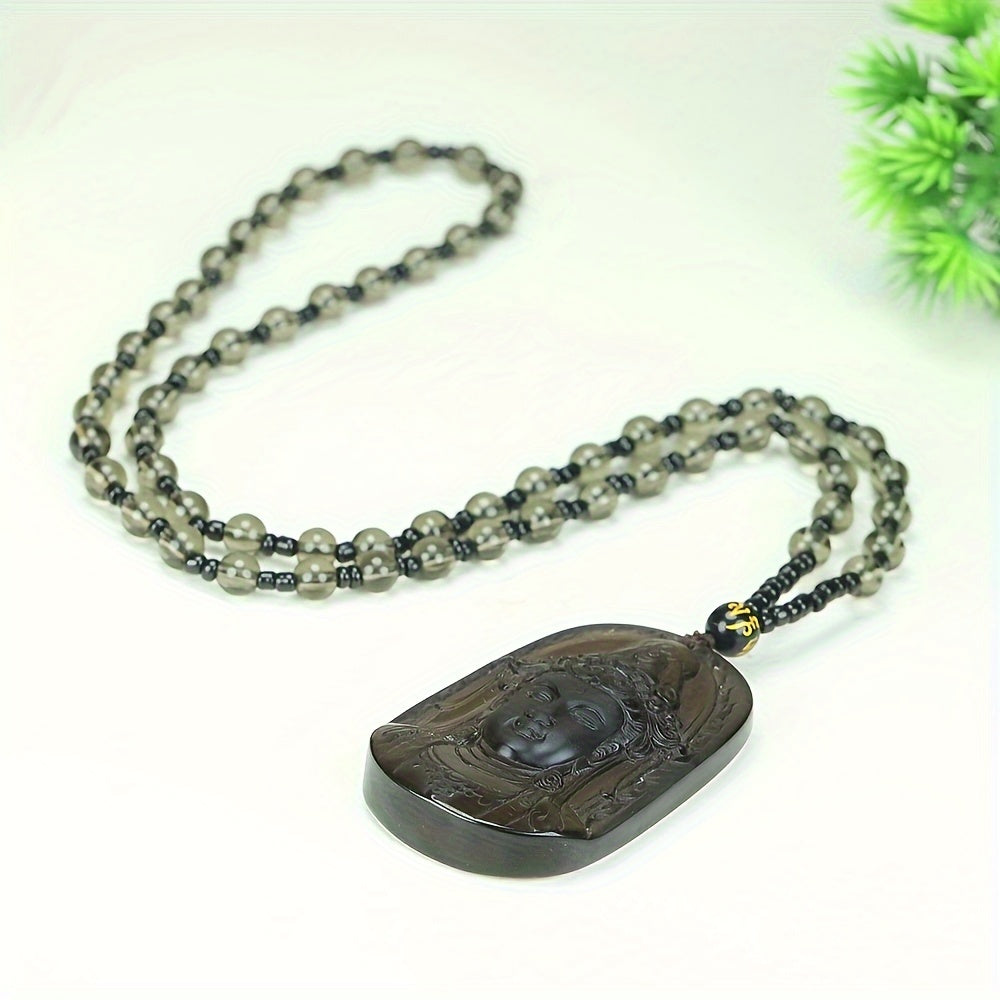
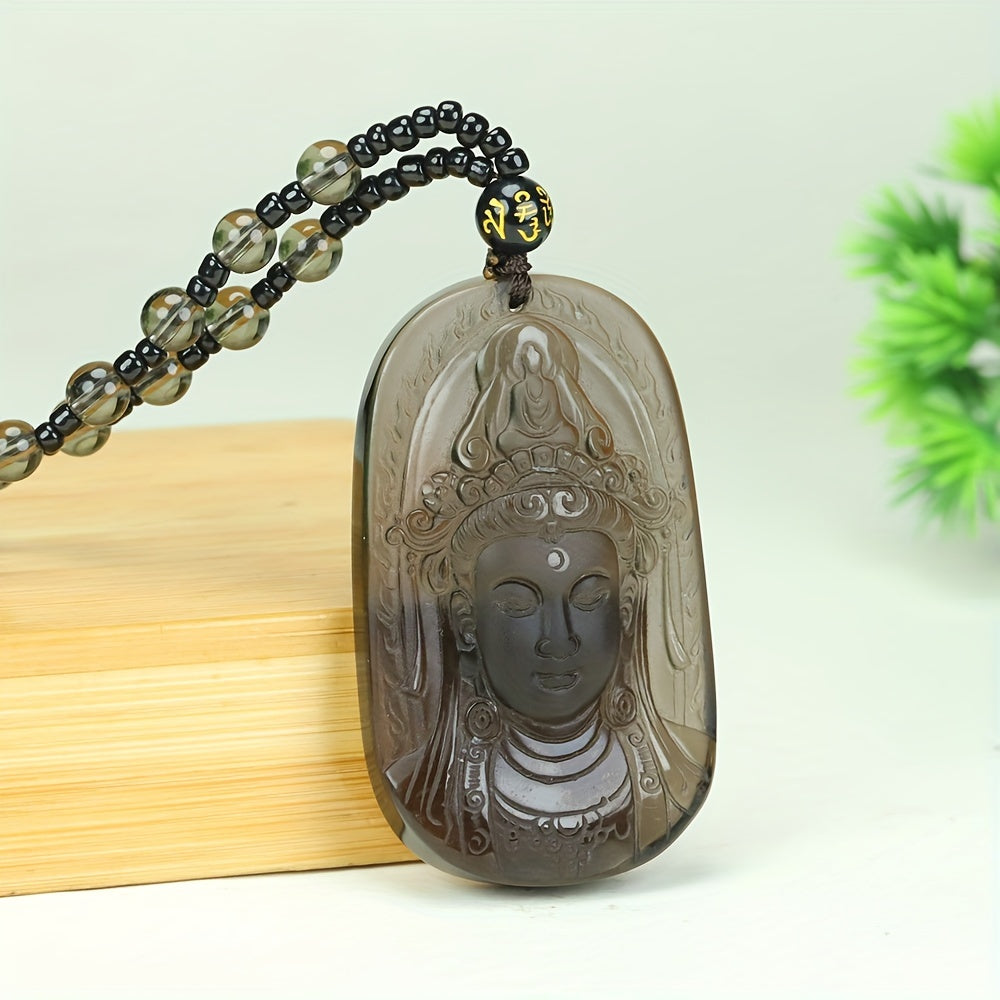
Modern Guanyin jewelry represents a fascinating synthesis of traditional iconography and contemporary design sensibilities. Designers must balance reverence for centuries-old symbolism with adaptations that resonate with contemporary wearers. The frosted finish, for example, maintains spiritual authenticity while introducing a modern aesthetic that speaks to current preferences for subtle, non-glaring spirituality.
Psychological Dimensions of Compassionate Symbols
From a psychological perspective, wearing Guanyin jewelry engages what cognitive scientists term "priming"—the subtle activation of mental associations that influence subsequent thoughts and behaviors. Research in embodied cognition demonstrates that physical objects associated with specific qualities can actually enhance those qualities in the wearer. A pendant representing compassion literally "primes" compassionate thinking and behavior.
The frosted finish adds an additional psychological layer. Unlike polished surfaces that reflect the viewer's image back, the matte surface encourages what psychologists call "decentered awareness"—the ability to step outside one's own perspective. This visual quality reinforces Guanyin's essential teaching: true compassion requires seeing beyond one's own reflection to perceive others' suffering.
"Wearing Guanyin symbolism creates what we might call 'compassionate proprioception'—an enhanced awareness of one's emotional orientation toward others. The pendant becomes a physical reference point for checking whether one's internal state aligns with compassionate values." — Dr. Li Wei, Cognitive Psychologist
Neuroscience of Compassion Cultivation
Recent neuroscience research offers fascinating insights into how symbolic objects might influence brain function. Studies using fMRI technology show that meditation on compassion activates specific neural networks, including the insula (involved in emotional awareness) and the anterior cingulate cortex (associated with empathy). While research specifically on compassion jewelry is limited, studies on religious symbols suggest they can trigger similar neural pathways associated with the qualities they represent.
The tactile dimension of jewelry adds another layer to this neurological engagement. The somatosensory cortex processes touch information, and when that touch is associated with a compassion symbol, it creates a multisensory reinforcement of compassionate intention. This explains why many wearers report that simply touching their Guanyin pendant during stressful moments helps shift their emotional state toward greater empathy and patience.
Cultural Adaptation and Global Spirituality
As Guanyin symbolism enters global jewelry markets, it undergoes fascinating cultural adaptations. Western designers often blend Guanyin imagery with other compassion symbols from different traditions—Kuan Yin with Mother Mary, or with Green Tara from Tibetan Buddhism. These hybrid designs reflect what religious scholars term "spiritual bricolage"—the creative combination of elements from different traditions to form personalized spiritual practices.
This global adaptation raises important questions about cultural appropriation versus appreciation. Thoughtful designers address this by: studying the historical and theological context of Guanyin worship, collaborating with Buddhist communities, creating designs that honor rather than trivialize the symbolism, and providing educational materials about the symbol's meaning. When done respectfully, this cross-cultural exchange can deepen understanding of compassion as a universal human value expressed through diverse cultural forms.
The Frosted Finish as Cultural Bridge
The frosted surface treatment serves as a particularly effective cultural bridge. While deeply rooted in Buddhist symbolism of gentle illumination, the matte finish also resonates with contemporary minimalist aesthetics popular across cultures. This allows the pendant to function simultaneously as traditional spiritual object and modern fashion accessory, appealing to diverse wearers with different relationships to Buddhist tradition.
Gender, Spirituality, and Contemporary Adornment
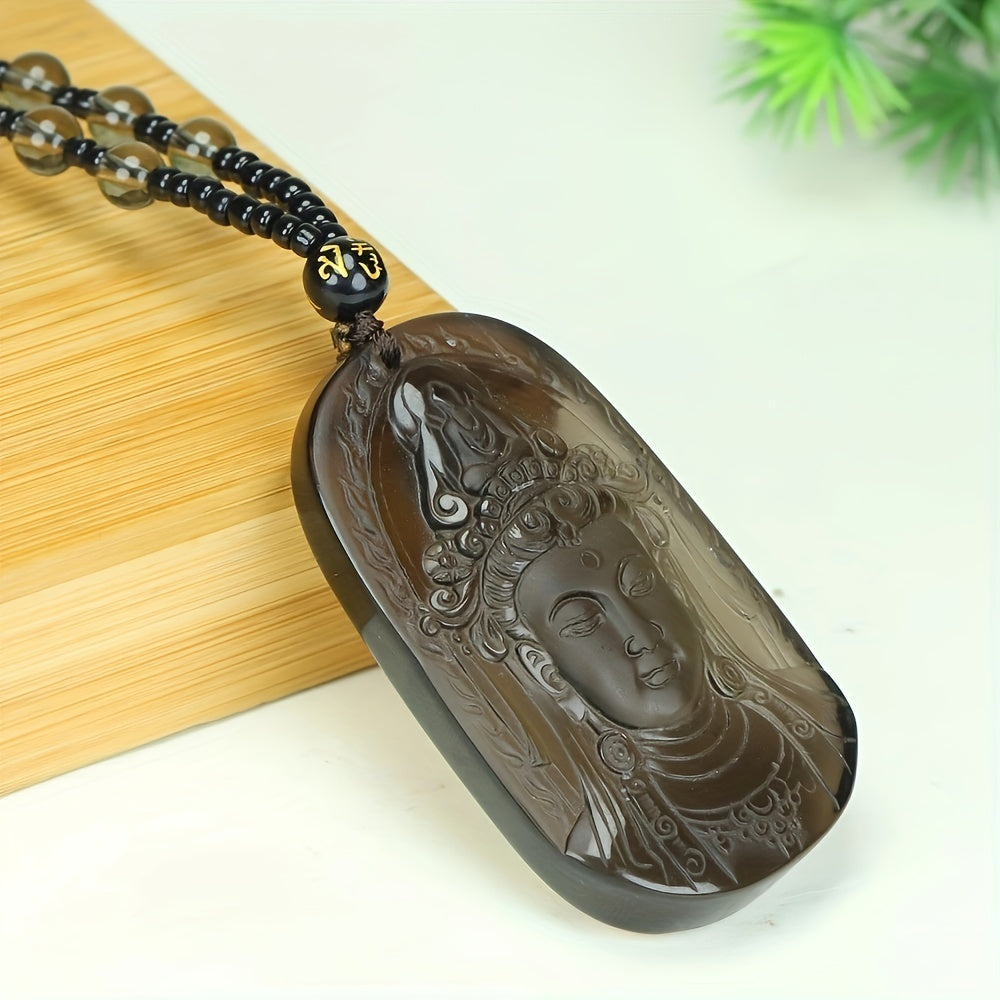
Guanyin jewelry occupies a unique space in contemporary gender dynamics. While historically associated with feminine compassion, modern interpretations are increasingly worn by people of all genders. This reflects broader cultural shifts in understanding compassion as a human rather than gender-specific quality. The frosted finish, with its neutral color palette, supports this gender-inclusive approach.
For male wearers, Guanyin jewelry represents an opportunity to engage with qualities traditionally coded as feminine without compromising masculine identity. This aligns with evolving masculinity that values emotional intelligence and empathetic capacity. The substantial size and weight of many Guanyin pendants make them compatible with masculine aesthetics while introducing spiritual depth.
The Bodhisattva as Archetype
From a Jungian perspective, Guanyin represents what Carl Jung called an "archetype"—a universal pattern or image from the collective unconscious. The Compassionate Bodhisattva archetype manifests across cultures in different forms but serves the same psychological function: integrating the capacity for unconditional empathy into conscious awareness. Wearing Guanyin jewelry becomes a practice in making this archetype conscious and active in daily life.
Material Spirituality: The Significance of Frosted Surfaces
The choice of frosted finish carries profound spiritual symbolism. In Buddhist teachings, enlightenment is often described using light metaphors. The frosted surface represents a particular quality of enlightened awareness—not the glaring sun of absolute truth that overwhelms ordinary perception, but the soft, diffused light of compassion that illuminates without blinding.
This material choice reflects the Mahayana Buddhist concept of upaya (skillful means)—the adaptation of teachings to the capacity of the listener. Just as Guanyin appears in whatever form is most helpful, the frosted finish presents the Bodhisattva's image in a form that is accessible and comforting rather than overwhelming. The matte surface invites contemplation rather than immediate comprehension, encouraging the slow, gentle deepening of understanding characteristic of compassion's development.
Social Impact and Compassionate Communities
Beyond individual spiritual practice, Guanyin jewelry has potential social implications. When worn visibly, these pendants create what sociologists call "symbolic cues" that signal values to others. In social settings, a Guanyin pendant can initiate conversations about compassion, spirituality, and values. This transforms personal adornment into potential community-building through shared values exploration.
Some organizations have begun using compassion symbols like Guanyin in what psychologists call "values affirmation" interventions. While research is preliminary, early studies suggest that visible reminders of compassionate values can increase prosocial behavior in group settings. This suggests that widespread wearing of compassion symbolism could have subtle but meaningful effects on social dynamics.
Future Directions: Technology and Tradition
Emerging technologies offer intriguing possibilities for compassion jewelry. Smart materials could change texture or temperature in response to physiological indicators of stress, providing biofeedback for compassion practice. Augmented reality could allow wearers to access teachings or guided meditations by scanning their pendant. 3D printing could create intricate Guanyin forms impossible through traditional carving.
Yet the enduring appeal of traditional forms suggests that technological enhancement should complement rather than replace the essential elements: meaningful symbolism, quality craftsmanship, and material presence. The most successful future designs will likely be those that use technology to deepen engagement with compassion practice rather than distract from it.
Conclusion: Adornment as Spiritual Technology
Guanyin jewelry represents what might be called "spiritual technology"—tools designed to cultivate specific qualities of consciousness. In a world facing what compassion researchers call an "empathy deficit," such tools take on renewed importance. The frosted Guanyin pendant, with its gentle illumination and traditional symbolism adapted for contemporary life, offers one pathway toward what Buddhist teachings call "the great compassion that embraces all beings."
As both art object and spiritual tool, such jewelry reminds us that beauty and ethics need not be separate. The aesthetic appreciation of the finely carved, frosted pendant can become the very gateway to ethical development. Each time the pendant is noticed, touched, or adjusted, it offers an opportunity to return to compassionate awareness—not as abstract ideal but as embodied practice.
In this sense, Guanyin jewelry does more than adorn the body—it adorns consciousness with the possibility of transformation. It represents a choice to carry compassion not just as internal value but as visible commitment, not just as occasional practice but as constant companion. In a fragmented world, such visible commitments to our shared humanity become small but meaningful acts of healing.
