




In the bustling digital age, where stress is a common currency and anxiety often feels like a default setting, a quiet revolution is taking place in personal adornment. People are increasingly turning to jewelry that does more than glitter—they seek pieces that resonate, that carry meaning, and actively participate in their well-being. At the forefront of this movement is a powerful duo: the ancient, jovial symbol of the laughing sage and the vibrant, protective stone known as cinnabar. This article delves deep into why this combination, exemplified in pieces like the Natural Cinnabar Laughing Character Pendant, represents more than a trend; it signifies a shift towards intentional living through wearable art.
I. Overview of a Unique Design: Where Symbol Meets Substance
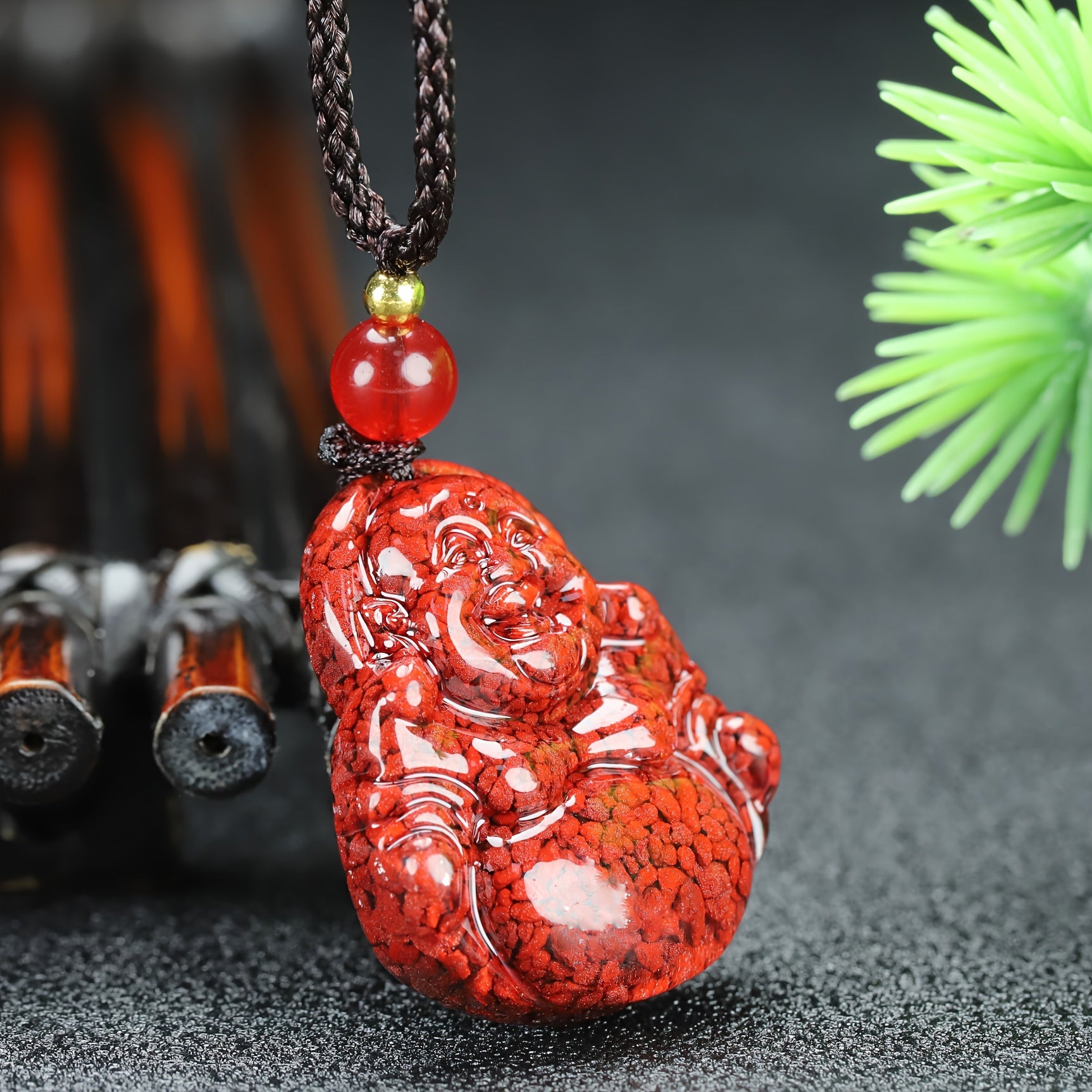
The design is deceptively simple: a carved character mid-laughter, rendered in bold vermilion red, hanging from a simple cord. Yet, this simplicity is its genius. It bypasses ornate complexity to deliver a direct, universal message of joy. The design philosophy is rooted in symbolic immediacy and energetic authenticity. The laughing character—whether interpreted as Budai, a joyful sage, or a universal emblem of mirth—acts as a psychological trigger, prompting a mirror-neuron response of happiness in both the wearer and the observer.
Simultaneously, the choice of solid, unplated cinnabar ensures the "substance" matches the symbol. This is not a superficial coating of red paint over common stone; it is the essence of the mineral itself. The design thus becomes a perfect marriage: the form (laughter) invites a positive mental state, while the material (cinnabar) works on a subtle energetic level to stabilize and protect that state. It is holistic design thinking applied to jewelry, considering aesthetic, psychological, and vibrational impact as one interconnected system.
II. Material and Craftsmanship: The Hand of the Artisan Meets the Heart of the Earth
Material: Cinnabar's Sacred Geology
Cinnabar (mercuric sulfide) is a mineral of profound geological and historical significance. Formed near volcanic vents and hot springs, its creation itself is a process of earthly alchemy—transformation under extreme heat and pressure. This origin story metaphorically aligns with its use: a tool for personal transformation. Historically, its brilliant red powder (vermilion) was more valuable than gold in ancient Rome and China, used in sacred art, royal seals, and alchemical pursuits seeking immortality. Wearing genuine cinnabar is thus an act of connecting with this lineage of power, protection, and transformation.
Each piece of cinnabar is unique, with variations in hue, density, and natural patterning. These "flaws" are, in fact, signatures of authenticity—proof of its natural origin and a rejection of the sterile perfection of mass production. When you hold a real cinnabar carving, you hold a fragment of the Earth's artistry, millions of years in the making.

Craftsmanship: The Intention in the Incision
The value of hand-carving cannot be overstated. In an era of 3D printing and injection molding, the slow, deliberate process of carving by hand imparts a different quality to the object. The artisan must work with the stone's natural structure, its hardness, and its hidden fissures. This requires patience, skill, and a meditative focus. Many craftsmen in this tradition hold specific intentions or mantras while carving, effectively programming the piece with positive energy from its very creation.
The tactile result is also different. Hand-carved surfaces have a subtle, living texture that reflects light softly and feels organic to the touch. The lines of the laughing character are not mathematically perfect but express the fluidity of the carver's hand, giving the symbol a warmth and personality that machine-made replicas lack. This connection to human artistry adds an intangible layer of soul to the jewelry.
III. Cultural & Symbolic Meaning: A Cross-Current of Traditions
The laughing figure is a cultural polymath. In Chinese Buddhism, Budai (or Hotei) is a folk deity embodying happiness, generosity, and wealth. His large belly symbolizes the capacity to digest the troubles of the world, and his laugh is the sound of enlightened contentment. In a broader, secular sense, the laughing character taps into a global archetype: the Fool in Tarot (representing new beginnings and faith), the Jester in medieval courts (speaking truth through humor), and the ever-present cultural ideal of the wise elder who meets life with a smile.
Pairing this with cinnabar creates a powerful symbolic cocktail. In traditional Chinese cosmology, red is the color of Yang energy—active, fiery, protective, and auspicious. It is the color of celebration (weddings, New Year), vitality, and life itself. Cinnabar was believed to ward off evil spirits and was placed in tombs to protect the deceased. Therefore, the pendant becomes a symbolic engine: the laughter attracts positive Yang energy (joy, opportunity), while the cinnabar container secures and protects that energy, preventing its dissipation.
"This pendant is not just a depiction of joy; it is a functional device designed according to ancient principles of energetic symbolism. The laughter calls, the cinnabar holds and protects. It's a complete circuit for prosperity." — Dr. Lin Wei, Cultural Symbolism Researcher.
IV. Historical Background: From Alchemists' Labs to Modern Necks
Cinnabar's history is a tapestry of science, spirituality, and art. Ancient Chinese alchemists, particularly in the Taoist tradition, prized cinnabar as the key ingredient in their quest for the elixir of life. They believed its transformative properties—from red stone to silvery mercury upon heating—mirrored the human potential for spiritual transformation and immortality. While the literal pursuit was fraught, the metaphorical legacy is powerful: cinnabar as a substance of change.
Parallelly, in the West, cinnabar from Spanish mines was a prized pigment for Roman frescoes and Renaissance masterpieces. Its use declined with the understanding of mercury's toxicity, but its legacy as a color of power remained. The modern use of solid cinnabar in jewelry is a safe and sustainable way to honor this history, allowing wearers to connect with these deep streams of human curiosity and reverence for the natural world, without the risks associated with its powdered or processed forms.
V. Emotional & Social Significance: The Jewelry of Resilience
On an emotional level, this jewelry acts as an anchor and a beacon. As an anchor, the weight and cool touch of the stone provide a grounding sensation during moments of anxiety or overwhelm—a tangible reminder to return to the present. As a beacon, its bright color and cheerful symbol project an intention of openness and approachability, potentially influencing social interactions.
In a social media-saturated world where curated perfection often breeds insecurity, wearing a symbol of genuine, uncomplicated laughter is a subtle act of rebellion. It states a preference for authentic joy over performative happiness. It can serve as a conversation starter about mindfulness, spirituality, or cultural appreciation, connecting like-minded individuals and fostering community based on shared values rather than mere aesthetics.
Why This Combination Resonates Now
The Wellness Shift: Modern wellness has moved beyond diet and exercise to encompass mental, emotional, and energetic health. Jewelry like this fits perfectly into this holistic model, offering aesthetic pleasure, emotional support (via symbolism), and purported energetic benefits.
The Rejection of Fast Fashion: As consumers become more conscious of environmental and ethical impacts, there's a growing demand for pieces that are made responsibly, last forever, and tell a story. A hand-carved, natural stone pendant is the antithesis of disposable fashion.
The Search for Meaning: In secular societies, people often seek meaning and ritual outside traditional religious structures. Personal spiritual tools, like intention-infused jewelry, provide a customizable framework for creating personal significance and daily ritual.
VI. Market Perspective & Future Outlook
The market for meaningful, spiritually-informed jewelry is not a niche fad but a robust and growing segment. Analysts note a consistent year-over-year increase in demand for "gemstones with purpose," "healing crystals," and "intentional adornment." This pendant sits at a sweet spot within this market: it is accessible (casual style, unisex), authentic (real stone, hand-carved), and carries a clear, positive message (joy/prosperity).
The future will likely see further integration of technology, such as QR codes linking to the stone's provenance or the artisan's story, enhancing transparency. We may also see more collaborations between traditional carvers and contemporary designers, pushing the aesthetic boundaries while preserving core symbolic and material integrity. The core appeal, however—the human connection to earth-derived materials and ancient symbols—will remain timeless.
VII. Final Synthesis: A Companion for the Modern Journey
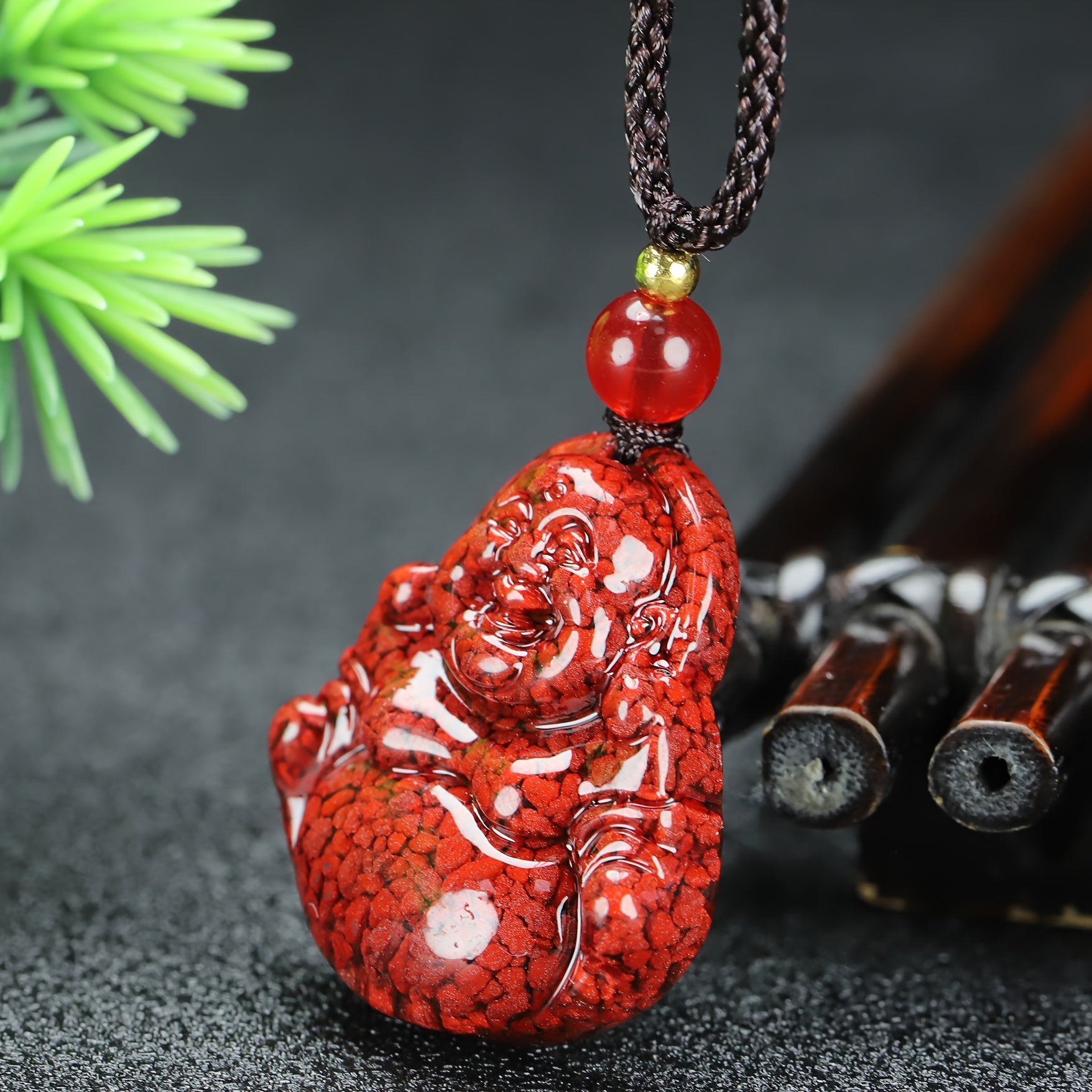
The Natural Cinnabar Laughing Character Pendant is more than an accessory; it is a modern talisman. It bridges the ancient and the contemporary, the spiritual and the stylistic, the earthy and the elevated. It does not demand belief in a specific system but offers its properties—the solidity of stone, the universality of a laugh, the warmth of a sacred color—as gifts to the wearer.
In choosing to wear such a piece, one makes a quiet yet powerful statement: that life is to be approached with joy and resilience, that we are connected to a history of human seeking, and that the objects we choose to carry can be active partners in crafting a more mindful, positive, and prosperous reality. In the alchemy of personal transformation, it serves as both the catalyst and the vessel.
Carry your joy. Protect your light. Wear your intention.
