




Introduction: The Shape of Feeling
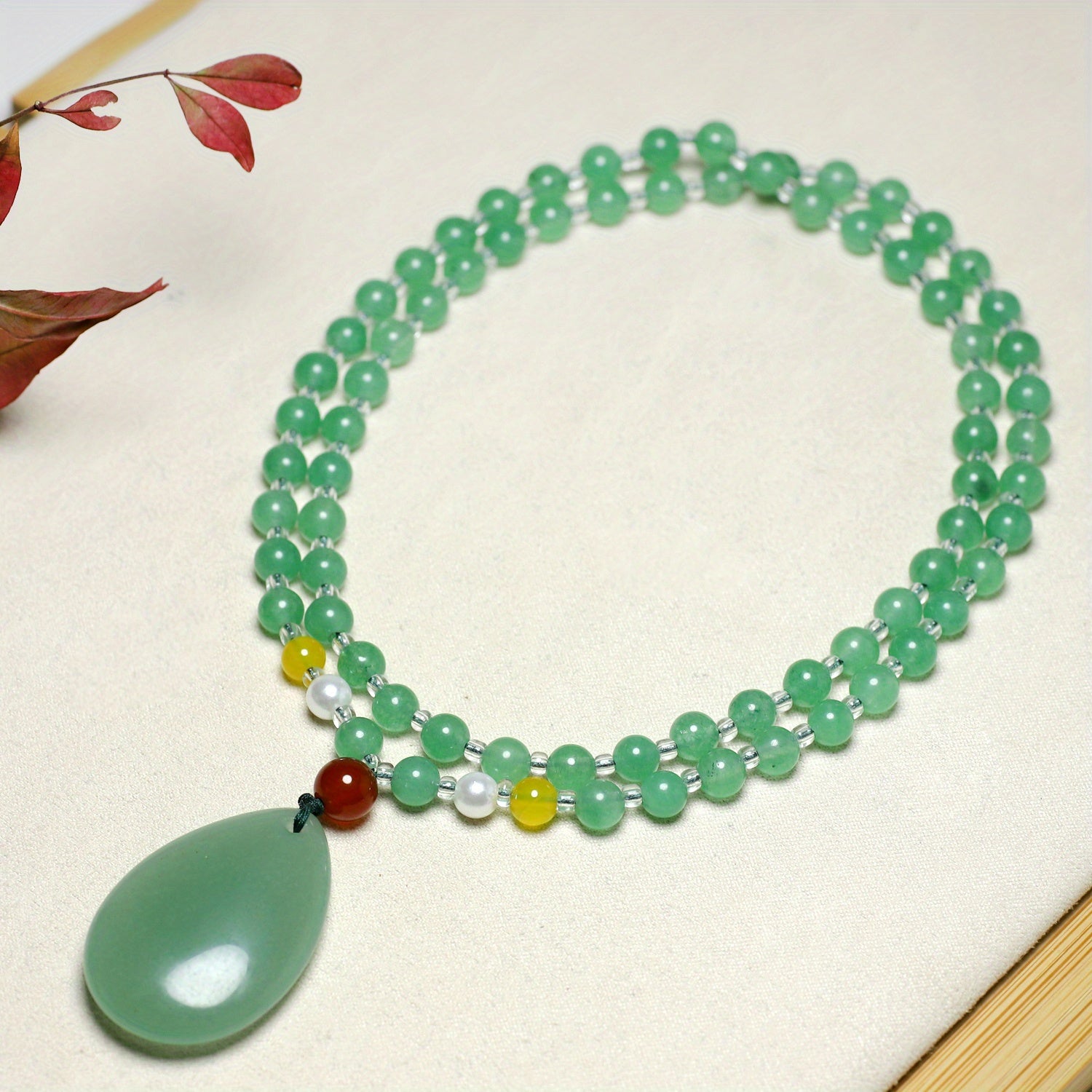
In the geometric lexicon of jewelry design—circles for eternity, squares for stability, triangles for dynamism—the teardrop occupies a uniquely poetic space. It is a shape in motion, a captured moment of transition between solid and liquid, emotion and release. When combined with the organic luster of the pearl, a gem born from fluid sensitivity, a powerful narrative emerges. This isn't merely adornment; it's a wearable philosophy. This article examines how this design synergy, exemplified in pieces like Darhai's Elegant Teardrop Pendant Necklace, responds to a growing cultural desire for accessories that honor emotional intelligence, fluid identity, and a spirituality rooted in feeling rather than dogma.
Core Design Principles of Fluid Jewelry:
- Organic Mimicry: Drawing inspiration from natural fluid forms—raindrops, waves, petals—to create a sense of aliveness and connection to nature.
- Kinetic Suggestion: Using shape and arrangement to imply movement and flow, even in a static object, engaging the viewer's imagination.
- Tactile Invitation: Smooth, rounded forms that encourage touch, fostering a personal, intimate relationship with the piece.
- Symbolic Depth: Layering multiple meanings (e.g., tear as release/grief, drop as cleansing/rebirth, pearl as wisdom/purity) to resonate with complex human experiences.
- Energetic Pathway: Designing the flow of elements to guide the eye and, symbolically, energy (chi) in a harmonious, unobstructed manner.
Historical Background: Tears of Gods and Queens
The teardrop motif, or the "pendeloque," has a rich and varied history. In ancient times, tear-shaped vessels were used to collect the tears of mourners in Roman and Egyptian cultures. In jewelry, the shape gained prominence in the Georgian and Victorian eras, often used in mourning jewelry where pearls (symbolizing tears) and jet or black enamel teardrops expressed grief. However, its symbolism was never monolithic. In many Eastern traditions, the dropping shape was seen as a symbol of the divine nectar or amrita—a substance of immortality and bliss.
Pearls, meanwhile, have been universally coveted. Formed within the soft tissue of a living mollusk as a defense mechanism against an irritant, the pearl became a metaphor for beauty born from adversity, wisdom gained through irritation, and value created through patience. Cleopatra famously dissolved a pearl in vinegar to win a bet with Mark Antony, displaying the ultimate in luxurious extravagance. This duality—the pearl as both a symbol of serene purity and of profound, transformative resilience—makes it the perfect companion to the emotionally complex teardrop.
Artistic & Aesthetic Interpretation: Capturing Liquid Light
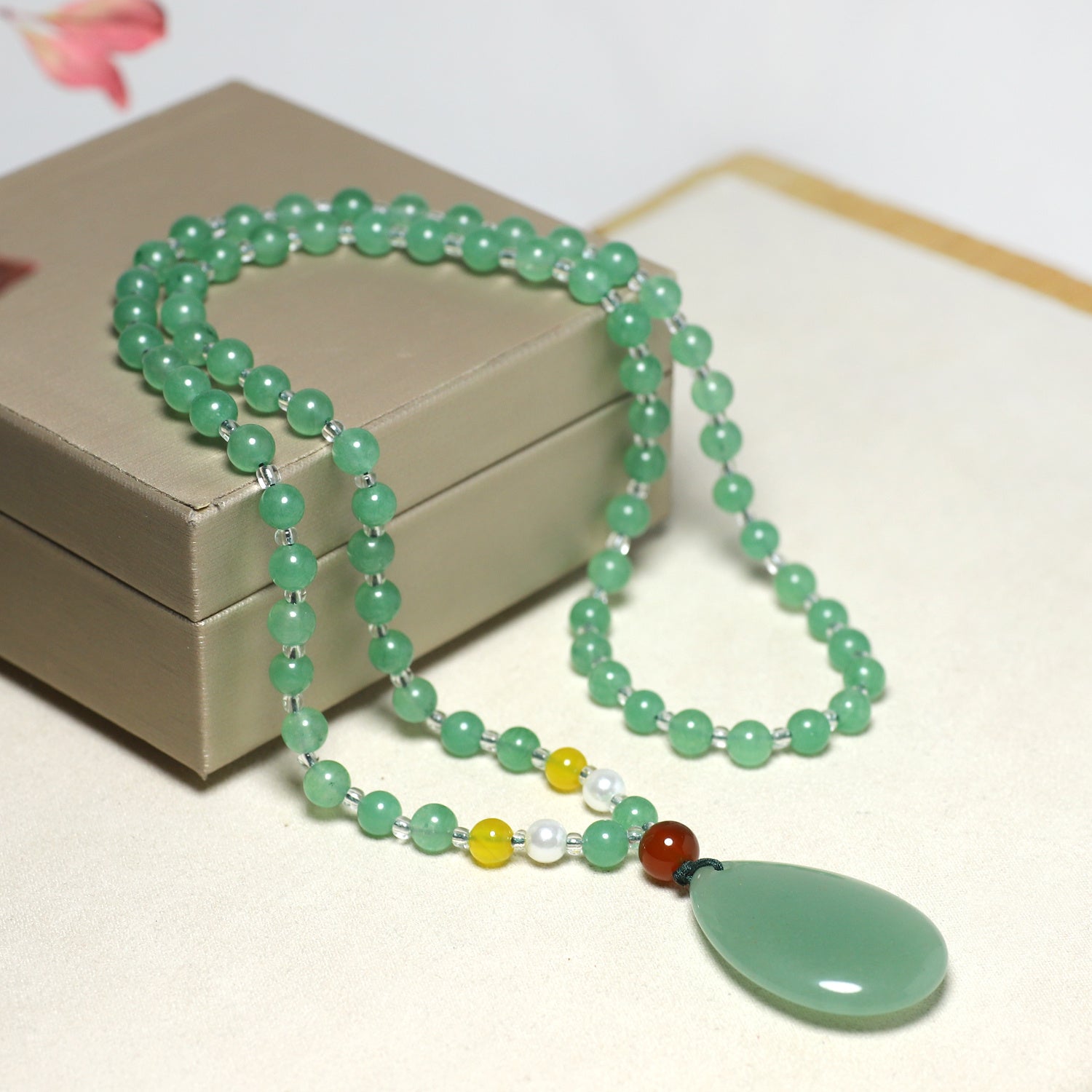
From an artistic standpoint, creating jewelry with fluid forms presents unique challenges and opportunities. The teardrop is a masterclass in minimalism and maximum expression. A successful teardrop pendant must have perfect symmetry and a curve that feels both weighted and graceful, suggesting the moment before a drop falls. The choice of material is crucial: a high-polish finish captures and plays with light, mimicking the way light dances on water.
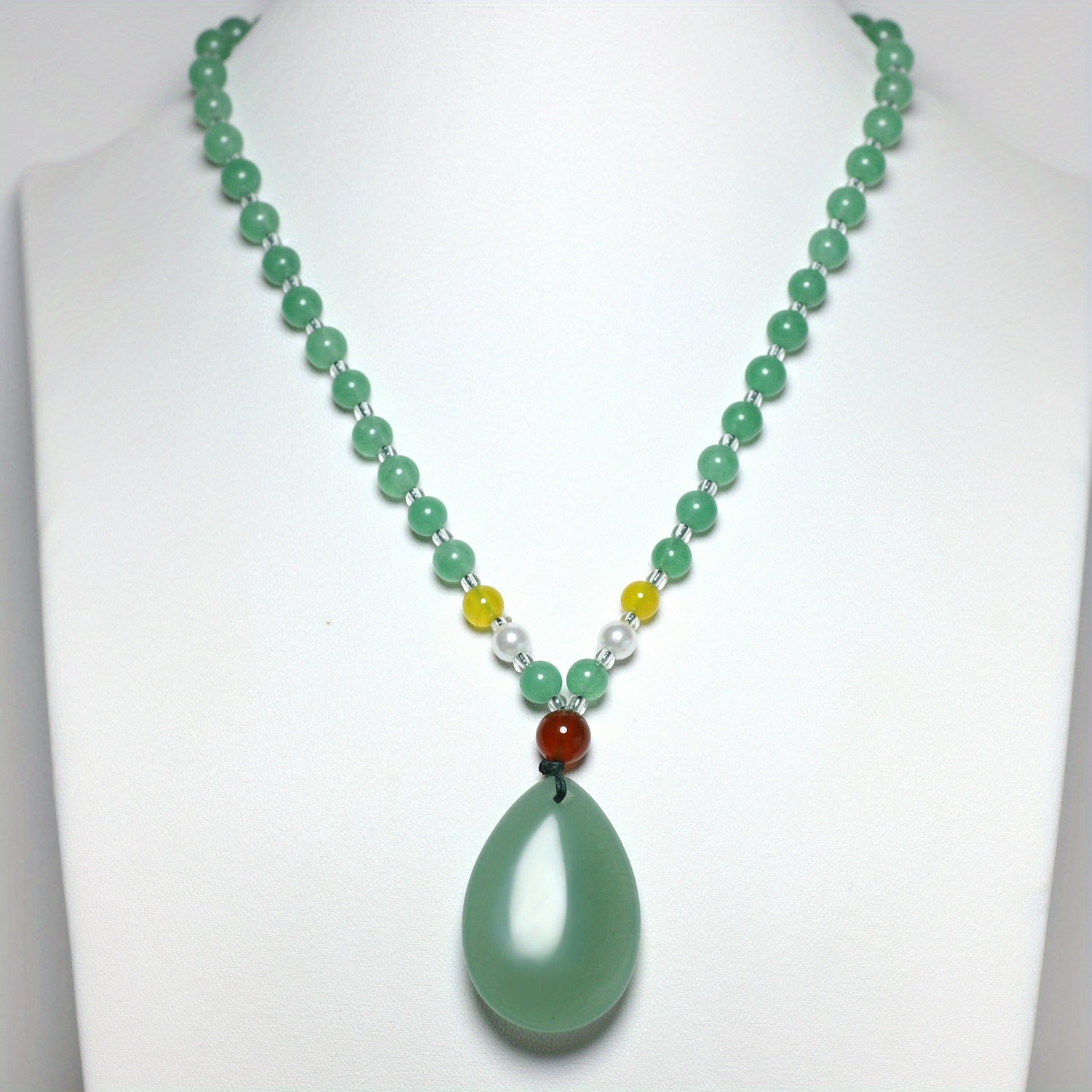
In the Darhai necklace, the faux jade provides a soft, internal glow, while the pearls offer a shimmery, diffused reflection. The metallic spacers act as points of light punctuation. This creates a visual rhythm—glow, shimmer, sparkle—that mimics natural flows. The arrangement isn't random; it's a composed cascade that leads the eye downward in a gentle, meandering path, much like a slow-moving stream. This visual flow has a subconscious calming effect, tapping into what psychologists call "soft fascination," a state elicited by natural patterns that promotes mental restoration.
Material, Energy, and Symbolism: A Synergetic Language
The energy of a piece is the sum of its material and symbolic parts. Let's decode the language of this specific combination:
Faux Jade (The Heart's Language):
While not mined stone, high-quality faux jade is engineered to visually and tactilely emulate nephrite or jadeite. In energy design, intention is paramount. By choosing the form and color of jade, the piece invokes its centuries-old symbolism: harmony, balance, and heart healing. Green is the color of the heart chakra (Anahata), associated with love, compassion, and emotional equilibrium. The material becomes a visual and intentional anchor for these qualities.
Pearls (The Wisdom of Depth):
Pearls are formed in the deep, dark sea, making them symbols of hidden knowledge, intuition, and the wisdom that comes from navigating emotional depths. Their smooth, cool surface is associated with calming nervous energy. In the composition, they act as energetic pauses or breaths between the more solid elements, allowing the "flow" of the necklace to feel natural and unhurried.
The Teardrop Form (The Courage to Feel):
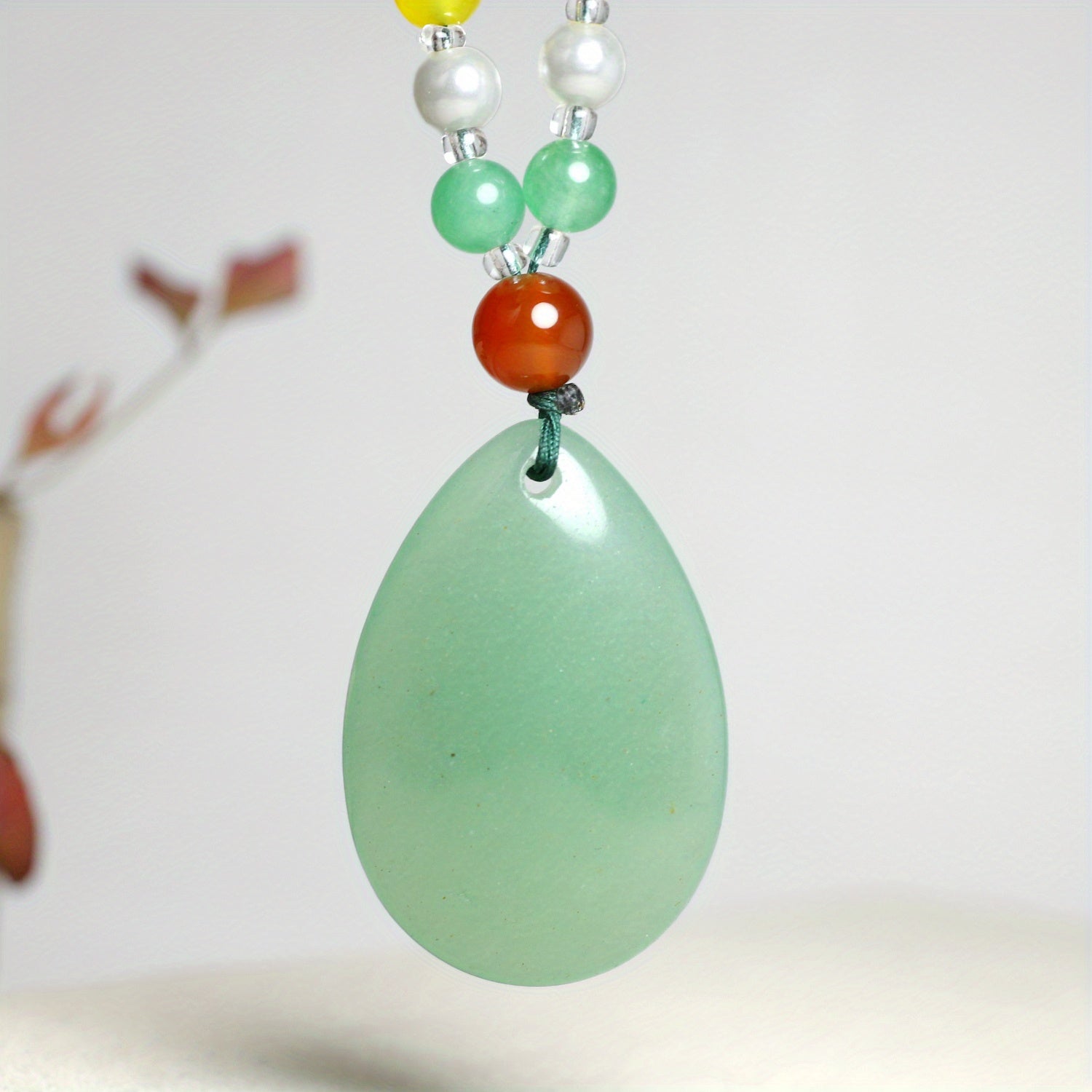
This is the most psychologically active element. It represents the courage to be vulnerable, to allow emotions to move through and out. In a culture that often values stoicism, wearing a teardrop can be a subtle act of rebellion—a declaration that feeling is a strength. Energetically, its pointed end is believed to help direct energy downward for grounding or to focus intention in a specific, gentle way.
Emotional & Social Significance: Jewelry as Emotional Armor
In contemporary society, where mental well-being is a central conversation, jewelry like this takes on new roles. It functions as "emotional armor"—not armor that blocks feeling, but armor that validates and protects one's right to feel deeply. For the wearer, it can be a self-soothing tool. The simple act of fingering the smooth teardrop pendant during a stressful moment can serve as a mindfulness anchor, pulling one back to the present and to a sense of inner calm.
Socially, such pieces act as subtle social signals. They can indicate to others that the wearer values depth, sensitivity, and authenticity. In romantic contexts, gifting or wearing a teardrop and pearl necklace communicates a understanding of love's complexities—that true love isn't just joy, but also encompasses empathy, comfort during sadness, and the wisdom gained through shared experiences.
"The modern jewelry consumer isn't just buying an object; they're seeking a companion for their inner journey. A teardrop pendant isn't about mourning; it's about the dignity of emotional process. It says, 'I am in flow,' which is one of the healthiest states a human can inhabit." — Dr. Anya Sharma, Psychologist and Author of 'The Worn Self: Psychology of Adornment'.
Market Perspective: The Rise of the "Feeling-First" Consumer
The market for symbolic, emotionally-resonant jewelry is expanding rapidly, driven by the "Feeling-First" consumer. This demographic, spanning generations but led by mindful Millennials and Gen Z, makes purchasing decisions based on emotional alignment, ethical production, and personal meaning over traditional luxury logos. They see jewelry as a component of their wellness toolkit and identity expression.
Brands that succeed in this space are those that can tell authentic stories about design intention, material symbolism, and the emotional landscape they aim to support. The faux jade teardrop necklace sits perfectly within this trend: it's accessible, deeply symbolic, versatile for various settings (from beach to boardroom), and speaks directly to the desire for emotional authenticity and spiritual subtlety in everyday life.
Future Outlook: Fluid Forms in a Digital & Sustainable World
The future of such design philosophy is intertwined with technology and sustainability. We can anticipate:
- Bio-Fabricated Materials: The development of lab-grown pearls and plant-based polymers that mimic jade with even greater authenticity and near-zero environmental impact.
- Dynamic Jewelry: Incorporating subtle tech that allows the teardrop to change color based on skin temperature or mood, offering a real-time reflection of the wearer's inner state.
- Hyper-Personalized Fluid Forms: Using 3D scanning and printing to create pendants based on the unique shape of a customer's own tear or a loved one's fingerprint, merging the fluid form with intimate data.
- Community and Story Platforms: Brands may build digital communities where wearers share stories of emotional release and renewal connected to their jewelry, transforming the object into a key for shared human experience.
The essence of the fluid form—adaptability, grace under pressure, continuous movement—makes it ideally suited to guide us into an uncertain future. It teaches resilience through flexibility.
Conclusion: Carrying a Drop of Consciousness
The journey from a tear's formation to its fall is a microcosm of emotional catharsis. The journey of a grain of sand to a pearl is a metaphor for transformative resilience. By wearing these forms combined, we do more than accessorize; we embody a narrative. The Elegant Faux Jade Teardrop Pendant Necklace, and pieces like it, represent a significant shift in why we wear what we wear.
It moves jewelry from the realm of external display to internal support. It is a choice to carry a drop of conscious feeling, a pearl of hard-won wisdom, and a flowing line of graceful adaptability close to one's heart. In a world that can often feel fragmented and harsh, choosing such a piece is an act of gentle defiance and profound self-care—a reminder that the most beautiful strength is often soft, fluid, and deeply, authentically felt.
