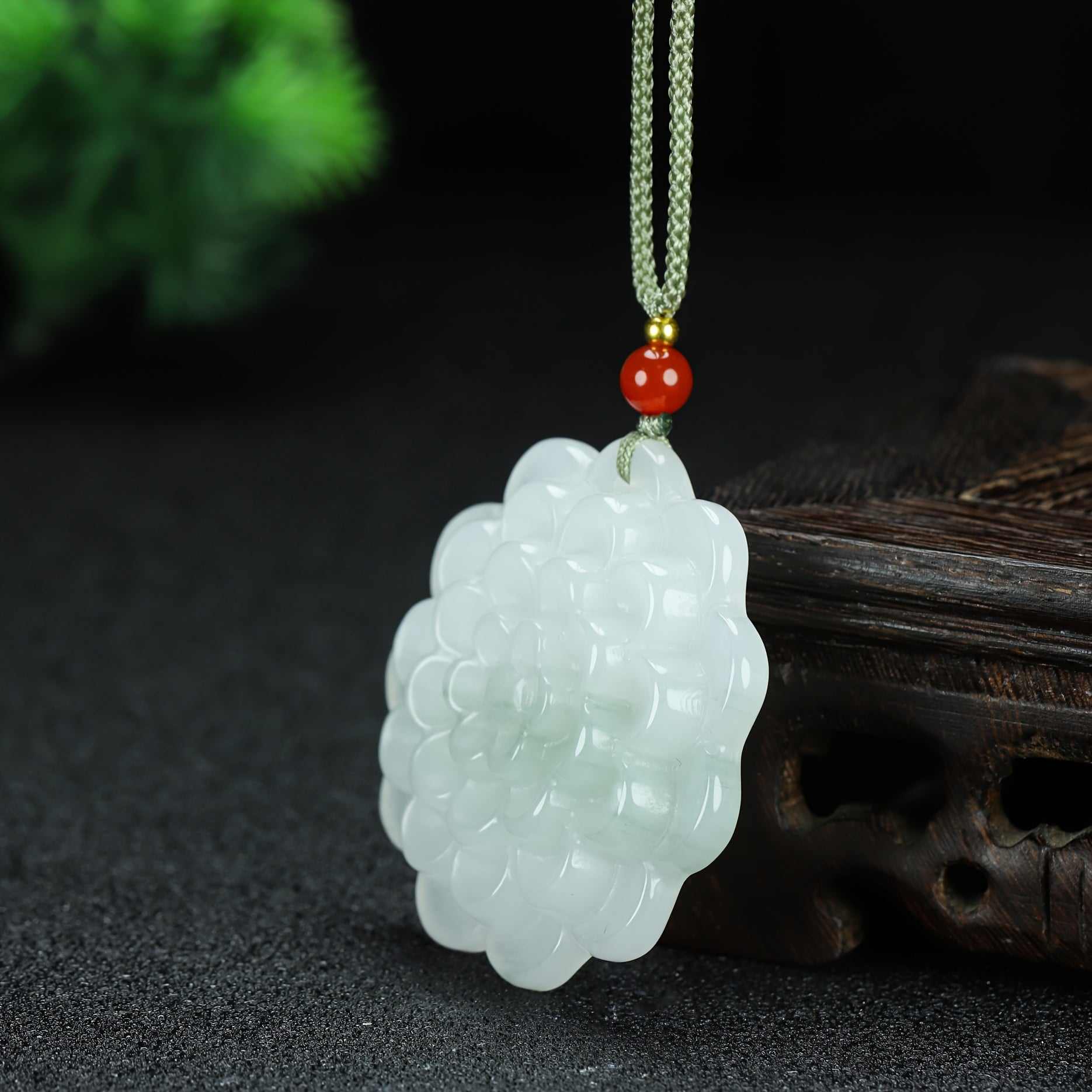


In the quiet space where skin meets stone, a silent conversation begins—one that spans dynasties, crosses oceans, and connects the wearer to a lineage of meaning that predates written history. This is the power of symbolic jewelry, and few motifs carry as rich a cultural tapestry as the peony. From its origins in the imperial gardens of Tang Dynasty China to its contemporary incarnation in pieces like the Peony Pendant Natural Stone Necklace, this "King of Flowers" continues to whisper ancient secrets while adapting to modern narratives of love, identity, and personal power. This exploration delves into how floral symbolism in jewelry serves as a living bridge between cultural heritage and individual expression.
Overview of Unique Design & Symbolism: More Than a Flower
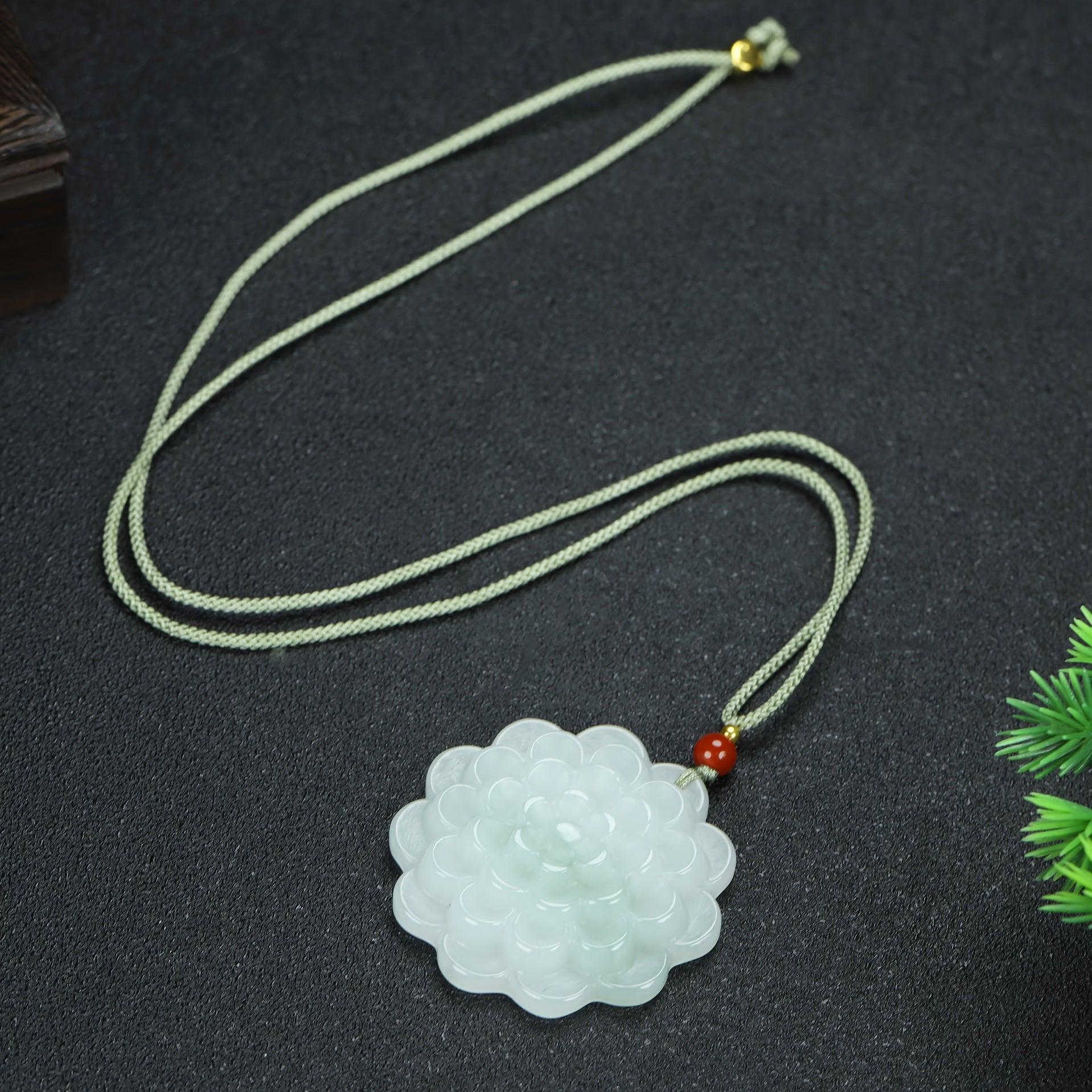
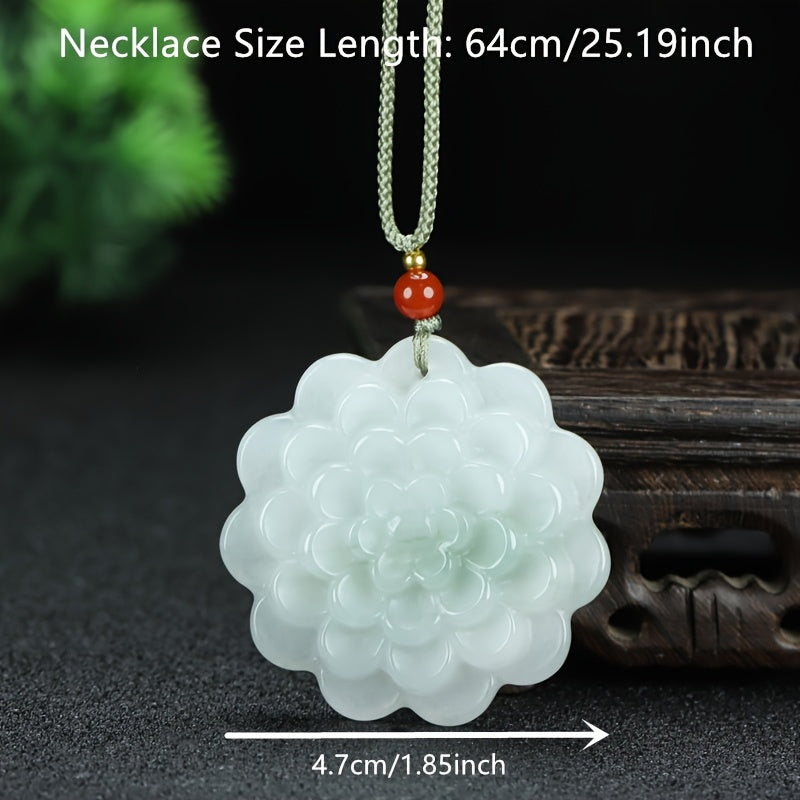
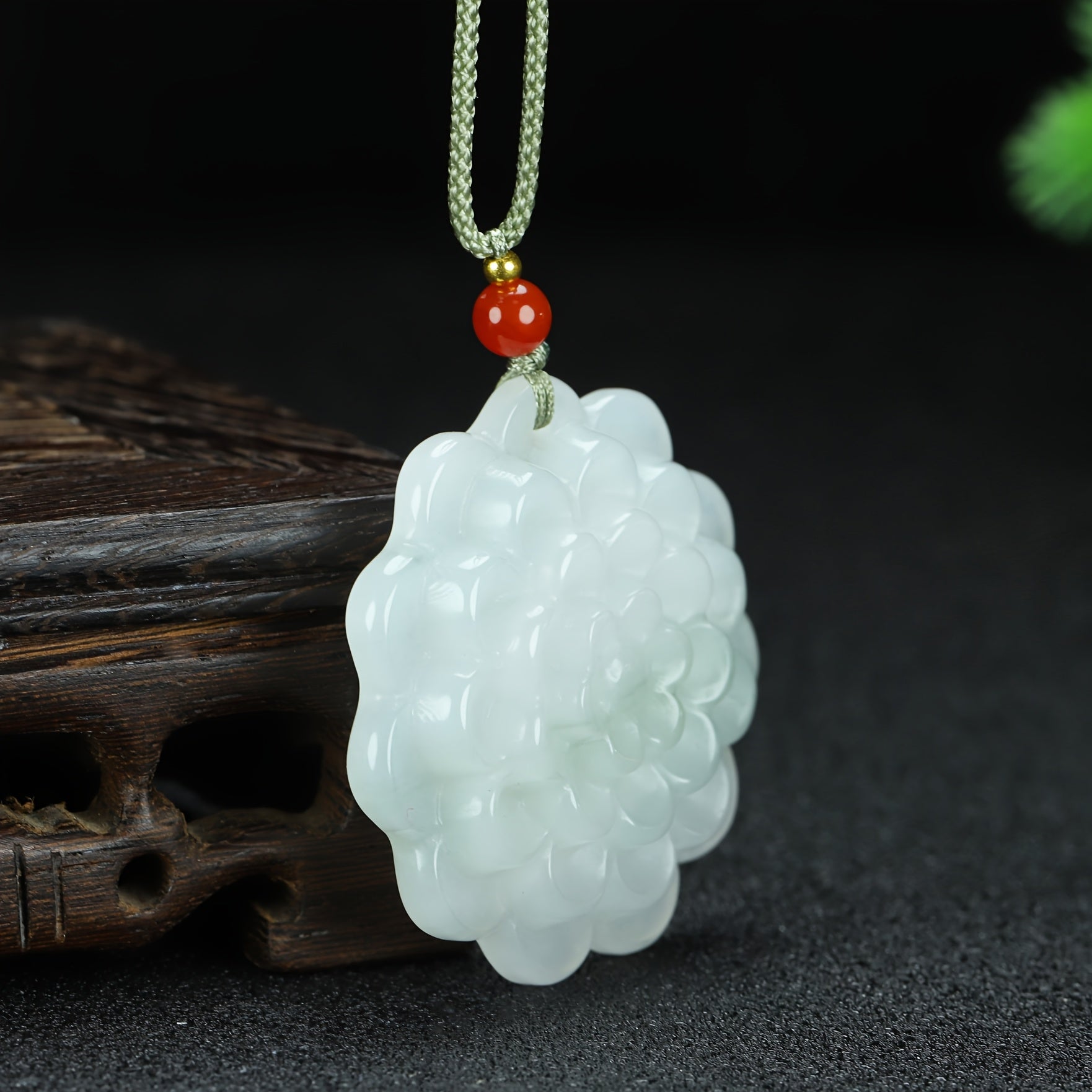
At first glance, a peony pendant may appear as simply a beautiful floral representation. But within its carved petals lies a multidimensional language. The peony in Chinese art is never merely decorative; it is communicative. Each element carries specific meaning: the full bloom represents the peak of success and beauty, the buds symbolize potential, the leaves denote protection and grounding, and the intricate center speaks to the complexity of inner life. When translated into jewelry design, these elements become a wearable lexicon.
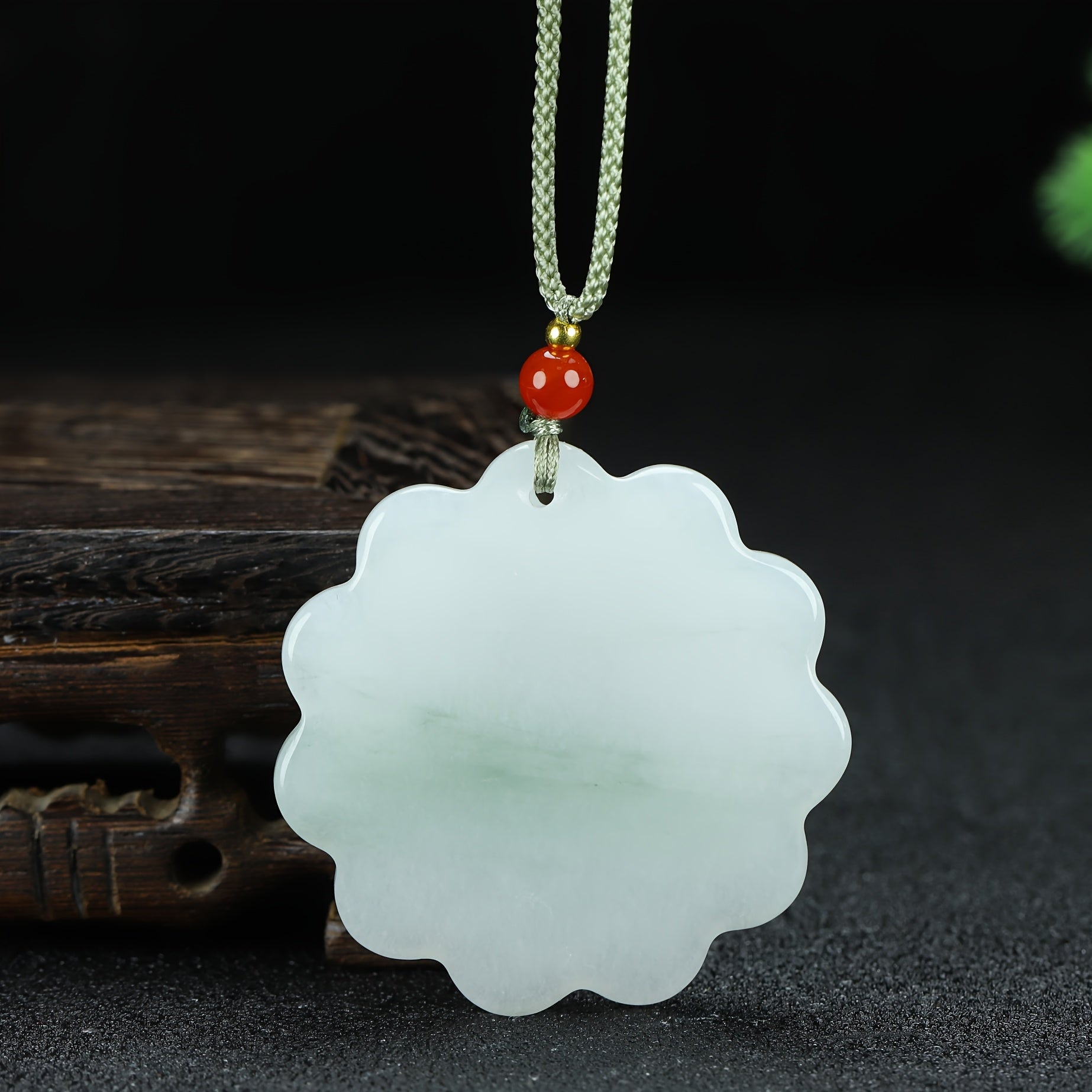
Modern peony jewelry like our featured pendant intentionally preserves this symbolic vocabulary while making it accessible. The choice of natural stone as a canvas is significant—it roots the flower's ethereal beauty in earthly reality, creating a balance between aspiration and authenticity. The rope chain, often overlooked, serves as the connective tissue between the symbolic focal point and the wearer's body, representing the ongoing dialogue between cultural heritage and personal identity.
Material and Craftsmanship: The Alchemy of Stone and Symbol
The material selection in symbolic jewelry is never accidental. Natural stones like the howlite or magnesite used in peony pendants are chosen for their energetic properties that complement the floral symbolism. Howlite, with its calming white and grey marbling, is known as a stone of awareness and communication—perfect for a symbol associated with emotional expression and romantic connection. The carving process itself is a meditation on patience and precision. Artisans must work with the stone's natural veins and inclusions, allowing the material to guide the design rather than forcing conformity.
This respectful collaboration between artisan and material results in pieces that feel both ancient and immediate. The raised relief carving technique used for peony petals creates a tactile experience that invites touch, deepening the wearer's connection to the symbol. Unlike stamped or molded jewelry, each hand-carved piece bears minor variations—tiny imperfections that testify to human creation rather than mechanical reproduction. These nuances become part of the piece's story, much like the variations found in living peonies.
Cultural & Symbolic Meaning: The Peony's Journey East to West
The peony's symbolic journey is a fascinating case study in cultural transmission. In China, where it originated, the peony (mǔdān 牡丹) has been cultivated for over 1,400 years. During the Tang Dynasty (618-907 CE), it became the imperial flower, associated with the emperor's power and the nation's prosperity. The famous poet Li Bai wrote of peonies "blooming like rosy clouds," cementing their association with celestial beauty. By the Song Dynasty, peonies represented feminine beauty, romance, and the ideal of the "perfect woman"—graceful, virtuous, and fertile.
This rich symbolism traveled along the Silk Road, reaching Japan where it became associated with bravery and masculinity (as the thornless flower worn by samurai), and eventually to Europe where it symbolized compassion, healing, and happy marriage in the Victorian language of flowers. Today's globalized peony symbolism represents a synthesis of these traditions—a cosmopolitan flower that means different things in different contexts, yet retains its core associations with beauty, prosperity, and romance.
"The peony is unique among floral symbols—it carries the weight of imperial history while remaining accessible to everyday people. This duality makes it perfect for contemporary jewelry, which often seeks to democratize symbols of power and make them personally meaningful." — Dr. Lin Wei, Cultural Historian
Historical Background: From Imperial Gardens to Personal Adornment
The historical journey of peony imagery from architectural ornament to personal jewelry tells a story of cultural democratization. During China's imperial eras, peony motifs were primarily reserved for those in power—embroidered on royal robes, carved into palace furniture, painted on scrolls kept in elite collections. Commoners might glimpse peonies in temple gardens or public festivals, but they couldn't claim them as personal symbols.
This changed gradually through trade and cultural exchange. As peony cultivation spread, so did its imagery. By the 19th century, peony patterns appeared on export porcelain, textiles, and eventually jewelry meant for broader markets. The Victorian era's fascination with floriography (the language of flowers) further popularized peony symbolism in the West, often stripped of its imperial connotations but retaining romantic associations.
Today, wearing a peony pendant represents the complete democratization of this once-exclusive symbol. It allows anyone to carry a fragment of imperial beauty and historical significance, reinterpreted through personal lens. This mirrors broader cultural shifts where symbols of status become symbols of personal meaning, and historical narratives become resources for contemporary identity construction.
Artistic & Aesthetic Interpretation: Modern Reimagining of Classical Motifs
Contemporary peony jewelry represents a fascinating artistic dialogue between tradition and innovation. Classical Chinese peony paintings emphasize certain characteristics: lush fullness, layered petals, vibrant colors against muted backgrounds. Jewelry designers working with this motif must translate these two-dimensional ideals into three-dimensional form while considering wearability, scale, and material constraints.
The aesthetic choices in modern peony pendants reveal much about our current cultural values. The preference for natural stone over brightly colored enamel or gems speaks to a contemporary desire for authenticity and connection to nature. The emphasis on intricate carving rather than minimalist silhouette reflects a renewed appreciation for craftsmanship in an age of digital simplicity. The unisex design challenges traditional gender associations with floral imagery, expanding who can claim this symbol as their own.
These aesthetic decisions create what art historians call "symbolic resonance"—the way a contemporary piece can evoke historical associations while feeling distinctly modern. When someone wears a natural stone peony pendant today, they're not wearing a historical reproduction; they're wearing a conversation between centuries of artistic tradition and present-day values.
Emotional & Social Significance: The Psychology of Wearing Symbols
The emotional power of symbolic jewelry operates on multiple psychological levels. Cognitive psychologists note that wearing a symbol with personal meaning can serve as an "externalized self-concept"—a tangible representation of desired qualities or states. For someone wearing a peony pendant, the flower becomes a physical anchor for thoughts about love, growth, or prosperity.
Socially, such jewelry functions as what sociologists call "identity signaling." It communicates values and affiliations to others while reinforcing them for the wearer. A peony pendant might signal appreciation for Eastern aesthetics, belief in symbolic meaning, or identification with qualities like resilience and beauty. In social interactions, it can serve as a conversation starter about cultural heritage, personal values, or simply shared appreciation for natural beauty.
Perhaps most powerfully, symbolic jewelry can facilitate what anthropologists term "ritual thinking"—the use of objects to mark transitions, set intentions, or create mindful moments. The simple act of putting on a peony pendant each morning can become a small ritual of self-blessing, an opportunity to consciously connect with one's goals for love, growth, or prosperity that day.
Market Perspective: The Rise of Meaningful Jewelry in Conscious Consumption
The growing market for symbolic, culturally-informed jewelry reflects broader shifts in consumer behavior. Market analysts note a move from "conspicuous consumption" (buying for status display) to "conscious consumption" (buying for meaning, ethics, and personal significance). In this context, a peony pendant isn't just a beautiful object—it's a statement of values.
Demographic data shows particular interest among Millennial and Gen Z consumers in products with "story value" and cultural authenticity. These consumers are more likely to research symbolism, appreciate artisan craftsmanship, and seek connections to cultural traditions (whether their own or others' approached respectfully). They're also driving the trend toward unisex floral jewelry, rejecting rigid gender associations in favor of more inclusive symbolism.
From a retail perspective, this creates opportunities for education and connection. Retailers who can articulate the cultural background and symbolic meaning of pieces like peony pendants create added value beyond the physical product. They're selling not just jewelry, but connection to stories, values, and identities.
Expert Commentary: Voices from Cultural Studies and Psychology
Dr. Eleanor Chang, professor of East Asian studies, observes: "The globalization of peony symbolism represents a fascinating case of cultural adaptation. In its journey from Chinese imperial courts to global jewelry markets, the peony has been both universalized and particularized. Western wearers might focus on its romantic connotations, while Chinese diaspora wearers might connect with cultural heritage. What's remarkable is how the symbol accommodates both readings."
Psychological researcher Dr. Marcus Thorne adds: "Our studies on symbolic objects show they can have measurable effects on mindset and behavior. Participants who wore jewelry with personal symbolic meaning reported higher levels of confidence, purpose, and emotional regulation. The physical presence of the symbol seems to serve as a cognitive anchor, reminding wearers of their values and intentions throughout the day."
Master jeweler Li Jian, who specializes in stone carving, offers a craftsman's perspective: "Carving peonies into stone requires understanding both the material and the metaphor. The stone has its own language—veins, hardness, response to tools. The peony has its historical language—petal count, bloom stage, leaf arrangement. The art is in translating between these languages to create something that speaks to the wearer today."
Technical Craftsmanship Details: The Art of Stone Carving
The creation of a detailed peony pendant involves multiple stages of skilled craftsmanship. It begins with stone selection—finding a piece with the right hardness, grain, and visual interest. The chosen stone is then cut to size and shaped into a blank. The design is transferred, often by hand-sketching directly onto the stone surface.
Using rotary tools with diamond-tipped bits, the artisan begins the subtractive process, removing material to create depth and dimension. The central bloom is typically carved first, establishing the focal point. Petals are shaped individually, with attention to natural curvature and overlapping. Leaves and stems follow, creating balance and movement. Finally, fine details like veining on petals and leaves are added using needle-thin bits.
The process requires constant adjustment based on the stone's response. Some stones might chip unexpectedly; others might reveal beautiful internal patterns that suggest design modifications. This responsive approach means no two hand-carved pendants are identical—each bears the unique conversation between artisan intention and material character.
Environmental Sustainability & Ethical Sourcing
The growing demand for natural stone jewelry raises important questions about sustainability and ethics. Responsible sourcing involves several considerations: quarrying practices (minimizing environmental impact, rehabilitating sites), labor conditions (fair wages, safe working conditions), and supply chain transparency.
Natural stones like howlite and magnesite are relatively abundant, reducing pressure on rarer, more environmentally sensitive materials. Their durability also supports sustainability—a well-cared-for stone pendant can last generations, contrasting with fast fashion's disposable cycle.
Increasingly, consumers seek assurance that their symbolic jewelry aligns with their values not just spiritually but ethically. Certifications like the Responsible Jewelry Council guidelines provide frameworks, but truly ethical sourcing often involves deeper relationships with mining communities and artisan cooperatives.
Fashion Trends: Florals Beyond Gender and Season
Peony jewelry sits at the intersection of several significant fashion trends. The "New Romantic" movement embraces floral imagery with emotional depth rather than superficial prettiness. Gender-fluid fashion has reclaimed florals for all genders, focusing on symbolic meaning rather than gendered association. The "craft revival" trend values visible artisanry and natural materials over perfect machine production.
Seasonally, peony symbolism connects to spring's themes of renewal and growth, but its association with prosperity and romance makes it relevant year-round. Stylistically, natural stone peony pendants work with multiple aesthetics: bohemian (paired with flowing fabrics and layered necklaces), minimalist (as a single statement piece against clean lines), or heritage-inspired (with traditional clothing that acknowledges cultural roots).
Fashion forecasters note increasing interest in jewelry that "does more"—pieces that are not just decorative but functional in emotional or spiritual terms. This aligns perfectly with symbolic pieces like peony pendants, which offer aesthetic beauty plus layers of meaning.
Social Impact: Cultural Appreciation vs. Appropriation
The globalization of cultural symbols like the peony raises important questions about respectful engagement versus appropriation. Key distinctions include: depth of understanding (superficial use vs. informed appreciation), credit and compensation (acknowledging origins, supporting source communities), and context (using symbols with respect for their original meanings).
Responsible designers and retailers address these concerns by: educating consumers about symbolism's origins, collaborating with cultural experts or source community artisans, and avoiding decontextualized or disrespectful use of sacred symbols. The peony, as a secular cultural symbol with long history of cross-cultural exchange, presents fewer concerns than religious or tribal symbols, but the principles of respect remain important.
For wearers, conscious engagement might involve learning about the symbol's history, reflecting on personal connections to its meanings, and supporting businesses that approach cultural symbols ethically. In an interconnected world, jewelry becomes not just personal adornment but part of broader conversations about cultural exchange and mutual respect.
Future Outlook: Digital Identity and Analog Symbols
Looking forward, the role of physical symbolic jewelry may become even more significant as our lives become increasingly digital. In a world of virtual identities and fleeting digital interactions, tangible symbols offer grounding, continuity, and depth. We may see interesting hybridizations: physical peony pendants paired with digital storytelling (QR codes linking to cultural information), or augmented reality experiences that bring the symbolism to life in new ways.
Future trends might include: hyper-personalized symbolism (custom carvings incorporating personal elements alongside traditional motifs), multi-sensory design (incorporating scent capsules with peony fragrance), or interactive elements (pendants that change appearance based on body temperature or mood). However, the core appeal will likely remain the same: the human desire to wear meaning, to carry stories, and to connect the personal to the universal through beautiful objects.
Why People Choose Symbolic Flower Jewelry Today
In a world dominated by mass-produced, disposable products, natural stone floral jewelry stands out because it offers what algorithms cannot: meaning, connection, and soul. People choose pieces like peony pendants because they are:
- Meaningful — saturated with layers of cultural, psychological, and personal symbolism that transcend mere decoration
- Artisanal — each piece bears the mark of human hands, carrying the energy of focused creation and skilled craftsmanship
- Natural — formed by geological processes over millennia, connecting wearers to earth's timeline and wisdom
- Energetic — functioning as tools for psychological anchoring, emotional regulation, and spiritual practice
- Timeless — rooted in traditions that predate nations and will outlast fleeting trends
- Unique — no two natural stones or hand-carvings are identical, offering truly personal expression
Final Thoughts: The Eternal Conversation Between Wearer and Worn
A hand-carved peony pendant is far more than an accessory. It is a participant in an ancient, ongoing conversation—between nature and culture, past and present, individual and collective. Each time it is worn, it gathers new layers of meaning from the wearer's experiences, becoming not just a symbol but a biography in stone.
As we navigate an increasingly complex world, such tangible connections to meaning become precious. They remind us that beauty and significance can coexist, that personal expression can honor tradition while forging new paths, and that sometimes the quietest objects—a stone flower resting above the heart—can speak the loudest truths about who we are and who we aspire to become.
The peony's journey from imperial gardens to personal adornment mirrors our own human journey toward finding meaning in a interconnected world. In wearing its image, we acknowledge that while we bloom individually, our roots connect us to stories, cultures, and histories much larger than ourselves. And in that acknowledgment, we find not limitation, but depth; not burden, but belonging.