
Skip to content

MORE THAN JEWELRY – A SYMBOL OF YOUR INNER LIGHT.


09 Jan 2026 0 comments

Practice & Daily Perception

Noticing the Pause: A Practice of Finding Rhythm in the Spaces Between

A verifiable exercise. It begins not with meditation, but with noticing the micro-pauses already in your day—the breath before replying, the hand resting on a table—and feeling their texture.

The friction is almost imperceptible at first. You’re mid-sentence in a video call, your thoughts racing ahead of your words, and your finger, as if of its own volition, reaches up to touch your earlobe. It finds not just skin, but a cool, intricate shape of metal. For a split second, your speech falters. Not enough for anyone else to notice, but you feel it—a tiny crack in the momentum of performance. In that crack, you feel the weight of the earring, its detailed surface under your fingertip. And then you continue talking. The moment is gone, absorbed back into the flow of the day. Where in daily life is perception most easily lost? It is lost in the spaces between these moments, in the unmarked territory of automatic reaction. This practice is about reclaiming those spaces, not by adding something new, but by noticing what is already there.The friction is almost imperceptible at first. You’re mid-sentence in a video call, your thoughts racing ahead of your words, and your finger, as if of its own volition, reaches up to touch your earlobe. It finds not just skin, but a cool, intricate shape of metal. For a split second, your speech falters. Not enough for anyone else to notice, but you feel it—a tiny crack in the momentum of performance. In that crack, you feel the weight of the earring, its detailed surface under your fingertip. And then you

We often think of mindfulness as a separate activity: sitting on a cushion, focusing on the breath for twenty minutes. That is a powerful practice. But there is another, woven into the fabric of an ordinary day. It is the practice of perceiving the micro-pauses that already exist—the hesitation before clicking “send,” the second of stillness when a door closes behind you, the sensation of water on your hands while washing a cup. These are not voids to be filled with more doing. They are apertures, tiny openings into a different quality of attention. And a simple object, worn on the body, can become the gentlest of guides back to them.

Step One: Identify the Anchoring Sensation

This practice requires an anchor—a reliable, physical sensation you can return to. It should be neutral, constant, and intimately tied to your body. The weight and texture of a specific piece of jewelry is perfect. It is with you, but it is not you. It provides a consistent point of reference.

Practice: For the next three days, do not try to change anything. Simply notice, three times a day, the physical presence of the object. Choose mundane triggers: when you first sit down at your desk, when you stand up after a meal, when you lock your front door. At that moment, pause for the duration of one breath and direct your attention to the sensation of the earring on your lobe. Is it cool or warm? Can you feel its exact weight? Can you sense the shape without touching it? Do not analyze. Just feel. Then, let your attention return to what you were doing.

The goal is not prolonged focus. It is brief, gentle recognition. You are training your attention to have a “home base” in the body, a place outside the whirlwind of thought and obligation. You might find that after a few days, this noticing begins to happen on its own, unprompted. The object has become a partner in perception.
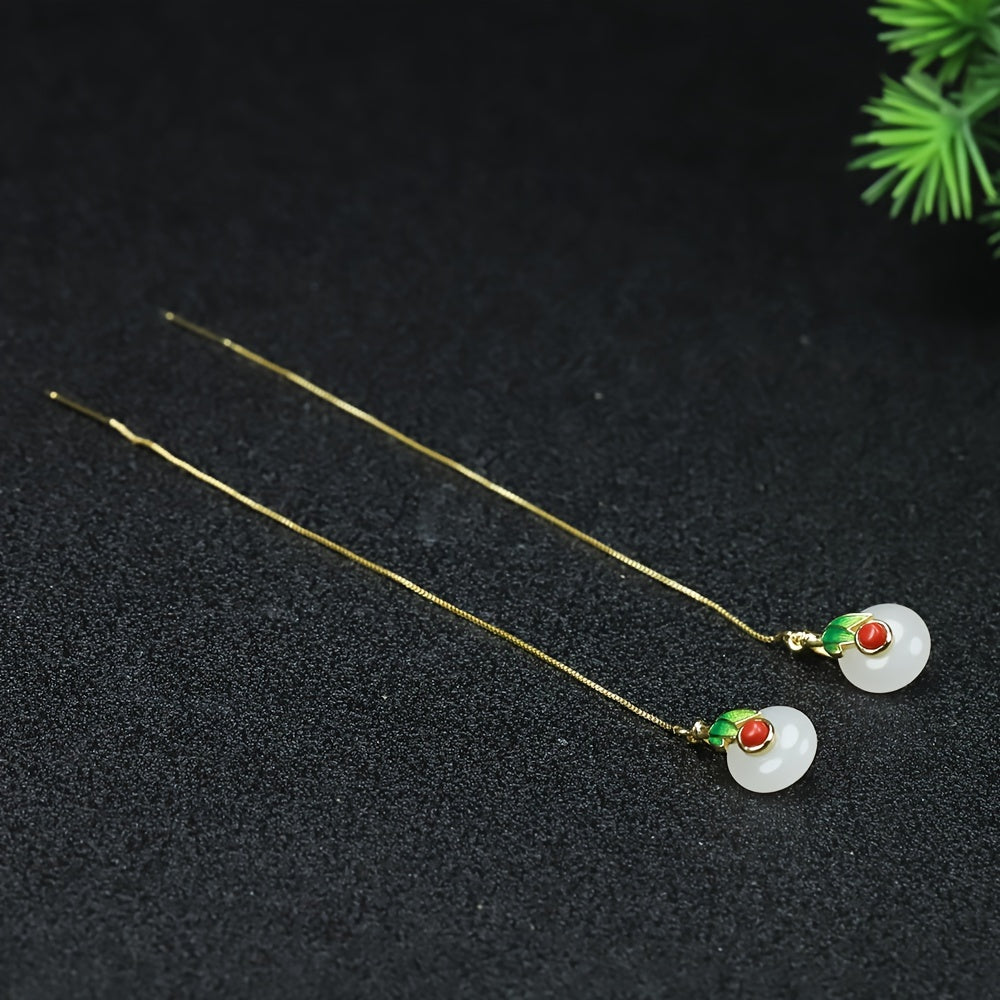
A hand hovering near the ear, about to engage in the tactile check-in practice

The anchor point: a deliberate, tangible presence waiting to be noticed amidst the day's flow.

Choose Your Practice Anchor →

Step Two: Map the Automatic Pauses

Once the anchor sensation is familiar, you can begin to listen for the natural pauses in your day. These are not dramatic silences. They are the fleeting moments of transition, hesitation, or completion. The mind usually rushes through them to get to the next task. Your job is to catch one.

Practice: Today, choose one routine activity: making a coffee, waiting for an elevator, scrolling to the end of an article. As you complete that activity—as your hand places the mug down, as the elevator dings, as you reach the final line—let there be a full stop. Not a mental one, a physical one. Freeze for one second. Do not move to the next action. In that frozen second, feel your feet on the floor, the air on your face, and yes, the anchor sensation of your jewelry. Then, release into the next action. You are not adding a pause; you are enlarging a pause that was already there, giving it sensory depth.

This feels awkward at first. The impulse to maintain momentum is strong. But in that enforced stillness, you might notice something: a slight lessening of tension in the shoulders, a clearer sensation of breathing, or the simple, often-ignored fact of being alive in a body, in a room, at this moment. Can something remain meaningful without being intense? This practice suggests that meaning is often found in the quiet amplification of the ordinary, not in the pursuit of the extraordinary.

Step Three: The Pause as a Response Buffer

The most practical application of this skill is in communication. Between a stimulus (someone’s challenging words, a stressful email) and your reaction, there is a space. The practice of noticing pauses trains you to find and inhabit that space.

Practice: In your next conversation, especially one that might be charged, use your anchor. When you feel the impulse to react defensively or quickly, let your hand subtly find your earring or let your attention drop to its weight. This is not a gesture for others to see; it’s a private neurological interrupt. The tactile sensation creates a micro-delay. In that delay, one breath becomes possible. And in that breath, you might find you have a choice of responses, rather than being hostage to a reaction.

The object doesn’t make you wise or calm. It simply acts as a physical speed bump on the road to reactivity. It creates the condition where a different kind of response—more considered, more yours—can potentially emerge. Over time, you may not need the physical touch; the mere memory of the sensation, or the intention to create a pause, can trigger the same buffer.
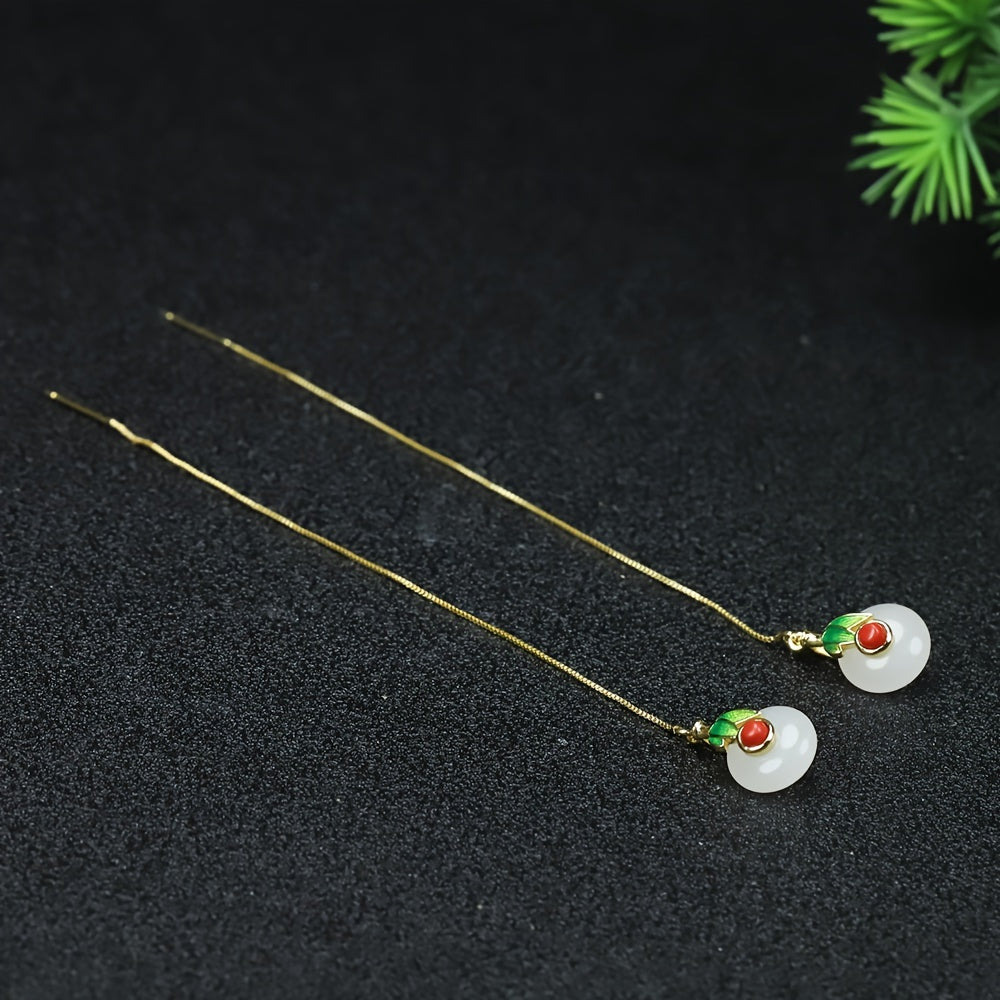
The earring being touched lightly, a moment of intentional pause and re-centering

The tactile interrupt: a physical cue to insert a breath between stimulus and response.

Step Four: Wearing as Waking

The final layer is integrative. It’s when the practice moves from something you “do” to a quality that infuses how you wear the object, and by extension, how you move through your day.

Practice: As you put on your jewelry in the morning, perform the action with full attention. Feel the cool metal, hear the clasp close, adjust the weight. Set an intention, not a goal. Something like: “Today, I will notice three pauses.” Or simply: “I wear this as a reminder to feel.” Then, go about your day. You don’t need to “achieve” anything. The object is now a companion in wakefulness. When you unconsciously touch it later, it will gently remind you of that morning intention, pulling you briefly back into presence.

This is where the object transcends ornament or even tool. It becomes a metronome for your inner rhythm. Its weight is the downbeat. The pauses you notice are the rests. Together, they compose the music of a day lived with a little more awareness, a little less automaticity. How does repetition deepen meaning? Not through grand revelations, but through this slow, cumulative stitching of attention into the mundane. The meaning of the object becomes the sum total of all these tiny returns to sensation you have practiced with it.

The Object as Question, Not Answer

It is critical to remember that this practice offers no guaranteed outcomes. It does not promise peace, productivity, or enlightened relationships. It offers only a method: the method of noticing. Some days, you will forget entirely. Other days, the pause will feel empty, frustrating. That’s part of it. The object is not a magic wand; it is a question mark worn on the body. Its presence asks, silently: Can you feel this? Can you feel the weight? Can you feel the pause?

Some people find that over months, their relationship with the object deepens precisely because it asks for nothing and promises nothing. It is just there, a consistent, patient reference point in an inconsistent world. Its patina becomes a record not just of time, but of these thousands of unnoticed and noticed moments. It holds the memory of your practice in its darkening crevices.

So begin here, now. Wherever you are, pause. Feel your body in the chair. Feel the air moving in and out. And if you are wearing something with weight, with texture, feel that too. That’s it. That’s the entire practice, repeated ten thousand times in ten thousand different ways. It is not about getting somewhere else. It is about arriving, again and again, right here.
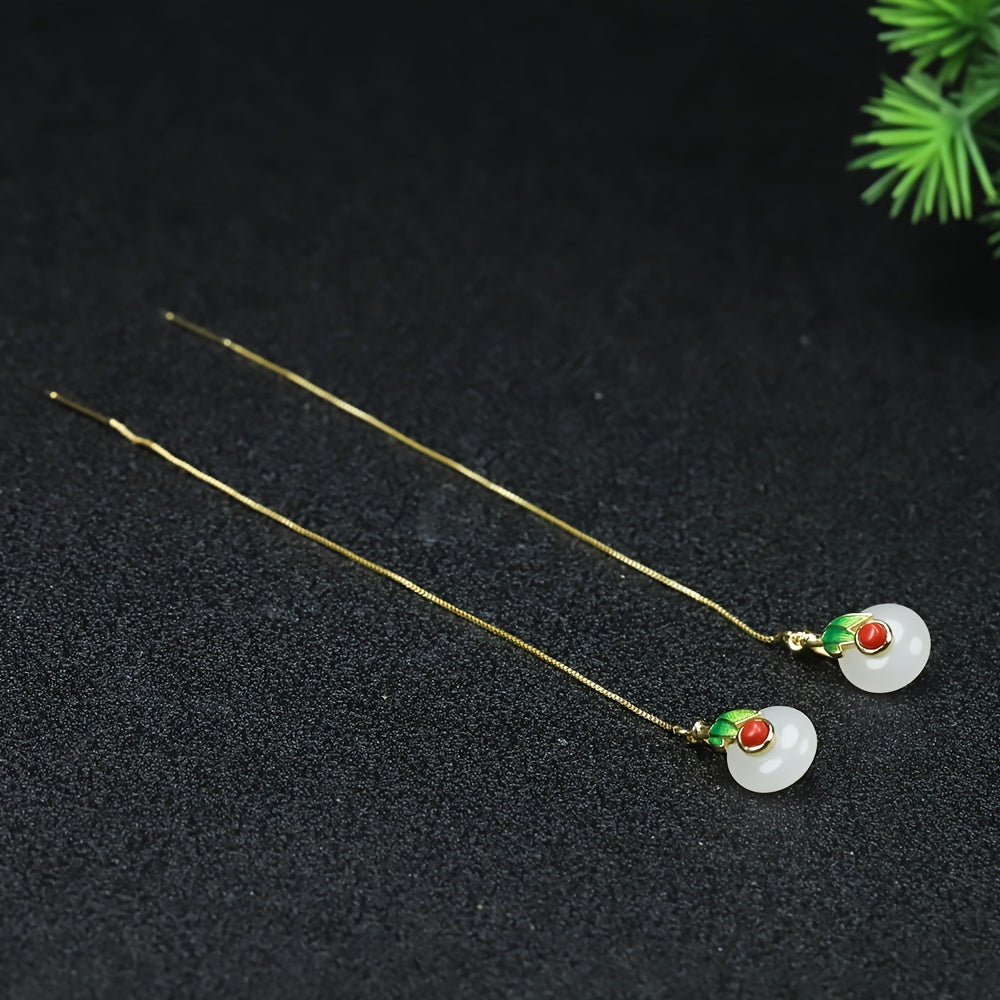
The earrings at rest in their box, a symbol of practice completed and ready to begin anew

The cycle of practice: a moment of rest, ready for the next day's conscious wearing.

Begin the Practice →

Part of the Practice & Daily Perception series by DARHAI. Verifiable tools for inner geography.

Prev post
Next post

Leave a comment

All blog comments are checked prior to publishing

Shop the look

Choose options

DarhaiJewelry
Sign Up for exclusive updates, new arrivals & insider only discounts
Edit option
Back In Stock Notification
Terms & conditions
Welcome to Darhai (www.darhai.com). These Terms and Conditions outline the rules and regulations for the use of our website and the purchase of our products. By accessing this website and/or purchasing something from us, you agree to be bound by the following terms. 1. Overview This website is operated by Darhai. Throughout the site, the terms “we”, “us” and “our” refer to Darhai. We offer this website, including all information, tools, and services available from this site to you, the user, conditioned upon your acceptance of all terms, conditions, policies, and notices stated here. 2. Products and Natural Materials Natural Variation: Our jewelry often incorporates natural stones, jade, and wood. Please note that because these are natural materials, each piece is unique. Slight variations in color, texture, and size from the product images are expected and celebrated as part of the item's natural character. Spiritual Claims: Any descriptions regarding the spiritual, metaphysical, or healing properties of our products are for educational and cultural purposes only. They are not intended to replace professional medical, legal, or financial advice. 3. Pricing and Payments All prices are displayed in USD (unless otherwise selected via our currency converter). We reserve the right to modify prices or discontinue products without prior notice. We use secure third-party payment gateways. We do not store your credit card information on our servers. 4. Shipping and Delivery Processing Time: Orders are typically processed within [1-3] business days. Shipping Estimates: International shipping times vary by destination. Darhai is not responsible for delays caused by customs clearance or local postal services. Customs & Duties: Customers are responsible for any import duties, taxes, or customs fees incurred in their country. 5. Return and Refund Policy Please refer to our [Link to Refund Policy] for detailed information. Generally: Items must be returned in their original, unworn condition within [14/30] days of delivery. Customized jewelry and certain personal care items may be non-returnable. 6. Intellectual Property All content on this site, including images, logos, product descriptions, and "Journal" articles, is the property of Darhai. You may not reproduce, duplicate, or exploit any portion of our intellectual property without express written permission. 7. Limitation of Liability Darhai shall not be liable for any direct, indirect, incidental, or consequential damages resulting from the use or inability to use our products or website. 8. Governing Law These Terms and Conditions shall be governed by and construed in accordance with the laws of [Hong Kong]. 9. Contact Information Questions about the Terms and Conditions should be sent to us at: Email: [support@darhai.com] Website: www.darhai.com

Choose options

this is just a warning
Login
Shopping cart
0 items