





Finding the Pause: Learn to identify moments of self-imposed pressure and use simple, physical reminders to cultivate patience with your own unfolding process.
It happens in the supermarket queue. You're standing there, holding a basket with three items, and the person in front has a full cart. The delay is maybe two minutes, three at most. But in that space, your mind begins its familiar rush: I should be doing something. I should check my phone. I should plan dinner. I should... The body is still, but the mind is running, trying to fill what it perceives as empty time with productive thought.
Or it happens at your desk, between tasks. You finish one thing and immediately reach for the next, without taking a breath. The transition happens so quickly you don't even notice there was a transition. Just continuous doing.
Or it happens in conversations. Someone asks how you are, and you give the automatic answer before they've finished the question. The space between question and answer—the space where a real response might form—gets collapsed by habit.
These are micro-moments where we rush to complete ourselves. Where we treat pause as problem, silence as emptiness, and transition as something to be minimized. And in doing so, we miss the very spaces where we might actually meet ourselves.

The Problem Isn't Busyness—It's Compression
We talk a lot about busyness. About packed schedules, overwhelming to-do lists, the constant pressure to produce. But there's a deeper issue that often goes unnoticed: the compression of experience.
Compression happens when we eliminate the natural pauses between activities, thoughts, or emotions. It's what happens when we move from task to task without transition. When we finish a thought and immediately start another without allowing resonance. When we feel an emotion and immediately analyze it rather than experiencing it.
This compression creates a particular kind of exhaustion. It's not just being tired from doing too much; it's being tired from being too continuous. From never having gaps where we're not performing, planning, or evaluating.
The body knows this exhaustion deeply. You might notice it as a constant low-grade tension in the shoulders. As a tendency to sigh without knowing why. As a feeling of being perpetually behind, even when you're technically caught up.
Compression also affects how we relate to ourselves. When every moment is filled with doing or thinking, there's no space for simply being. And without that space, we lose touch with who we are beneath our activities. We become human doings rather than human beings.
The Core Insight
You are not incomplete in the pauses. The pauses are where you remember your completeness. The rush to "complete" yourself through constant activity is based on a misunderstanding: that you need to add something to be whole. In reality, wholeness is what's revealed when you stop adding.
This practice—Finding the Pause—is about learning to notice and inhabit these gaps. Not as empty spaces to be filled, but as fertile ground where your actual life happens.
Why Physical Objects Help
Before we get to the practice itself, it's worth understanding why physical objects can be so helpful in changing mental habits.
The mind operates at lightning speed. Thoughts arise and vanish in milliseconds. Emotions can shift in moments. This speed makes it difficult to catch ourselves in the act of compression. By the time we notice we're rushing, we've already rushed through several more thoughts.
Physical objects operate on a different timescale. They have weight. They have texture. They exist in space. When you interact with a physical object—like touching a stone pendant—you're forced to slow down to its rhythm. You can't touch at the speed of thought. Touch takes time.
This is why jewelry can be such an effective practice tool. It's always with you. It doesn't require setting aside special time. It works through gentle interruption: you're rushing, your hand brushes against the earring, you feel its coolness or weight, and that sensation creates a tiny gap in the mental momentum.
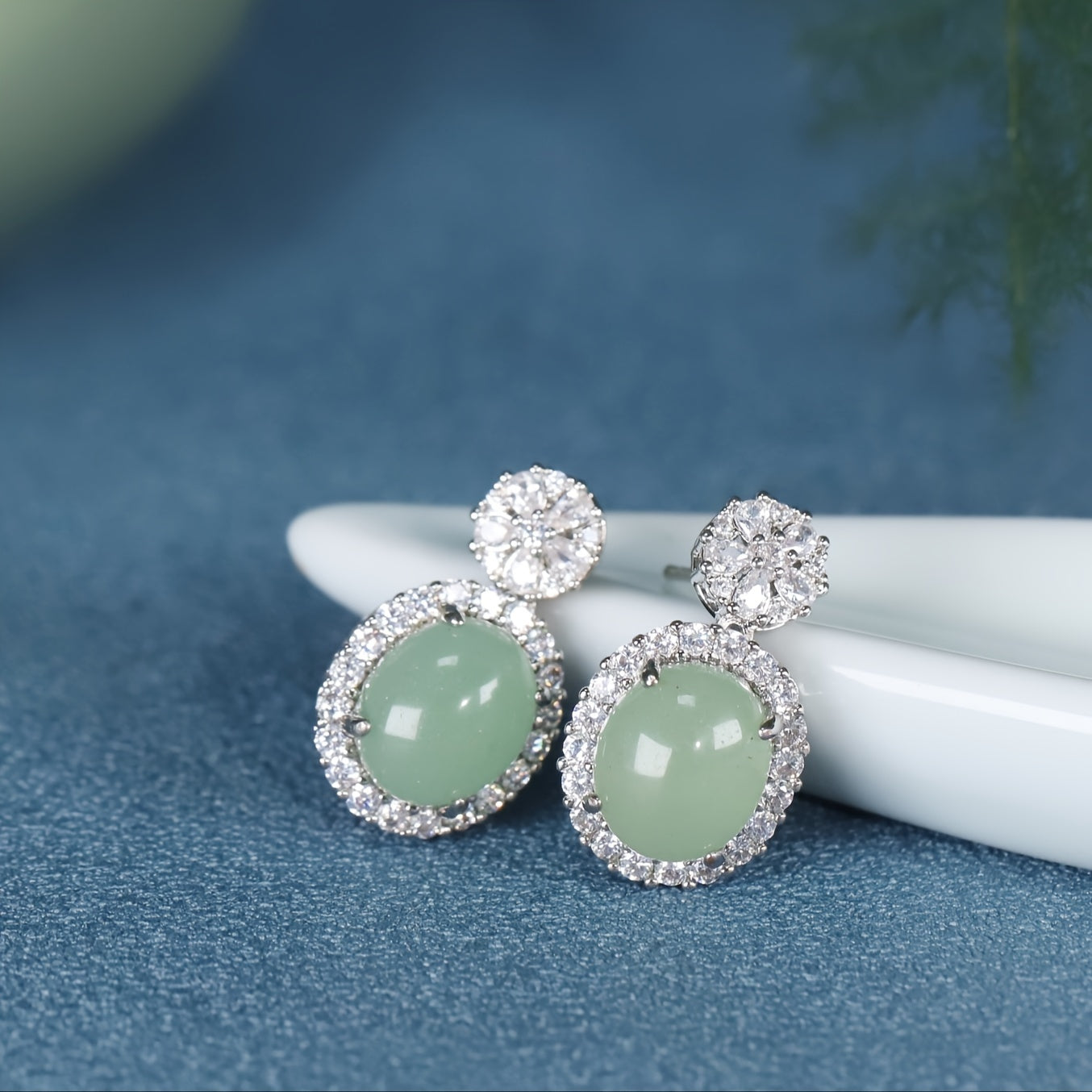
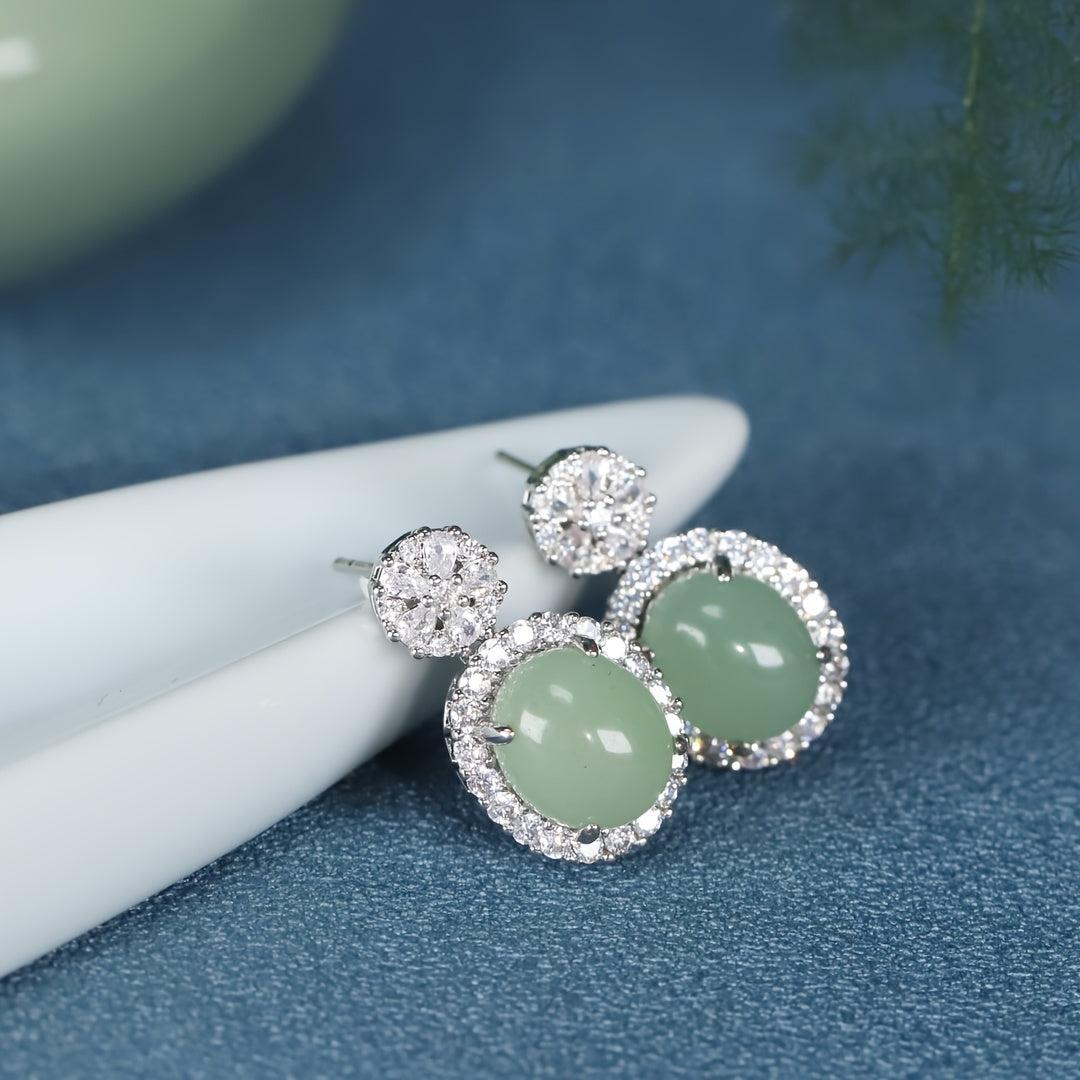
The green jade earrings are particularly suited to this practice because of their contrasting materials. The cool jade creates a distinct sensation that's different from your skin temperature. The open circle form is visually distinctive. These differences make them more noticeable—they stand out against the background of ordinary sensation.
The Practice: Finding the Pause
This isn't a complicated meditation technique. It's a simple, verifiable practice you can do anywhere, anytime. It has three phases: Noticing, Touching, and Resting.
-
Phase 1: Noticing the Rush
The first step is simply to notice when you're compressing experience. You don't need to judge it or change it—just notice. Common signs include: speaking before thinking, moving to the next task without breathing, planning while someone is talking to you, feeling irritated at small delays, checking your phone reflexively.
For the first week, just practice noticing. Keep a small notebook or use your phone to jot down when you catch yourself rushing. You might be surprised how often it happens.
-
Phase 2: The Tactical Pause
Once you're better at noticing, add a tactical pause. When you notice rushing, do one simple thing: touch your earring. Not dramatically, just let your fingers brush against it. Feel the temperature of the stone. Notice its texture.
This does two things: First, it creates a physical interruption to the mental pattern. Second, it gives you something to do instead of rushing. You're not trying to stop thinking; you're just redirecting attention to sensation for a moment.
The pause can be brief—three seconds is enough. The point isn't to achieve a deep meditative state; it's just to create a gap in the compression.
-
Phase 3: Resting in the Gap
After a few weeks of tactical pauses, you might notice something: the gaps begin to feel different. They stop feeling like empty space and start feeling like... space. Room. Possibility.
In this phase, when you touch the earring and create a pause, allow yourself to rest there for a moment. Don't try to make anything happen. Don't try to achieve clarity or insight. Just be in the gap. Notice what it feels like to not be rushing to the next thing.
This might feel uncomfortable at first. We're so conditioned to fill every moment that simply being in an unfilled moment can trigger anxiety. That's normal. The practice isn't to avoid the discomfort, but to notice it without immediately reacting.
The entire practice is built on repetition, not duration. It's better to do it twenty times a day for three seconds each than to do it once for an hour. The goal is to rewire your relationship with pause at the micro-level, where compression actually happens.
Daily Life as Practice Ground
You don't need special conditions to practice. Daily life provides countless opportunities. Here are some common moments where you might practice finding the pause:
Instead of pulling out your phone, stand there. Feel your feet on the floor. Touch your earring. Notice the impulse to do something. Let it be there without acting on it. The elevator will come regardless.
After you swallow one bite, before taking the next, put down your utensil. Take one breath. Touch your earring. Then continue eating. You'll taste your food more, and you'll eat more slowly.
Instead of immediately moving to the next task, sit for a moment. Touch your earring. Feel the completion of one thing before beginning another. This helps prevent the blurring of tasks that leads to overwhelm.
Instead of formulating your response while they're talking, listen completely. When they finish, take a breath before responding. Touch your earring during that breath. You'll respond more thoughtfully, and they'll feel heard.
These might seem like small things. They are. That's the point. We don't change our relationship with time through grand gestures, but through thousands of tiny recalibrations.
What You Might Notice Over Time
This practice has observable effects, though they're often subtle. After a few weeks, you might notice:
Increased sensory awareness: You start noticing textures, temperatures, sounds you previously overlooked. The world becomes more vivid because you're actually present to experience it.
Better decision-making: With even a tiny pause before decisions, you respond less reactively and more intentionally. You catch yourself before saying something you'll regret or making impulsive choices.
Reduced anxiety: Much anxiety comes from anticipatory thinking—worrying about what's next. When you practice being in the current moment, even briefly, you break the cycle of anticipatory anxiety.
More authentic interactions: When you're not rushing to respond, you communicate more from your actual experience rather than from habit or social script.
A different relationship with time: Time doesn't actually change, but your experience of it does. It feels less scarce, less like something you're constantly losing.
These changes happen gradually. Some days you'll forget to practice entirely. Other days you'll do it once and feel like it made no difference. That's all part of the process. The practice isn't about achieving perfect presence; it's about remembering, again and again, that pause is possible.
A Note on "Success"
This practice has no measurable outcome. You can't do it "right" or "wrong." If you notice yourself rushing, that's success—because you noticed. If you create a pause, that's success. If you intend to create a pause but forget, that's success too—because you had the intention. The practice is in the returning, not in achieving a particular state.
Why the Open Circle Matters Here
The specific design of these earrings supports this practice in a particular way. The open circle is a visual representation of the pause itself—a space that isn't empty, but open.
When you touch the earring, your finger often goes to that opening. It's a natural resting place. And in that touch, you're physically connecting with a form that says, "Completion isn't about closure; it's about continuity."
This is important because our rush to complete ourselves often comes from a desire for closure. We want to finish projects, answer questions, resolve uncertainties. We want to be "done" with growth, with learning, with becoming. But life doesn't work that way. We're always in process.
The open circle reminds us that we can be whole without being finished. That our pauses aren't interruptions in our completeness, but expressions of it. That sometimes the most complete feeling comes not from adding one more thing, but from stopping right where we are.
When you wear these earrings as part of this practice, they become more than jewelry. They become physical manifestations of a different relationship with time—one where gaps aren't problems to solve, but spaces to inhabit.
Integrating the Practice into Your Life
After a month or two, the practice might begin to integrate naturally. You might find yourself pausing without consciously deciding to. The earrings might trigger the pause even when you don't touch them—just feeling them sway as you turn your head reminds you.
At this point, the practice expands beyond the earrings. You might notice yourself pausing when you see certain visual cues: the space between clouds, a gap in a fence, an open doorway. The physical object has trained your perception to notice openings everywhere.
This is the ultimate goal: not to be dependent on the object, but to have the object teach you how to see the world differently. The earrings become like training wheels for a different way of being—eventually you ride without them, but they helped you learn the balance.
Of course, you might choose to keep wearing them anyway. Not because you need them to practice, but because you enjoy the reminder. Because they've become partners in this exploration. Because their cool green stones and open silver circles have become part of your daily landscape, familiar friends in the journey of learning to be present.
The Larger Implications
What begins as a simple practice of pausing can ripple out into broader changes. When you stop rushing to complete yourself in small moments, you might start questioning where else you're rushing.
• In relationships: Are you rushing to define them, to reach certain milestones, to have them be "finished"?
• In work: Are you rushing to achieve, to prove, to arrive at some imagined endpoint?
• In personal growth: Are you rushing to become some idealized version of yourself, missing who you are right now?
The practice of finding the pause teaches patience not as a virtue to be cultivated, but as a natural state that emerges when we stop fighting time. It teaches presence not as something to achieve, but as something to stop covering up.
And it all starts with something as simple as touching a cool green stone when you notice yourself rushing. With creating a three-second gap where before there was only compression. With remembering, through your fingers, that you are already here, already complete, already whole—even in the pauses, especially in the pauses.
