





The Enduring Allure of Pink Gemstones: A Journey Through History, Culture, and Symbolism
From the beds of ancient rivers to the red carpets of Hollywood, the delicate hue of pink gemstones has captivated humanity for centuries.
Pink is a color that speaks a universal language. It is the soft blush of dawn, the petal of a rose, the gentle flush of a cheek. In the world of gemstones, this color carries a profound weight of meaning, embodying concepts as diverse as love, compassion, femininity, and even spiritual enlightenment. This article explores the rich tapestry of history, culture, and symbolism woven into the very fabric of pink gemstones, revealing why these delicate stones hold such a powerful and enduring appeal.
The Dawn of Pink: Ancient Beliefs and Early Uses
The story of pink gemstones begins not with a single stone, but with the color itself. In many ancient cultures, colors were not merely aesthetic but held deep spiritual significance. Pink, being a lighter shade of red, often inherited some of red's powerful associations with life, blood, and vitality, but with a softer, more gentle connotation. Early civilizations, including the Egyptians and Greeks, did not widely distinguish between different shades of pink stones, often grouping them with red or purple gems. They were valued for their rarity and beauty, but the specific symbolic meanings we assign today were yet to be fully formed.
One of the earliest and most significant pink gemstones is Rose Quartz. Its name is derived from the Greek word "hyalos," meaning glass, and the Latin "rosa," meaning rose. Ancient lore suggests that Rose Quartz was used as a love charm. Roman and Egyptian legends tell of the stone being used to prevent aging and to maintain youth and beauty. It was believed that the stone was created by the blood of Adonis or Aphrodite, linking it directly to the myths of love, desire, and eternal life. These early beliefs laid the groundwork for Rose Quartz's modern reputation as the ultimate stone of the heart.
The Language of Color: Pink in Symbolism and Psychology
To understand the allure of pink gemstones, one must first understand the psychology and symbolism of the color pink itself. Unlike primary colors, pink is a tint, a mixture of red and white. This composition is key to its meaning. It combines red's passion and energy with white's purity and innocence. This duality creates a complex and multifaceted symbolism:
- Love and Compassion: This is perhaps the most dominant association. Pink represents a gentle, nurturing, and unconditional form of love, distinct from the fiery passion of red. It is the love of a mother for a child, the affection between friends, and the crucial, often-neglected love for oneself.
- Femininity and Softness: In the 20th century, pink became strongly associated with femininity, a trend that has since evolved. While this association persists, there is a growing movement to reclaim pink as a color for all genders, representing softness, empathy, and emotional expression regardless of sex.
- Healing and Tranquility: The gentle, calming nature of soft pink hues is known to have a soothing effect on the psyche. It is often used in environments designed for healing and relaxation, promoting feelings of peace, safety, and well-being.
- Youth and Innocence: The connection to childhood and innocence is deeply ingrained. It evokes images of baby clothes and youthful naivety, representing a state of open-heartedness and purity.
When these symbolic meanings are infused into a durable and precious material like a gemstone, the result is a powerful talisman. A pink gemstone is not just a pretty object; it is a physical embodiment of these concepts, a wearable reminder of compassion, love, and inner peace.
A Spectrum of Pink: From Rose Quartz to Rare Diamonds
The world of pink gemstones is incredibly diverse, ranging from common and affordable to exceedingly rare and valuable. Each stone carries its own unique history and energy, contributing to the rich lore of pink jewelry.
Rose Quartz: The most famous of the pink stones, Rose Quartz is a microcrystalline variety of quartz. Its translucent, milky pink glow is caused by trace amounts of titanium, iron, or manganese. Found in large quantities in Brazil, Madagascar, India, and South Africa, its affordability has made it a staple in crystal healing and jewelry design. Its energy is considered gentle, soothing, and deeply connected to the Heart Chakra, making it a go-to stone for emotional healing and attracting love.
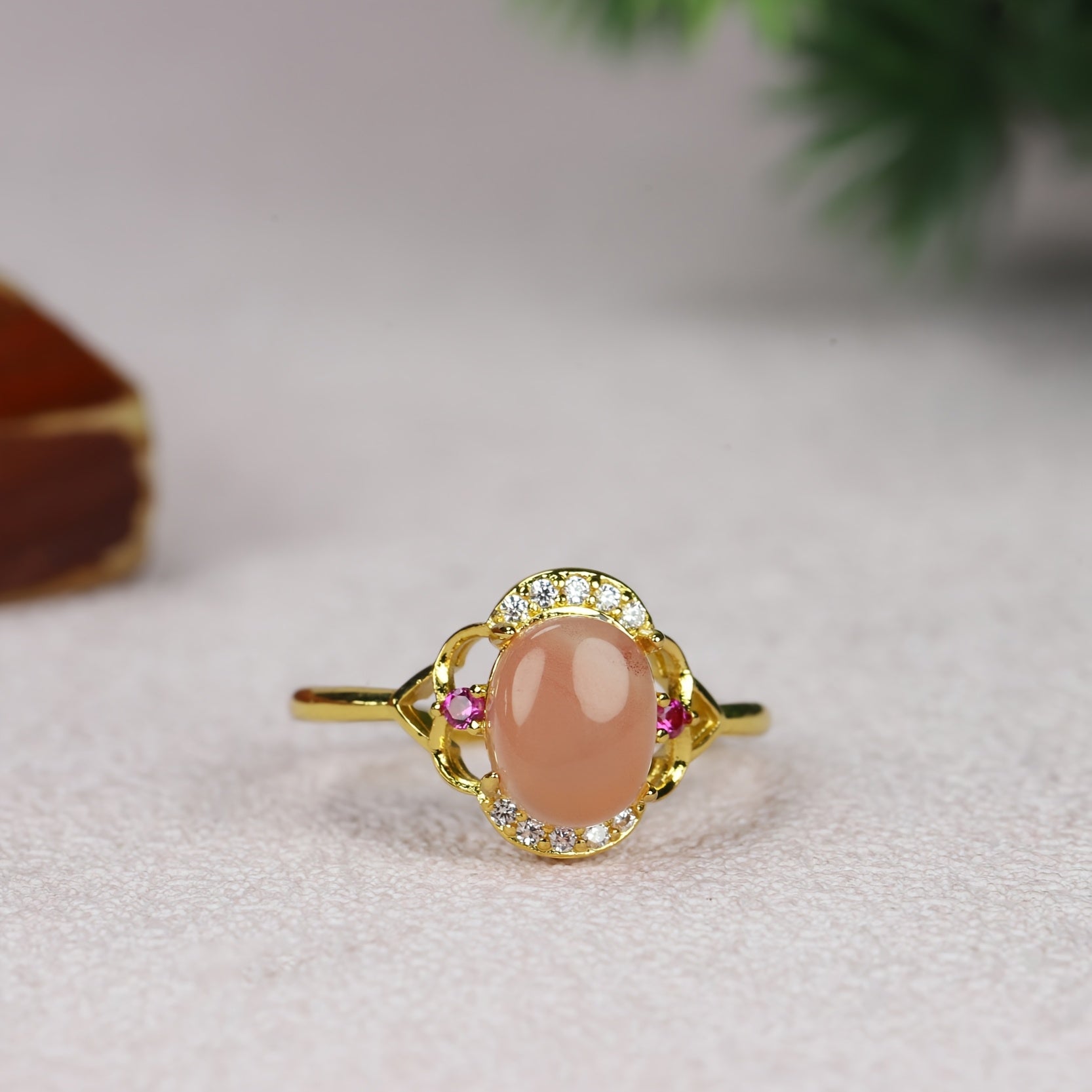
Morganite: Named after the American financier and gem collector J.P. Morgan, Morganite is a variety of beryl, the same mineral family as emerald and aquamarine. Discovered in Madagascar in 1910, its delicate, salmon-to-peach color is caused by manganese. Morganite's relatively recent discovery gives it a more modern feel than Rose Quartz. It is prized for its clarity and brilliance, offering a more vibrant and saturated pink. In metaphysical circles, it is associated with divine love, joy, and emotional healing, believed to help one connect with the energy of the goddess.
Pink Sapphire: While blue sapphire is more famous, pink sapphires are highly valued gemstones. Their color is caused by trace amounts of chromium. Ranging from a soft pastel to a vibrant magenta, high-quality pink sapphires are rare and command significant prices. Historically, sapphires of all colors were believed to protect against harm and envy. Pink sapphires, in particular, are associated with romance, fidelity, and the expression of one's inner self.
Pink Tourmaline: The tourmaline family is known for its incredible range of colors, and pink tourmaline is one of its most beautiful varieties. Its color can range from a light, almost pastel pink to a deep, intense magenta. Often found in Sri Lanka, Brazil, and Africa, pink tourmaline is celebrated for its cleansing and calming properties. It is thought to clear emotional wounds, dispel fear and anxiety, and inspire a sense of self-love and confidence.
Pink Diamonds: At the pinnacle of rarity and value are pink diamonds. They are among the rarest colored diamonds in the world, with their color originating from a rare geological process involving immense pressure that distorts the diamond's crystal lattice. Found primarily in Australia's Argyle mine (now closed), pink diamonds are the ultimate symbol of luxury, romance, and exclusivity. Their astronomical value makes them treasures for collectors and connoisseurs, representing the most intense and concentrated form of pink's symbolic power.
Cultural Significance Through the Ages
The meaning of pink gemstones has not been static; it has evolved and been shaped by different cultures and historical periods. In Victorian England, the "language of flowers" (floriography) was immensely popular. A pink rose, for instance, conveyed admiration and gentleness, while a red rose signified deep love. This floral symbolism easily transferred to gemstones. A pink gemstone given as a gift was a subtle and socially acceptable way to express affection without the intense passion of a red stone. It was the color of budding romance and tender sentiment.
In ancient China, pink and red were colors of good fortune, happiness, and prosperity. While red was the dominant color for these concepts, pink was associated with health and longevity. Jade, a stone of immense cultural importance, comes in various colors, including a highly prized lavender-pink. This "Imperial Pink" jade was considered a symbol of virtue, purity, and status, often carved into jewelry and ornamental objects for the emperor and nobility.
In the modern era, particularly in the 20th century, the association of pink with femininity became pronounced in Western societies. This shift influenced jewelry marketing and design, with pink gemstones being heavily marketed toward women as symbols of romance and beauty. However, the rise of the New Age and crystal healing movements in the late 20th and early 21st centuries has broadened the meaning of pink stones. They are now widely seen as tools for spiritual and emotional healing for all genders, connecting the wearer to their heart center and promoting empathy, self-love, and inner peace, transcending outdated gender norms.
The Modern Revival: Pink Gemstones in Contemporary Jewelry and Spirituality
Today, pink gemstones are experiencing a renaissance. They are no longer confined to traditional designs but are featured in bold, contemporary, and avant-garde jewelry. Designers are drawn to their versatility, using them to create pieces that are both delicate and powerful. The trend towards personalization and meaningful jewelry has also boosted the popularity of pink stones. People are increasingly drawn to gemstones not just for their beauty, but for their energy and symbolic resonance.
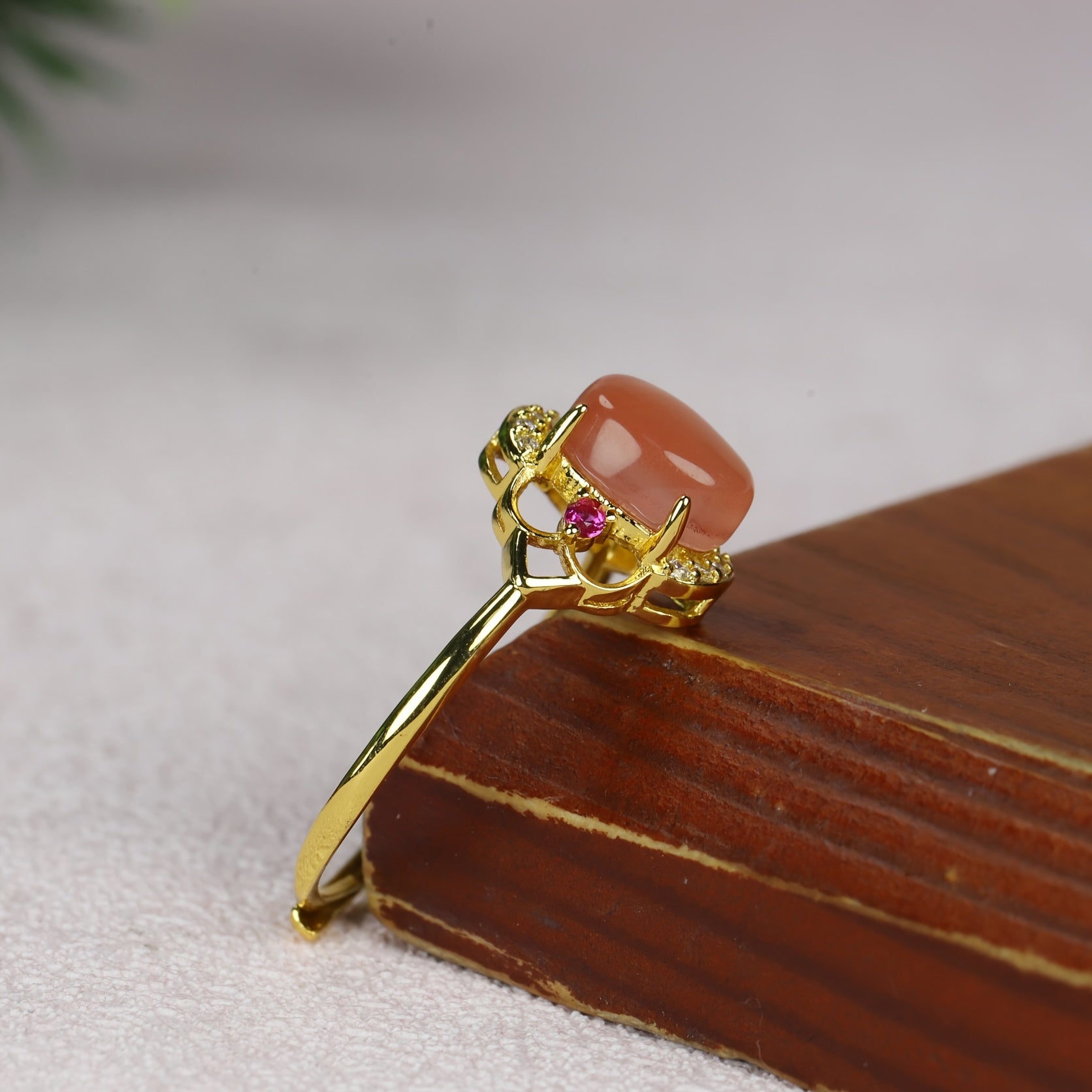
The wellness and self-care movement has played a significant role in this revival. As more people seek tools for managing stress, anxiety, and emotional turmoil, the gentle, soothing energy of stones like Rose Quartz has found a receptive audience. A pink crystal ring, like the one pictured, is more than an accessory; it is a personal talisman, a daily reminder to practice self-compassion, to open one's heart to love, and to cultivate emotional balance. It is a piece of jewelry with a purpose, a beautiful object that supports the wearer's inner journey.
From thebeds of antiquity to the cutting-edge designs of today, the story of pink gemstones is a testament to their enduring power. They are stones of the heart, carrying within their delicate hues the universal human desires for love, peace, healing, and connection. Whether worn as a fashion statement, a symbol of romance, or a spiritual tool, a pink gemstone is a timeless treasure that speaks directly to the soul.
