





The Sacred Geometry of Filigree: How Ancient Metalwork Patterns Influence Modern Spiritual Jewelry Design
Introduction: The Language of Patterns
For millennia, humanity has adorned itself with jewelry that transcends mere decoration, serving as portable symbolism, spiritual protection, and cosmic mapping. Among the most enduring techniques in this tradition is filigree—the art of creating intricate, lace-like patterns from twisted threads of precious metal. Far beyond aesthetic appeal, these patterns encode mathematical principles, cosmological understanding, and energetic pathways that continue to resonate in contemporary spiritual jewelry design.
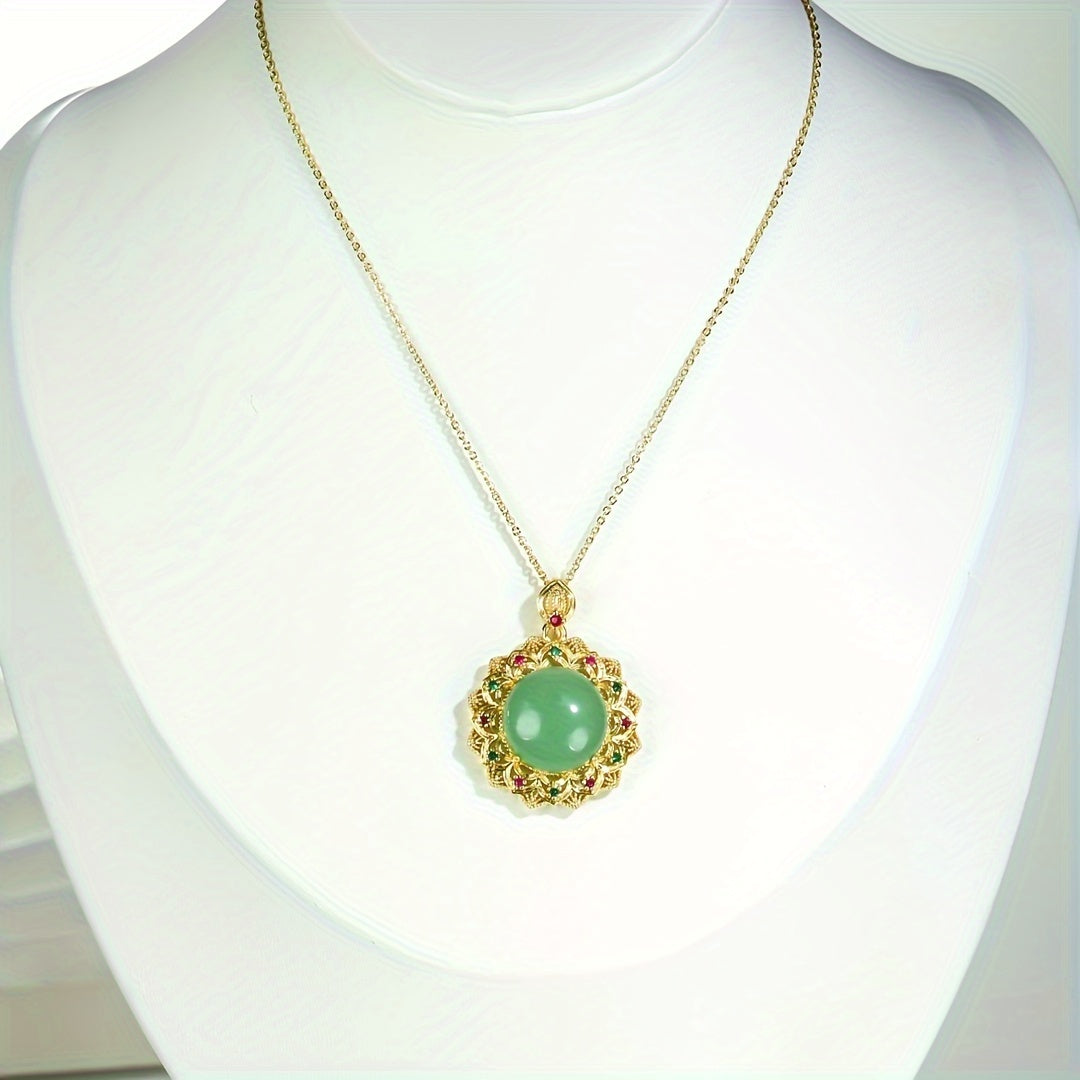
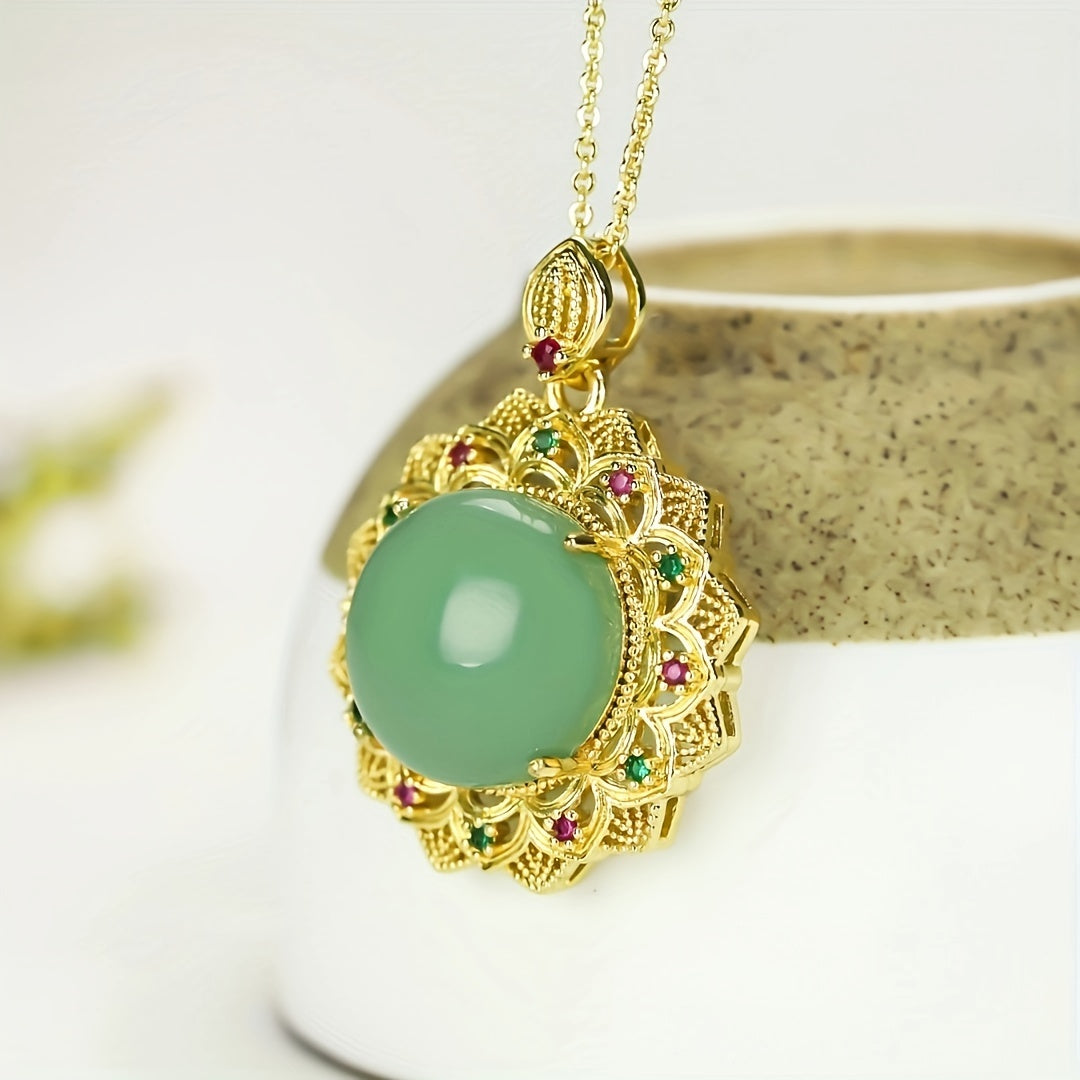
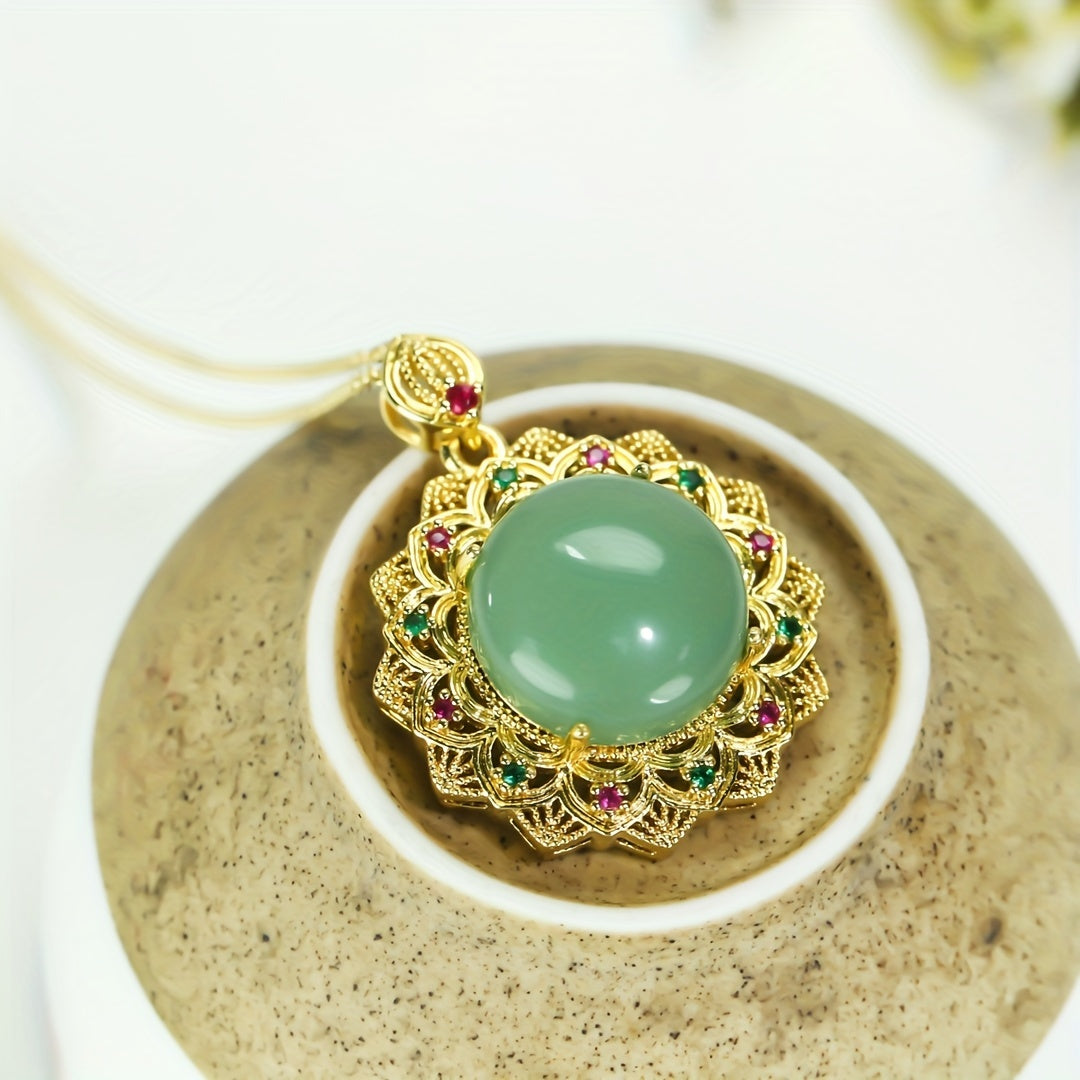
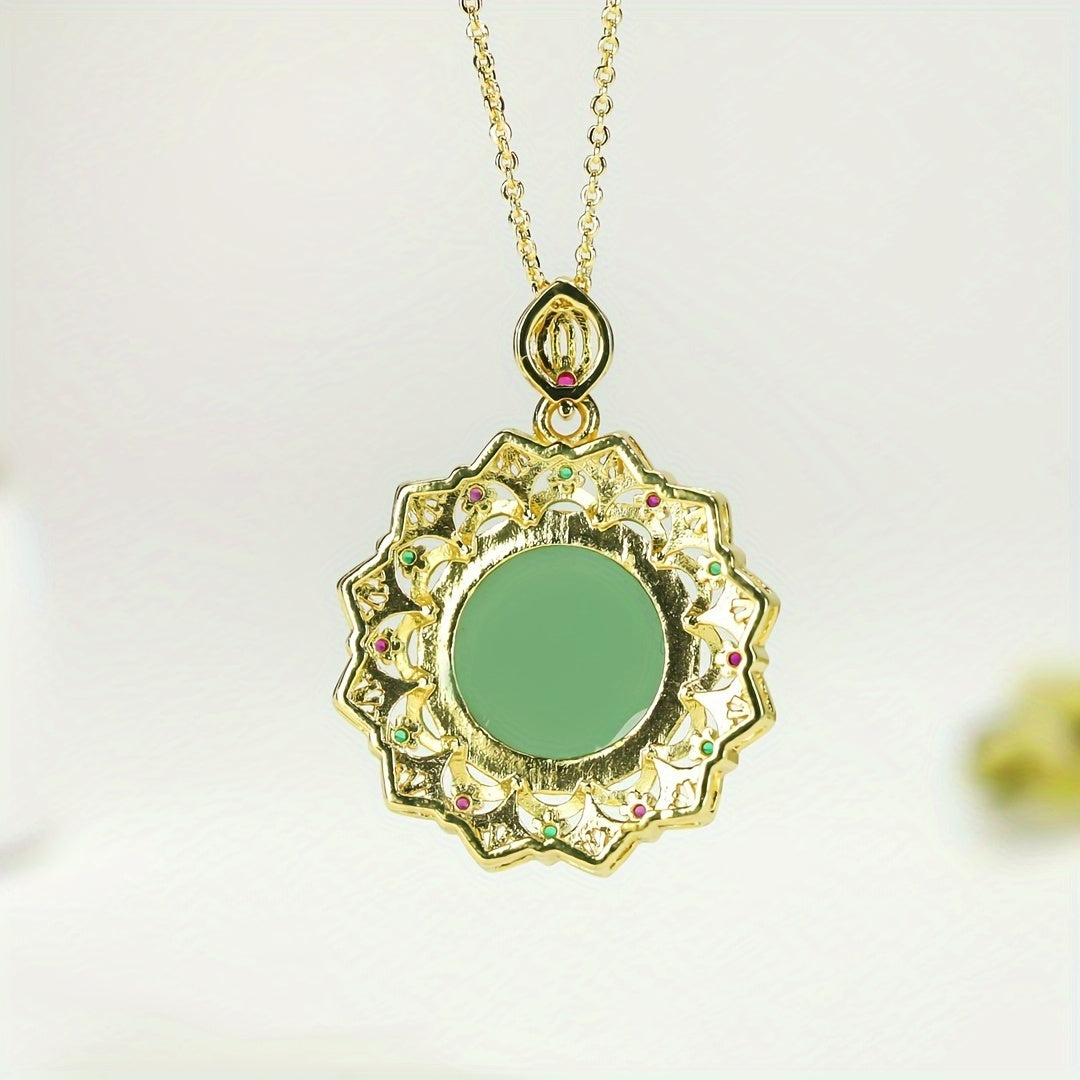
Modern pieces like the Elegant Natural Stone Filigree Pendant Necklace represent a continuation of this ancient dialogue between geometry and spirituality. Through careful examination of historical precedents, mathematical principles, and contemporary applications, we can uncover how these ornate patterns function as more than decoration—they become energetic conduits, meditation aids, and personal talismans for modern spiritual seekers.
Core Insight: Filigree patterns are not randomly decorative but are based on mathematical ratios and geometric principles found throughout nature—from the spiral of galaxies to the branching of trees. These patterns create resonant fields that interact with human energy systems when worn as jewelry.
Historical Foundations: Filigree Across Cultures
Ancient Origins and Cultural Expressions
The earliest known filigree work dates back to ancient Mesopotamia around 3000 BCE, where goldsmiths created delicate wire patterns that symbolized celestial order. Egyptian artisans refined these techniques, incorporating symbolic patterns representing the Nile's meandering flow—a literal and metaphorical life source. Greek and Etruscan civilizations elevated filigree to high art, with patterns mirroring philosophical concepts of harmony and proportion that would later influence Renaissance thinkers.
In Asia, particularly in India and China, filigree developed distinct cultural expressions. Indian Kundan and Meenakari work incorporated geometric patterns representing mandalas—cosmic diagrams used in meditation. Chinese artisans developed "fine gold thread" techniques during the Ming Dynasty, creating patterns that followed Taoist principles of balance between yin and yang energies. These diverse traditions shared a common understanding: that metalworked patterns could channel specific energies and intentions.
The Art Nouveau Revival and Spiritual Symbolism
The late 19th-century Art Nouveau movement marked a pivotal moment in filigree's spiritual evolution. Artists like René Lalique and Louis Comfort Tiffany rejected industrial uniformity in favor of organic forms inspired by nature's geometry. Their filigree patterns incorporated spirals (symbolizing evolution), tendrils (representing growth), and floral motifs (embodying blooming consciousness). This period established the direct connection between ornamental metalwork and spiritual philosophy that continues to influence designers today.
Sacred Geometry: The Mathematics of Meaning
The Golden Ratio and Fibonacci Sequences
At the heart of compelling filigree design lies the Golden Ratio (approximately 1.618), a mathematical proportion found throughout nature—from nautilus shells to hurricane formations. Master artisans have intuitively incorporated this ratio into their scrollwork for centuries, creating patterns that feel inherently harmonious to human perception. Contemporary research suggests that exposure to Golden Ratio proportions can induce calm brainwave states, explaining why filigree jewelry often feels "soothing" to wearers.
Fibonacci sequences—where each number is the sum of the two preceding ones (0, 1, 1, 2, 3, 5, 8, 13...)—manifest in branching filigree patterns. These sequences govern growth patterns in plants, the arrangement of leaves, and even galactic arm formations. When incorporated into jewelry, these mathematical progressions create a subtle resonance with natural growth cycles, potentially supporting personal development and transformation in the wearer.
Fractal Patterns and Infinite Complexity
Fractal geometry—patterns that repeat at increasingly small scales—appears throughout traditional filigree work, particularly in Islamic metalwork where infinite pattern repetition symbolized the boundless nature of the divine. Modern spiritual jewelry continues this tradition, with intricate scrollwork that draws the eye into ever-smaller details, creating a meditative focus point. This fractal quality may explain why many wearers report entering contemplative states when observing detailed filigree patterns.
Energetic Properties: How Patterns Influence Energy Flow
The Conduit Principle: Channeling Energy Through Metal
Metals have unique conductive properties, both electrically and energetically. Traditional spiritual systems recognize gold as solar energy conductor, silver as lunar energy amplifier, and copper as earth energy grounder. When shaped into filigree patterns, these metals create specific energetic pathways. The twisted wire technique common in filigree creates what energy workers describe as "vortex channels"—spiral pathways that can collect, transform, and direct subtle energies.
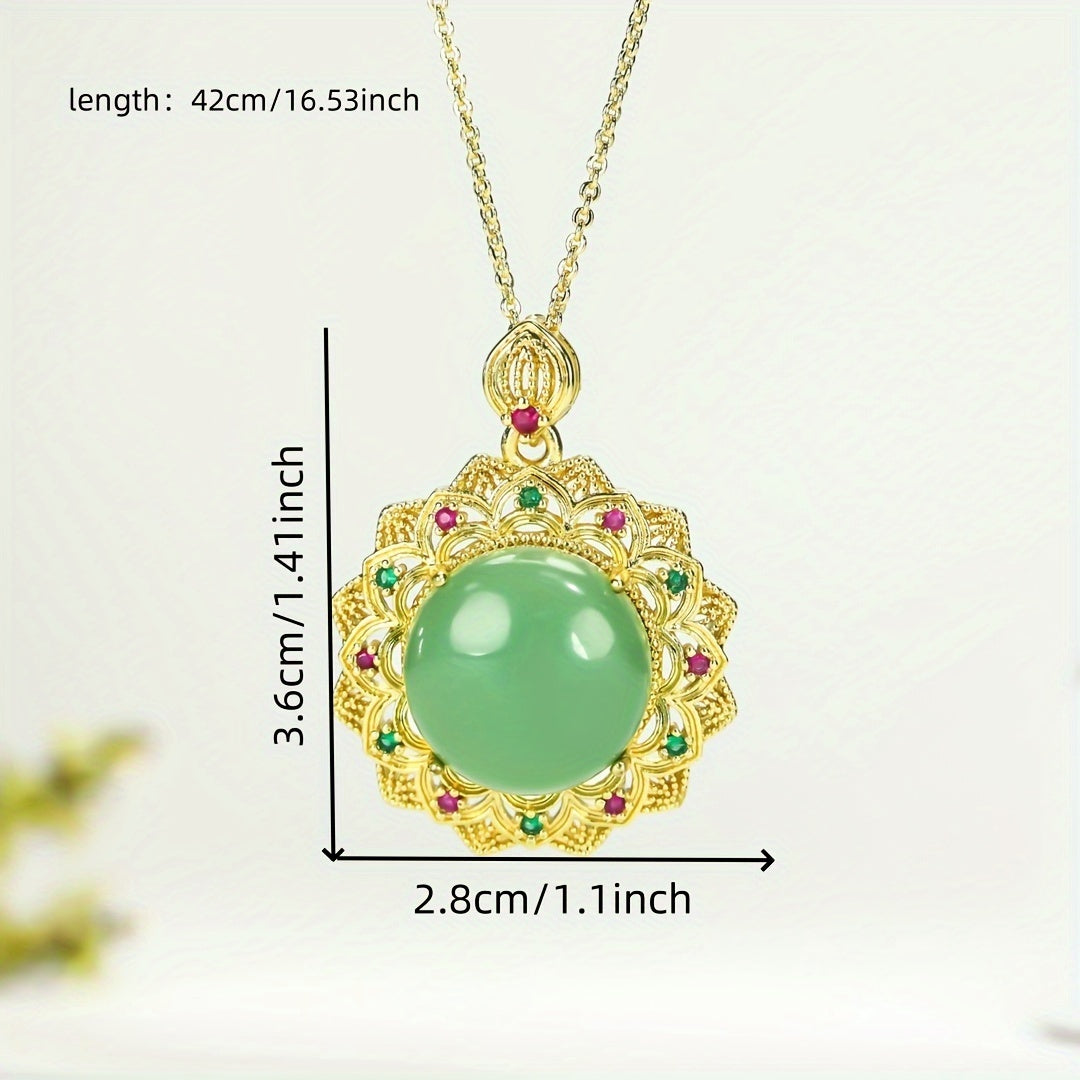
Contemporary pieces like the Natural Stone Filigree Pendant utilize this principle by combining conductive metals with semi-precious stones, creating complete energetic circuits. The metalwork channels environmental energies, while the stone transforms and personalizes these energies before they reach the wearer's body.
Pattern-Specific Effects: Different filigree patterns produce distinct energetic effects. Circular patterns create containment fields, protective energy bubbles around the wearer. Radial patterns function as energy transmitters, broadcasting intentions outward. Meandering patterns, reminiscent of river systems, encourage energy flow and emotional release. Lattice patterns create filtration systems, screening out discordant energies while allowing harmonious frequencies to pass through.
Wearable Architecture: From an energetic architecture perspective, filigree jewelry creates miniature sacred structures around the wearer—portable temples, energy grids, or meditation chambers. The spaces between wires are as important as the wires themselves, creating windows for energy exchange and consciousness expansion.
Chakra Alignment Through Geometric Resonance
Each of the body's primary energy centers (chakras) resonates with specific geometric forms. The heart chakra vibrates with hexagons and six-pointed stars, the third eye with triangles and Vesica Piscis shapes, and the crown chakra with circles and complex mandalas. Thoughtfully designed filigree incorporates these shapes to stimulate corresponding energy centers when worn at appropriate body locations.
Pendants worn near the heart, like the Elegant Natural Stone Filigree Pendant, often incorporate hexagonal patterns to support emotional balance and compassion. The stone's central placement within the geometric framework creates what energy practitioners call a "focal lens"—concentrating and directing the stone's properties through the geometric filter of the metalwork.
Contemporary Applications: Spiritual Jewelry for Modern Life
Design Philosophy for the Conscious Consumer
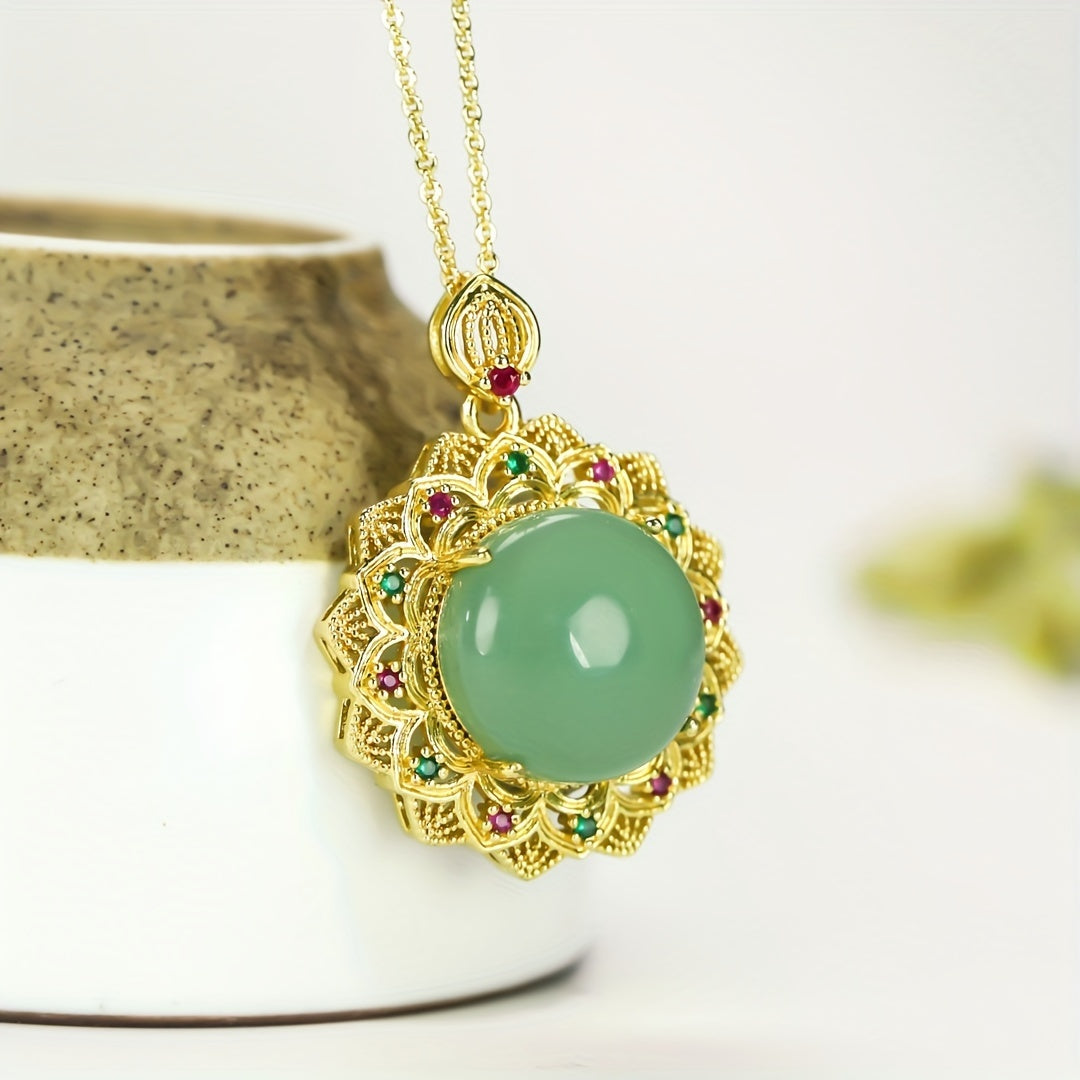
Today's spiritual jewelry designers face the challenge of creating pieces that honor traditional wisdom while serving contemporary needs. The design philosophy behind successful pieces like the Natural Stone Filigree Pendant typically includes several key principles: intentionality in pattern selection, balance between complexity and wearability, integration of multiple energetic elements, and adaptability to various spiritual practices.
Modern designers often work with energy practitioners during the design phase, testing prototypes for their energetic effects. Some even incorporate biofeedback measurements to assess how different patterns influence physiological markers like heart rate variability, skin conductance, and brainwave patterns. This empirical approach, combined with traditional knowledge, creates jewelry that supports wellbeing on multiple levels.
Design Integration: The most effective contemporary spiritual jewelry integrates three elements: geometric metalwork (structure), natural stones (transformation), and symbolic motifs (intention). This triad creates pieces that function as complete energetic systems rather than decorative objects.
Multifunctional Jewelry for Holistic Living
Beyond personal adornment, modern filigree spiritual jewelry serves multiple functions: meditation aids (the patterns provide focal points for concentration), energy tools (supporting healing practices), mindfulness reminders (tactile anchors to present-moment awareness), and conversation starters about spirituality in daily life. The versatility of pieces like the Filigree Pendant allows them to transition seamlessly from yoga studios to professional settings, supporting spiritual practice throughout the day.
Cultural Resurgence and Market Evolution
The Growing Demand for Meaningful Adornment
The global market for spiritual and meaningful jewelry has grown exponentially in the past decade, with particular interest in pieces that combine aesthetic appeal with energetic properties. Consumers increasingly seek jewelry that tells a story, embodies values, and supports personal growth—moving beyond status symbols toward meaning symbols. This shift has created renewed interest in traditional techniques like filigree, reinterpreted through contemporary spiritual understanding.
Market research indicates three primary consumer segments driving this growth: spiritual practitioners seeking functional tools, mindful consumers wanting daily reminders of their values, and cultural creatives appreciating the fusion of art and spirituality. Pieces that successfully bridge these segments, like well-designed filigree pendants, occupy a unique position in the expanding consciousness-oriented marketplace.
Sustainability and Ethical Considerations
The spiritual jewelry market has become increasingly conscious of material sourcing and production ethics. Consumers expect transparency about stone origins, metal recycling, fair labor practices, and environmental impact. This ethical dimension adds another layer of meaning to the jewelry—wearing becomes not only a personal spiritual practice but also a statement of values regarding planetary stewardship and social responsibility.
Forward-thinking designers are exploring innovative approaches: using lab-created stones with identical energetic properties to mined gems, implementing zero-waste production techniques for metalwork, and creating modular designs that can be repaired or reconfigured rather than replaced. These practices align with the spiritual principles of interdependence and conscious consumption that many wearers embrace.
Expert Perspectives: Interviews with Designers and Practitioners
The Designer's View: Intention in Every Curve
According to master jewelry designer Elena Vasquez, who has studied filigree traditions across three continents: "When I create filigree patterns, I'm not just making something beautiful—I'm encoding energy blueprints. Each curve has intention, each intersection creates an energetic node. The spaces between wires are as important as the wires themselves; they're where energy breathes and moves."
Vasquez describes her design process as meditative: "I enter a flow state where the patterns seem to design themselves according to mathematical principles that feel ancient and universal. When wearers tell me they feel different energy when wearing my pieces, I believe they're responding to these embedded geometric codes that resonate with their own energy fields."
The Energy Practitioner's Perspective: Functional Spiritual Tools
Energy healer and Reiki master David Chen incorporates filigree jewelry into his practice: "I recommend specific filigree patterns to clients based on their energetic needs. Circular patterns for protection during emotional vulnerability, branching patterns for those needing growth and expansion, spiral patterns for accessing deeper consciousness. The metal conducts energy while the patterns shape its flow."
Chen notes measurable effects: "In my practice, I've observed changes in clients' biofield coherence when they wear intentionally designed filigree pieces. The geometric patterns seem to create standing wave patterns that interact with human energy fields, much like sound or light waves create interference patterns. Pieces like the Natural Stone Filigree Pendant create particularly balanced fields because of their symmetrical design and central stone focus."
Scientific Inquiry: Bridging Tradition and Research
Emerging Studies on Pattern Perception and Physiology
While traditional knowledge systems have long asserted the energetic effects of geometric patterns, contemporary science is beginning to explore these claims through rigorous study. Neuroscience research has demonstrated that specific visual patterns can induce distinct brainwave states—mandala viewing increases alpha waves (associated with relaxation), while certain fractal patterns generate theta waves (linked to meditation and creativity).
Materials science offers another avenue of inquiry, investigating how different metal alloys might interact with the body's bioelectrical field. Preliminary studies suggest that wearing certain metals can influence skin conductance and galvanic skin response, potentially explaining why specific metals have been traditionally associated with particular energetic properties in various spiritual systems.
The Placebo Effect and Ritual Significance
Psychological research acknowledges the powerful effects of belief and ritual in creating subjective experiences of energy and healing. When a piece of jewelry like the Filigree Pendant is intentionally selected, cleansed, and programmed with specific purposes, the ritual itself creates neural pathways that enhance the wearer's sensitivity to subtle experiences. This doesn't diminish the jewelry's value but rather highlights the importance of intentional relationship with spiritual objects.
The intersection of these perspectives—traditional knowledge, subjective experience, and scientific inquiry—creates a rich understanding of how filigree jewelry might function as more than decoration. Rather than seeking to "prove" or "disprove" energetic claims, contemporary approaches often focus on the phenomenological experience of wearers and the demonstrable psychological benefits of meaningful adornment.
Future Directions: The Evolution of Spiritual Adornment
Technological Integration and Personalization
The future of spiritual jewelry likely involves greater personalization through technology. Imagine filigree patterns generated from an individual's energy field readings, or pieces that incorporate subtle lighting responsive to physiological states. Some designers are experimenting with conductive threads that can interface with meditation apps, creating haptic feedback during mindfulness practices. These technological enhancements don't replace traditional craftsmanship but rather extend its applications for contemporary spiritual practitioners.
3D printing technology offers new possibilities for creating impossibly intricate filigree patterns that would challenge even the most skilled traditional artisans. This technology allows for geometric complexity based on mathematical algorithms, potentially creating patterns with specific energetic properties calculated for individual wearers. The challenge lies in maintaining the "soul" and intentionality of handmade pieces within technologically facilitated production.
Cultural Synthesis and Global Design Language
As spiritual practices become increasingly globalized and syncretic, jewelry design reflects this fusion. Future pieces might incorporate Celtic knotwork alongside Islamic geometric patterns, or combine Native American symbolism with Hindu mandala structures. This cross-pollination creates a new global design language for spirituality—one that honors diverse traditions while creating forms that speak to universal human experiences of meaning, connection, and transcendence.
The enduring appeal of pieces like the Elegant Natural Stone Filigree Pendant suggests that certain design principles—balance between complexity and simplicity, integration of natural and crafted elements, geometric harmony—resonate across cultural boundaries. As spiritual jewelry continues to evolve, these principles will likely remain foundational while (forms of expression) become increasingly diverse and personalized.
Conclusion: The Timeless Appeal of Geometric Harmony
The journey through filigree's history, mathematics, energetic properties, and contemporary applications reveals a profound truth: humans have always sought to wear their cosmology, to carry sacred geometry against their skin, to manifest spiritual principles in tangible form. From ancient Mesopotamian workshops to modern design studios, the impulse remains consistent—to create beauty that means something, patterns that do something, jewelry that connects wearers to larger realities.
Contemporary pieces like the Elegant Natural Stone Filigree Pendant Necklace represent the latest chapter in this enduring tradition. They honor ancient wisdom while serving modern needs, offering wearers not just adornment but tools for transformation, not just beauty but bridges between visible and invisible worlds. In their delicate metalwork, we find encoded the mathematical mysteries of the universe; in their wearing, we participate in the eternal human quest for meaning expressed through form.
As we move forward in an increasingly digital and disembodied age, such tangible connections to geometry, nature, and tradition may become ever more precious. The filigree pendant around one's neck becomes more than jewelry—it becomes a personal monument to the marriage of art and spirituality, a wearable meditation on pattern and meaning, a daily reminder that we are both shaped by and shapers of the geometric order underlying all existence.
