




When Stones Stopped Speaking — The Silent Migration of Gem Meaning
Sacred Symbology & how garnet and peridot became quiet companions.
You're in a waiting room. The air tastes like disinfectant and old magazines. Your fingers, restless, find the ring on your right hand. They trace the smooth, warm curve of gold, then the sharp ridge where the stone splits. One side is a deep, wine-dark red. The other is a pale, almost electric green. You don't think, "Garnet for passion, peridot for clarity." You don't think about planetary alignments or chakras. You just feel the division. The clean line. The fact of two colors held in one oval, bound by a single band of warm metal. When did stones stop telling us what to feel, and start just being things we feel with?
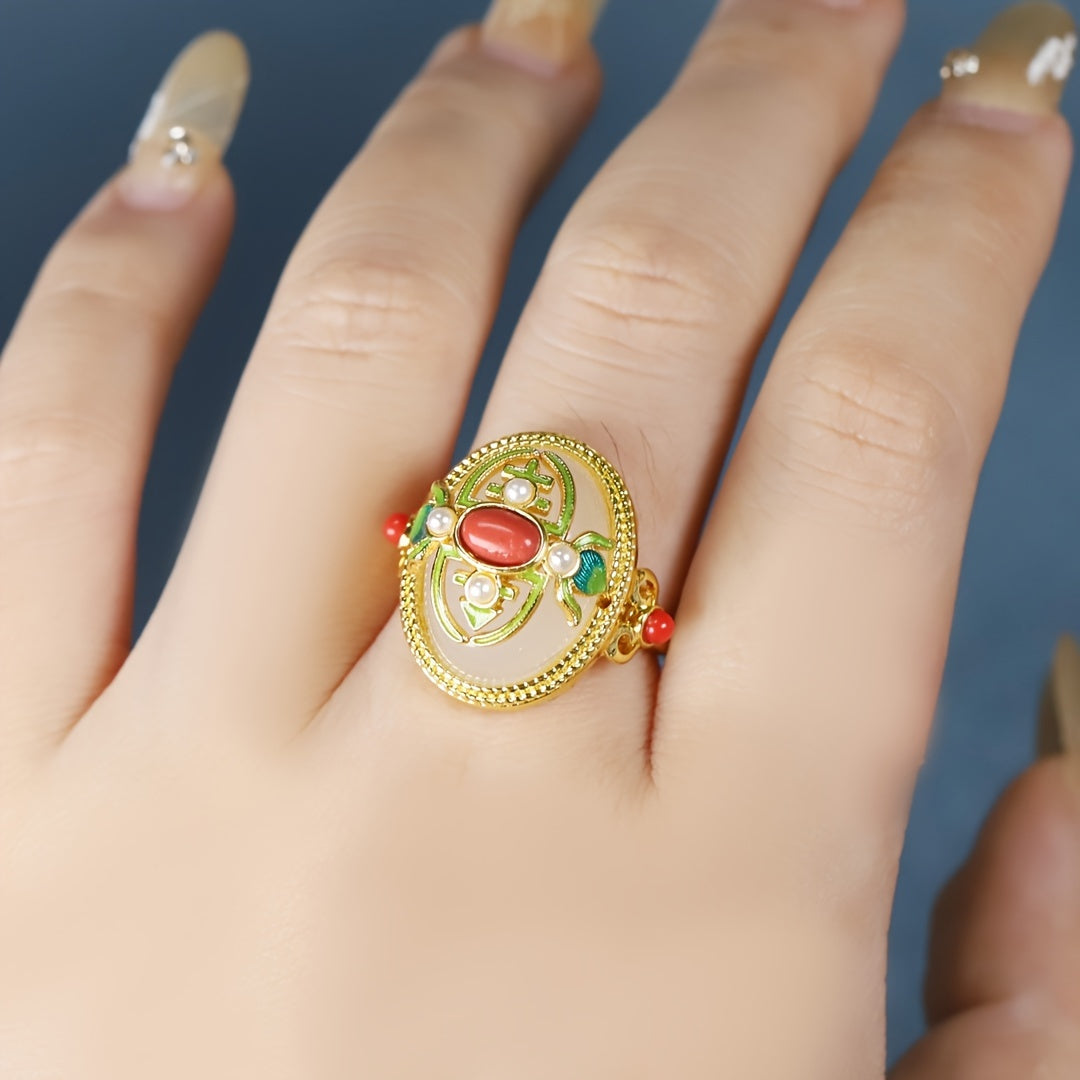
The divided stone: garnet and peridot held in a single oval.
For most of human history, gems were not passive. They were active participants in cosmology. In ancient texts, garnet wasn't just red; it was the stone of Mars, carrying the god of war's qualities of courage, aggression, and vitality. It was thought to regulate the heart and blood. Peridot wasn't just green; it was the stone of the sun, radiating its light-dispelling qualities, guarding against nightmares, illuminating the mind. These meanings weren't metaphors. They were understood as real, inherent powers—the stone's essence interacting with the world's essence.
The shift happened slowly. It wasn't that people stopped believing. It was that belief became optional. Personal. The stone's job description changed from "influence the world" to "reference an idea." The garnet on your finger no longer has to make you passionate; it can simply remind you that passion is a color you recognize, a depth you sometimes touch. The peridot doesn't have to grant clarity; it can just sit there, a cool, bright green spot in your vision when you're feeling foggy.
The Great Simplification & The Birth of the Birthstone
The modern birthstone list, formalized in the early 20th century, was perhaps the final act of this simplification. It took complex, location-specific, tradition-bound symbolisms and flattened them into a calendar. January: Garnet. August: Peridot. The "why" became secondary to the "when." The rich, sometimes contradictory lore—garnet as a protector on journeys, peridot as a gem formed in volcanic fire—was reduced to a personality trait or a lucky charm.
This was a loss of depth, but also a liberation. It freed the stones from the priesthood of expertise. You no longer needed a scholar to tell you what your gem meant. You could just be born in a month and have a stone. Or, more personally, you could just like the color. The meaning could migrate from the library to the living room, from the ritual to the random Tuesday.
So what are we left with? We're left with objects that carry the ghost of their old meanings, like a house that still smells faintly of its previous owners. The garnet whispers of blood and fire, but you might just hear "warmth" or "depth." The peridot hums with sunlight and mental clarity, but you might just see "freshness" or "a break in the clouds." The symbols haven't died; they've gone quiet. They speak in hints, not declarations.
This is where a ring like this lives. It doesn't insist on its historical meanings. It presents them as possibilities. The divided oval is a perfect visual metaphor for this state: two ancient symbol systems, once loud and specific, now sitting side-by-side in respectful silence. They don't argue. They don't even explain. They just are—red and green, depth and light, earth and sun—waiting for you to project whatever personal weather you're carrying onto their still, polished surfaces.
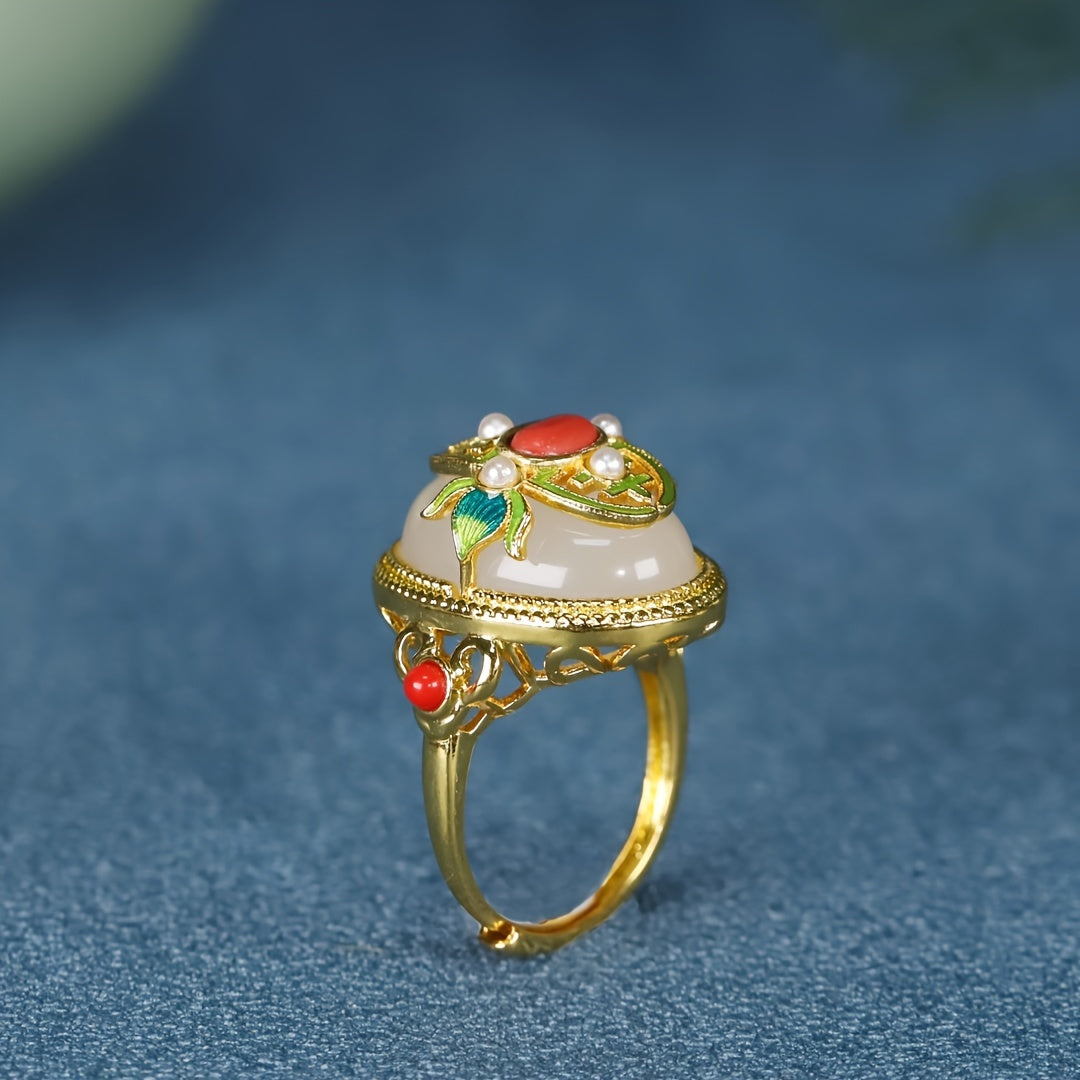
In different light: the garnet deepens, the peridot glows.
Wearing it becomes less about harnessing "energetic balance" and more about contemplating the very idea of balance. The physical balance of the weighted gold band. The visual balance of complementary colors. The conceptual balance of two different stories held in one object. The ring doesn't create equilibrium; it models it. It shows you what it looks like when opposites don't cancel each other out, but coexist within a defined, wearable space.
This is the silent migration. From stones that spoke commands to stones that hold space for questions. From gems that changed reality to gems that change—perhaps only slightly—how you pay attention to reality. The magic, if there is any, is in the attention, not in the stone.
So when your thumb rubs that smooth dividing line in the waiting room, you're not activating ancient powers. You're conducting a tiny, personal archaeology. You're brushing the dust off two very old stories and asking, quietly, if either of them has anything to do with the story you're living right now. And sometimes, in the silence that follows, you might find your own answer.
Contemplate the Symbol
The Vintage Gold Oval Ring with Garnet & Peridot is a study in this quiet, personal symbology.
View the Jewelry Piece →