





The Moment You Reach for Green
It happens on a Tuesday afternoon, maybe. You’re standing in front of a mirror, getting ready for another meeting, and your hand pauses over the jewelry box. You’re not looking for sparkle. You’re looking for something that feels like a quiet exhale.
Some people notice they reach for green when the world feels too loud. Not the green of traffic lights or neon signs, but the green of moss on stone, of leaves after rain—a green that holds its own temperature, cool and steady against the skin.
This isn’t about fashion. It’s about the body knowing what the mind hasn’t yet put into words: a need for groundedness, for a touchstone that doesn’t ask for anything in return.
A History of Holding Ground
Long before green became a Pantone color, it was a substance pulled from the earth. Malachite, jade, serpentine—stones carved into seals, amulets, and tokens of safe passage. In ancient China, jade was buried with the dead as a protector of the soul. In Egypt, green malachite was ground into eyeshadow, believed to ward off evil glances.
But here’s what gets missed in the history books: people didn’t wear these stones because they were told to. They wore them because the weight felt right. Because in a world of uncertainty, holding a piece of the earth close created a private kind of logic.
The green stone, across cultures, became less about magic and more about memory—a physical reminder of stability in the palm.
The Misreading of Protection
Today, we often hear green stones described as “protective.” But protection from what? The word has been flattened into a generic shield against bad energy, a kind of spiritual armor.
If you look closer, though, the original use was subtler. It wasn’t about deflecting external forces so much as maintaining internal clarity. A green stone amulet in a Roman soldier’s pouch wasn’t meant to stop arrows; it was meant to steady his hand. To keep his mind clear amidst chaos.
That’s the shift: from protection as a barrier to protection as a state of mind. A way of staying present when everything else pulls you into distraction.
The Modern Anchor
So what does a green stone mean now, in an age of constant scrolling and performed identities? It becomes an anchor—not to the past, but to the present.
You might find yourself touching it during a difficult conversation, not as a talisman, but as a tactile reset. The cool surface against your skin says: you are here, in this room, in this body. The weight of the pendant, just over 3 centimeters long, is enough to notice but not enough to pull. It’s a gentle tug back to your own center.
For some, it’s worn on days when decisions feel heavy. The green doesn’t make the decision for you. It simply says: you can see clearly. You can trust what you see.
Gold as a Question, Not an Answer
The gold enamel here isn’t meant to shout luxury. It’s a line, a contour, a way of framing the stone. In many traditions, gold represents the sun, the eternal, the divine. But in this pairing, it plays a different role.
Think of it as a highlight—not of wealth, but of attention. It says: this part matters. This shape, this curve, this moment of contact between earth and artistry.
When light catches the gold, it’s not a flashy display. It’s a quiet reminder that even in something as solid as stone, there’s movement. There’s reflection. There’s a dialogue between the permanent and the passing.
Wearing It Over Time
The first week, you notice the weight. The second week, you notice the temperature—how it warms to your skin slowly, almost reluctantly. By the third week, you stop noticing it consciously. It becomes part of your morning rhythm, like putting on glasses or tying your shoes.
And that’s when it starts to work in a different way. It’s no longer an object you look at, but an object you feel. On crowded trains, in long meetings, in moments of sudden anxiety, your hand goes to your ear without thinking. The stone is there, cool and solid. A point of contact with something that doesn’t change, even when everything else does.
This is the real symbolism: not in the stone itself, but in the relationship you build with it through repetition. Through daily, ordinary wear.
A Companion for the Unspoken Moments
Some objects exist not to be explained, but to be worn into meaning. This is one of them.
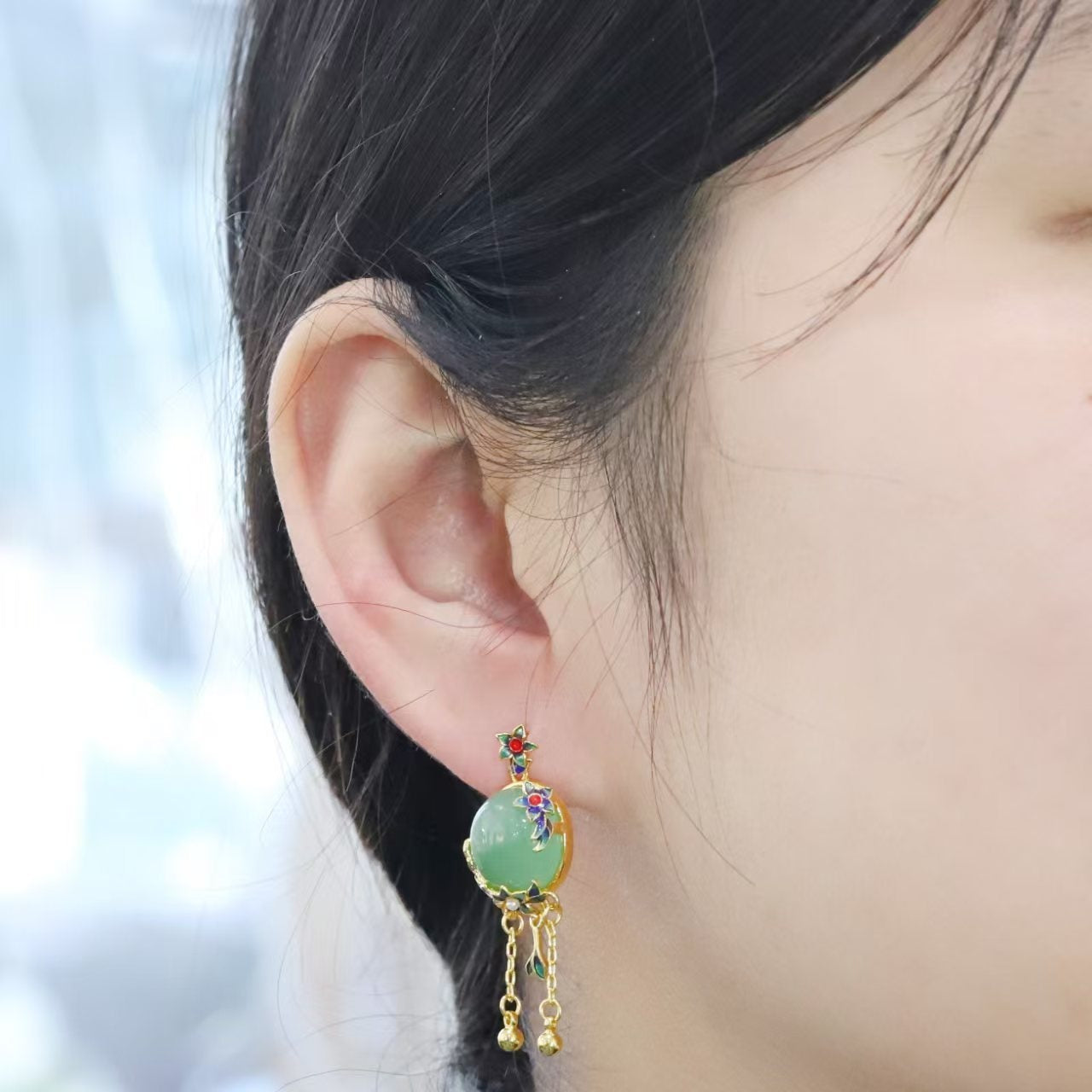 View the Jewelry Piece →
