




The Quiet Language of Green: How a Color Became a Symbol of Inner Terrain
You see it on a screen, in a store, on someone walking past. Green. It registers as calm, maybe as nature. The association is immediate, almost automatic. We’ve been taught that green means growth, balance, renewal. But when did this shorthand become a substitute for feeling? When did a color’s complex history get flattened into a wellness hashtag?
Somewhere along the way, we started misreading the symbol. We took a shade that has whispered different things to different cultures for millennia and decided it had one job: to fix us. To bring balance. To heal. The expectation got attached like a static charge, and now the color itself can feel burdened by our need for it to work.
The first time you hold a piece of green stone, you might notice its temperature first. It’s cooler than your skin. It has weight. These are immediate, physical facts. They happen before any meaning arrives. The coolness doesn’t mean “calm”; it just is. The weight doesn’t symbolize “grounding”; it’s just mass in your hand. This is where the misunderstanding often begins—we skip the “is” and jump straight to the “means.”
Historically, green has been a territory of contradictions. In ancient Egypt, it was the color of rebirth and vegetation, linked to Osiris. In the Middle Ages, its instability in pigments made it associated with toxicity and moral peril. For the Islamic tradition, it was the color of paradise. In China, jade’s green was less about a color and more about a substance’s soul—its texture, its sound, its cool permanence. The symbol was never one thing. It was a conversation between material, maker, and moment.
When you wear a green stone now, you are entering that old, layered conversation. You’re not applying a fix. You’re not subscribing to a universal meaning. You are, perhaps, holding a piece of a very long, unresolved story. And your part in that story isn’t to decode it, but to notice where your own life brushes up against it.
Maybe you find yourself touching it on a crowded train, your thumb finding the smooth curve. The action isn’t spiritual; it’s tactile. A search for a different texture in a world of flat glass and plastic. The green is just there, in your periphery. It doesn’t have to do anything. Its job, if it has one, is simply to be present as a piece of the earth, formed under pressure over epochs, now sitting quietly against your skin. Its timescale dwarfs your momentary worry, and in that disparity, there can be a kind of relief. Not because the stone “absorbs stress,” but because its silent, ancient presence puts your own time into perspective.
This is the shift: from using a symbol to letting a symbol be. From asking it to represent something to allowing it to coexist with your unrepresented states. The green doesn’t balance you. It exists alongside your imbalance, a steady, non-judgmental point of reference. Some people notice that this external steadiness can, over time, make their own internal fluctuations feel less alarming. The stone didn’t cause the calm; it merely held space for it to occur.
So the question isn’t “What does green mean?” It becomes “What happens when I stop needing it to mean something specific?” The symbol is released from its duty. The color is free to just be a color—one that has witnessed centuries of human hope, fear, and artistry, and remains unchanged. When you wear it, you carry a fragment of that witness. You are not wearing a solution. You are wearing a companion to the question.
The Migration from Sacred to Personal
Symbols migrate. They travel across borders, through languages, losing some layers and gaining others. The green that once signified divine fertility in a temple now sits in a teenager’s bedroom, catching the light from a laptop. The meaning hasn’t been lost; it has been personalized. The sacred, in a DARHAI sense, isn’t about a fixed divine meaning. It’s about the moment an object becomes a vessel for personal significance—a significance that is felt, not dictated.
This is where the modern tension lies. We crave the depth of historical meaning but resist the dogma that often comes with it. We want an object to connect us to something larger than ourselves, but we want to define that “something” on our own terms. The green stone becomes a perfect medium for this. Its history is long and rich, offering a sense of continuity. Yet its meaning for you is allowed to be vague, shifting, private. It can be a reminder of a forest you walked in once. It can be the color of your best friend’s eyes. It can just be a shade that, for reasons you don’t fully understand, makes your inner noise soften a half-decibel.
The practice, then, is one of observation. Not interpretation. You might wear the stone for a week and simply notice when your attention goes to it. Is it when you’re feeling unmoored? When you’re feeling particularly creative? When you need a break from someone else’s voice? The pattern, not the prophecy, becomes the insight. The symbol stops telling you what you should feel and starts showing you what you actually feel.
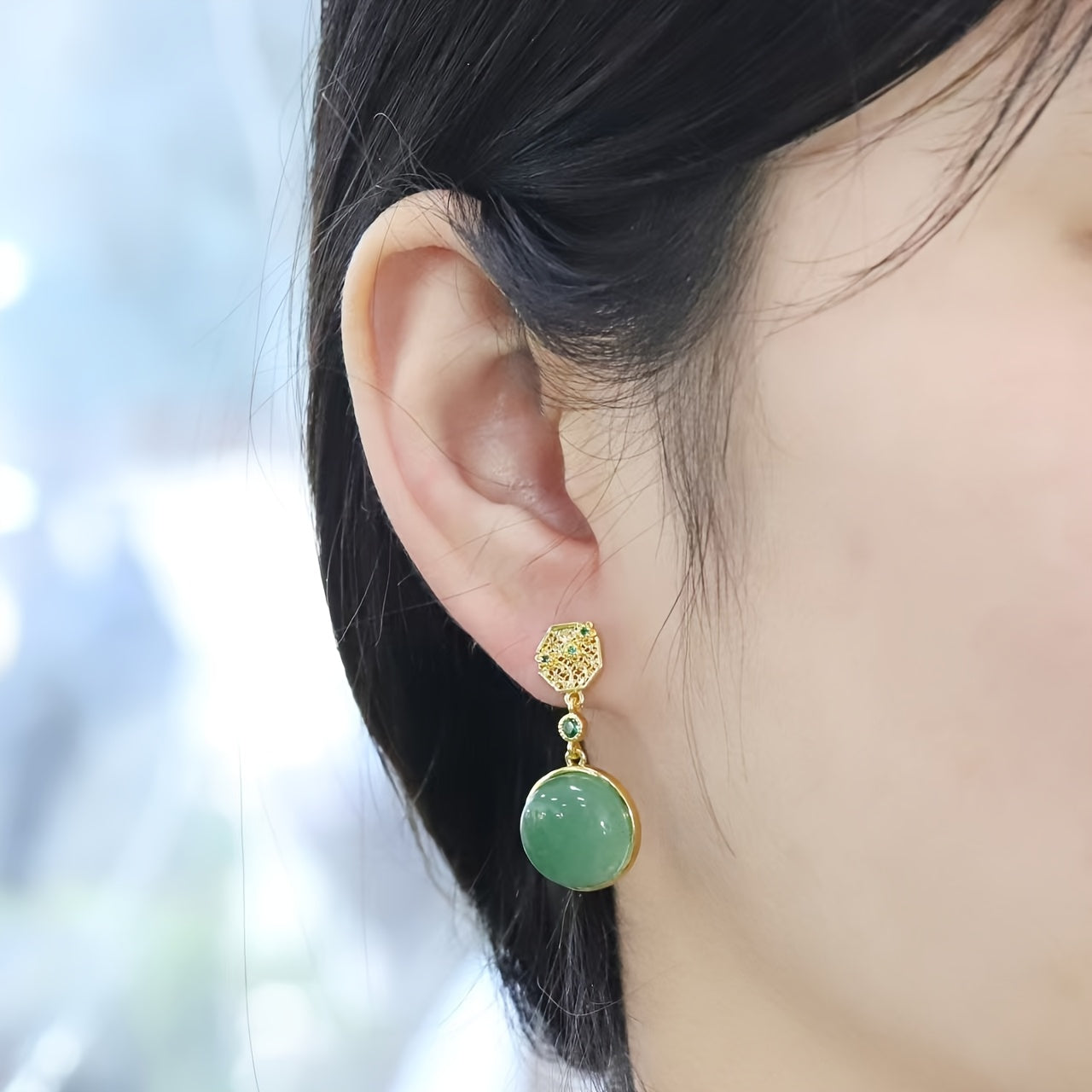
In the end, the quiet language of green isn’t spoken in words. It’s spoken in pauses. In the slight pressure of a drop earring against your neck. In the way a cool surface can feel like a small, private truth in a world of warm, noisy opinions. It doesn’t ask for belief. It doesn’t promise transformation. It simply offers a point of focus—a natural, ancient, beautifully incomplete piece of the world—against which your own humanity can be reflected, considered, and accompanied.
So when you see the green stone, try to see the color before the concept. Feel the weight before the wish. Let the meaning emerge, if it does, from the silent dialogue between its mineral patience and your fleeting, precious human moment.
The Object of Contemplation
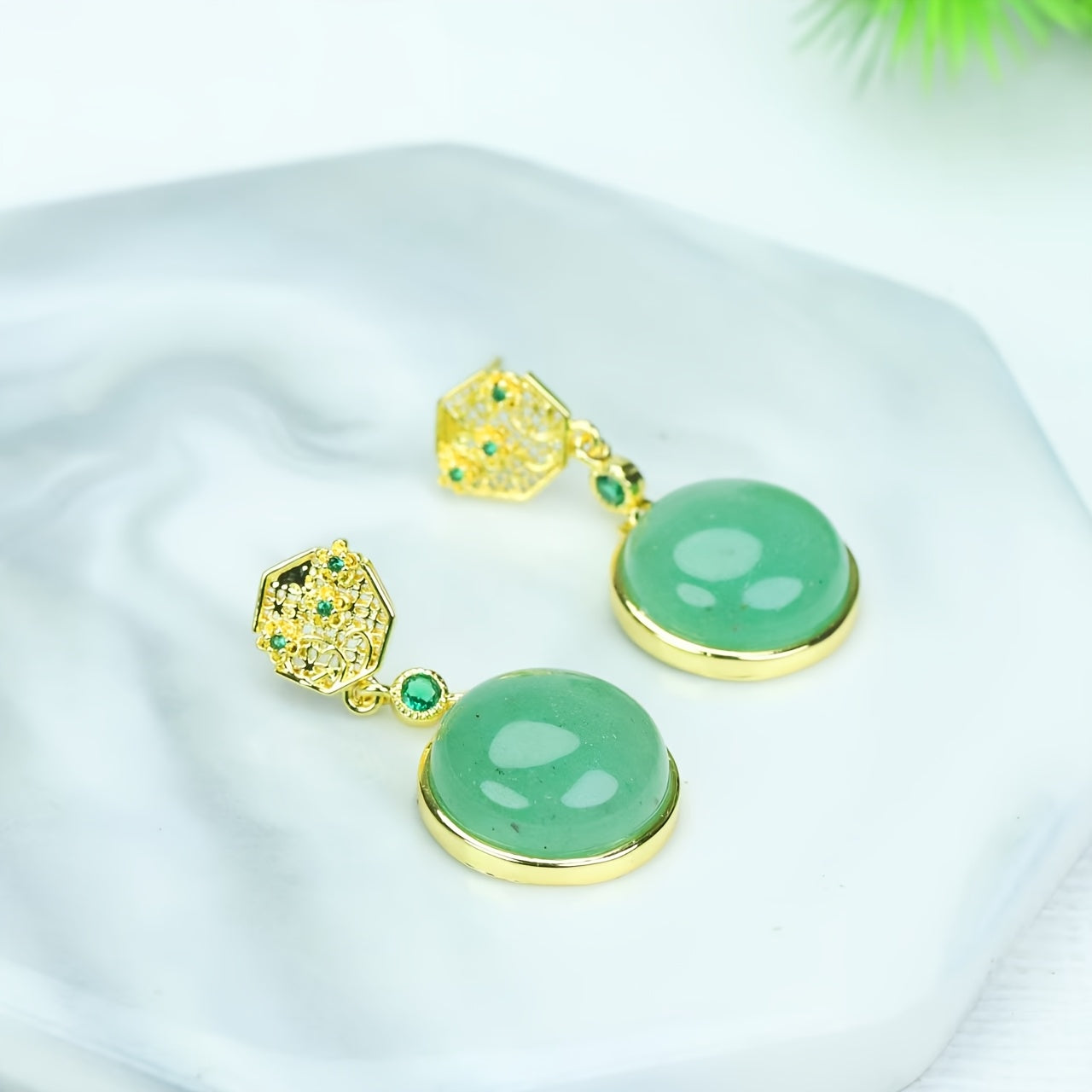
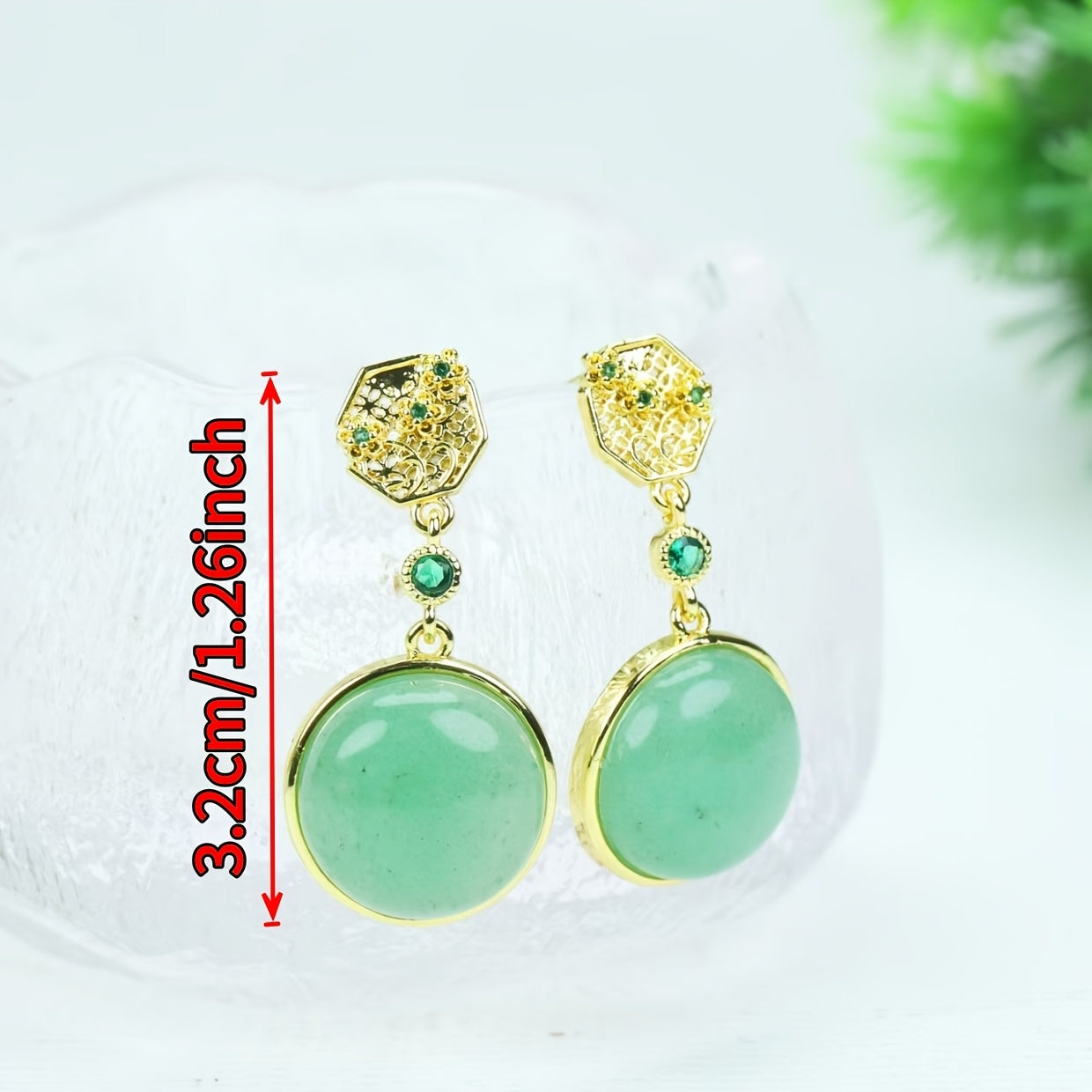
The Elegant Green Natural Stone Drop Earrings featured in this reflection.
 View the Jewelry Piece →