

The Tiger That Wasn't a Protector: How a Symbol of Raw Terrain Got Tamed into a "Power Animal"
The First Misreading
You see it everywhere now. On tote bags, screen savers, in wellness studio logos. The tiger, flattened into a stock image of “personal power.” A clip-art icon for “be fierce.” It’s become spiritual shorthand, a badge you’re supposed to adopt when you need to channel some mythical, external courage. As if courage were a substance you could borrow from an image.
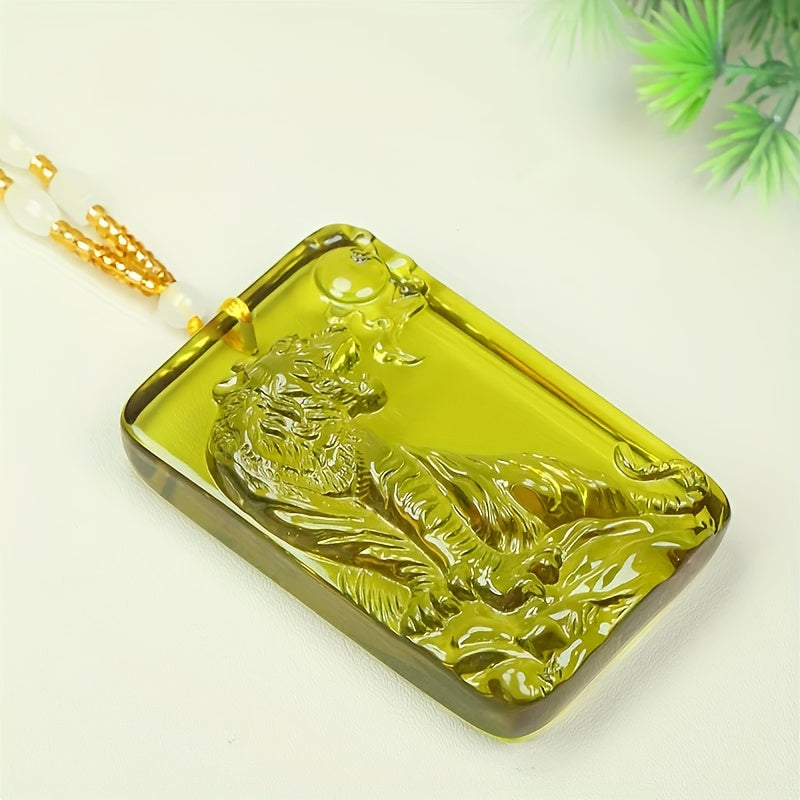
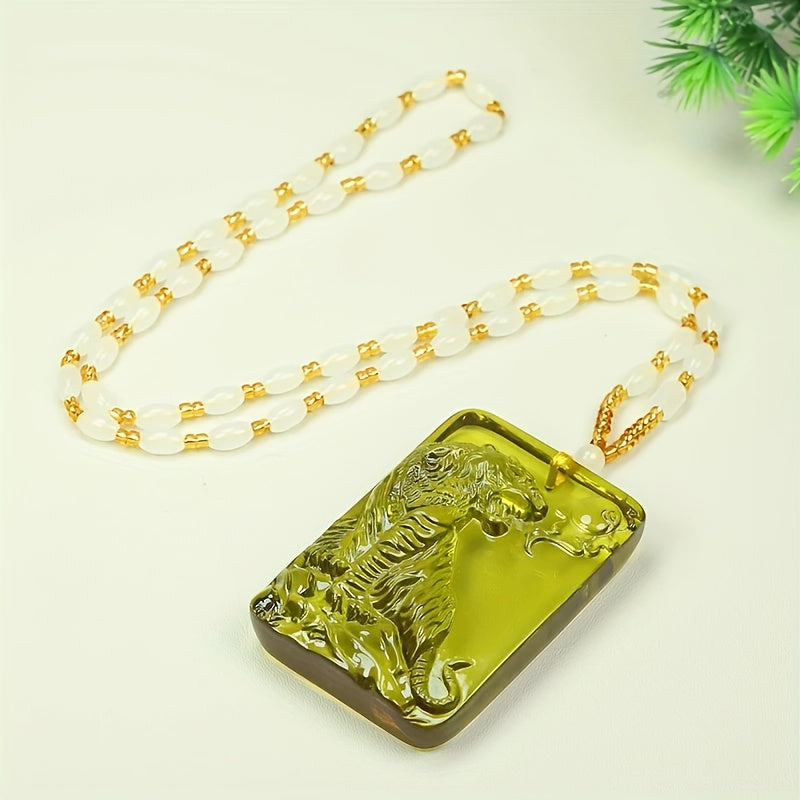
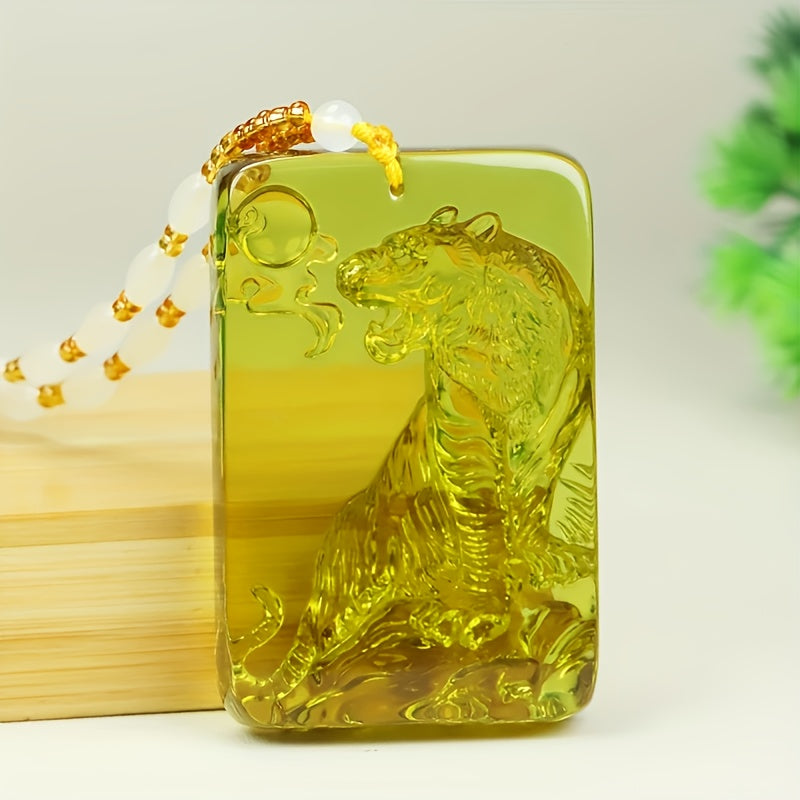
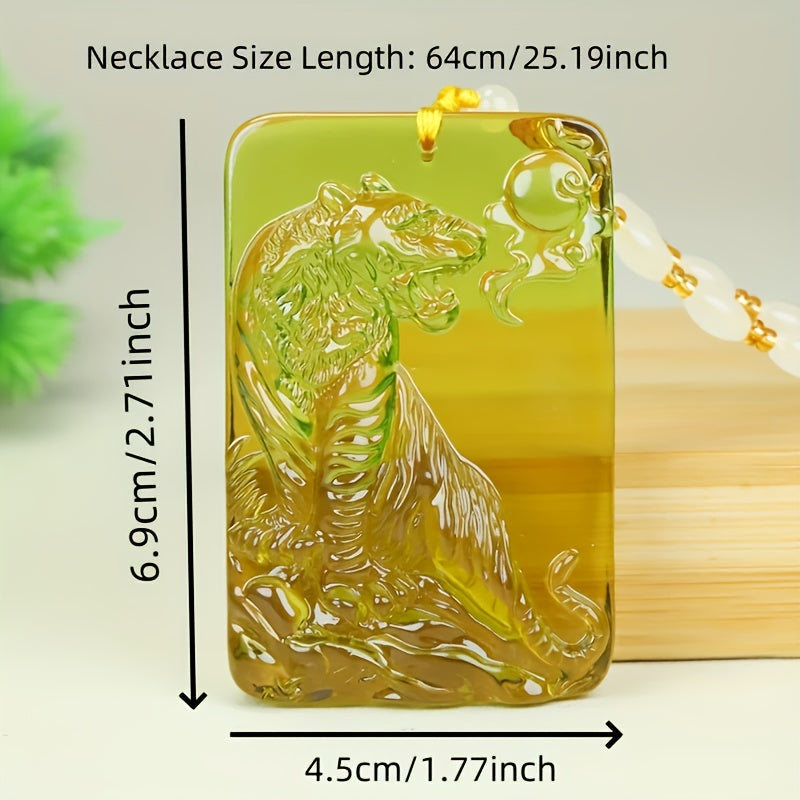
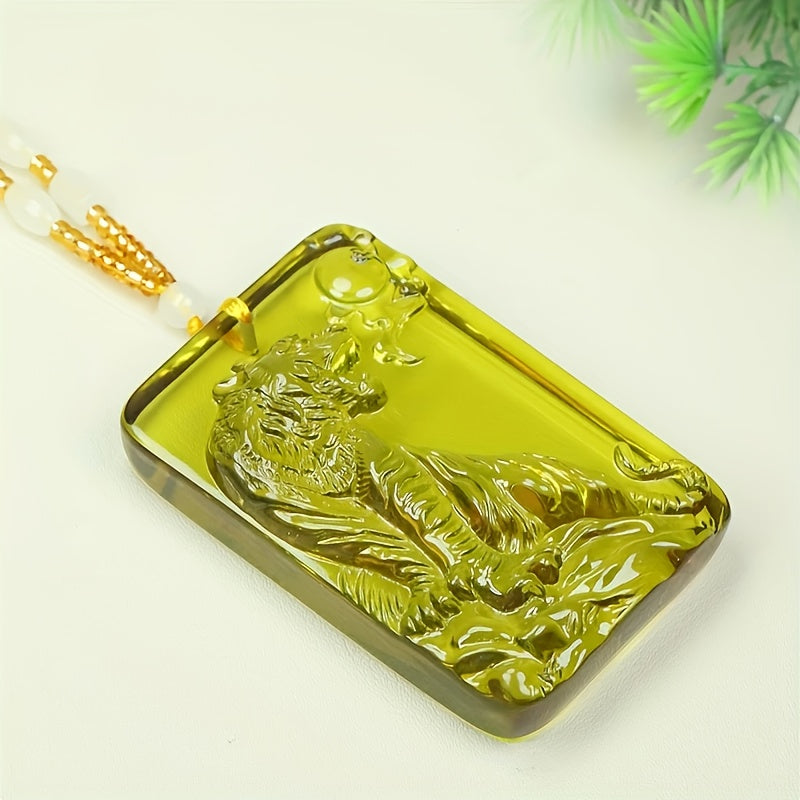
Some people notice a feeling, though, when they see this particular pendant. It’s not a surge of energy. It’s quieter. It’s more like the pause after a door clicks shut in an empty house. The image feels less like a cheerleader and more like a fact. A geographic fact. Before the tiger was a metaphor, it was a location. A stretch of land where the rules were different. That’s the misunderstanding we’ve inherited: we’ve turned terrain into a trait.
I remember the first time I held one. It was late, the kind of late where the city sounds have finally dropped to a hum. The silver was cool, of course, but it was the weight that was the surprise. Not heavy, but present. A dense, specific gravity. It didn’t feel like it was meant to be looked at so much as it was meant to be counterweight. To what, I couldn’t say then. Just that my hand felt more anchored with it in the palm than without it.
We start there. Not with the symbol’s meaning, but with the moment its modern meaning falls silent. When the commercialized “roar” fades, and you’re left with a shape that simply occupies space.
Terrain, Not Trait
In older cartographies, from the Bengali Sundarbans to the Manchurian forests, the tiger wasn’t primarily a symbol of someone’s inner strength. It was a marker on a map. It indicated a region of profound self-contained logic. “Here,” the map implied, “the human order thins out. Here, a different set of laws operates.” The presence of the tiger defined the ecology of a place—what could grow, what could pass through, what remained hidden.
This is the first layer we often miss. The tiger didn’t symbolize bravery because it was fearless; it symbolized a type of space that demanded a complete recalibration of perception to navigate. You didn’t enter tiger-country with a sword and a boast. You entered with a heightened, silent attention to every broken twig, every shift in the wind. Your courage was a byproduct of your attention, not the other way around.
To wear a symbol of that terrain, then, is not necessarily to declare “I am brave.” It can be a much quieter statement: “I am trying to remember how to pay attention. I am acknowledging an internal geography that operates by its own, often unseen, laws.” It’s a nod to the wilderness that persists within a life of schedules and screens—not a destructive wilderness, but a complex, self-regulating one.
The cool silver against your collarbone on a Tuesday morning doesn’t inject you with power. It might, however, remind you that the meeting room you’re about to enter is also a kind of territory, with its own unspoken rules and hidden paths. The pendant doesn’t make you dominant; it invites you to observe.
The Modern Reduction
Somewhere in the last century, the terrain collapsed into a personality quiz. Jungian archetypes, filtered through pop psychology and then through marketplace spirituality, turned the tiger into the “Warrior” or the “Shadow Self.” It became a tool for self-branding. The complexity of the ecosystem—the prey, the foliage, the water sources, the time of day—vanished. All that remained was a snarling headshot, an avatar for assertiveness training.
This reduction serves a culture obsessed with actionable takeaways. It’s easier to sell “Access Your Inner Tiger in 5 Steps!” than to sit with the unnerving question: “What part of my life is truly wild, ungovernable, and follows a logic I don’t fully understand?” The former is a product. The latter is a lifelong conversation.
You might find that people who are genuinely drawn to the older, territorial meaning aren’t the loudest in the room. They’re often the ones who sense the underlying currents in a family dynamic, who feel the unspoken tension in a negotiation before the terms are even laid out. Their “tiger” isn’t about pouncing; it’s about perceiving the boundaries of the social jungle they’re in. The pendant, for them, isn’t a spark. It’s a compass.
After wearing it for a while, the silver warms. It loses that initial shock of coolness and just rests there, a small, familiar density. That’s when the symbol often shifts again—from a compass to a simple landmark. A thing you touch absentmindedly on your commute, not to summon anything, but to recognize where you already are.
A Companion for Uncharted Days
So what does it mean to live with this symbol now, after its commercial hijacking? It means allowing it to be silent. It means not forcing it to mean “courage” on days you feel fragile, or “strength” on days you feel hollow. It can just be a piece of metal that traces the outline of a creature from a disappearing world.
Its value might appear in those minor, unrecorded moments. When you’re scrolling through a news feed that screams with simplified conflicts, and your thumb brushes the pendant. The physicality of it—the slight texture, the unyielding edge—pulls you back from the symbolic abstraction. It grounds the idea of “wildness” in a tangible, cool object on your skin. It doesn’t solve the world’s problems. It merely insists that you are here, in a body, and the world is out there, complex and untamed.
For some, it’s worn during transitions—not because it magically clears the path, but because it’s a token from a mental landscape where paths aren’t even guaranteed. It accompanies you into the new job, the difficult conversation, the quiet grief, as a reminder that you are, in fact, equipped to navigate uncharted territory because you carry a piece of that territory within you. Not as a weapon, but as a native understanding.
The chain is 64 centimeters. A specific length. It’s not too tight, not too loose. It allows the pendant to rest a hand’s breadth below the hollow of the throat. It moves when you do, but not wildly. It has a jurisdiction. A territory. Even in its wearing, it maps a quiet, personal geography.
Leaving the Symbol Open
Perhaps the most honest relationship with such a symbol begins with a question, not an affirmation. Not “I am strong,” but “Where is my strength located?” Not “I am fearless,” but “What, right now, feels like terrain I don’t know how to cross?”
The tiger pendant doesn’t answer these. It just holds the space for them. In a culture that demands instant meaning—This means that!—it offers a slower kind of semantic companionship. Over weeks, it might accumulate the faint oils of your skin, a soft patina in the recesses of its casting. The meaning, too, accumulates slowly. It becomes less about the generic tiger and more about the specific history of your own wearing.
Some people notice they reach for it on days of big decisions. Others forget they have it on for weeks, only noticing its weight when they finally take it off at night. Both are valid. The symbol isn’t working in the first case and broken in the second. It’s simply present, a part of the landscape of a life.
In the end, we don’t master symbols. We inhabit them, and they, in turn, come to inhabit small moments of our day. The gleam of silver in a dim elevator. The cool touch after being outside in the heat. The slight pull on the chain when you turn your head quickly. These are the moments where the grand narrative of “the tiger” falls away, and what remains is just an object, doing its job: being present. And sometimes, that’s the only permission you need.