




The Cloud That Does Not Drift: How a Symbol of Transition Became a Token of Fixity
We trace the cloud's journey from a Daoist motif of constant change to a modern shorthand for 'good vibes.' What gets lost when a symbol of process is asked to promise permanence?
It happens quietly, often in the morning. You reach for a pair of earrings, your fingers brushing against a cool, intricately pierced form. It’s meant to be a cloud. You know this because the description said so. “Cloud and peace buckle.” The words conjure a vague sense of serenity, of flow, of something aspirational and light. For a moment, standing before the mirror, it feels like wearing a piece of the sky, a token of detachment. But later, in the lull of the afternoon, feeling its substantial weight tug gently on your earlobe with every turn of your head, a quiet question forms. Is this what a cloud is supposed to feel like? This isn’t weightless. It doesn’t drift. It insists. And somewhere in that disconnect—between the ethereal idea and the physical, grounding reality of the object—lies a centuries-long story of a symbol that got stuck.
This isn’t about the “true meaning” of the cloud motif. That search for a single, authoritative definition is part of the problem. It’s about watching what happens to a symbol when it travels—from the mist-wrapped peaks of an eighth-century ink painting, to the embroidered sleeve of a Ming dynasty robe, to the homepage of a wellness brand, and finally, to the tangible silver resting against your skin. At each stop, something is gained, and something fundamental is often left behind. The journey reveals less about the cloud itself, and more about what we, in different times and with different needs, ask our symbols to do for us.
The Breath Between Peaks: Cloud as Process, Not Icon
To encounter the cloud in classical Chinese landscape painting is to encounter an absence that defines presence. Look at a scroll like Guo Xi’s “Early Spring.” The mountains are not static monuments; they are emerging, alive. And between them, winding through valleys, clinging to slopes, are the clouds. They are not fluffy, discrete shapes. They are the qi—the vital breath—of the landscape made visible. They are the painter’s way of showing what is hidden (the far side of the mountain) and what is in motion (the atmospheric moisture, the passage of time). The cloud is the intermediary, the connector, the visible proof of an unseen, constant transformation.
In Daoist thought, this wasn’t just artistic convention; it was cosmological principle. Reality was a continuous process of becoming, a flow between complementary poles (yin and yang). The cloud, formless yet formative, perpetually changing shape, was a perfect natural analogue for this. It symbolized the inherent dynamism of existence, the beautiful, ungraspable truth that nothing is fixed. To depict a cloud was to depict transition itself. Its value lay precisely in its instability, its refusal to be pinned down. It was a visual lesson in non-attachment, not because it pointed to a peaceful heaven, but because it demonstrated that even solid-seeming mountains were engaged in a silent, endless dialogue with the mist that shrouded and revealed them.
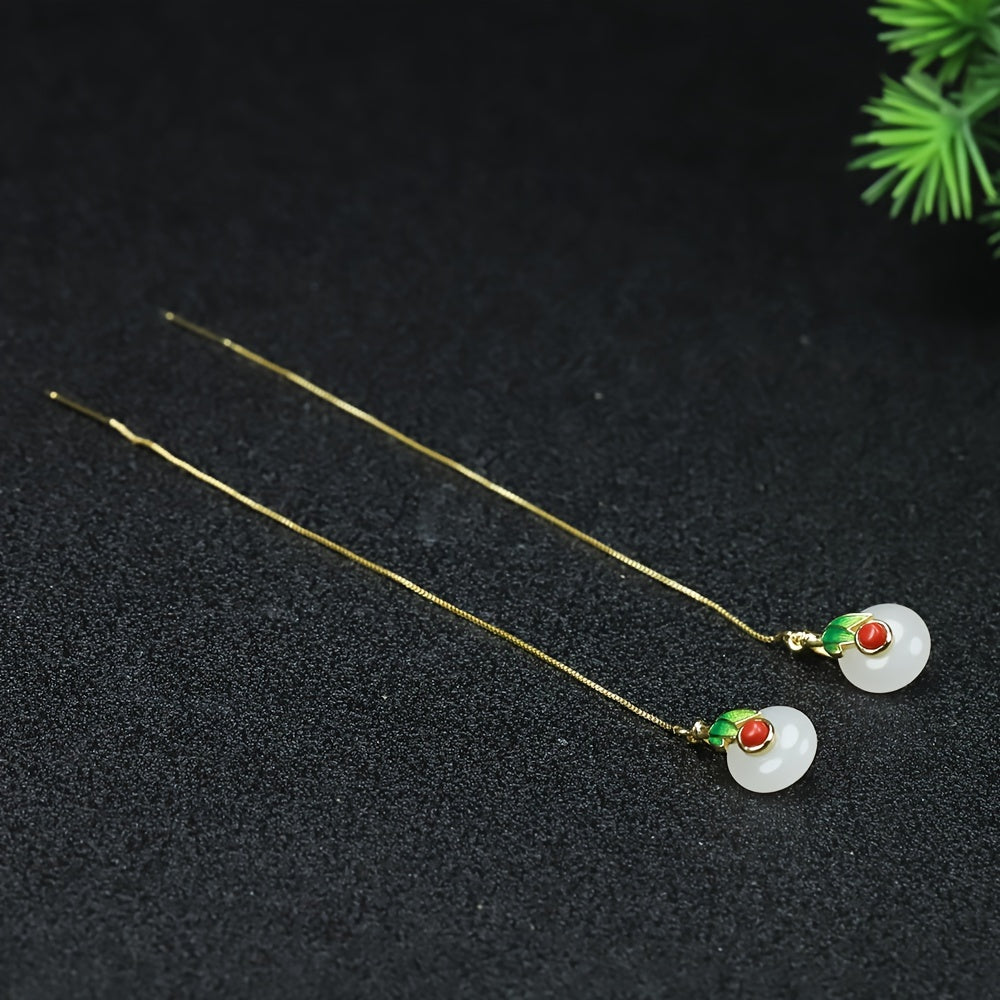
The openwork of the silver cloud: not a solid icon, but a frame for emptiness, a reminder of the form within the formless.
View the Silver Cloud & Peace Buckle Earrings →The Migration to Decoration: From Cosmic Principle to Auspicious Pattern
The symbol began its slow descent from philosophy to ornament as it moved from the scholar’s scroll to the objects of daily and imperial life. On Ming and Qing dynasty porcelain, robes, and architecture, cloud patterns (yunwen) proliferated. The swirling, curvilinear forms retained a memory of that flowing qi, but the context shifted. On a dragon robe, clouds surrounded the celestial beast, placing the emperor in a heavenly context. They became part of an auspicious visual language, signaling luck, elevation, and divine favor.
This was the first, subtle misunderstanding—or perhaps, a necessary adaptation. The cloud’s inherent meaning of change and transition is psychologically complex. It’s a demanding symbol, asking the viewer to contemplate impermanence. In a decorative context, that sharp edge was often softened. The cloud became a “lucky cloud.” Its association with the heights (mountains, sky) easily morphed into an association with high status, good fortune, and ascending success. The process of semantic dilution had begun. The symbol was no longer primarily a teacher of Daoist principle; it was becoming a bearer of socially desirable outcomes.
Some people notice this shift in their own attraction. You might be drawn to a cloud symbol not for its philosophical depth, but for the feeling of lightness or optimism it seems to offer. There’s no judgment in that. It’s a natural human impulse to seek symbols that comfort and uplift. But it’s worth asking: When did we start asking the cloud to promise us stability, rather than remind us of its absence? The original cloud was a symbol you could not build a house on. The decorative “lucky cloud” often becomes a cornerstone in the architecture of our hopes.
The Modern “Vibe”: Cloud as Detached Serenity and Spiritual Branding
The final stage of the cloud’ journey into misunderstanding is our present moment. Here, the symbol undergoes a digital-age flattening. Stripped of its specific cultural and philosophical lineage, the cloud becomes a free-floating signifier for a cluster of vague, marketable concepts: “zen,” “calm,” “flow state,” “good vibes.” It appears on yoga studio logos, mindfulness app icons, and, yes, jewelry marketed for “spiritual balance.”
In this incarnation, the cloud is almost purely atmospheric (in the emotional sense). It symbolizes a desired inner state—detached, peaceful, above the fray. This is a profound inversion. The original cloud was not detached from the mountain; it was in intimate, dynamic relationship with it. It was the interaction that mattered. The modern “vibe” cloud often suggests an escape from interaction, a serene isolation. Furthermore, this cloud is frequently deployed in a context of “spiritual” consumerism, where it tacitly promises that the purchased object can confer the state it symbolizes. Buy the cloud, acquire the calm.
This is where the physical object on your ear can become a curious corrective. A silver cloud with tangible weight resists this ethereal branding. You can’t forget it’s there. Its cool metal doesn’t whisper of detached serenity; it announces a present, physical reality. Does wearing a symbol change its meaning, or does the body’s experience of it reclaim something older? When your finger traces the intricate, hand-sawn paths of the silver, you’re not touching a vibe. You’re touching the evidence of a craftsman’s labor, the resistance of metal, the creation of negative space. This tactile experience can quietly re-anchor the symbol, pulling it away from abstraction and back towards a concrete, felt presence.
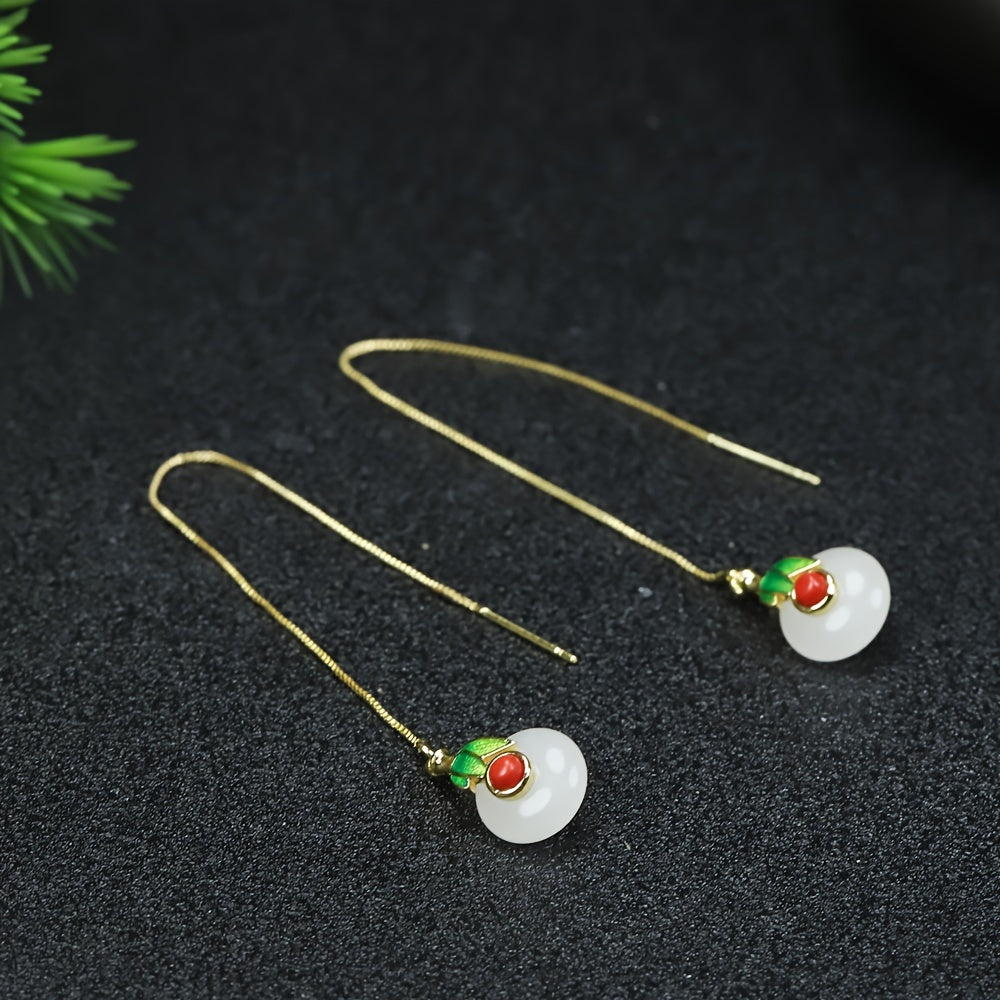
The crafted reality: solid silver, deliberate weight. A cloud that cannot drift, insisting on its material truth.
The Unclosed Circle: Can a Misunderstood Symbol Still Speak?
So, are we merely misusing an ancient symbol? Is wearing a “cloud” earring a act of cultural loss? The situation is more nuanced. Symbols are not museum pieces with fixed labels; they are living things that accumulate meaning as they travel through time. The “lucky cloud” and the “zen cloud” are valid chapters in its story, reflecting the needs and interpretations of their eras.
The potential loss occurs not in the evolution itself, but in the forgetting—when the newer, simpler meaning completely overwrites the older, more complex one. When the cloud only signifies “good luck” or “calm,” we lose access to a more challenging, and perhaps more sustaining, idea: that of graceful participation in endless change. We exchange a tool for navigating reality for a wish to escape it.
The value of understanding this migration isn’t to instill guilt or prescribe a “correct” interpretation. It’s to open up a richer, more personal relationship with the symbol you choose to wear. Knowing that the cloud once represented elusive, dynamic process might allow you to wear it differently. On a day of frustrating stagnation, feeling its weight might become a reminder that even stuckness is part of a larger, invisible motion. On a day of chaotic change, its solid, crafted form might offer a paradoxical anchor—not by denying change, but by embodying the beauty that can be shaped within it.
Who decides what a symbol “means” for the wearer? The historians trace its path. The marketers assign its value. But the final, quiet arbitration happens in the lived moments: in the morning when you put it on without thinking, in the afternoon when you feel its pull during a difficult conversation, in the evening when you take it off and it leaves a temporary, slight impression on your skin. The meaning isn’t fixed in the silver; it emerges in the space between the symbol’s long history and your short, specific day.
The cloud on the ancient scroll was the breath between mountains. The cloud in your hand is a weight of silver. Perhaps the dialogue between those two truths—the ethereal ideal and the tangible object—is where the symbol truly lives now. Not as a misunderstood relic, nor as a bland commercial token, but as a quiet companion for your own process of becoming. It doesn’t offer serenity from above. It simply hangs there, substantial and open, a frame through which you might glimpse the changing weather of your own life, and feel, for a moment, less alone in it.
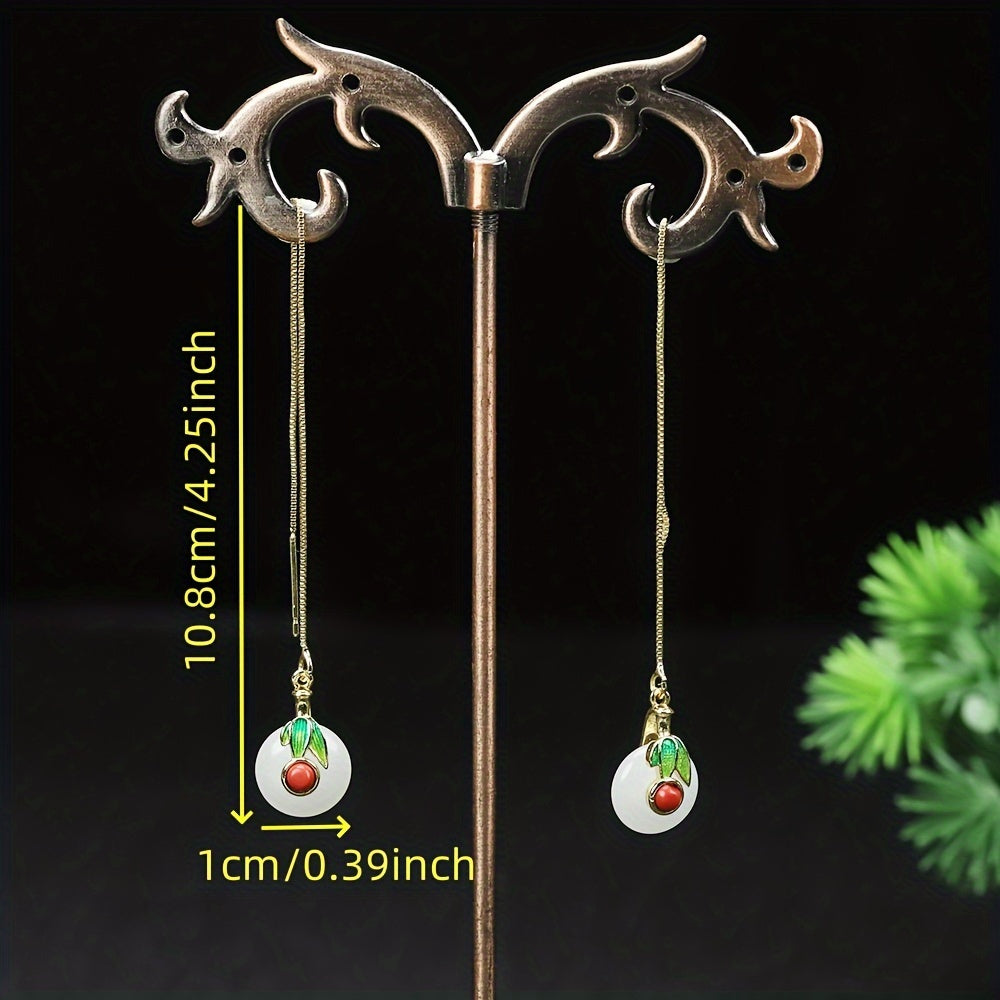
Cloud meeting buckle: the symbol of transition anchored to a symbol of closure. A personal dialogue worn on the body.
Contemplate the Symbol →