





Architecting the Heart — The Daily Practice of Emotional Reconstruction and Building Resilient Inner Form
In the aftermath of loss, change, or trauma, we often speak of "picking up the pieces." It's a telling metaphor. It acknowledges fragmentation, a sense that something whole has been shattered. But the metaphor usually stops there, leaving us with a confusing pile of shards and no blueprint for what to build next. The practice of emotional reconstruction begins where the metaphor ends. It is the deliberate, daily process of examining those pieces, not with grief for the lost vase, but with the curiosity of an architect surveying materials for a new, more resilient structure.
This is not positive thinking. It is structural thinking. It moves beyond the question "Why did this break?" to the more empowering question: "Given these materials—my experiences, my emotions, my history—what stable and beautiful form can I now construct?" The ancient beehive pattern, a symbol of perfect natural architecture, serves as our guiding blueprint. Its hexagons represent efficiency, strength, and communal effort. Applied inwardly, they become the cells of new emotional habits, thought patterns, and behavioral rhythms.

Phase One: The Survey — Non-Judgmental Inventory
Before construction, a survey. You cannot build with materials you refuse to see. The first practice is to take a quiet, courageous inventory of your inner landscape without judgment.
Practice: Set a timer for 10 minutes. With a notebook or simply in mindful silence, ask: "What is here?" Don't analyze, don't solve. Just name. "A heavy feeling in my chest." "A recurring memory of that conversation." "A sense of emptiness here, a spark of hope there." "Fatigue." "A flicker of anger." Imagine you are a geologist cataloging rocks, or an architect listing available bricks and beams. Their emotional charge is irrelevant to the catalog; it's just data. This practice, often called noting in mindfulness, begins to create space between you and your experiences. You are not the pile of rubble; you are the surveyor standing beside it.
Why it works: Judgment ("This sadness is bad, I shouldn't feel this") creates tension and resistance, which uses immense energy and halts progress. Simple observation ("Sadness is present") allows the material to just be, making it available for use. You cannot build a wall with bricks you're constantly trying to throw away.
Reconstruction begins not with force, but with perception. You must see the pieces clearly before you can discern the new pattern they suggest.
Phase Two: Finding the Pattern — The Beehive Blueprint
Chaos is unsustainable. The mind naturally seeks pattern. Your task is to guide that seeking toward a resilient, functional pattern—the beehive blueprint. This doesn't mean imposing a false order of "everything is fine." It means discovering the latent order within your experience.
Practice: Look at your inventory from Phase One. Can you identify themes? Perhaps several feelings point to a core need for safety that was disrupted. Perhaps the "spark of hope" aligns with a long-forgotten value of independence. Start connecting dots. This is where journaling becomes architectural drawing. Draw a central hexagon and label it with a core need or value you've identified (e.g., "Safety," "Authenticity," "Connection"). In connecting hexagons around it, list small, actionable thoughts or actions that would support that core. "Safety" might connect to "Set one small boundary today," "Connection" to "Text one friend a genuine message."
The beehive pattern is powerful because it is both strong and flexible, both individual (each cell) and communal (the whole structure). Your internal blueprint should mirror this: small, manageable practices (cells) that collectively support a larger, resilient whole (your well-being).
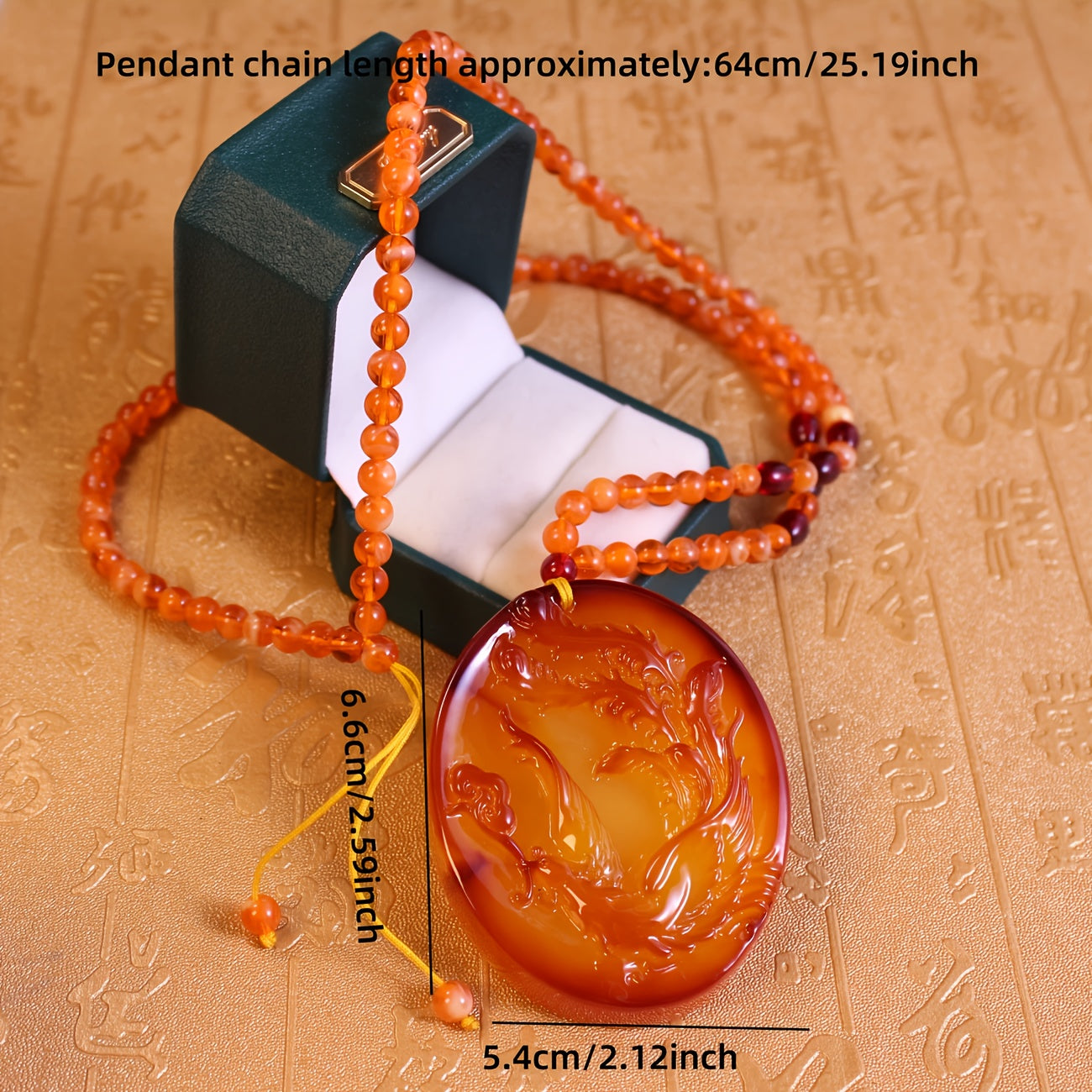
The Blueprint in Your Hand
The engraved beehive pattern on the Phoenix pendant is a physical manifestation of this phase. Running your fingers over its precise lines is a tactile reminder to look for pattern, to think in terms of interconnected, supportive structures rather than isolated fragments.
Phase Three: Laying the Foundation — The Micro-Action
Architecture happens brick by brick. Emotional reconstruction happens action by tiny, consistent action. Grand gestures often fail because they lack a foundation. The foundation of resilience is built on micro-actions—behaviors so small they feel almost trivial, yet are perfectly aligned with your new blueprint.
Practice: From your beehive blueprint, choose one cell for today. Just one. If your hexagon is "Grounding," your micro-action might be: "Place my feet firmly on the floor and take three deep breaths before checking my phone in the morning." If it's "Self-Care," it might be: "Drink a full glass of water before coffee." The key is consistency, not scale. Successfully completing this tiny action is like perfectly placing one hexagonal wax cell. It may seem insignificant, but it proves the pattern is buildable. It builds self-trust, the most crucial material in reconstruction.
Why it works: Micro-actions bypass the resistance of the overwhelmed mind. They create a neurological "win," releasing dopamine and reinforcing the neural pathway of constructive action. Each completed micro-action is a vote for your new identity as someone who builds, not just someone who broke.
Phase Four: Raising the Walls — Ritual and Rhythm
Isolated actions are cells. Repeated actions become walls. This phase is about transforming micro-actions into rituals—daily or weekly practices that have meaning and rhythm. Ritual provides the structural integrity for your new inner form.
Practice: Attach your micro-action to an existing habit (habit stacking). "After I brush my teeth, I will do my one minute of mindful breathing." "Before I open my work email, I will write down my one key intention for the day." The existing habit is the anchor; the new ritual is the ship it secures. Over time, this ritual becomes non-negotiable, a stable part of your inner architecture. It is no longer something you "do"; it is part of who you are—a person who grounds themselves, who sets intentions, who practices self-care.
This is where a symbolic object finds its practical power. Putting on the Phoenix pendant in the morning can be the ritual—a moment of tactile connection where you consciously align yourself with the themes of dignified rebirth and architectural rebuilding. The act becomes a somatic anchor for your intention.

The Ritual Object
The daily act of wearing the pendant can be ritualized. As you fasten it, you might silently affirm: "Today, I build one cell of patience," or "I wear this as a reminder of my capacity for graceful emergence." It transforms adornment into intention.
Phase Five: Integration — When the Structure Holds
You know reconstruction is taking hold not when you never feel pain again, but when the structure you've built can hold the pain without collapsing. A well-architected building doesn't disappear in a storm; it provides shelter during it.
Practice: The next time a wave of old grief, anxiety, or anger arises, practice containment. Instead of being swept away by it (the old, fragmented response), or desperately trying to make it stop (a reactive response), see if you can allow it to be present within the new structure. Use your rituals: feel the pendant against your skin and remember the beehive's strength. Take your three grounding breaths. This is not about eliminating the feeling, but about changing your relationship to it. You are inside a strong structure, watching the weather pass by. The feeling is the weather; your reconstructed self is the shelter.
This phase is the essence of resilience. Resilience is not a lack of vulnerability; it is the presence of a supportive internal architecture that allows you to experience vulnerability without becoming defined by it.

The Role of the Symbolic Companion
Throughout this arduous, beautiful process, a symbolic object like the Phoenix pendant serves multiple practical functions:
- Mnemonic Device: It visually and tactilely recalls the entire philosophy—the Phoenix's rebirth, the beehive's architecture.
- Transitional Object: In psychological terms, it provides comfort and a sense of continuity as you move from an old self-state to a new one.
- Focus Anchor: In moments of distraction or distress, focusing on its physical details (coolness, weight, engraving) can instantly bring you back to the present moment and your chosen practice.
- Progress Marker: Over time, the pendant becomes associated with your journey. Its patina tells the story of the atmosphere it's been through, just as you carry the dignified marks of your experiences.

A Companion for the Journey
This piece is designed not as a finale, but as a companion for the long work of reconstruction. It is a solid, beautiful reminder that you are the architect of your inner world, capable of building a form that is uniquely, resiliently yours.
Conclusion: The Never-Finished Structure
Emotional reconstruction is not a project with a completion date. Like a living city, your inner architecture will always require maintenance, renovation, and sometimes even partial demolition to make way for new growth. The goal is not a perfect, static monument, but a livable, adaptable form.
The practice of architecting the heart is, therefore, a lifelong practice. It is the commitment to be both the dweller and the builder, the one who experiences the storms and the one who repairs the roof. It is the understanding that while we cannot control the fires that sweep through our lives, we can choose, with patient, deliberate effort, the form that rises from the ashes. And in that choosing, we discover our deepest strength: not the strength of unbreakable stone, but the strength of intelligent, adaptable, and endlessly renewable form.
Your Practice Anchor