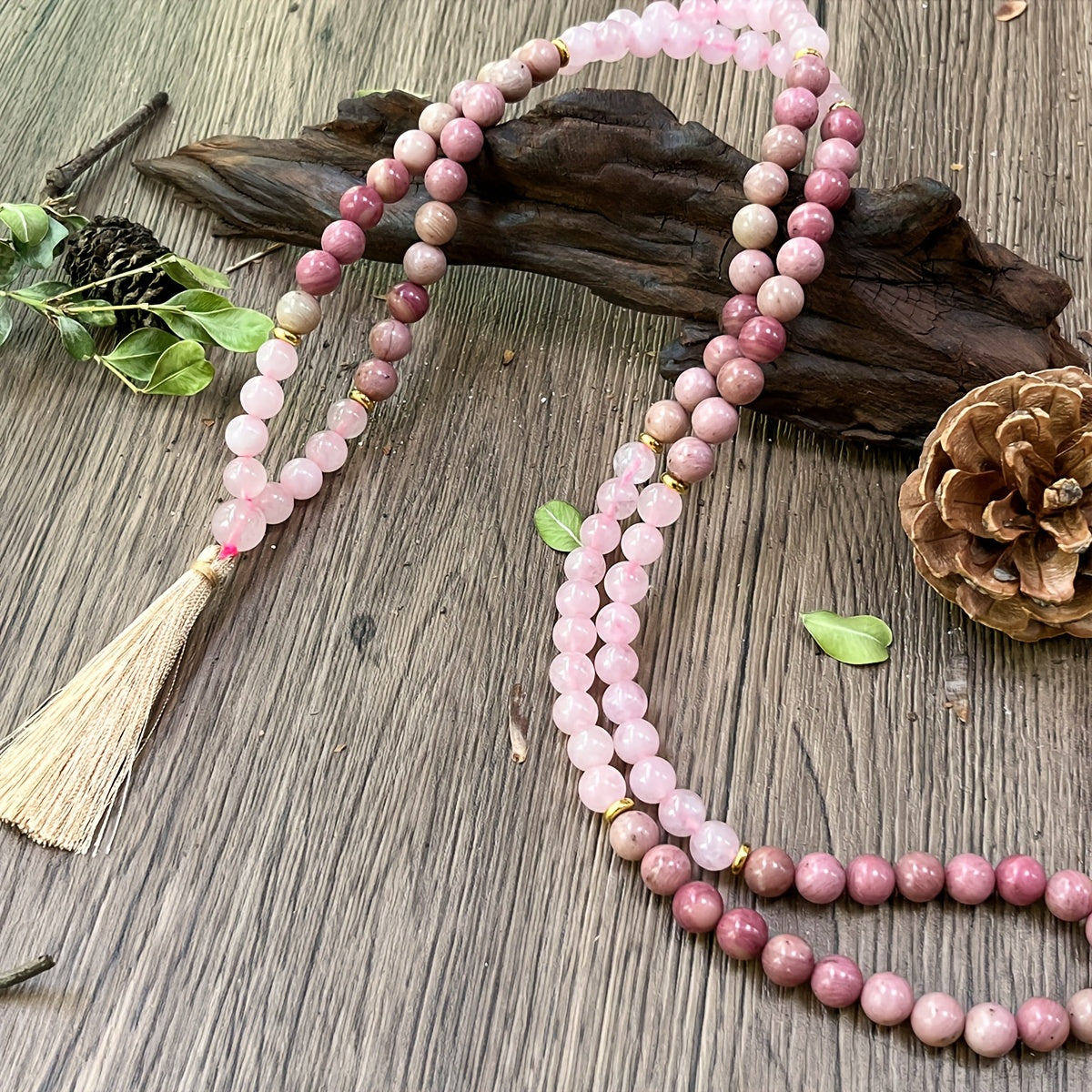


In a world that often feels fragmented and hurried, there exists a growing longing for connection—connection to self, to purpose, and to the present moment. This search has given rise to a beautiful convergence: the transformation of ancient spiritual tools into modern symbols of intentional living. At the heart of this movement is the mala necklace, a string of 108 beads that has journeyed from the meditation cushions of Himalayan monasteries to the necks of fashion-forward individuals in urban centers worldwide. This article explores the profound journey of the mala, examining how it serves as a bridge between deep spiritual practice and contemporary personal expression.
From Sacred Tool to Style Statement: A Historical Evolution
The mala, or japamala, has its roots in ancient India, dating back over 3,000 years. Initially used by Hindu and Buddhist practitioners as a counting device for mantra repetition (japa), its 108 beads held deep cosmological significance. The number 108 appears throughout Eastern spirituality: it is said to represent the distance between the Earth and the Sun in relation to their diameters, the number of sacred sites in India, and the stages of the soul's journey. For centuries, malas were primarily functional objects, often made from rudraksha seeds, tulsi wood, or lotus seeds, and were kept private, used only during meditation.
The transformation began in the late 20th century, as Eastern spiritual practices migrated West during the counterculture movement. What was once solely a meditation tool began to be appreciated for its aesthetic beauty and symbolic power. The 1990s and early 2000s saw the rise of "boho-chic," a style that embraced eclectic, globally-inspired accessories. Mala necklaces, with their natural materials and artisan craftsmanship, fit perfectly into this aesthetic. Designers began incorporating semi-precious gemstones like amethyst, turquoise, and rose quartz, elevating the mala from a simple tool to a piece of jewelry that carried both spiritual meaning and fashion appeal.
The Cultural Shift: This evolution mirrors a broader societal shift towards mindfulness and holistic well-being. As meditation and yoga entered mainstream consciousness, so too did their accompanying tools. Wearing a mala became a way to publicly identify with these values—a quiet declaration of one's commitment to inner peace and conscious living.
Material, Energy, and Symbolism: The Language of Stones
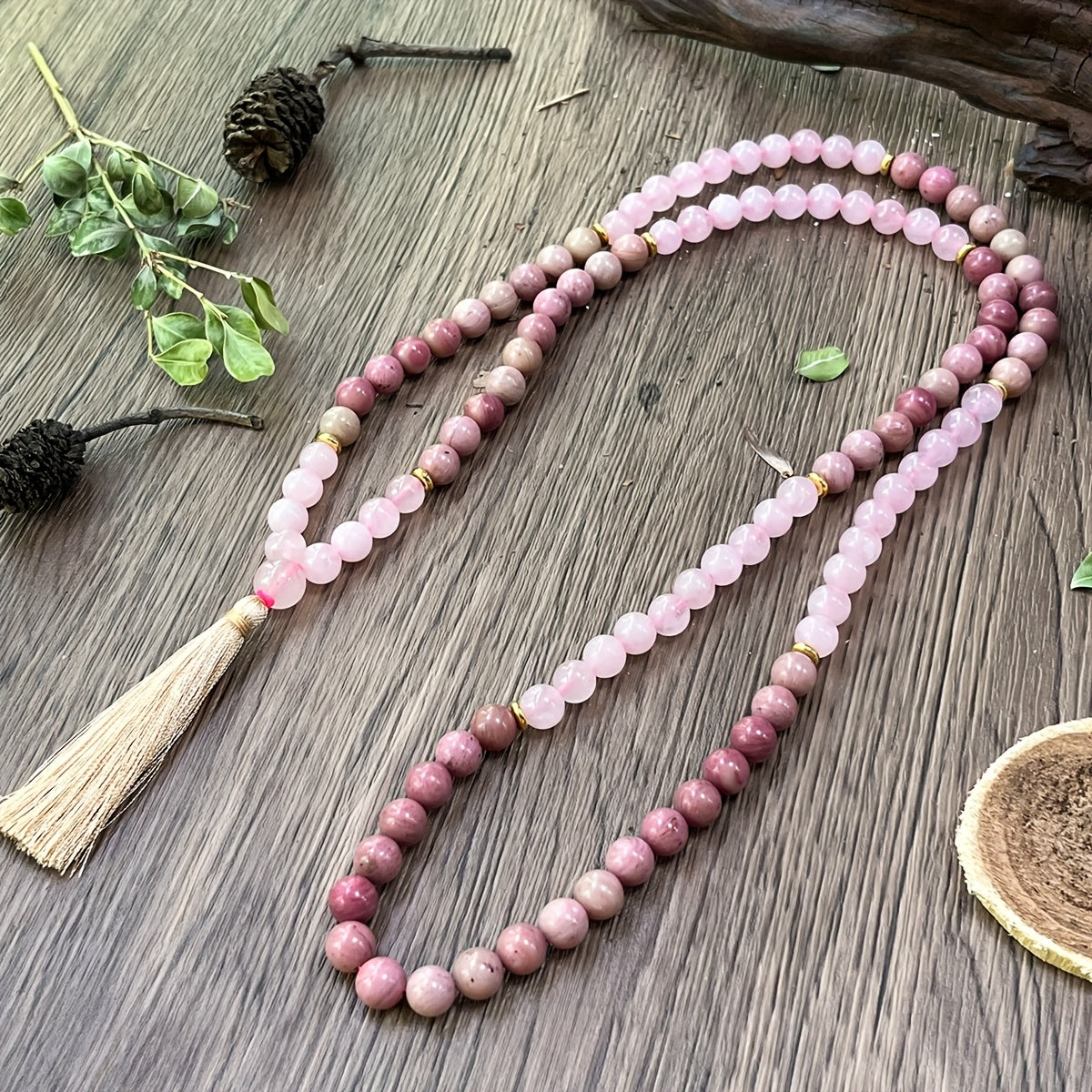
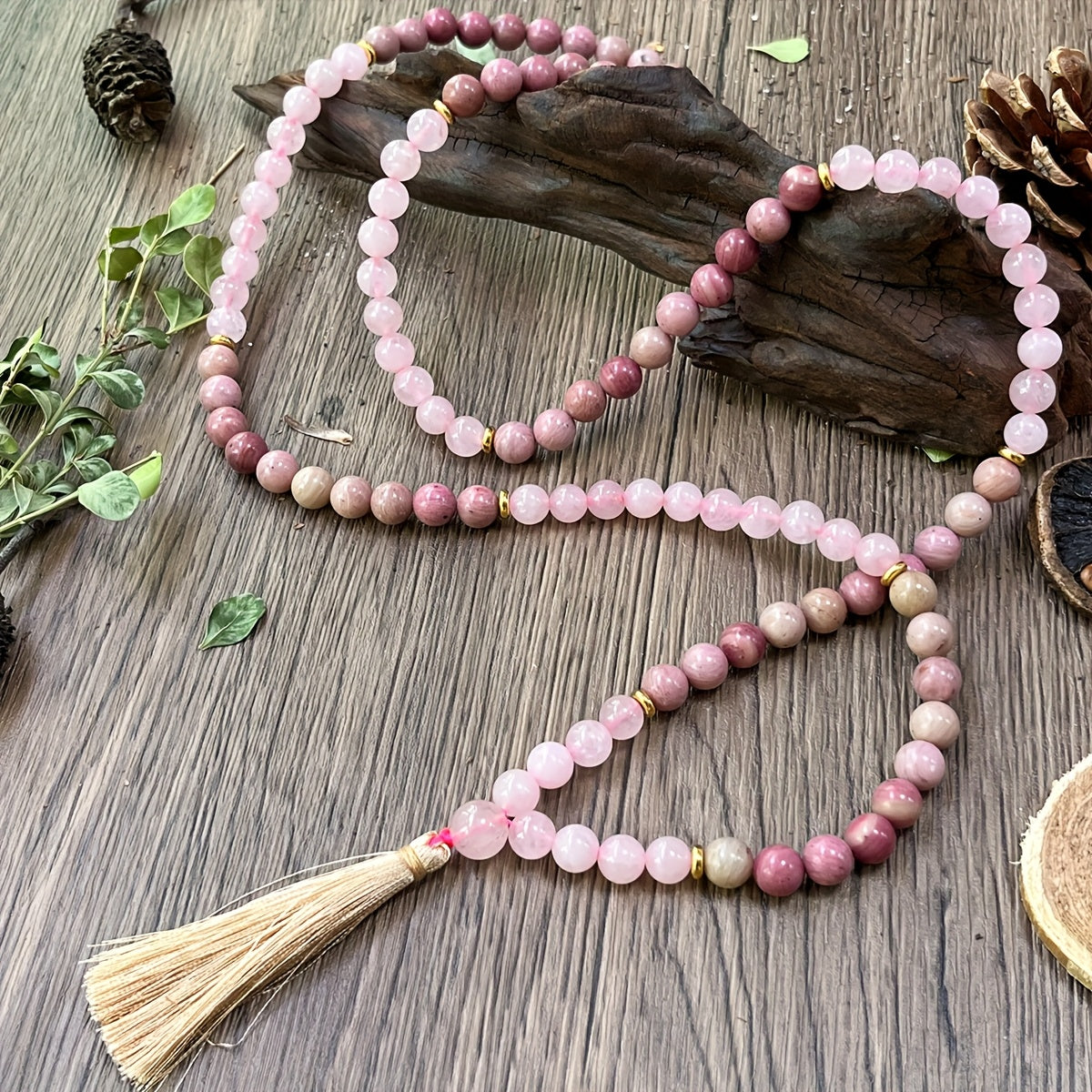
The choice of materials in a mala is never arbitrary. Each stone carries its own vibrational frequency and symbolic meaning, creating a layered language of intention. Take, for example, the combination of Rose Quartz and Rhodonite. Rose Quartz, with its gentle pink hue, is universally recognized as the stone of unconditional love. It resonates with the heart chakra, promoting self-love, compassion, and emotional healing. Rhodonite, often pink with black manganese veining, is known as the stone of compassion and emotional balance. The black veining is said to ground the stone's energy, helping to release past traumas and foster resilience.
When these two stones are combined in a mala, they create a powerful synergy. The Rose Quartz opens the heart, while the Rhodonite provides the emotional stability needed to process and heal. This is not merely folk belief; it taps into the ancient understanding of correspondences—the idea that the material world reflects and influences the energetic and emotional realms. In a modern context, choosing a mala with specific stones becomes an act of self-prescription, selecting the energetic support one needs most.

The Craftsmanship Behind the Beads: Artisan Philosophy
In an era of mass production, the handmade mala stands as a testament to slow, intentional craft. Creating a 108-bead mala is a meditative process in itself. Each bead must be individually selected for quality and hue, then carefully strung in a precise order. The knotting between each bead—typically using a strong cotton or silk cord—is crucial, both for durability and symbolism. These knots represent the pauses between breaths, the spaces between thoughts, and the interconnection of all things.
Artisans who specialize in mala-making often speak of the intention they pour into each piece. As one craftsperson from Jaipur explains, "I sit in a quiet space, often early in the morning. As I string each bead, I hold a positive thought or a silent prayer. The mala becomes a carrier of that peaceful energy." This philosophy transforms the mala from a commodity into a sacred object, imbued with the care and consciousness of its maker. It's a far cry from the impersonal nature of factory-produced jewelry, offering the wearer a tangible connection to human hands and heart.
"The mala is a circle, with no beginning and no end. It reminds us that our practice, our growth, and our journey are continuous. Wearing it is a commitment to that ongoing process." — Maya Tiwari, Ayurvedic practitioner and author.
Emotional and Social Significance: The Mala as Non-Verbal Communication
What we choose to wear communicates volumes about our identity, values, and state of mind. In this context, a mala necklace serves as a powerful form of non-verbal communication. On a personal level, it can act as an anchor—a physical reminder to breathe deeply, return to the present, or practice compassion when challenged. Touching the beads throughout the day can trigger a mindfulness response, pulling the wearer out of autopilot and into awareness.
Socially, wearing a mala can signal membership in a community of like-minded individuals who value spirituality, wellness, and authenticity. It can serve as a conversation starter, opening dialogues about meditation, self-care, or personal growth. In professional settings where overt spiritual symbols might be less common, a well-chosen mala can be a subtle statement of one's holistic approach to success and well-being. It bridges the gap between the personal inner world and the social outer world, allowing the wearer to carry their practice into all aspects of life.
Market Perspective: The Rise of Conscious Consumerism
The global market for spiritual and mindfulness-related products has seen exponential growth, with the wellness industry now valued in the trillions. Within this, the market for meaningful jewelry—pieces that offer more than just aesthetic appeal—is a significant segment. Consumers, particularly millennials and Gen Z, are increasingly driven by values. They seek products that are ethically sourced, artisan-made, and carry a story or purpose.
Mala necklaces perfectly align with this trend. They are often:
- Sustainable: Made from natural, often locally-sourced materials.
- Ethical: Many brands ensure fair wages for the artisans, often supporting women's cooperatives in regions like Nepal and India.
- Transparent: The provenance of the stones and the story of the craft are frequently shared.
- Multi-functional: They serve as both jewelry and a tool for practice, offering value beyond adornment.
This shift represents a move away from fast fashion towards what is being termed "slow jewelry"—pieces meant to be treasured, worn for years, and passed down. A mala necklace, with its durability and timeless design, is the antithesis of disposable trends.
Expert Commentary: The Psychological Impact of Ritual Objects
Dr. Eleanor Reed, a psychologist specializing in mindfulness-based therapies, offers insight into why tools like malas are so effective. "The human mind responds powerfully to ritual and tangible symbols. A mala provides a kinesthetic focus—something to touch and feel—which can be incredibly grounding for individuals who struggle with purely cognitive meditation techniques. The act of moving the beads engages the senses and helps quiet the 'monkey mind.' Furthermore, wearing the mala outside of formal practice creates a conditioned response. Over time, simply feeling the beads against the skin can trigger a state of calm awareness."
This psychological perspective helps explain the mala's enduring appeal. It is a bridge between the abstract intention of "being more mindful" and the concrete action of holding a bead. It externalizes the internal process, making the intangible tangible.
Environmental Sustainability and Ethical Sourcing
As demand for mala necklaces grows, so does the importance of responsible practices. The mining of gemstones can have devastating environmental and social impacts if not managed carefully. Leading brands in the mindful jewelry space are now prioritizing:
- Traceable Supply Chains: Knowing exactly where each stone was mined and processed.
- Supporting Small-Scale Mines: Partnering with operations that provide safe working conditions and fair pay.
- Using Recycled Materials: Incorporating beads from vintage jewelry or off-cuts from larger stone industries.
- Natural Dyes and Fibers: For cords and tassels, opting for plant-based dyes and organic cotton or hemp.
This commitment to ethics enhances the spiritual integrity of the mala. It ensures that the object intended to promote inner harmony does not come at the cost of outer harm. For the conscious consumer, this alignment of values is paramount.
Fashion Trends: The Mala in the Style Ecosystem
The mala has been adopted and adapted by the fashion world in fascinating ways. On high-fashion runways, designers have incorporated oversized mala-like beads into statement necklaces. In street style, the practice of "mala stacking"—wearing multiple malas of different lengths and stones together—has become a popular way to express personal style and layer intentions. The colors of the stones often coordinate with seasonal color palettes, with earthy stones like rhodonite and tiger's eye dominating autumn looks, and lighter stones like rose quartz and moonstone appearing in spring collections.
This integration demonstrates a key point: spirituality and style are not mutually exclusive. The mala proves that what is sacred can also be stylish, and what is fashionable can also have depth. It challenges the superficiality often associated with fashion, inviting a more considered, intentional approach to how we adorn ourselves.
Future Outlook: The Mala in a Digital Age
As we move deeper into the digital age, the appeal of analog, tactile objects like the mala may only intensify. In a world of screens and virtual interactions, the physical sensation of beads between fingers offers a grounding counterpoint. We are likely to see further innovation:
- Personalized Malas: Using birthstones, astrologically-significant stones, or beads engraved with personal symbols.
- Tech-Integrated Malas: Subtle wearables that track mindfulness metrics or vibrate gently as a meditation timer.
- Virtual Communities: Online groups where individuals share their mala practices, creating digital sanghas (communities).
- Corporate Wellness: Malas being incorporated into workplace mindfulness programs as tools for stress management.
The core purpose, however, will remain: to serve as a tool for focus, a symbol of intention, and a beautiful reminder of the journey inward.
Why People Choose Malas Today?
In a world dominated by mass-produced products, natural stone mala necklaces stand out because they are:
- Meaningful — Each bead and knot is infused with symbolism and purpose.
- Artisanal — Hand-strung with care, carrying the energy of the maker.
- Natural — Crafted from the Earth's own minerals, offering a connection to nature.
- Energetic — Selected stones support specific emotional and spiritual intentions.
- Timeless — Their design transcends fleeting trends, rooted in ancient tradition.
- Unique — No two natural stones are identical, making each mala one-of-a-kind.
Final Thoughts: A Jewelry Piece With Soul
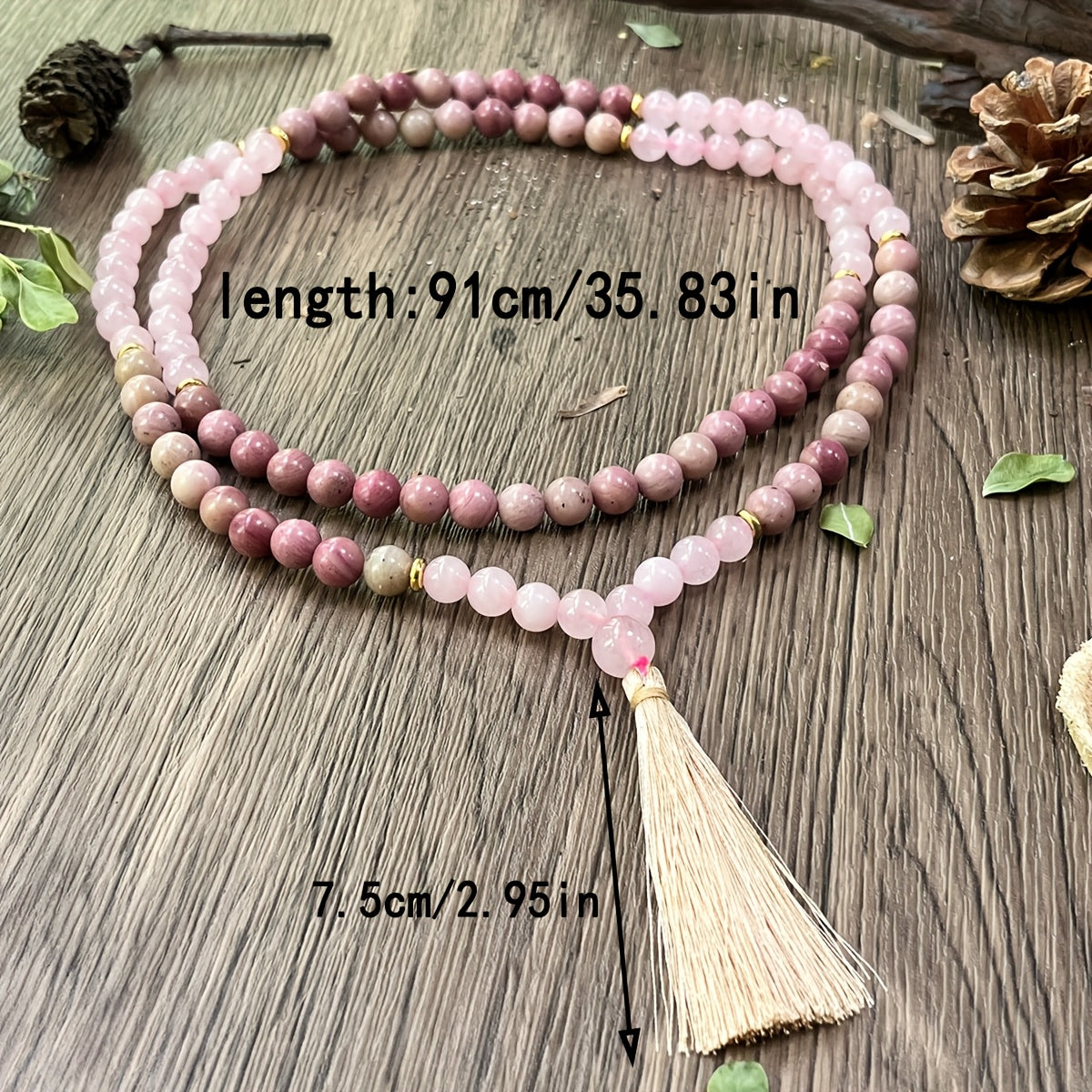
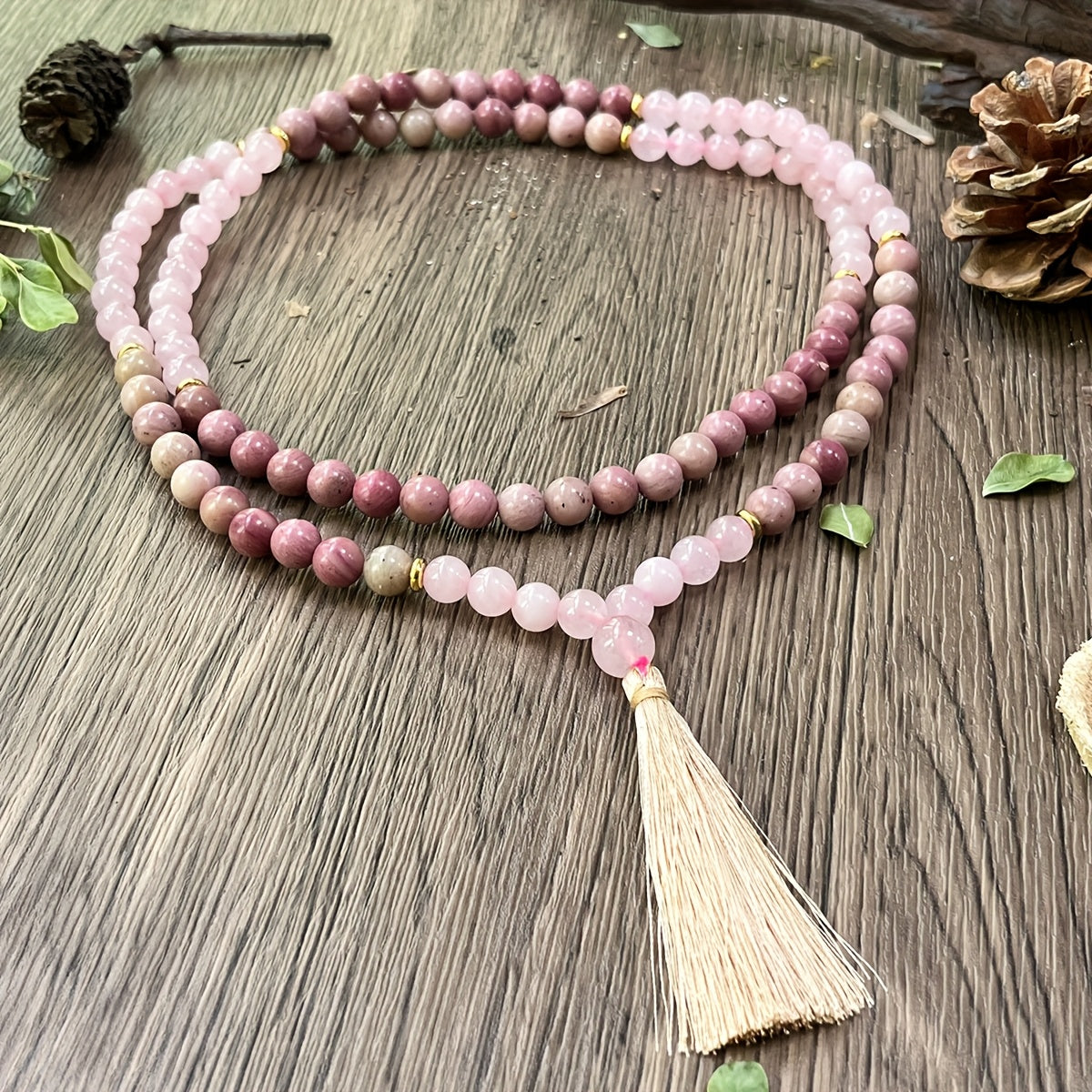
A handmade mala necklace, like the Rose Quartz and Rhodonite piece featured here, is far more than a decorative accessory. It is:
A Symbol of Continuity — Its circular form represents the unending cycle of life and practice.
A Grounding Tool — Its weight and texture bring the wearer back to the present moment.
A Piece of Living Heritage — It carries forward a 3,000-year-old tradition into the modern world.
A Handmade Piece of Art — Each piece reflects the skill and intention of its creator.
A Spiritual Companion — A silent support system for daily challenges and joys.
A Statement of Values — A wearable declaration of a commitment to mindfulness, compassion, and intentional living.
As we navigate the complexities of modern life, such objects become essential. They are anchors in the storm, reminders of our depth, and beautiful affirmations that style and spirit can walk hand in hand. The mala necklace, in its elegant simplicity, invites us to wear our intentions proudly, to carry our practice with us, and to remember that every moment—and every bead—is an opportunity to begin again.