

Finding the Gap
You're scrolling through your phone, and your thumb moves automatically, swiping through images without really seeing them. Your mind is somewhere else—replaying a conversation from earlier, worrying about something tomorrow, planning dinner. Your left hand rises to your chest, fingers searching for texture, for something real amid the digital stream.
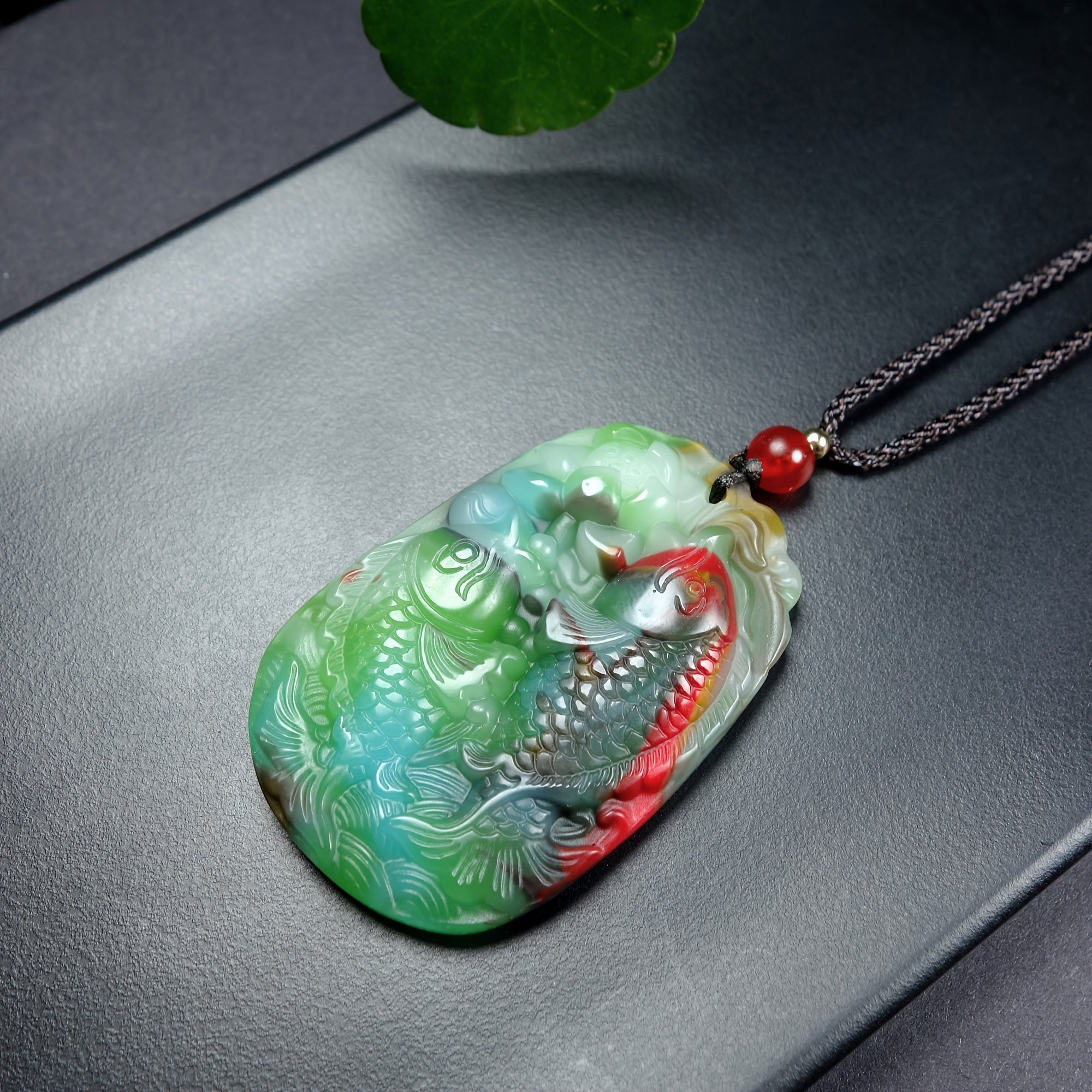
This is the gap: that moment when you're physically present but mentally somewhere else. That moment when you reach—literally reach—for something to ground you. Your hand finds the stone fish pendant. Cool. Solid. Rough in places. Your thumb traces the outline, and for just a second, you're here. In your body. In this room. Not in the remembered conversation or the anticipated worry.
This isn't meditation. It's not about clearing your mind or achieving stillness. It's much simpler: it's about noticing when you've left. Noticing when your awareness has drifted from your physical surroundings into the endless loop of thought. And having a physical anchor that can gently pull you back.
The practice begins with observation. Don't try to change anything. Just notice. Notice how often your hand goes to your chest or neck when you're anxious, distracted, bored. Notice what you're reaching for. Often, you're reaching for reassurance, for comfort, for something solid in a mental landscape that feels fluid and uncertain.
The stone fish becomes useful here not because of any magical properties, but because of its physicality. It's cool when you first touch it. It has texture—some parts smooth, some rough. It has weight—enough to notice, not enough to burden. These physical qualities make it an effective anchor. They give your senses something to focus on besides your thoughts.
Try this: next time you catch yourself worrying about something that hasn't happened yet, pause. Don't try to stop worrying. Just bring your attention to your body. Feel your feet on the floor. Notice your breathing. Then find the pendant with your fingers. Feel its temperature. Explore its texture. Count the rough patches. Notice where it's smooth.
This takes about ten seconds. In those ten seconds, something shifts. You haven't solved your worry. You haven't achieved enlightenment. But you've interrupted the pattern. You've created a gap between the stimulus (the worry) and your habitual response (more worrying). In that gap, there's space. Space to breathe. Space to choose a different response. Or space to simply return to what you were doing before the worry took over.

Over time, you might notice patterns. Maybe you reach for the pendant most often during video calls. Maybe it's when you're waiting in line. Maybe it's during tense family conversations. These aren't failures; they're data. They show you where your awareness tends to drift. They show you where you might need more anchoring.
The Anatomy of a Moment
Let's break down what actually happens in one of these moments. You're reading an email that frustrates you. Your jaw tightens. Your breathing becomes shallow. Your mind starts composing a response. Your left hand rises to your chest, finds the pendant. Your thumb finds a particular rough patch.
In that instant, several things occur simultaneously:
1. Sensory shift: Your attention moves from the mental (the email, the frustration) to the physical (the cool stone, the texture). This isn't avoidance; it's expansion. You're adding sensory information to your experience.
2. Temporal shift: You move from future-thinking (planning your response) to present-feeling (the stone in this moment). The future and past exist only in thought; the present exists in sensation.
3. Spatial shift: You move from the abstract space of the email exchange to the concrete space of your body in a chair, in a room, with a stone against your skin.
These shifts happen quickly, almost automatically once the habit is established. The pendant serves as a trigger—a physical reminder that you have the capacity to shift your attention. It doesn't make the email less frustrating. It doesn't solve the problem. What it does is give you a moment of choice. In that moment, you can choose how to respond rather than reacting automatically.
The practice becomes more interesting when you start noticing the subtleties. The pendant feels different at different times of day. In the morning, it's cool from sitting on your bedside table overnight. By afternoon, it's warmed to your body temperature. In the evening, it might feel cool again if you've been outside. These temperature changes become part of the practice—a way of tracking time through sensation rather than clock-watching.
You might also notice how the pendant feels different depending on your emotional state. When you're anxious, it might feel colder, heavier. When you're calm, it might feel like it's barely there. These perceptions aren't necessarily about the pendant changing; they're about your sensitivity changing. The pendant becomes a mirror for your internal state.
This practice works precisely because it's so simple. You don't need to set aside special time. You don't need to sit in a particular position. You just need to wear something that can serve as an anchor, and develop the habit of noticing when you reach for it. The noticing itself is the practice.
The fish pendant is particularly effective for this because of its cultural weight. The fish symbol carries centuries of meaning about abundance, about swimming through difficulties, about transformation. But in this practice, you're not engaging with those meanings intellectually. You're engaging with the object physically. The cultural weight becomes background, like the historical weight of a stone that's existed for millions of years. It's there, but it doesn't need to be understood to be felt.
Some days, the practice feels natural. You notice when you've drifted, touch the pendant, return to presence. Other days, you might go hours without noticing the pendant at all. That's fine. The practice isn't about perfection; it's about gentle return. Each time you notice you've forgotten is an opportunity to remember again.
Over weeks and months, something subtle happens. The pendant begins to represent not just an anchor for individual moments, but for your commitment to showing up for your own life. Putting it on in the morning becomes a quiet intention: today, I will notice when I drift. Today, I will use this physical object to return to my physical experience.
A Physical Anchor
For those moments when your thoughts are moving faster than your surroundings.