





An exploration of the money bag motif's journey from ancient Chinese economic tools to contemporary spiritual jewelry, examining how this enduring symbol continues to shape our relationship with wealth, success, and personal empowerment across cultures and centuries.
In the bustling marketplaces of Tang Dynasty China, amid the clatter of coins and rustle of silk, a humble yet potent symbol emerged that would transcend centuries: the money bag. What began as a practical container for currency evolved into a complex emblem of wealth management, financial wisdom, and spiritual prosperity. Today, this ancient symbol finds new expression in contemporary cinnabar jewelry, bridging historical economic practices with modern financial consciousness and spiritual aspiration.
The resurgence of money bag symbolism in jewelry—particularly in pieces like the cinnabar red bag pendant—represents more than a fashion trend. It signals a deeper cultural reevaluation of our relationship with wealth, success, and personal empowerment. This article explores the multifaceted journey of this symbol from practical tool to spiritual talisman, examining its psychological impact, cultural significance, and enduring relevance in an increasingly digital economy.

Historical Foundations: The Money Bag in Ancient Chinese Economics
The money bag's origins trace to China's development of formalized economic systems during the Han and Tang dynasties. Before standardized banking, individuals carried their wealth in embroidered pouches that served multiple functions beyond mere containment. These bags represented one's entire financial identity—containing not only coins but often IOUs, seals, and small valuable items used in trade.
Historical records from the Tang Dynasty (618-907 CE) describe elaborate classification systems for money bags based on their contents and purposes. Merchant accounts mention "trade bags" for business transactions, "savings bags" for long-term wealth storage, and "gift bags" containing coins for special occasions. This categorization reveals an early understanding of financial compartmentalization that parallels modern budgeting principles.
The bags' construction itself carried symbolic weight. Drawstrings represented controlled access to resources—wealth could be released when needed but otherwise remained secured. Embroidery patterns often included prosperity symbols like coins, bats (homophonous with "fortune" in Chinese), and the endless knot representing continuous abundance.
From Practical Tool to Symbolic Object
By the Song Dynasty (960-1279 CE), the money bag had transcended its practical function to become a potent status symbol and ritual object. Elaborately embroidered bags were presented during business partnerships, wedding ceremonies (as part of bride wealth), and imperial tax collections. The bags' quality and decoration communicated the owner's financial acumen and social position as effectively as their contents.
This period also saw the emergence of "empty ritual bags"—pouches containing only symbolic items or left intentionally empty to represent potential rather than actual wealth. These ritual objects were used in ceremonies to attract prosperity, establishing the foundation for the money bag's later evolution into a spiritual talisman.
Material Matters: The Significance of Cinnabar in Wealth Symbolism
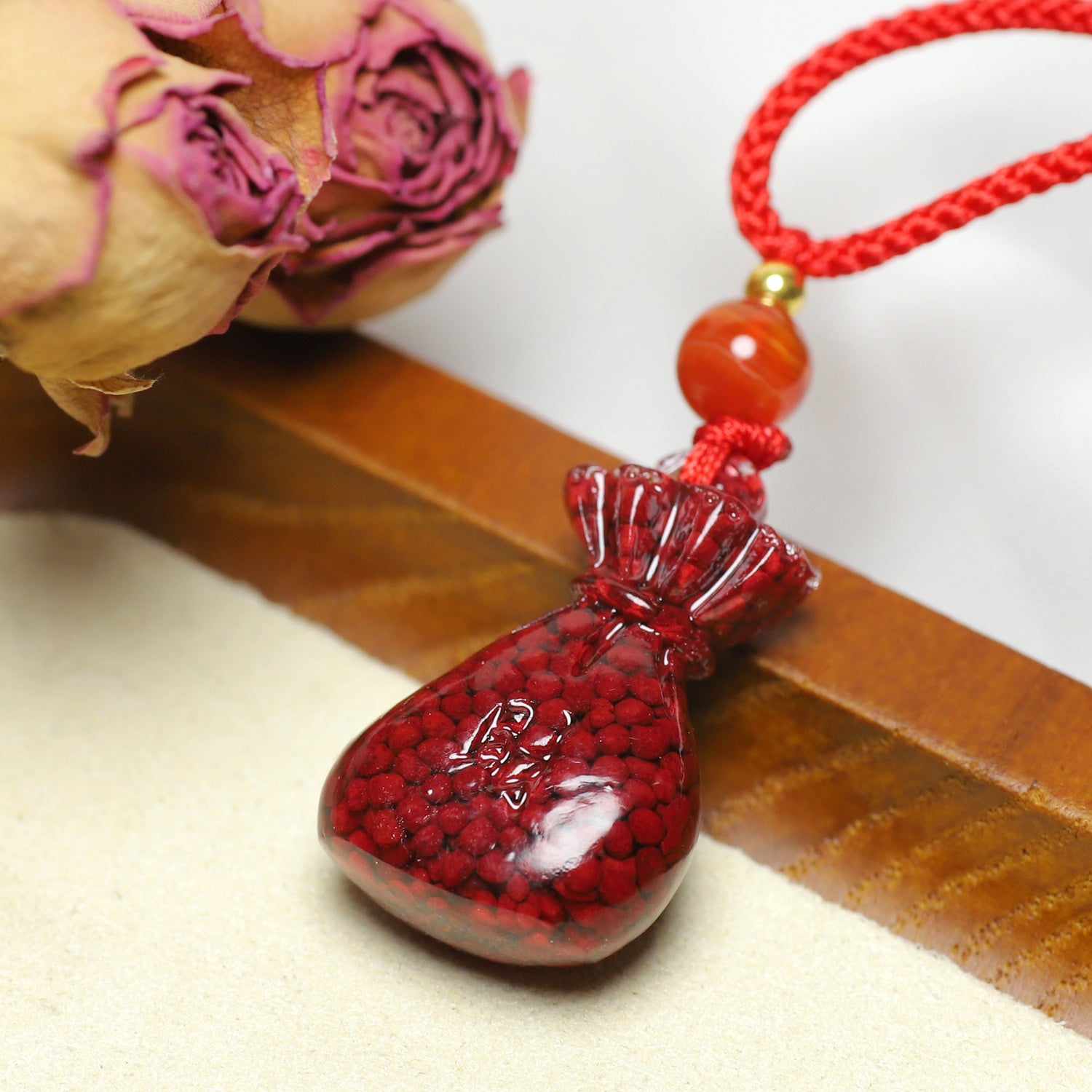
The choice of cinnabar for contemporary money bag jewelry represents a deliberate synthesis of material symbolism. Cinnabar (mercury sulfide) holds a unique position in Chinese cultural history, associated with both practical applications and profound spiritual significance.
Cinnabar's Multifaceted Symbolic Associations:
- Imperial Authority: Used in royal seals and official stamps, creating association with authorization and legitimacy in financial matters
- Alchemical Transformation: Central to Taoist alchemy where it represented the transformation of base materials into valuable ones—a perfect metaphor for wealth creation
- Protective Properties: Historically believed to ward off negative energies and misfortune, including financial loss
- Vitality and Life Force: Its red color associated with blood, energy, and the essential force necessary for enterprise and success
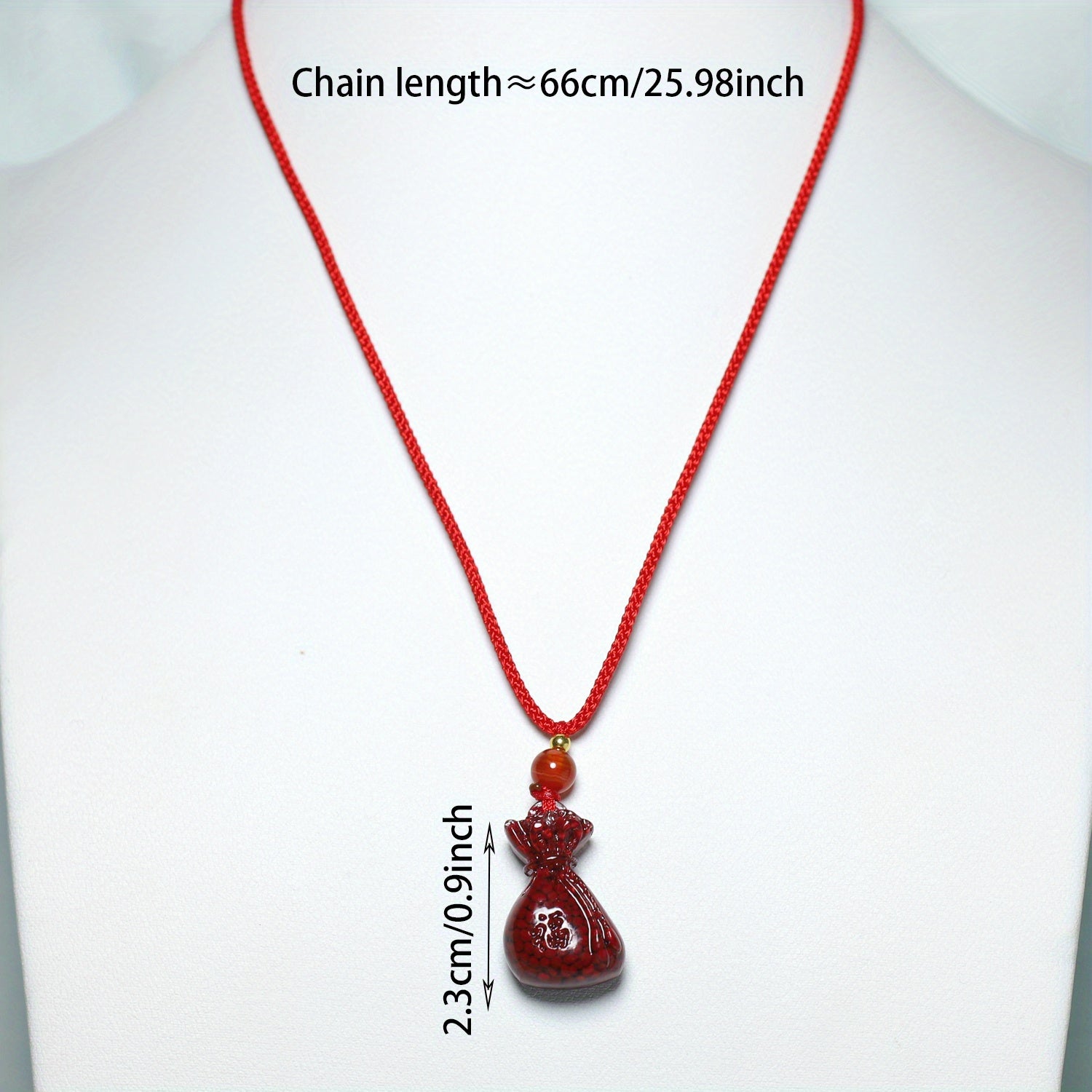
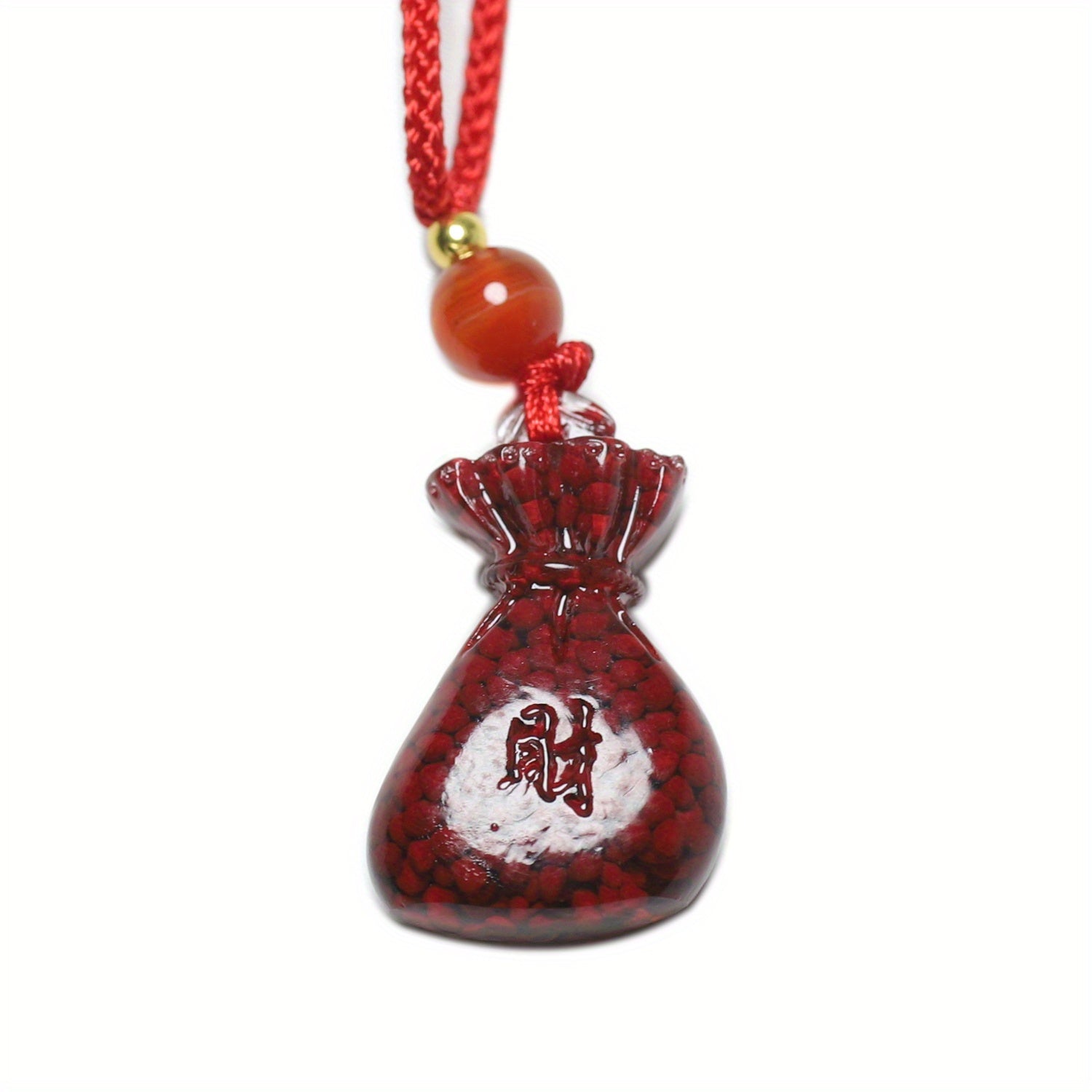
When carved into money bag shapes, cinnabar creates a double-layered symbolism: the container (bag) representing wealth management and the material (cinnabar) representing transformation and protection. This combination addresses both practical and spiritual aspects of prosperity—the skills needed to manage resources and the energetic conditions needed to attract them.
Psychological Dimensions: How Symbolic Jewelry Shapes Financial Behavior
The wearing of money bag jewelry operates on multiple psychological levels, influencing both conscious financial decisions and subconscious attitudes toward wealth. Understanding these mechanisms helps explain why such symbolic pieces have maintained relevance across dramatically different economic systems.
The Psychology of Symbolic Financial Objects
Research in behavioral economics and psychology suggests that tangible symbols of wealth and success can significantly influence financial behavior through several mechanisms:
- Anchoring Effect: Physical reminders of financial goals keep those objectives cognitively accessible, influencing daily decisions toward goal-aligned behavior
- Identity Reinforcement: Wearing prosperity symbols strengthens identification with financially savvy, successful self-concepts
- Reduced Decision Fatigue: Symbols serve as heuristics that simplify complex financial decisions by activating established value frameworks
- Emotional Regulation: Tactile connection with symbolic objects can reduce financial anxiety and increase risk tolerance within reasonable bounds
Contemporary money bag jewelry functions as what psychologists call an "implementation intention trigger." Each time the wearer touches or notices the pendant, it subtly reinforces their financial intentions and priorities. This constant, low-level reinforcement can be particularly powerful in counteracting the overwhelming financial messaging of consumer culture, helping individuals maintain focus on long-term prosperity rather than immediate gratification.
Cultural Translation: Eastern Symbolism in Global Context
The globalization of Feng Shui and Chinese prosperity symbolism raises important questions about cultural translation and appropriation. The popularity of money bag jewelry outside Chinese cultural contexts represents a fascinating case study in how ancient symbols adapt to new cultural environments while retaining core meanings.
This translation process involves several adaptations:
- Democratization of Symbols: Once associated primarily with merchant classes and nobility, money bag symbolism now serves broader populations seeking financial stability
- Integration with Diverse Spiritual Systems: The symbols incorporate into various spiritual practices beyond traditional Chinese belief systems
- Digital Age Relevance: Ancient physical wealth symbols gain new meaning in increasingly dematerialized financial systems
- Gender Fluidity: Once gendered financial symbols become accessible across gender identities
The "Funky Style" Phenomenon: Ancient Symbols in Contemporary Aesthetics
The designation "funky style" applied to traditional money bag pendants represents a deliberate aesthetic strategy to make ancient wisdom accessible to contemporary audiences. This approach involves several creative reinterpretations:
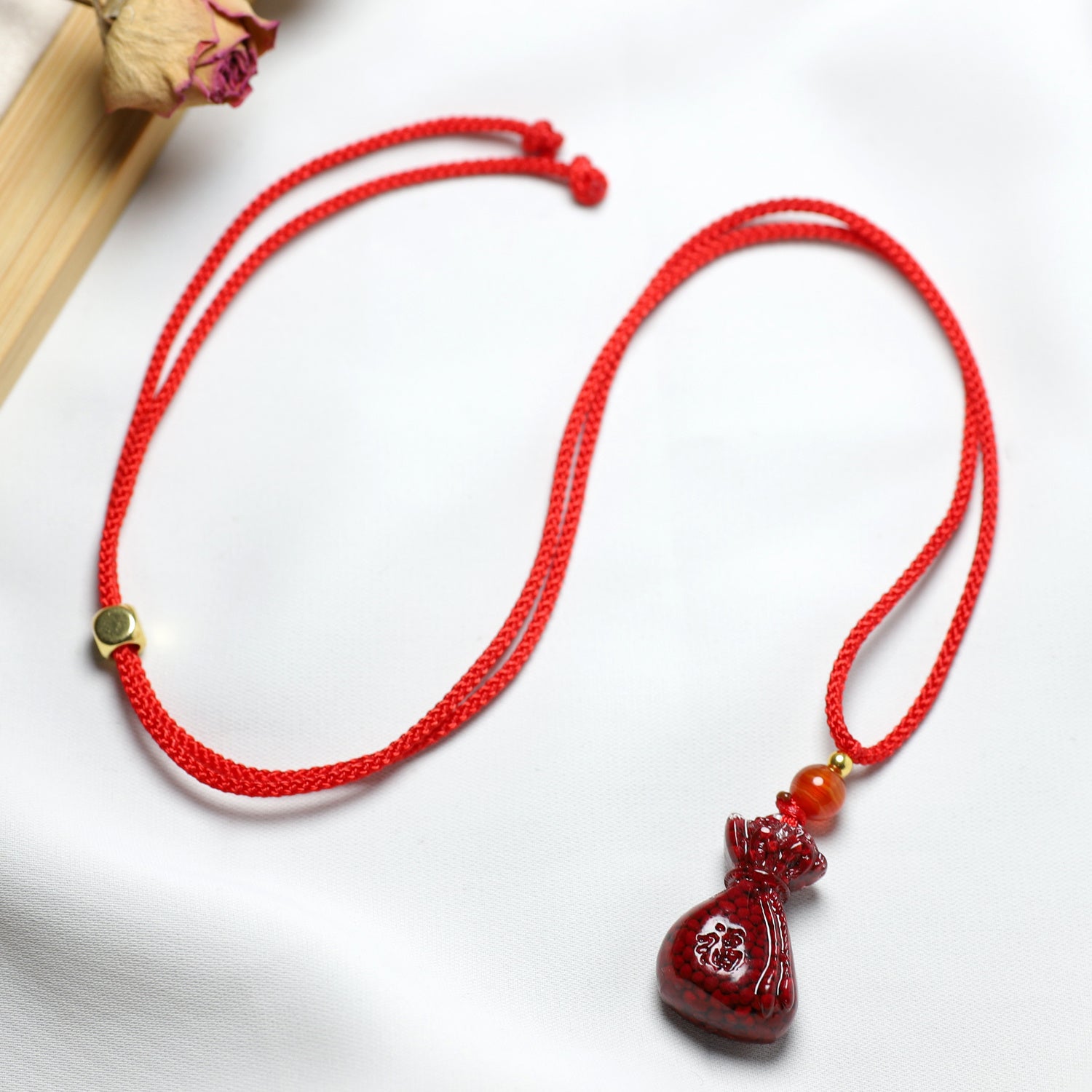
Simplified Silhouettes: Traditional elaborate embroidery patterns translate into clean, minimalist carving that maintains symbolic essence while adapting to modern aesthetic preferences. The reduction to essential forms paradoxically makes the symbolism more potent by removing decorative distractions.
Color Reinterpretation: While maintaining cinnabar's traditional red, contemporary pieces often play with saturation and finish—high-gloss surfaces reflect modern preferences while matte finishes appeal to minimalist aesthetics. This color consistency maintains symbolic continuity while allowing stylistic variation.
The "funky" designation also represents an acknowledgment of the inherent playfulness in wearing prosperity symbols. Rather than solemn financial tools, these pieces become joyful celebrations of abundance—a psychological shift from scarcity consciousness to abundance mindset that research suggests actually supports better financial outcomes.
Market Dynamics: The Economics of Symbolic Jewelry
The market for prosperity-themed jewelry has grown substantially in recent years, reflecting broader cultural trends toward meaningful consumption and spiritually-informed lifestyle choices. Understanding this market reveals insights about contemporary values and economic behaviors.
Market Analysis: Prosperity Jewelry Trends 2020-2024
Industry research indicates several key trends driving growth in symbolic prosperity jewelry:
- Post-Pandemic Values Shift: Increased focus on financial security and meaningful possessions following economic uncertainty
- Rise of "Financial Wellness": Integration of financial health with overall wellbeing, creating demand for objects that bridge these domains
- Millennial and Gen Z Preferences: Younger consumers show strong preference for purchases with cultural authenticity and symbolic meaning
- Digital Detox Movement: Counter-trend toward tangible, meaningful objects in response to digital overwhelm
- Global Economic Uncertainty: Increased seeking of symbolic reassurance during volatile economic periods
Interestingly, the market for prosperity jewelry shows particular strength during economic uncertainty—contrary to what might be expected for discretionary purchases. This paradox suggests that such items fulfill deeper psychological needs beyond mere decoration, functioning as tangible anchors of hope and agency during challenging financial periods.
Environmental and Ethical Considerations
The production of cinnabar jewelry raises important questions about material sourcing, environmental impact, and cultural authenticity. Responsible production addresses several key concerns:
Ethical Framework for Symbolic Jewelry Production
- Sustainable Sourcing: Using cinnabar from responsible mining operations with environmental protections
- Cultural Partnership: Collaborating with traditional artisans rather than appropriating designs without context
- Educational Integration: Providing cultural and historical context with each piece to ensure respectful engagement
- Transparent Pricing: Fair compensation for artisans and clear communication about material and labor costs
- Alternative Materials: Offering options for those concerned about traditional mining practices
The most forward-thinking producers in this space recognize that the ethical dimensions of prosperity jewelry extend beyond production methods to encompass the entire economic chain—from miner to artisan to retailer to consumer. This holistic approach aligns the symbolic message of financial wellbeing with the practical reality of ethical economic relationships.
Future Outlook: Digital Wealth and Physical Symbols
As financial systems become increasingly dematerialized through digital currencies and virtual transactions, the appeal of physical prosperity symbols appears to be growing rather than diminishing. This counter-trend reveals important insights about human psychological needs in relationship to wealth.
Tactile Counterbalance: In a world of abstract digital numbers representing wealth, physical symbols provide tangible connection to financial concepts. The weight of a cinnabar pendant, the coolness of the stone against skin—these sensory experiences ground abstract financial concepts in bodily reality, potentially reducing the psychological distance that can lead to irresponsible financial behavior in digital systems.
Symbolic Continuity: Ancient symbols provide continuity during periods of rapid financial innovation. As cryptocurrency, digital banking, and AI-driven investment platforms transform financial landscapes, traditional symbols offer psychological stability and connection to enduring wisdom about wealth management that transcends specific economic technologies.
The Christmas Gift Phenomenon
The specific marketing of money bag pendants as Christmas gifts represents an interesting cultural synthesis. Christmas gift-giving traditions emphasize generosity and abundance, while Chinese prosperity symbolism focuses on wealth attraction and management. The combination creates a gift that transcends seasonal consumerism to offer year-round symbolic value.
As a Christmas gift, a prosperity pendant communicates several layered messages:
- Wishes for Financial Security: Beyond immediate holiday cheer, a wish for year-round wellbeing
- Recognition of Economic Realities: Acknowledgement that financial health contributes to overall happiness
- Empowerment Over Dependency: A gift that supports the recipient's own agency rather than creating obligation
- Cultural Bridge: Introduction to alternative economic philosophies and prosperity concepts

Conclusion: The Enduring Power of Contained Wealth
The journey of the money bag symbol from Tang Dynasty marketplaces to contemporary cinnabar jewelry reveals enduring human concerns about wealth, security, and prosperity. Far from being a mere decorative motif, this symbol encapsulates complex economic wisdom about containment, management, and conscious deployment of resources.
In an age of financial complexity and economic uncertainty, such symbols serve multiple functions: they anchor abstract financial concepts in tangible reality, reinforce positive financial behaviors through constant subtle reminders, bridge cultural wisdom traditions with contemporary challenges, and provide psychological reassurance during volatile economic periods.
The cinnabar money bag pendant represents more than aesthetic appeal or even spiritual aspiration—it embodies a philosophy of conscious wealth management that recognizes prosperity as both attracted and consciously stewarded. In wearing such symbols, individuals engage in an ancient yet continually relevant practice: making visible their commitment to financial wisdom, their openness to abundance, and their recognition that true wealth encompasses far more than monetary measures alone.
As economic systems continue to evolve, the fundamental human relationship with resources remains constant. The money bag symbol, in all its contemporary interpretations, continues to offer wisdom about this relationship—reminding us that wealth, like all energy, flows most effectively when properly channeled, respected, and consciously directed toward meaningful ends.
Key Insights: The Multidimensional Value of Prosperity Symbols
- Historical Continuity: Connects contemporary financial challenges with millennia of economic wisdom
- Psychological Reinforcement: Supports positive financial behaviors and abundance mindset
- Cultural Dialogue: Facilitates exchange between Eastern and Western prosperity philosophies
- Tactile Grounding: Provides tangible connection to wealth concepts in increasingly abstract financial systems
- Holistic Perspective: Integrates financial wellbeing with spiritual and emotional health
- Ethical Framework: When produced responsibly, models the equitable economic relationships it symbolizes
In a world of complex financial instruments and abstract economic forces, the simple symbolism of the money bag offers profound clarity: wealth is not merely acquired but contained, not just accumulated but wisely managed, not hoarded but strategically deployed. These timeless principles, carved in cinnabar and worn close to the heart, continue to guide and inspire across centuries and cultures.

"What we're witnessing with the global adoption of Chinese prosperity symbols isn't simple cultural appropriation but rather cultural translation. The money bag symbol carries universal concepts about wealth management that resonate across economic systems, while specific cultural meanings adapt to local contexts. This creates a dialogue between traditional Chinese economic wisdom and contemporary global financial challenges."