





Practical techniques for working with geological materials to restore sensory presence, stabilize attention, and reconnect with embodied awareness in mediated environments
We live increasingly in what philosophers call "disembodied environments"—digital spaces that engage our minds while leaving our bodies behind, urban landscapes that separate us from geological time, mediated experiences that prioritize visual stimulation over tactile presence. The cost of this disembodiment is subtle but significant: fragmented attention, sensory deprivation, and what ecopsychologists call "earth amnesia"—forgetting our fundamental connection to the planetary body that sustains us.
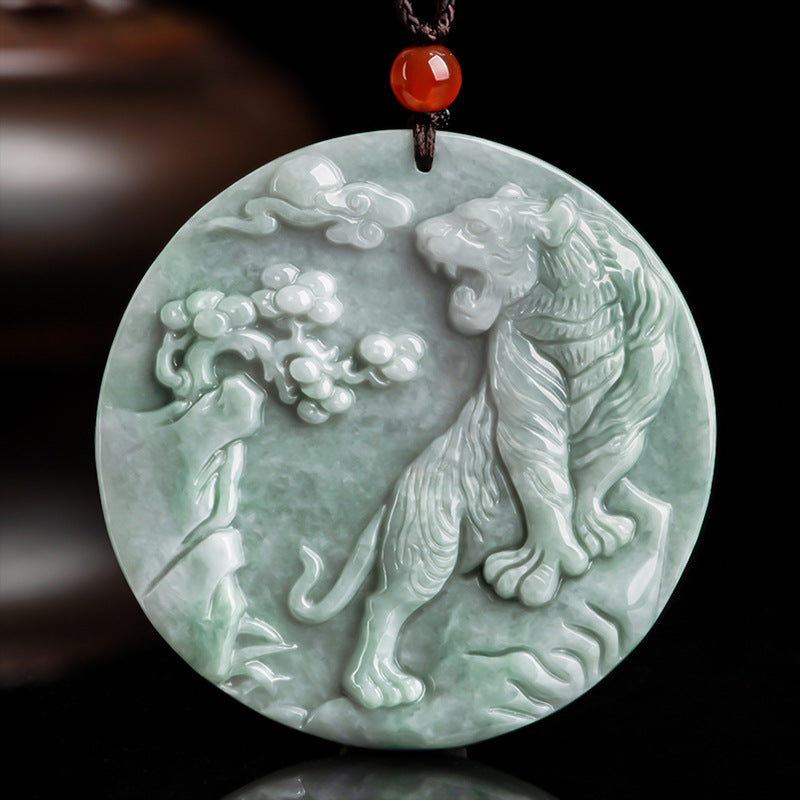
Grounding practices attempt to repair this disconnect, and among the most effective are those involving natural stone. Unlike manufactured materials, stone carries what geologists call "deep time"—millions of years of planetary history compressed into mineral form. Working with stone isn't merely aesthetic preference; it's sensory re-education, retraining our nervous systems to recognize weight, texture, temperature, and the slow patience of geological time.
Why Stone? The Unique Properties of Geological Materials
Before exploring specific practices, it's helpful to understand what makes stone particularly effective for grounding work:
Geological Memory: Stone formation processes—sedimentation, metamorphosis, crystallization—occur across timescales incomprehensible to human consciousness. Holding stone connects us to this deep time, providing perspective on our transient concerns.
Density and Weight: Stone has literal mass, which provides tangible feedback to our proprioceptive system (the sense of body position and movement). This physical weight counters the weightlessness of digital existence.
Thermal Properties: Stone retains temperature differently than metals or plastics. Its coolness against skin provides immediate sensory feedback that draws attention to the present moment.
Texture Variation: From smooth polished surfaces to rough natural fractures, stone offers complex tactile experiences that engage our often-neglected sense of touch.
Mineral Complexity: Even seemingly uniform stone contains microscopic variations—crystal structures, mineral inclusions, color gradients. This complexity at multiple scales mirrors the complexity of our own embodied experience.
Non-Reactivity: Unlike many modern materials, stone doesn't respond instantly to our touch. It remains itself regardless of our interaction—a model of autonomous presence.

Foundational Practice: The Five-Minute Stone Meditation
The Basic Sequence
This practice can be done with any natural stone object, from a simple river stone to a carved pendant. The key is consistency—repeating the sequence daily trains the nervous system to associate stone contact with grounded presence.
- Selection: Choose your stone object. If using jewelry, remove it rather than leaving it on. The act of removal and conscious handling is part of the practice.
- Observation (1 minute): Hold the stone in your non-dominant hand (left hand for right-handed people). Simply look at it without analysis. Notice colors, patterns, imperfections. Don't label or judge; just observe.
- Temperature Awareness (1 minute): Close your eyes. Focus on the stone's temperature against your skin. Notice where it's coolest, warmest. Notice how your hand's warmth gradually affects the stone's temperature.
- Weight and Texture (1 minute): Still with eyes closed, shift attention to the stone's weight. Feel its mass, its pull toward earth. Then notice texture—smooth areas, rough patches, edges, curves.
- Breath Synchronization (1 minute): As you inhale, imagine drawing earth energy up through the stone into your body. As you exhale, imagine releasing scattered energy down through the stone into the earth. Don't force this; just suggest it gently.
- Integration (1 minute): Open your eyes. Look at the stone again, now with the added sensory information from touch. Notice how your perception has deepened. Set a simple intention: "May this connection support grounded presence throughout my day."
Note: The times are suggestions, not requirements. Even 30 seconds per phase is beneficial. What matters is the sequence: visual → thermal → tactile → energetic → integrative.
This practice might seem simple, but its effects accumulate. Over weeks and months, the nervous system begins to associate stone contact with a specific quality of attention—slower, more embodied, less reactive. The stone becomes what psychologists call a "conditioned stimulus" for grounded presence.

Advanced Practice: Stone as Transition Anchor
Once the basic meditation is established, stone objects can be used more dynamically to support transitions between different states or environments—particularly valuable in modern life's constant context-switching.
Transition Ritual Sequence
This practice is especially useful when moving between work and personal time, digital and analog activities, or any situation requiring a cognitive or emotional shift.
- Identify Transition Points: Choose 2-3 daily transitions that typically feel disjointed or stressful (e.g., finishing work, before important conversations, after digital immersion).
- Preparation: Have your stone object accessible at these transition points. If wearing stone jewelry, this might mean touching it consciously rather than removing it.
-
The Three-Breath Reset: When reaching a transition point:
- Breath 1: Hold/touch stone. Inhale while feeling its texture. Exhale while releasing the previous context.
- Breath 2: Inhale while feeling stone's weight/temperature. Exhale while settling into your body.
- Breath 3: Inhale while acknowledging the coming context. Exhale while setting intention for how you want to enter it.
- Physical Movement: Accompany the breaths with a simple physical gesture—placing the stone down, putting jewelry on/taking off, or even just shifting its position in your hand.
- Verbal Cue (optional): Add a simple phrase: "Transition complete" or "Now I am here." The verbal component helps anchor the ritual neurologically.
Psychological Mechanism: This ritual works through what behavioral psychologists call "stimulus control"—associating a specific stimulus (stone contact) with a specific psychological shift. Over time, the stone itself begins to trigger the transition state automatically.
The transition practice is particularly valuable for knowledge workers, caregivers, or anyone navigating multiple roles or contexts daily. It creates psychological boundaries between different "selves" or modes of being, reducing what sociologists call "role contamination"—the bleeding of one role's demands or emotions into another.

Environmental Practice: Stone Placement for Spatial Grounding
Beyond personal practices, stone objects can be used to ground physical spaces—particularly helpful in digital-heavy environments like offices or urban apartments.
Spatial Grounding Principles
- Threshold Stones: Place a stone object at entry points to rooms or spaces (doorways, room entrances). Touch it when entering or leaving to mark the transition consciously.
- Attention Anchors: Position stones in peripheral areas of visual fields (desk corners, shelf edges) rather than central focus points. Their presence should be subtle, noticed occasionally rather than stared at constantly.
- Digital Counterpoints: Place stones near digital devices (beside computer, near phone charging station). The contrast between geological and digital materials creates useful cognitive friction.
- Weight Distribution: Use stones of different sizes/weights in different areas. Heavier stones in areas needing stability (workspaces), lighter stones in areas for creativity or relaxation.
- Seasonal Rotation: Change stone placements seasonally or monthly. The movement itself becomes a ritual of spatial re-grounding.
Feng Shui Integration: These principles align with traditional Feng Shui earth element practices but adapted for contemporary environments. The key innovation is positioning stones specifically in relation to digital technologies—creating earth energy anchors in digitally dominated spaces.
Environmental stone placement works through what environmental psychologists call "affordance theory"—the idea that objects in our environment suggest certain actions or states of mind. A stone on a desk doesn't just sit there; it affords touching, holding, grounding. Its presence alone, even untouched, can shift the psychological quality of a space from purely functional to subtly embodied.

Challenges and Troubleshooting
Like any practice, stone grounding can encounter obstacles. Common challenges and responses include:
"I forget to do the practices": Link stone practices to existing habits (after brushing teeth, before checking phone in morning, during tea/coffee preparation). Habit stacking is more effective than trying to establish entirely new routines.
"The stone feels like just another object": This often indicates moving too quickly through sensory phases. Slow down. Spend entire sessions on just temperature or just texture. Depth of attention matters more than variety.
"I don't feel anything different": Grounding effects are often subtle—slightly less reactivity, slightly more patience, slightly clearer thinking. Look for small shifts rather than dramatic experiences. Keep a simple journal: "After stone practice today, I noticed..."
"I lose the stone or it gets damaged": This is part of the practice. Stone teaches impermanence even within seeming permanence. If a stone breaks, work with the pieces. If lost, begin again with a new stone, noticing how the relationship develops differently.
"Others think it's strange or superstitious": Frame the practice in secular, psychological terms if needed: "It's a sensory mindfulness anchor" or "It helps me transition between mental states." The practice doesn't require metaphysical belief to be effective.
Integration with Other Practices
Stone grounding complements and enhances other mindfulness or spiritual practices:
With Breath Awareness: Hold stone during breathing meditation. Notice how the stone's weight affects breath rhythm, how breath warmth affects stone temperature.
With Movement Practices: Place stones along yoga mat edges or meditation cushion. Touch them during specific poses or at practice beginning/end.
With Digital Minimalism: Use stone contact as replacement for phone checking during idle moments. When feeling the urge to check device unnecessarily, touch stone instead for 30 seconds.
With Creative Work: Keep a stone on your desk while writing, designing, or problem-solving. Touch it when stuck or scattered to reground attention before continuing.
With Compassion Practices: When working with difficult emotions or relationships, hold a stone while visualizing grounding cord connecting to earth. The stone provides tangible anchor for the visualization.
Conclusion: Stone as Teacher of Embodied Time
At its deepest level, stone grounding practice isn't about relaxation, stress reduction, or even mindfulness in the conventional sense. It's about relearning how to inhabit time through the body.
Digital culture trains us toward what media theorists call "instantaneous time"—the collapse of duration into instant response, the compression of process into outcome. Stone teaches the opposite: geological time, where change occurs across scales we can't perceive directly, where patience isn't virtue but necessity, where presence means accepting duration rather than trying to escape it.
When we work with stone regularly, something subtle shifts in our relationship to time itself. Deadlines feel less absolute. Waiting becomes more tolerable. The urge for instant resolution softens. This isn't because stone magically changes external realities, but because it changes our internal experience of time's passage—from something to be managed, optimized, or escaped, to something to be inhabited, felt, and accepted.
The practices outlined here—basic meditation, transition rituals, environmental placement—are merely entry points. The real practice is what emerges through consistent engagement: a gradual re-education of attention, a retraining of the nervous system, a re-membering (putting back together) of our fragmented sensory experience.
In this sense, every stone object becomes a teacher. Not a teacher with lessons to impart, but a teacher through its very being: its weight teaching us about presence, its texture teaching us about attention, its geological history teaching us about perspective, its simple existence teaching us that some things don't need to do anything to be valuable—they just need to be what they are.
And perhaps that's the ultimate grounding lesson: We don't need to become something else to be grounded; we need to remember what we already are—embodied beings living in geological time on a planetary body made of stone. The stone in our hand is merely a mirror, showing us back to ourselves.
