




Magpie & Peony: Decoding the Ancient Symbols of Joyful Union and Auspicious Blessings
In the vast lexicon of East Asian symbolism, few motifs are as instantly recognizable or as deeply cherished as the pairing of the magpie and peony. To the untrained eye, it might appear as simply a beautiful bird beside a lush flower—a pleasant natural scene. But to those familiar with the cultural language of "auspicious patterns" (吉祥图案), this combination speaks a complete sentence about human happiness, a visual poem that has been recited for over a thousand years. It is a symbol that doesn't just represent joy; it teaches us how to recognize it.
I. The Magpie: The Feathered Herald of Good News
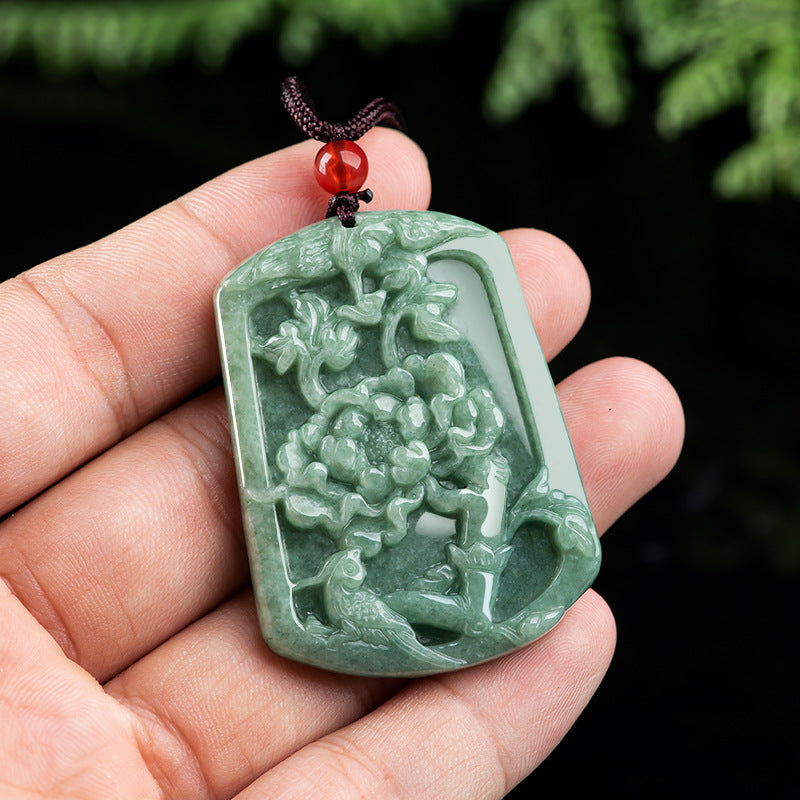
The magpie's symbolic journey begins with its name. In Mandarin, it is called 喜鹊 (xǐquè)—a compound of the character 喜 (xǐ), meaning "joy" or "happiness," and 鹊 (què), meaning "magpie." This is not a coincidence of language but a deliberate cultural assignment. The bird is literally named "joy-bird."
Folklore across China and Korea is rich with tales attributing almost oracular qualities to the magpie. Its distinctive, chattering call was interpreted not as noise, but as speech—a herald announcing the arrival of good news, the end of a hardship, or the coming of a welcome guest. In the famous legend of the Cowherd and the Weaver Girl (the Chinese equivalent of the Milky Way myth), it is magpies who form the bridge across the celestial river once a year, allowing the separated lovers to reunite. Thus, the magpie became irrevocably linked to joyful reunions and the fulfillment of longing.
Symbolic Layers of the Magpie:
Messenger: Bringer of good tidings and positive change.
Harbinger of Spring: Its activity signals the end of winter and the return of warmth and life.
Bridge-Builder: Connector of separated lovers or distant friends.
Protector: In some traditions, believed to ward off evil spirits with its lively presence.
The Peony: The Unrivaled "King of Flowers"
If the magpie is the messenger, the peony is the message's glorious content. Known as 牡丹 (mǔdān), the peony's reign as the "King of Flowers" was formally established during the Tang Dynasty (618-907 CE), a period of unprecedented cultural flourishing and opulence. The peony, with its large, layered, voluptuous blooms in shades of pink, red, and white, perfectly embodied the Tang aesthetic of abundance, confidence, and sensual beauty.
Its symbolism is multifaceted and rich:
Wealth and Prosperity: The peony's lush, full form suggested material abundance and financial success. It was often depicted in the homes and garments of the wealthy and aristocratic.
Honor and High Status: Associated with the imperial court, it represented noble character, dignity, and social standing.
Romantic Love and Happy Marriage: Most significantly for its pairing with the magpie, the peony became the premier symbol of romantic affection, feminine beauty, and a blissful, prosperous union. A peony in full bloom represented love at its most passionate and fulfilled state.
Poets like Bai Juyi and Liu Yuxi wrote verses praising the peony's beauty, comparing it to the most beautiful women and the most successful lives. It was not a shy, retiring flower but one that announced its presence with glorious, unapologetic splendor.
II. The Meeting of Symbols: A Visual Pun and a Cultural Promise
The genius of Chinese symbolic language often lies in visual and auditory puns. The magpie-and-peony motif is a masterclass in this practice. The phrase it represents is "喜上眉梢" (xǐ shàng méi shāo).
Let's break it down:
喜 (xǐ) = Joy/Happiness (represented by the magpie, 喜鹊).
上 (shàng) = To ascend, to go onto.
眉梢 (méi shāo) = The tip of the eyebrows.
The literal translation is "happiness ascends to the tip of the eyebrows"—an idiom describing a face lit up with such visible joy that it seems to reach one's hairline. But there's a brilliant pun here: the character for "eyebrows" (眉, méi) sounds nearly identical to the character for "plum blossom" (梅, méi). In earlier artistic renditions, the motif sometimes showed a magpie on a plum branch. However, the peony, with its stronger connotations of love and prosperity, eventually became the dominant partner, creating an even richer symbolic layer: joy (magpie) alighting upon love/prosperity (peony).
III. From Imperial Courts to Everyday Life: The Motif's Journey
Initially adorning the robes of Tang nobility and the walls of imperial palaces, the magpie-and-peony motif gradually trickled down through society. By the Song Dynasty and especially the Ming and Qing periods, it had become a staple of folk art.
It appeared everywhere:
• Textiles: Embroidered on wedding quilts, dresses, and accessories to bless the union.
• Ceramics: Painted on vases, plates, and jars used in prosperous households.
• Woodcarvings: Adorning furniture, window lattices, and architectural elements in homes.
• Papercuts: Used during festivals, especially weddings and Spring Festival, to decorate windows and doors.
This widespread use wasn't merely decorative. It was a form of sympathetic magic and positive psychology. By surrounding oneself with symbols of joy, love, and prosperity, one was actively inviting those energies into one's life and home. It was a daily, visual affirmation of hope and a cultural contract with good fortune.
"In a world without mass media, these symbols were the memes of their time—condensed packages of meaning, emotion, and aspiration that everyone understood."
IV. The Modern Resonance: Why This Ancient Symbol Still Speaks
In our digital, globalized age, why does an agrarian symbol from centuries past still hold power? The answer lies in the timeless human needs it addresses.
First, it addresses our need for narrative hope. Life is uncertain. The magpie-and-peony motif tells a simple, reassuring story: good news comes (magpie), and it leads to blossoming, beauty, and fulfillment (peony). It's a narrative arc that comforts the human psyche.
Second, it serves as a corrective to modern alienation. In an age of transactional relationships and digital isolation, the symbol reaffirms the value of deep, joyous union—whether romantic, familial, or communal.
Third, it is an antidote to scarcity mindset. The peony, in its outrageous abundance, is the opposite of lack. Wearing or displaying this symbol is a subtle, daily practice in believing in abundance—of love, of opportunity, of beauty.
V. Beyond Romance: The Expanded Meaning for Contemporary Life
While its traditional core speaks of romantic union, the modern interpretation of the magpie and peony can be beautifully expanded:
The Magpie (喜鹊): Can represent any "good news" or positive turn—a career opportunity, a creative breakthrough, a healed friendship, a moment of personal insight, a completed project.
The Peony (牡丹): Can symbolize the full, abundant blossoming of one's potential, the prosperity of a peaceful mind, the "wealth" of health, or the flowering of a cherished dream or project.
Thus, the symbol becomes not just about finding a partner, but about the joyful union of effort and outcome, intention and manifestation, the self and one's best life.
VI. Carrying the Symbol Forward: From Artifact to Active Practice
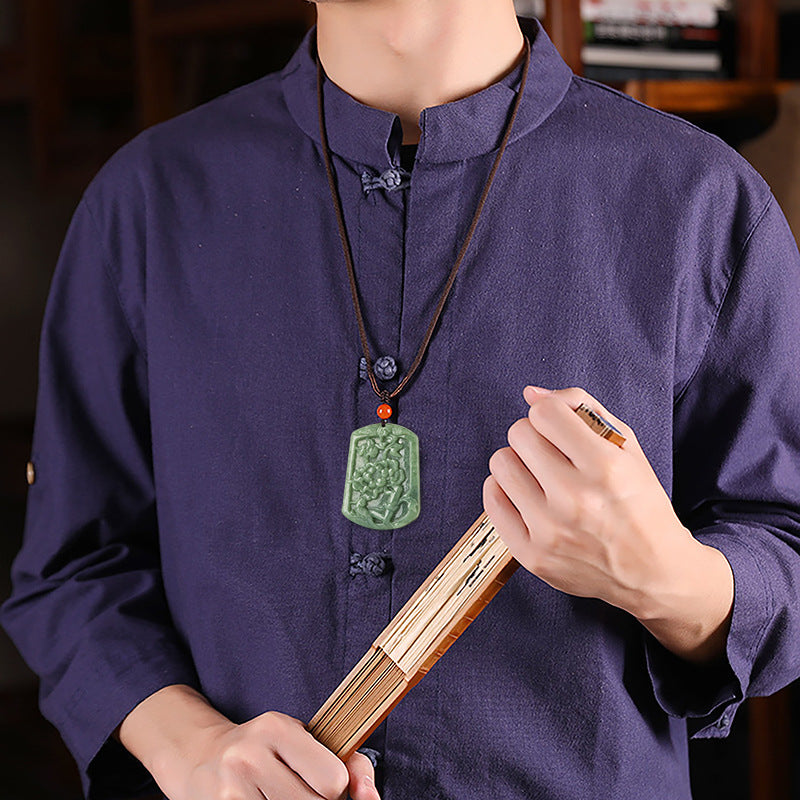
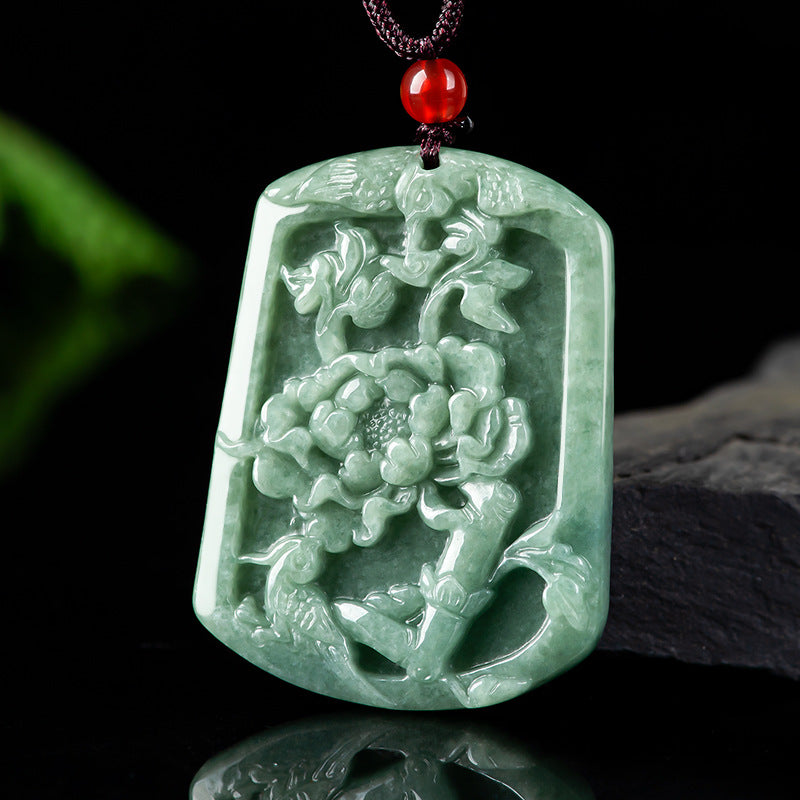
The ultimate power of a symbol lies not in passive observation, but in active engagement. When this ancient motif is translated into a wearable piece of jewelry, it undergoes a profound transformation. It moves from being a distant artifact on a museum vase to a personal companion on one's journey.
The weight of the stone against the skin becomes a tactile reminder. The act of touching the carved lines—the bird's wing, the flower's petals—becomes a momentary ritual. This ritual asks the wearer a quiet question: "What is the good news in my life today? Where is the blossoming happening?"
In this way, the symbol stops being a static picture of an ideal and starts being a dynamic tool for perception. It trains the wearer to become their own magpie—to spot the signs of good fortune—and to nurture their inner peony—to allow their own unique beauty and prosperity to unfold.
The magpie and peony pendant, therefore, is more than an homage to tradition. It is an invitation to participate in that tradition's deepest purpose: to craft a life where joy is recognized, love is honored, and every individual is encouraged to bloom in their own time and their own magnificent way.
