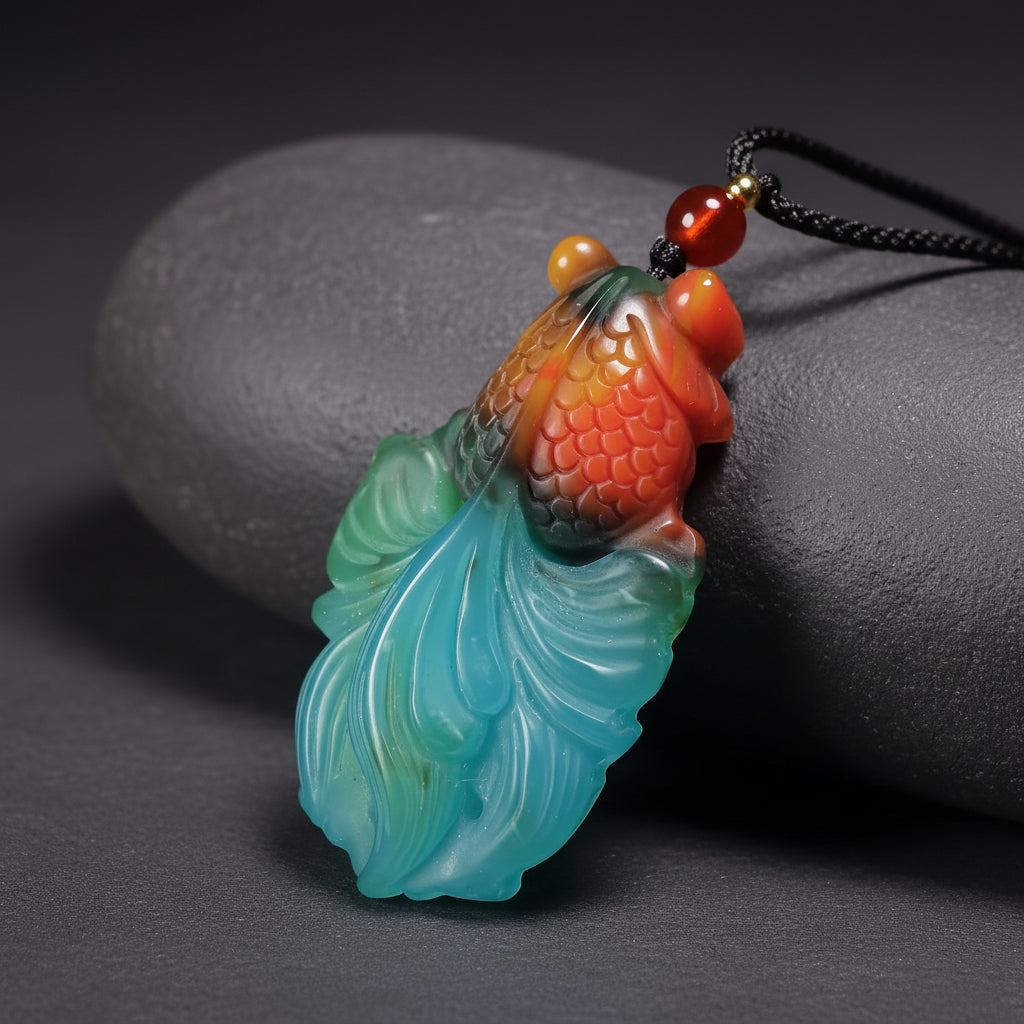


Throughout human history, aquatic symbolism has flowed through our cultural consciousness, with fish occupying a particularly potent place in our collective imagination. From ancient fertility goddesses to modern Feng Shui practices, fish have symbolized abundance, transformation, and the deep currents of the unconscious. In contemporary jewelry design, the goldfish pendant represents a convergence of these ancient meanings with modern aesthetic sensibilities. This article explores how fish symbolism in jewelry—particularly pieces like the Natural Stone Goldfish Pendant—serves as a bridge between cultural heritage and personal transformation, offering wearers not just adornment but a tangible connection to prosperity consciousness and fluid adaptation.
Overview of Unique Design & Symbolism
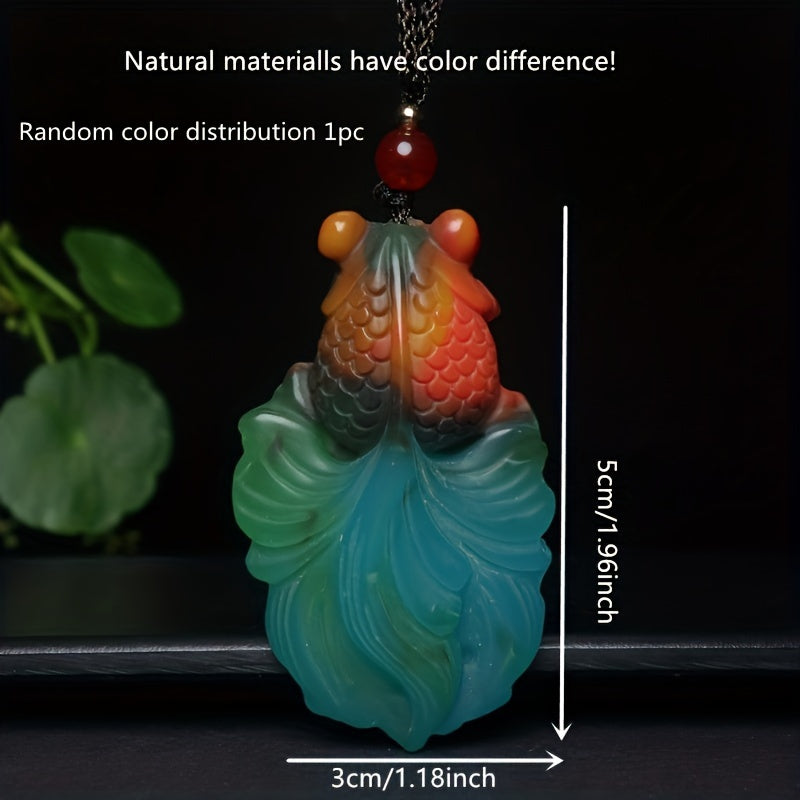
The goldfish, with its vibrant colors and graceful movement, carries symbolic weight far beyond its aquarium existence. In jewelry design, capturing this symbolism requires attention to both form and material significance. The Natural Stone Goldfish Pendant achieves this through several intentional design elements: the mosaic of colorful stones represents the diverse manifestations of abundance; the fish's upward orientation symbolizes aspiration and progress; the flowing lines capture the essence of adaptability and grace under pressure.
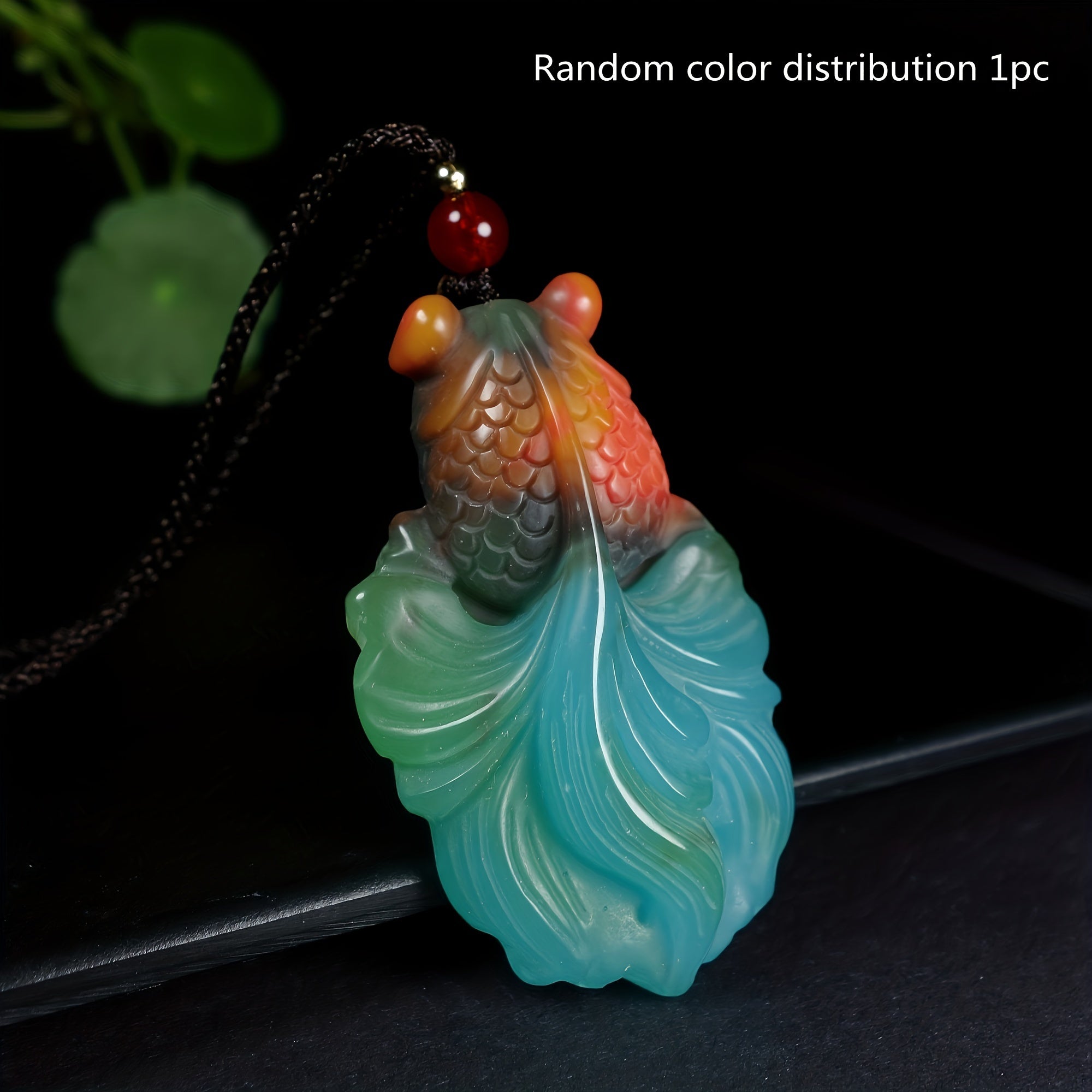
Unlike literal representations, symbolic jewelry must balance recognizability with artistic interpretation. This pendant's design allows the goldfish form to emerge from the arrangement of stones, creating a visual metaphor for how abundance emerges from diverse sources coming together harmoniously. The "random" color distribution is actually carefully curated to create energetic balance—warm colors (reds, oranges) for activation and motivation, cool colors (blues, greens) for calm and communication, and earth tones for grounding and stability.
Material and Craftsmanship Details
The selection of materials for symbolic jewelry carries as much meaning as the form itself. For the goldfish pendant, various natural stones are chosen not just for their visual appeal but for their energetic properties and cultural associations. Carnelian, with its fiery orange-red hues, has been used since ancient times for courage and motivation—perfect for a symbol of career advancement. Turquoise, revered by Native American, Tibetan, and Persian cultures, offers protection and clear communication—essential for navigating professional relationships. Jasper provides grounding, while other stones contribute their unique vibrations to the overall energetic signature.
The craftsmanship process involves multiple stages: stone selection and cutting, arrangement according to both aesthetic and energetic principles, secure setting, and final polishing. Artisans must consider how light interacts with each stone's unique properties, how colors transition naturally, and how the overall composition maintains balance while suggesting movement. This requires both technical skill and intuitive artistry—a balance between planned design and responsive adjustment to the materials' natural characteristics.
"Creating a mosaic goldfish pendant is like conducting an orchestra of stones. Each piece has its own voice—its color, its texture, its energy—and my job is to arrange them so they sing together in harmony. The fish should appear to be swimming even though it's made of solid stone. That's the magic of this craft." — Master Jeweler Elena Rodriguez, specializing in symbolic stonework for 15 years
Material, Energy, and Symbolism: A Trifecta of Meaning
The power of symbolic jewelry lies in the convergence of material properties, intentional form, and cultural resonance. When a wearer dons a goldfish pendant, they're not just wearing a fish-shaped ornament; they're engaging with multiple layers of meaning:
The material layer involves the specific energetic properties of each stone, which interact with the wearer's energy field according to principles of crystal healing and vibrational medicine. The formal layer involves the symbolic meaning of the goldfish shape across cultures—prosperity in Chinese tradition, transformation in Celtic mythology, fertility in ancient Mediterranean cultures. The intentional layer involves the artisan's focus during creation and the wearer's personal associations with the symbol.
This multidimensional approach transforms the pendant from accessory to talisman—an object that not only represents certain qualities but actively engages with them through material properties, symbolic resonance, and personal intention. This is why such pieces often become "lucky charms" or "power pieces" for their wearers; they function as physical anchors for psychological and spiritual processes.
Cultural & Symbolic Meaning Across Traditions
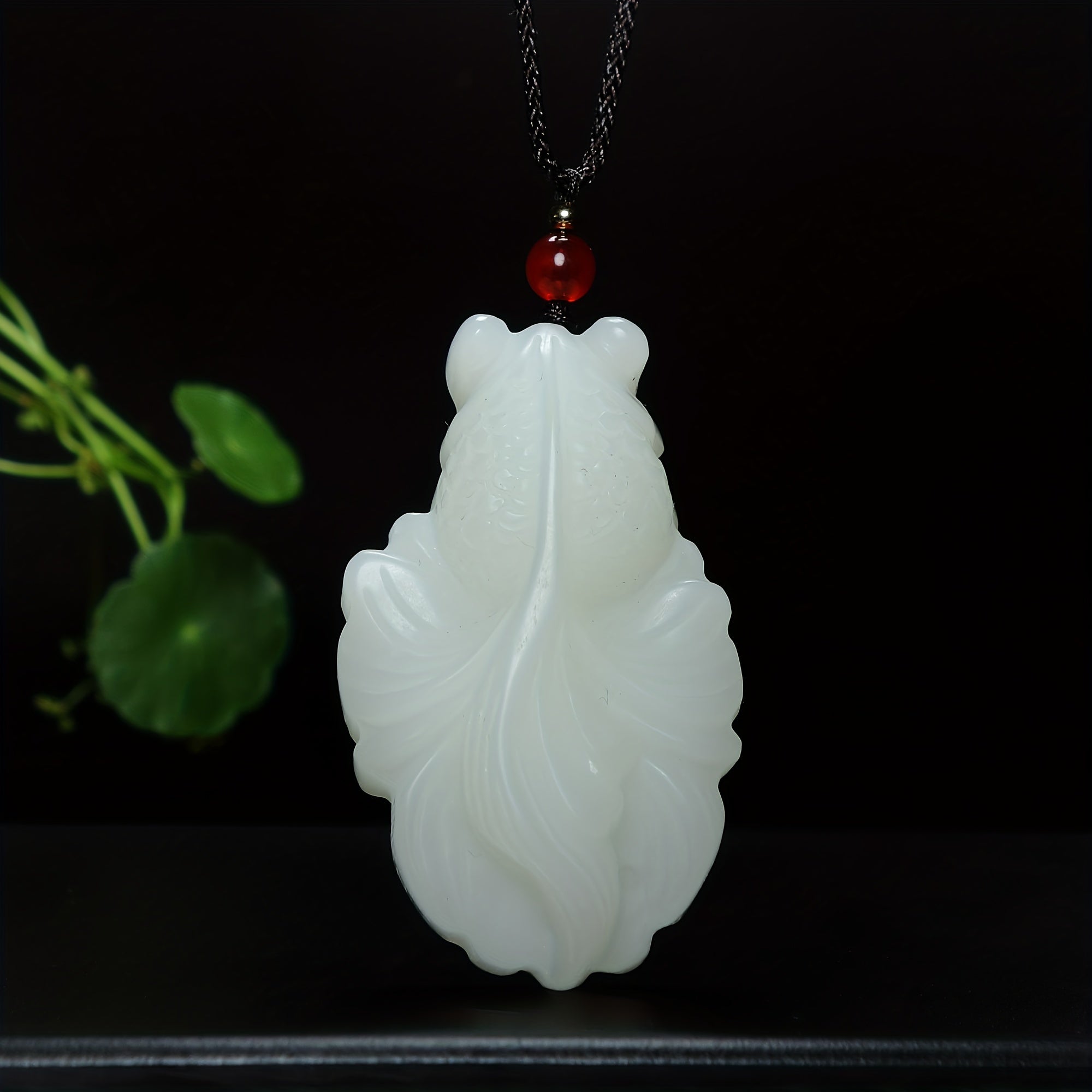
The goldfish's symbolic journey reveals fascinating cultural adaptations of aquatic symbolism. In Chinese culture, goldfish (金鱼 jīnyú) are particularly auspicious because their name contains the character for gold (金 jīn) and sounds like the words for "abundance" and "surplus." During the Tang Dynasty, golden carp were kept by the wealthy as status symbols, and their selective breeding created the goldfish varieties we know today—literally cultivating abundance through careful attention.
In Japanese culture, goldfish (金魚 kingyo) are associated with summer festivals and represent perseverance, as they thrive in environments that would challenge other fish. In Buddhist tradition, fish symbolize happiness and freedom, as they swim freely without drowning in the ocean of suffering. In early Christian symbolism, the fish (ichthys) represented Christ and spiritual abundance, while in Celtic mythology, salmon represented wisdom and transformation.
This cross-cultural reverence makes fish jewelry particularly potent for contemporary wearers who may draw from multiple traditions or seek universal symbols of prosperity, adaptation, and flow. The goldfish pendant becomes a meeting point for these diverse meanings, offering wearers a connection to shared human appreciation for aquatic life as metaphor for desirable human qualities.
Historical Background of Fish Symbolism in Adornment
The use of fish imagery in personal adornment dates back to prehistoric times. Some of the earliest known jewelry featuring fish motifs comes from the Paleolithic era, where fish bones and teeth were worn as necklaces, likely for both practical and symbolic purposes. In ancient Mesopotamia, fish-shaped pendants were associated with the water goddess and fertility. Egyptian tomb paintings show nobility wearing fish amulets for protection in the afterlife.
During the Renaissance, fish motifs in jewelry often carried Christian symbolism but also reflected growing scientific interest in natural history. Victorian era jewelry saw a revival of symbolic motifs, with fish representing secret messages in the "language of flowers and jewels" popular at the time. In Art Nouveau, fish and aquatic themes flourished as artists sought to break from rigid geometric forms in favor of natural, flowing lines.
The contemporary fascination with fish jewelry, particularly goldfish pendants, represents both continuity with these historical traditions and adaptation to modern spiritual and aesthetic needs. In a world where many feel disconnected from natural rhythms, aquatic symbols offer a connection to fluidity, depth, and the unconscious—qualities often undervalued in logical, productivity-focused cultures.
Why People Choose Symbolic Jewelry Today
In a world dominated by mass-produced products, symbolic natural stone jewelry stands out because it is:
- Meaningful — saturated with cultural symbolism that connects wearers to ancient wisdom and personal values
- Artisanal — crafted by human hands, carrying the energy and intention of the maker in an age of machine uniformity
- Natural — made from Earth's materials, offering connection to the natural world's beauty and energy
- Energetic — functioning as a tool for personal transformation, intention setting, and spiritual practice
- Timeless — drawing from symbols that have resonated for millennia, ensuring relevance beyond fleeting trends
- Unique — each natural stone variation ensures personal distinction in a world of sameness
Final Thoughts: A Jewelry Piece That Swims with Meaning
A hand-crafted natural stone pendant like the goldfish shown in the image is far more than a decorative accessory. It is:
- A symbol of flowing abundance in career and personal life
- A grounding tool connecting wearers to natural rhythms and cycles
- A piece of cultural heritage spanning civilizations and centuries
- A handmade piece of art carrying artisan skill and intention
- A spiritual companion for navigating life's currents with grace
- A statement of connection to something deeper than surface appearances
As we navigate increasingly complex economic, social, and environmental currents, symbols like the goldfish offer more than aesthetic pleasure. They provide anchors to cultural memory, tools for personal adaptation, and reminders that prosperity is not about stagnant accumulation but about flowing with opportunities, adapting to changes, and moving gracefully through life's waters. Whether approached as cultural symbol, spiritual tool, or simply beautiful craftsmanship, such pieces invite us to carry fragments of our shared human story, transforming how we move through the modern world while staying connected to what flows beneath the surface.