




The Gourd in Eastern Symbolism: From Ancient Medicine Bottle to Modern Spiritual Icon
In the bustling markets of modern Shanghai, amidst sleek smartphones and contemporary fashion, a curious symbol persists: the humble gourd. Carved from wood, cast in metal, or rendered in minimalist jewelry, the gourd—or "Hulu" (葫芦) in Chinese—maintains a powerful presence in Eastern culture. This seemingly simple vessel represents one of the most fascinating journeys in symbolic history: from practical agricultural product to sacred spiritual container, from doctor's tool to Feng Shui essential, and finally to contemporary wearable talisman. This article traces the gourd's remarkable evolution and explores why this ancient symbol continues to resonate in our modern world.

Agricultural Origins and Practical Utility
Before it became a spiritual icon, the bottle gourd (Lagenaria siceraria) was one of humanity's earliest cultivated plants, with archaeological evidence dating back over 10,000 years. Its practical virtues were immediately apparent: when dried, the hard shell became watertight, lightweight, and durable—perfect for storing liquids, grains, and medicines. Across ancient China, gourds served as canteens, storage containers, musical instruments, and fishing floats.
The Gourd in Early Chinese Medicine
Perhaps the gourd's most significant practical application was in traditional Chinese medicine (TCM). Physicians would travel with multiple gourds containing different herbal preparations. The gourd's natural properties—it doesn't impart flavor, preserves contents well, and is non-reactive—made it ideal for medicine storage. This practical association between gourds and healing formed the foundation for its later symbolic meaning. The famous physician Bian Que (c. 500 BCE) was said to have received his medical knowledge from a supernatural being who emerged from a gourd.
This practical utility shaped early symbolic associations. A container that preserves and protects valuable contents naturally becomes a metaphor for preservation and protection itself. The transition from practical tool to symbolic object began as people started decorating their utilitarian gourds with carvings and paintings, transforming everyday objects into carriers of meaning.
Taoist Immortality and the Gourd's Spiritual Transformation
The gourd's journey from practical object to spiritual symbol accelerated within Taoist philosophy. Taoism, with its emphasis on nature, transformation, and the pursuit of immortality, found rich symbolism in the gourd. Several key factors contributed to this transformation:
The Gourd as Microcosm
Taoist cosmology saw the gourd as representing the universe itself—the round bottom symbolizing heaven (yuan), the flattened top symbolizing earth (fang). The empty interior represented the undifferentiated Tao from which all things emerge.
Container of Elixirs
Taoist alchemists seeking elixirs of immortality used gourds to store their preparations. The gourd thus became associated with the ultimate Taoist goal: transcending mortal limitations.
Attribute of Immortals
Many of the Eight Immortals are depicted with gourds. Most famously, Li Tieguai, the crippled immortal, carries a gourd containing medicine to heal humanity, linking the gourd to compassionate service.
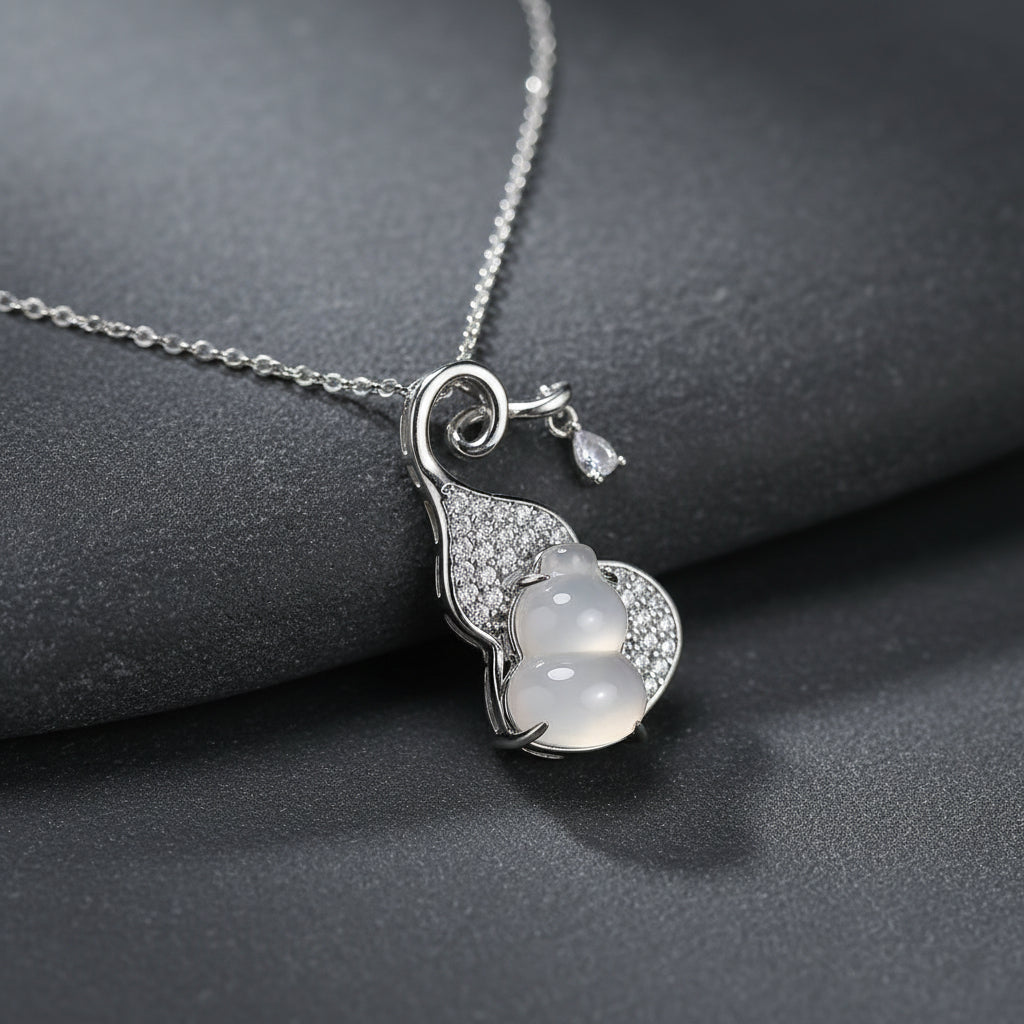
The gourd also exemplified key Taoist principles. Its hollow interior represented emptiness (xu)—not as deficiency but as potential, echoing the Taoist concept that usefulness comes from what is not there (as in the empty space of a room that makes it livable). Its transformation from a living plant to a durable container mirrored the Taoist ideal of spiritual transformation.
The Gourd in Feng Shui: Protection and Harmony
As Taoist philosophy influenced Chinese domestic life, the gourd found a central place in Feng Shui practice. In the art of spatial arrangement for harmony and prosperity, the gourd became one of the most versatile and powerful cures. Its applications in Feng Shui are remarkably specific:
- Health Protection: Placed in the east sector of a home (associated with health and family), a gourd is believed to protect against illness and promote recovery.
- Neutralizing Negative Energy: Hung in areas with "poison arrow" sha qi (negative energy from sharp corners or angles), the gourd absorbs and contains this harmful energy.
- Relationship Harmony: In the southwest (relationship sector), a pair of gourds promotes marital harmony and mutual understanding.
- Academic Success: In the northeast (knowledge sector), a gourd helps students concentrate and retain information.
- Wealth Attraction: In the southeast (wealth sector), a gourd "contains" and preserves financial abundance.
The Feng Shui gourd is often tied with a red ribbon (red representing protection and vitality) and may contain herbs, rice, or other symbolic materials. The practice of using actual dried gourds evolved into using gourd-shaped objects made from various materials—wood, metal, jade, or glass—making the symbol accessible regardless of agricultural seasons.

Modern Resurgence: The Gourd in Contemporary Culture
In recent decades, the gourd symbol has experienced a remarkable resurgence, particularly in wellness, mindfulness, and personal development circles. This revival can be attributed to several factors:
- The Global Mindfulness Movement: As Eastern practices like meditation and qigong spread worldwide, their accompanying symbols gained recognition and meaning for new audiences.
- Holistic Health Trends: The gourd's association with healing resonates with contemporary interests in integrative and preventive health approaches.
- Minimalist Aesthetics: The gourd's simple, elegant shape aligns perfectly with minimalist design preferences, making it adaptable to modern jewelry and home decor.
- Personal Empowerment Culture: In an age of anxiety and overwhelm, protective symbols that promise to "contain" or manage negative energy have particular appeal.
Contemporary designers have reimagined the gourd in sleek metals, clean ceramics, and even digital forms. The symbol appears in jewelry, tattoos, home accessories, and corporate logos. Each iteration maintains the core symbolic meanings while adapting to contemporary tastes and materials.
The Psychology of Container Symbols
Why does the gourd—as a container symbol—hold such enduring psychological power? Container symbols appear universally in human culture, from the Holy Grail to Pandora's Box. Psychologically, containers represent:
Boundary and Safety
Containers create boundaries between inside and outside, offering psychological safety by suggesting that what is valuable can be protected and preserved.
Potential and Mystery
A closed container hints at hidden contents, stimulating imagination and representing potentiality—the unknown that might be revealed.
Order and Control
In a chaotic world, containers represent our ability to organize, categorize, and control our environment and experiences.
The gourd specifically adds layers of natural, organic association (unlike manufactured containers) and a distinctive shape that feels both comforting and mysterious. Its curves are maternal and protective, while its narrowing neck suggests careful control over what enters or exits.

Market Perspective and Cultural Exchange
The modern market for gourd symbolism exists at the intersection of multiple trends: cultural appreciation (not appropriation), wellness branding, and meaningful consumerism. Jewelry featuring gourd symbols appeals to:
- Cultural Connectors: Individuals of Asian heritage seeking tangible connections to ancestral wisdom.
- Wellness Seekers: Those engaged in meditation, yoga, or holistic health practices who appreciate symbols with deep roots in contemplative traditions.
- Mindful Consumers: Buyers looking for products with stories and meanings beyond mere aesthetics.
- Gift Givers: People seeking meaningful gifts for health recoveries, new beginnings, or housewarmings.
Designers face the challenge of honoring traditional meanings while making symbols accessible to global audiences unfamiliar with their origins. The most successful contemporary interpretations—like the minimalist gourd pendant—maintain the essence of the symbol while stripping away cultural specifics that might create barriers to understanding or appreciation.
Environmental and Ethical Dimensions
The gourd's journey also reflects changing attitudes toward materials and sustainability. Traditional dried gourds are biodegradable and renewable. Modern interpretations in metal or ceramic raise questions about material sourcing and production ethics. Forward-thinking designers are addressing this by:
- Using recycled metals in gourd jewelry and objects
- Partnering with artisans who use sustainable harvesting practices for natural gourds
- Creating pieces designed for longevity rather than fast-fashion disposability
- Educating consumers about the symbol's connection to natural cycles and sustainability
This ethical dimension adds another layer to the gourd's symbolism: as a natural object transformed by human ingenuity, it represents a balanced relationship between humanity and nature—particularly relevant in our age of ecological concern.
Future Outlook: The Gourd in Digital and Virtual Spaces
As our lives become increasingly digital, how will ancient symbols like the gourd adapt? Early indications suggest several fascinating directions:
- Digital Talismans: In gaming and virtual reality, players acquire or purchase digital gourd items that offer "protection" or "health boosts" within the game universe.
- App Icons: Meditation and wellness apps using gourd symbols to represent "containers" for mindfulness practices or health tracking.
- NFT Interpretations: Digital artists creating unique gourd symbols as non-fungible tokens, exploring the concept of "digital containers" for value or identity.
- Augmented Reality: AR filters that place virtual gourd symbols in your environment for "Feng Shui" adjustments to your living space.
These digital adaptations raise interesting questions about whether a symbol maintains its potency when divorced from physical form. Yet the gourd's fundamental meaning as a container may be even more relevant in the digital age—as we seek ways to "contain" information overload, digital stress, and the fragmentation of attention.

Conclusion: The Enduring Vessel
The gourd's journey from agricultural implement to spiritual icon to contemporary talisman represents one of the most complete symbolic evolutions in human culture. It demonstrates how practical human needs give rise to forms that then accumulate layers of meaning across centuries. The gourd succeeds as a symbol because it works on multiple levels:
Practically, it embodies usefulness and adaptation. Spiritually, it represents containment, transformation, and protection. Psychologically, it offers comfort through the ancient human understanding of boundaries and safe spaces. Aesthetically, its form is pleasing in its simplicity and organic elegance.
In our fragmented, anxious modern world, the gourd's promise is particularly compelling: that we can create containers for what matters—health, relationships, peace of mind—and protect them from life's chaos. The modern minimalist gourd pendant worn close to the heart is a perfect manifestation of this ancient wisdom adapted for contemporary life. It asks us to consider: What do we wish to contain and preserve in our lives? What negative energies do we need protection from? And how can we, like the gourd, transform naturally into vessels capable of holding both practical necessities and spiritual aspirations?
The gourd endures because its fundamental symbolism—the container, the protector, the transformer—addresses eternal human concerns. As long as we seek to preserve health, attract prosperity, protect what we love, and navigate life's transformations, this humble vessel will continue to hold meaning, whether carved from wood, cast in metal, or rendered in pixels on a screen.

