




In the quiet spaces between our digital lives and material pursuits, a profound yearning for connection to something ancient, powerful, and meaningful has taken root. This longing manifests in the quiet revolution occurring in personal adornment: the dramatic resurgence of dragon symbolism in contemporary jewelry. No longer confined to fantasy literature or historical artifacts, the dragon has emerged as a potent archetype for modern individuals seeking to navigate complexity with strength, protect their energy in a chaotic world, and express a multifaceted identity. Pieces like the Natural Stone Dragon Pendant Necklace are at the forefront of this movement, transforming an ancient global symbol into a personal tool for empowerment, resilience, and spiritual navigation.
Overview of Unique Design & Symbolism: The Dragon as a Multidimensional Mirror
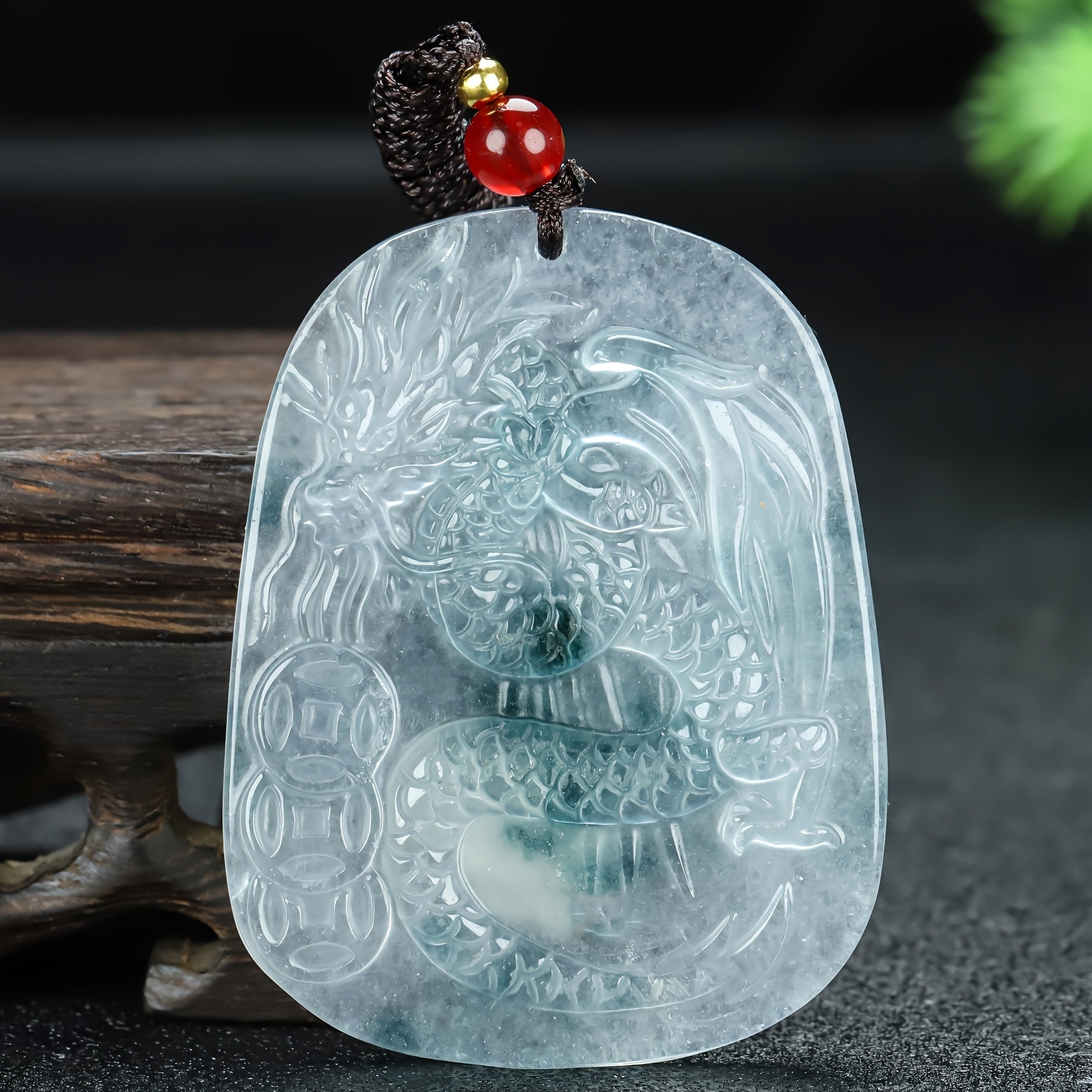
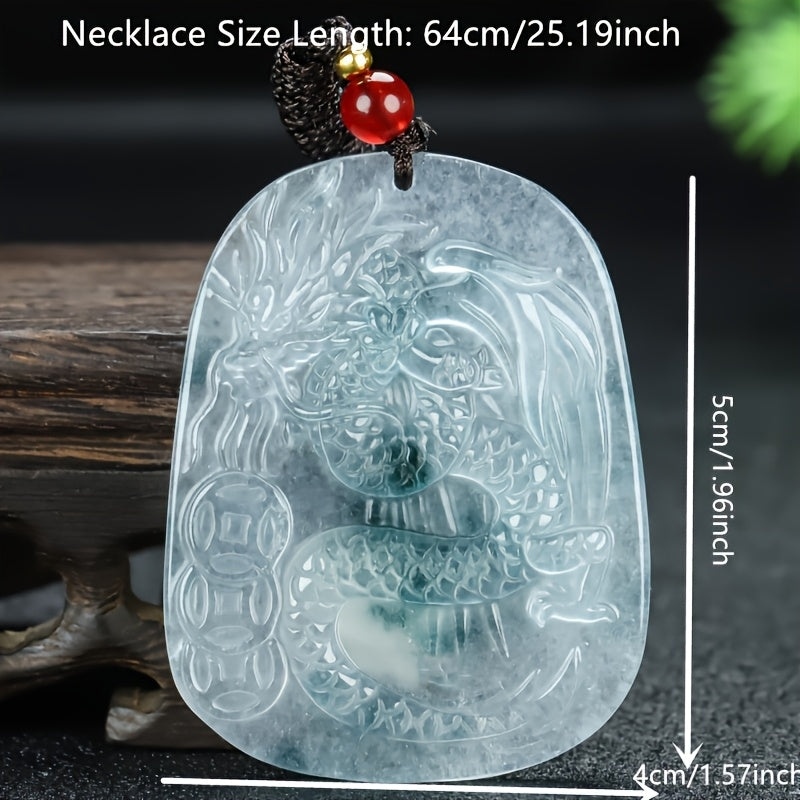
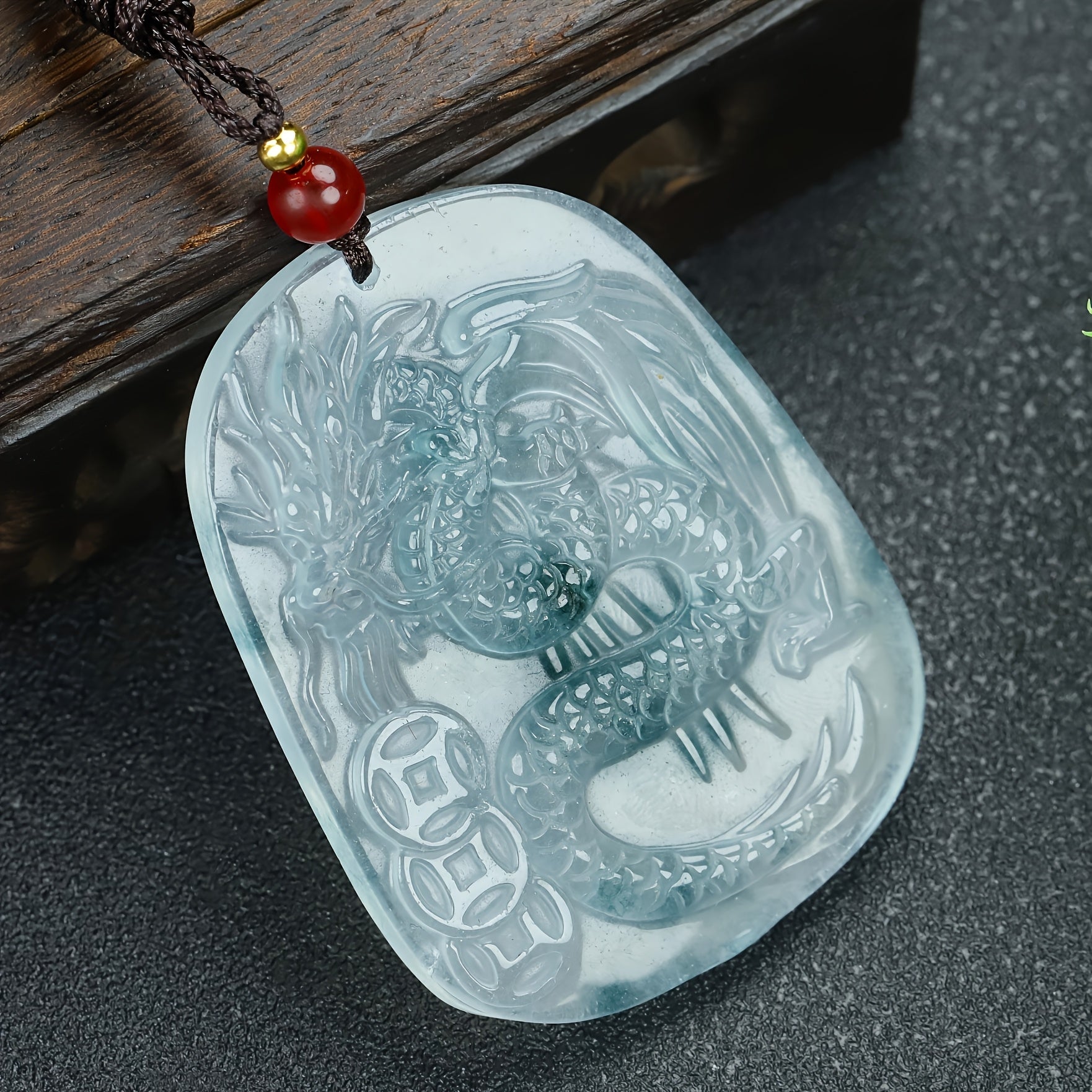
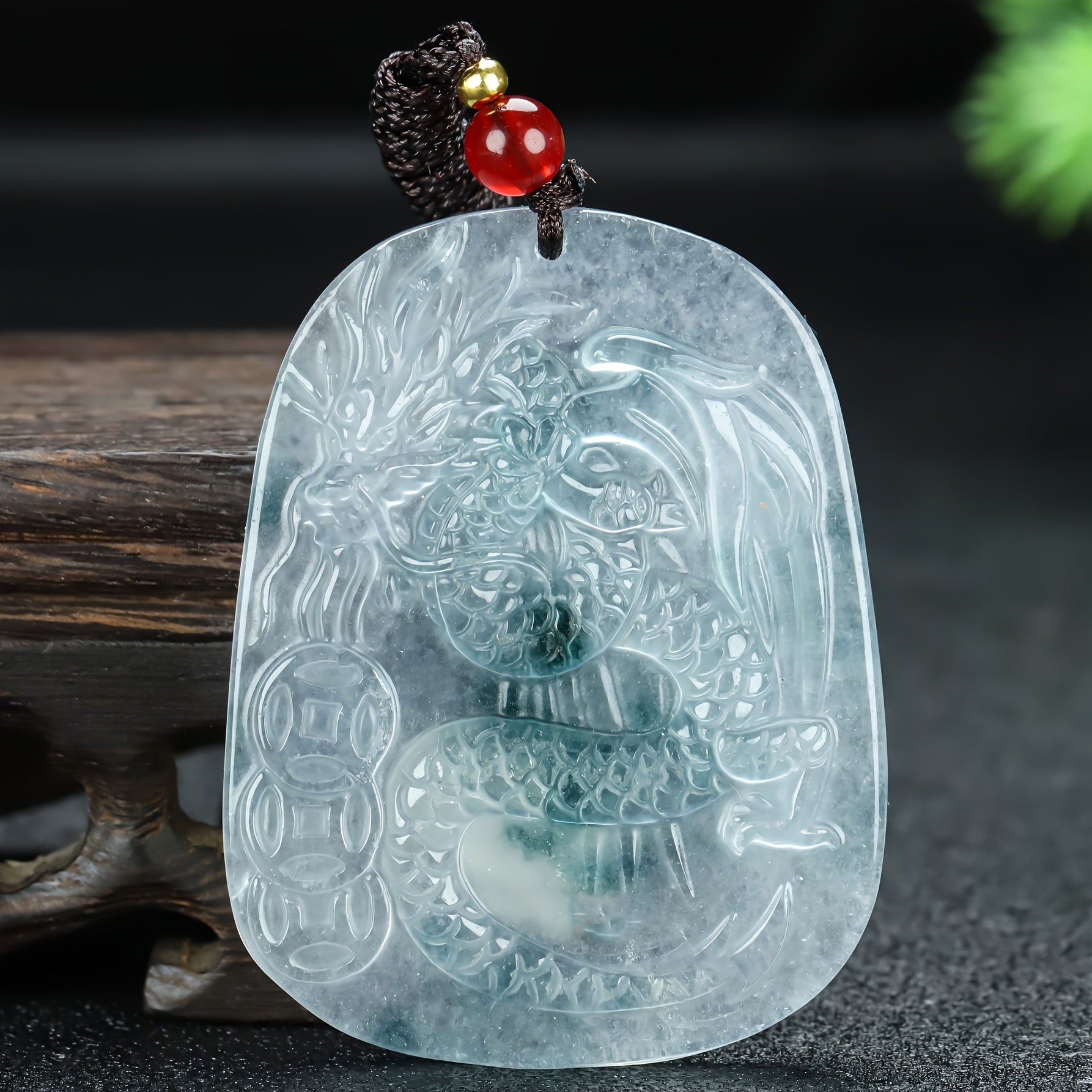
The modern dragon jewelry renaissance is characterized by a shift from mere representation to embodiment. Designers are moving beyond flat silhouettes to create fully realized, three-dimensional sculptures meant to be worn. The dragon is no longer a distant emblem on a shield; it is a companion on the skin. This shift is deeply psychological. By giving the dragon form, weight, and texture—as seen in the intricate carving of scales, the tension in the wings, the articulation of claws—the jewelry becomes a tactile mirror for the wearer's own inner complexity. Each facet of the dragon's form corresponds to an aspect of the human experience: the scales represent resilience developed through repeated challenges, the wings symbolize the aspiration to rise above limitations, the watchful eyes denote wisdom and perception. The jewelry becomes a map of the wearer's potential, worn as a reminder and a catalyst.
Material and Craftsmanship: The Alchemy of Earth and Myth
The choice of material in dragon jewelry is never accidental. There is a deliberate alchemy at play. Natural stone, like the black agate or obsidian used in our featured pendant, provides the foundational energy. These stones are geological records of time, pressure, and transformation—echoing the dragon's own mythical birth from the primordial elements. The carving process is a dialogue between artisan and stone. The artisan must "find" the dragon within the raw material, respecting its veins and inclusions, much like a sculptor releasing a form from marble. This process imbues the piece with a dual energy: the ancient, slow frequency of the earth (the stone) and the focused, intentional energy of human creativity (the carving). The addition of colored enamels—fiery reds and life-giving greens—acts as a symbolic activation, like lighting the dragon's breath or highlighting its connection to the living world.
Cultural & Symbolic Meaning: A Tapestry of Global Interpretations
To wear a dragon is to wear a tapestry of global consciousness. In Eastern traditions, particularly Chinese, the dragon (Lóng) is a benevolent, celestial being associated with wisdom, prosperity, rainfall, and imperial authority. It is a symbol of Yang energy—active, masculine, and auspicious. In contrast, Western medieval mythology often framed the dragon as a hoarding, destructive beast to be slain, representing chaos and greed to be conquered by heroic virtue. Modern jewelry brilliantly synthesizes these dualities. Today's dragon is not purely "good" or "evil"; it is an integration. It represents the power we must learn to wield responsibly, the chaos we must navigate creatively, and the treasures (internal and external) we are meant to guard. This synthesis makes the symbol profoundly relevant for contemporary life, where individuals must often be both warrior and peacemaker, guardian and innovator.
Historical Background: From Imperial Regalia to Personal Rebellion
Historically, dragon motifs were strictly regulated. In Imperial China, five-clawed dragons were reserved for the emperor alone; lesser nobility could wear four or three claws. In medieval Europe, dragons adorned the shields and banners of royalty and elite knights. The dragon was a symbol of institutional, conferred power. The modern adoption of dragon jewelry represents a radical democratization of this power. It is a personal reclamation. When an individual today chooses a dragon pendant, they are not claiming royal lineage but asserting self-sovereignty. This aligns with broader cultural shifts towards individualism and the rejection of rigid hierarchies. The dragon has evolved from a symbol of power-over (authority) to a symbol of power-within (personal agency).
"The contemporary fascination with dragon symbolism is a cultural detox from sanitized, passive imagery. People are hungry for symbols that speak to the full spectrum of human experience—our capacity for ferocity, our need for guardianship, our connection to primal wisdom." — Dr. Eleanor Vance, Symbolic Anthropologist
Artistic & Aesthetic Interpretation: Beyond Fantasy into Archetypal Art
Aesthetically, dragon jewelry has moved from the realm of costume fantasy into serious wearable art. The design language has matured. There is a focus on anatomical plausibility, dynamic composition, and material integrity. The dragon might be stylized, but it is rendered with respect for its mythic weight. Designers draw from art history, biology (reptilian and avian forms), and sacred geometry. The result is jewelry that feels both ancient and avant-garde. It complements everything from a crisp business suit to bohemian casual wear, signaling that the wearer's power is not situational but integral. The aesthetic communicates that strength and sensitivity, wildness and refinement, can coexist.
Emotional & Social Significance: The Dragon as Social Signal and Inner Anchor
Emotionally, dragon jewelry serves a dual function: external signaling and internal anchoring. Socially, it acts as a non-verbal identifier. It signals to others that the wearer values strength, mystery, depth, and perhaps a touch of the unconventional. It attracts like-minded individuals and can deter those who are intimidated by authentic power. Internally, it functions as a psychological anchor. In moments of doubt or stress, touching the carved stone can serve as a grounding ritual—a physical connection to the symbolic reservoir of courage and resilience the dragon represents. It externalizes an inner dialogue, making abstract qualities like "bravery" or "protection" tangible and accessible.
Market Perspective: The Rise of "Meaningful Luxury"
The market for symbolic, artisan-crafted jewelry like dragon pendants is exploding, forming a core segment of the "meaningful luxury" sector. Consumers, particularly Millennials and Gen Z, are rejecting logo-driven, mass-produced luxury in favor of pieces with narrative and ethical provenance. They are not just buying a product; they are buying into a story and a set of values—artisan skill, natural materials, cultural depth, and personal empowerment. This represents a fundamental shift from conspicuous consumption to conscious curation. The dragon pendant is a prime example: its value lies not in the brand name stamped on it, but in the skill of its carving, the quality of its stone, and the depth of its symbolism.
Expert Commentary: Psychologists and Cultural Theorists Weigh In
Dr. Aris Thorne, a psychologist specializing in symbolic therapy, observes: "We're seeing clients use objects like dragon pendants as 'transitional objects' for adults. Just as a child's blanket provides comfort and a sense of self, these symbolic pieces help adults navigate identity shifts, integrate shadow aspects (like assertiveness or anger), and maintain ego strength in challenging environments. The dragon is a perfect symbol for this—it represents the integration of powerful, sometimes feared, aspects of the self into a cohesive whole."
Cultural theorist Professor Lin Mei adds: "The dragon's fluidity of meaning allows it to be a vessel for personal interpretation. For one wearer, it may represent protective maternal energy. For another, it's about entrepreneurial ambition. For a third, it's a connection to ancestral heritage. This polyvalence is its strength in a pluralistic, globalized world."
Technical Craftsmanship Details: The Hand Behind the Myth
Creating a piece like this dragon pendant is an exercise in micro-engineering and artistic vision. It begins with stone selection—finding a slab with the right hardness, grain, and color saturation. The design is then transferred, not with a laser, but often by hand-sketching directly onto the stone. Using a combination of diamond-tipped rotary tools for rough shaping and increasingly fine burs for detail, the artisan removes material millimeter by millimeter. The scales are individually raised or incised—a process that can take days. The wings are thinned to suggest membrane while retaining structural integrity. Finally, the enamel is applied in precise drops and fired to a permanent, glass-like finish. This is not manufacturing; it is slow, deliberate creation where the maker's energy and focus become part of the object's essence.
Environmental Sustainability & Ethical Sourcing
This movement is inherently tied to sustainability. Natural stone is a finite resource, and ethical jewelers source from suppliers who adhere to responsible quarrying practices, fair labor conditions, and minimal environmental disruption. The durability of stone and metal means the piece is designed to last generations, countering the throwaway culture of fast fashion. Furthermore, the value is placed on craftsmanship over resource extraction—the majority of the "cost" is in the skilled labor, not in depleting rare gems. This aligns the dragon—a symbol of nature's raw power—with a philosophy of respect and reciprocity towards the earth.
Fashion Trends: Integrating the Mythic into the Modern Wardrobe
In fashion, dragon jewelry sits at the intersection of several key trends: **Dark Academia** (with its love for the scholarly and mythical), **Genderfluid Fashion** (the dragon is a powerfully non-binary symbol), and **Statement Jewelry as Armor**. It's being layered with delicate chains for contrast, worn over turtlenecks for a medieval-modern look, or paired with minimalist outfits to serve as a single, powerful focal point. Fashion influencers are styling dragon pieces not as costume accessories but as integral components of a personal "power uniform."
Social Impact: Supporting Artisan Communities and Cultural Preservation
The demand for hand-carved symbolic jewelry provides vital economic support for artisan communities, often in developing regions where traditional carving skills are a cultural heritage. By valuing this work, consumers help preserve these techniques from being lost to industrialization. Furthermore, it fosters cross-cultural appreciation. A wearer in New York sporting a dragon pendant may develop a deeper interest in Chinese mythology or Celtic lore, fostering global cultural literacy and connection.
Future Outlook: Digital Identity and the Physical Talisman
Looking forward, the role of physical talismans like dragon pendants may become even more pronounced as our lives become more digitally mediated. In a world of virtual identities and NFTs, a tangible, weighty symbol of personal power offers a crucial grounding counterpoint. We may see further hybridization—digital designs informed by traditional dragon motifs, or physical pendants that interact with augmented reality. The core function, however, will remain: to provide a touchpoint for human strength, creativity, and resilience in an increasingly complex world.
Why People Choose Dragon Symbolism Today
In a world dominated by mass-produced, ephemeral products, dragon jewelry stands out because it is the antithesis of all that. It is:
- Meaningful — saturated with layers of cultural, psychological, and personal symbolism.
- Artisanal — each piece is a unique record of human skill, time, and attention.
- Natural — forged from the earth's own materials, carrying geological time and energy.
- Energetic — functioning as a tool for psychological empowerment and spiritual centering.
- Timeless — connected to stories that predate nations and will outlast trends.
- Unique — no two hand-carvings, like no two dragons in legend, are ever exactly alike.
Final Thoughts: More Than Adornment—A Pact with Potential
A hand-carved natural stone dragon pendant is far more than a decorative accessory. In choosing to wear it, one enters into a silent pact with their own potential. It is:
A Symbol of Protection — guarding not just the body, but the spirit, boundaries, and dreams.
A Grounding Tool — a weight that pulls you back into your body and your power when the world feels unmoored.
A Piece of Cultural Heritage — a wearable thread connecting you to humanity's oldest and most powerful stories.
A Handmade Piece of Art — a miniature sculpture that celebrates human creativity and patience.
A Spiritual Companion — a focus for meditation, intention, and connection to archetypal energies.
A Statement of Personal Strength — a declaration that you embrace your full complexity—your fire, your wisdom, your might, and your mystery.
The dragon has awoken from the pages of legend and taken its place around our necks. It is not a relic of a forgotten past, but a guide for a courageous future. In its coiled form and watchful eye, we are reminded that the greatest treasures and the fiercest guardianship are found not in external kingdoms, but within the self.
