




In the landscape of contemporary jewelry, few styles have demonstrated the staying power and cultural relevance of boho (bohemian) design. Beyond its aesthetic appeal, boho jewelry represents something deeper: a modern alchemical process that transforms base materials into meaningful talismans. Pieces like the Cinnabar Stone Long Necklace with Rose Pendant and Fox Charms exemplify this synthesis, merging ancient earth wisdom, artistic freedom, and spiritual protection into wearable art. This article explores how boho jewelry functions as contemporary alchemy, creating objects that are simultaneously decorative, symbolic, and energetically active.
I. The Alchemy of Composition: Symbolic Synthesis in Design
Boho jewelry operates on principles remarkably similar to traditional alchemy. Where alchemists sought to transform base metals into gold, boho designers transform ordinary materials into symbolic gold—pieces rich with meaning and energetic potential. This transformation occurs through intentional symbolic synthesis, where disparate elements are combined to create new, emergent meanings.
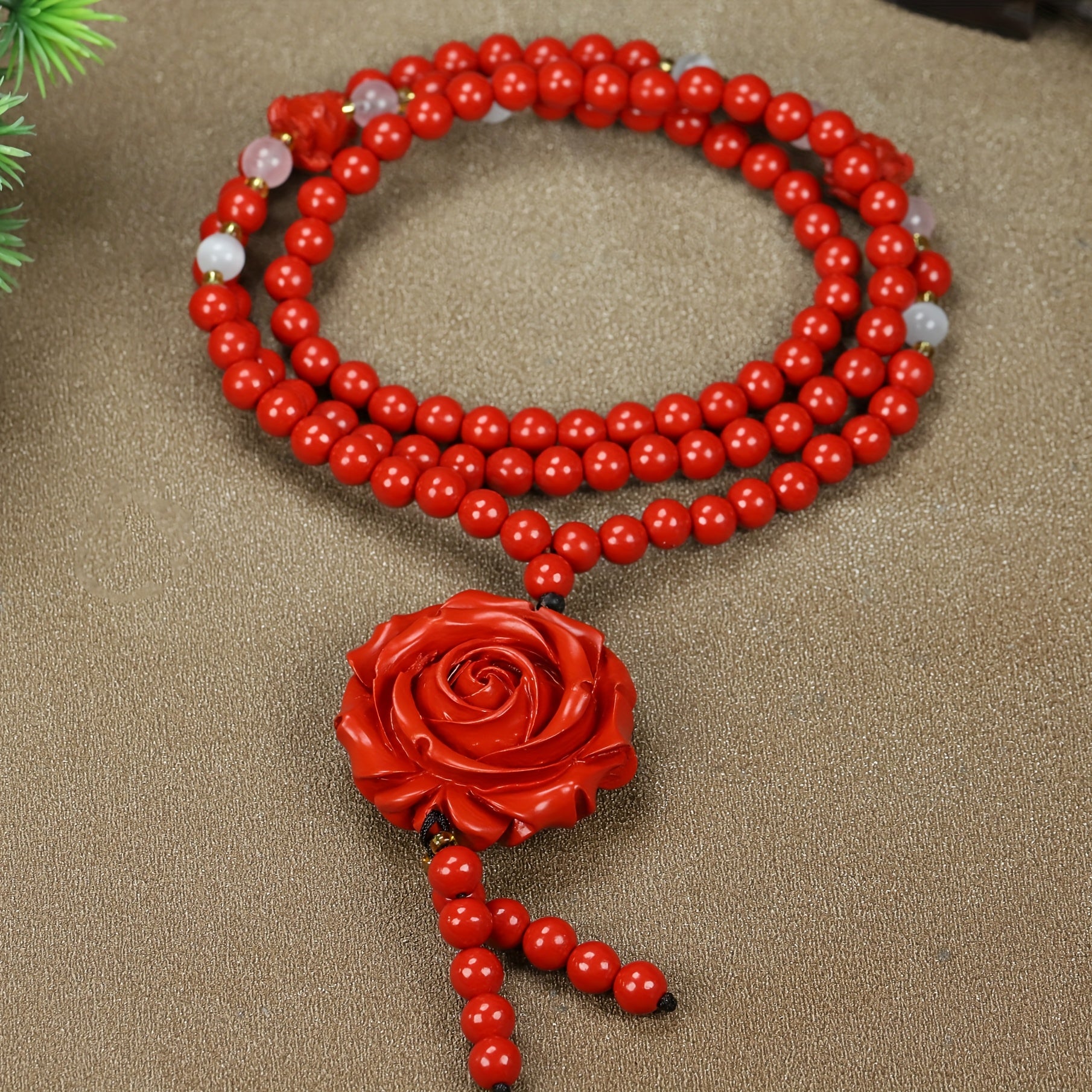
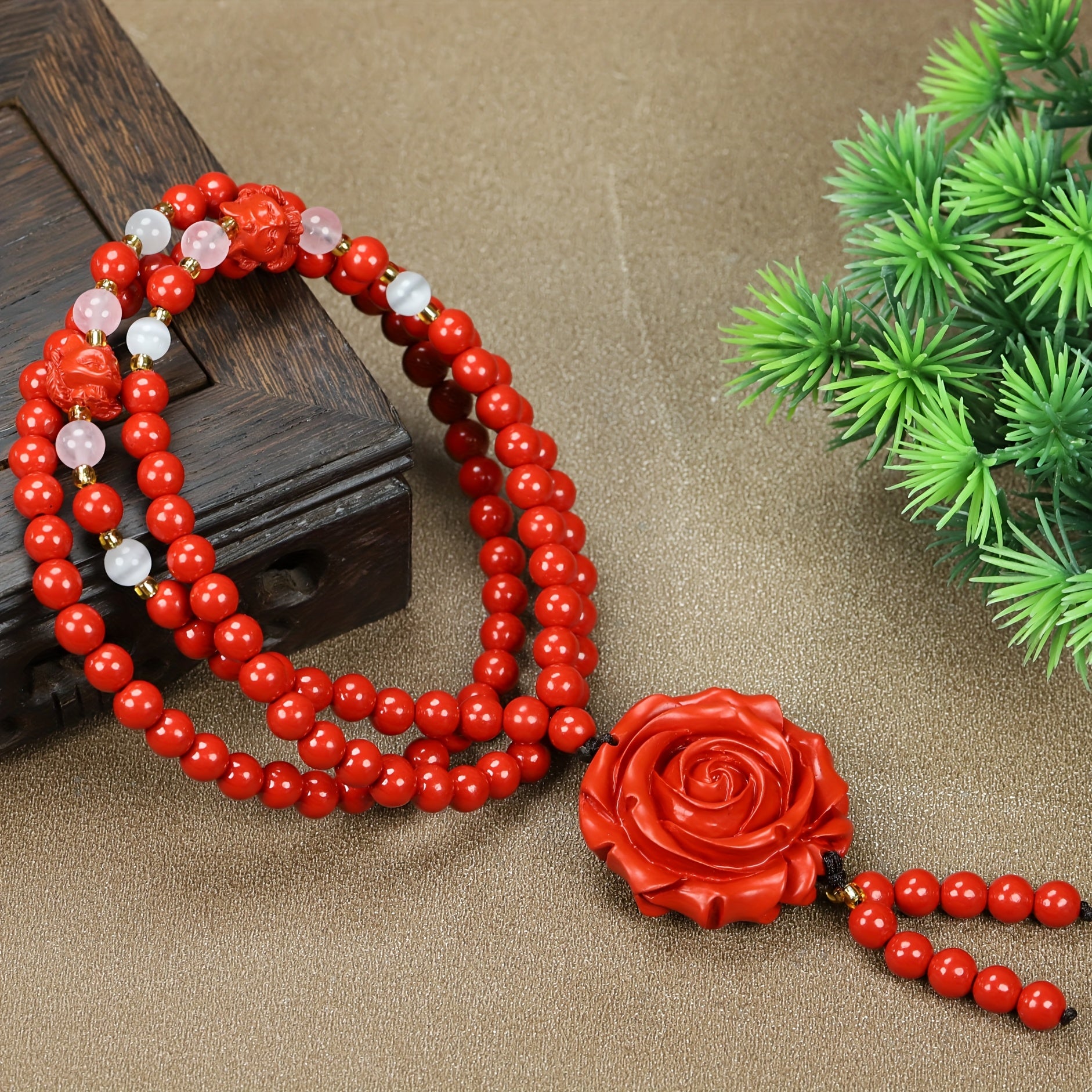
Consider the cinnabar necklace: cinnabar (earth mineral representing protection and vitality) + rose (botanical symbol representing love and beauty) + fox (animal symbol representing cleverness and adaptability). Individually, each element carries specific meanings; combined, they create a narrative about protected love that adapts wisely. This isn't random decoration—it's intentional symbolic chemistry. The design becomes greater than the sum of its parts, creating what anthropologists might call a "symbolic ecosystem" where each element interacts with and enhances the others.
This approach reflects a distinctly postmodern understanding of spirituality: rather than adhering to a single tradition, boho design curates symbols from multiple traditions, creating personalized spiritual toolkits. The wearer isn't just putting on jewelry; they're engaging with a designed ecosystem of meanings that can be activated according to their needs and interpretations.
II. Material & Craftsmanship: The Physical Manifestation of Ideals
Cinnabar: The Alchemist's Stone Reimagined
Cinnabar holds particular significance in this alchemical metaphor. In traditional Chinese alchemy, cinnabar (丹砂, dānshā) was considered the most important substance—the key to creating the elixir of immortality. Alchemists believed that through careful processing, cinnabar could yield mercury, which could then be transformed into gold, representing spiritual perfection.
In boho jewelry, this alchemical heritage is repurposed for contemporary spiritual needs. The cinnabar isn't processed to extract mercury but is instead shaped into beads that channel its protective energy. The "transformation" isn't chemical but symbolic: ordinary stone becomes spiritual armor. This represents what we might call "democratic alchemy"—making the protective properties historically associated with elite alchemical practices available to everyday wearers through accessible jewelry forms.
Technical Craftsmanship: Weaving the Symbolic Tapestry
The craftsmanship of boho jewelry like this necklace involves multiple specialized skills: stone cutting and polishing, metal casting or carving for charms, and intricate beading techniques. What distinguishes boho craftsmanship is its intentional imperfection—the celebration of handmade qualities that mass production eliminates.
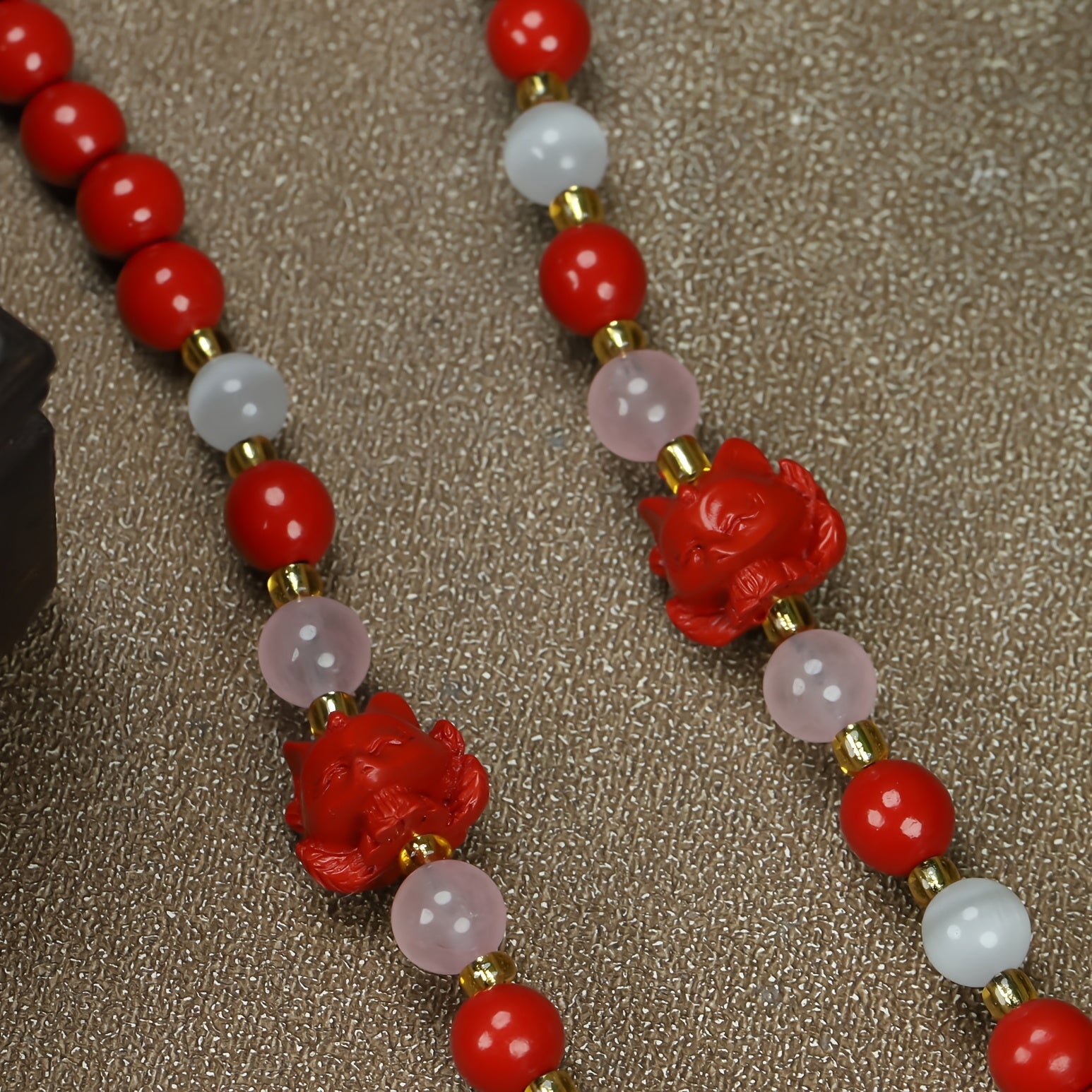
Each bead is individually strung, often with intentional variation in spacing and arrangement to create organic, flowing patterns rather than rigid uniformity. The fox charms are positioned asymmetrically, breaking conventional jewelry symmetry to create dynamic visual interest. This craftsmanship philosophy values the human touch over machine precision, believing that the slight variations and imperfections carry the energy and intention of the maker, much like how traditional talismans were believed to be empowered by their creators' focused intention.
III. Cultural & Symbolic Meaning: A Cross-Traditional Tapestry
Boho jewelry excels at what cultural theorists call "symbolic bricolage"—the creative reassembly of existing cultural symbols into new configurations. The cinnabar necklace draws from at least three distinct symbolic traditions:
- Chinese Alchemical Tradition: Cinnabar as protective substance and key to transformation.
- Western Esoteric Tradition: The rose as mystical symbol of the heart and spiritual unfolding.
- Global Folkloric Tradition: The fox as trickster/guide figure appearing in Native American, European, and Asian folklore.
This cross-traditional approach reflects contemporary spiritual seeking, where individuals often draw from multiple traditions rather than committing to a single path. The jewelry becomes a physical manifestation of this eclectic spiritual identity. Importantly, boho design typically avoids cultural appropriation by treating symbols with respect and understanding their origins, often through research or collaboration with cultural experts.
"Boho jewelry represents what I call 'wearable syncretism'—the physical manifestation of our era's spiritual cross-pollination. It's not shallow eclecticism but rather a thoughtful integration of symbols that speak to universal human experiences: protection, love, wisdom. The fact that these symbols come from different traditions actually strengthens their collective power, creating a kind of spiritual diversity that mirrors biological diversity's strength." — Dr. Anya Petrov, Cultural Anthropologist.
IV. Historical Background: From Bohemian Counterculture to Mainstream Spirituality
The boho aesthetic has roots in the 19th-century Bohemian movement—artists and intellectuals who rejected bourgeois conventions in favor of creative freedom, unconventional lifestyles, and often, spiritual exploration beyond mainstream religion. Early bohemians were drawn to "exotic" spiritual traditions from Asia and the Middle East, seeing them as purer alternatives to European Christianity.
Original Bohemian Movement: European artists and writers adopt unconventional dress and explore Eastern spirituality. Jewelry becomes a marker of countercultural identity.
Hippie Movement: Revives and expands bohemian ideals. Beaded jewelry, natural materials, and spiritual symbols from multiple traditions become mainstream counterculture markers.
Boho-Chic: Fashion industry commercializes boho aesthetics but often strips them of spiritual meaning, focusing instead on visual style.
Conscious Boho: A return to meaningful boho with emphasis on sustainability, artisan craftsmanship, and authentic spiritual symbolism. Jewelry like the cinnabar necklace represents this phase.
Today's boho spiritual jewelry represents what we might call "conscious boho"—a return to the movement's original values of meaningful self-expression and spiritual exploration, but with greater cultural awareness, ethical sourcing, and intentional design. The cinnabar necklace exists within this continuum, honoring boho's roots while adapting to contemporary values and needs.
V. Artistic & Aesthetic Interpretation: The Visual Language of Freedom
From an artistic perspective, boho jewelry like this necklace employs specific aesthetic principles that communicate its philosophical values:
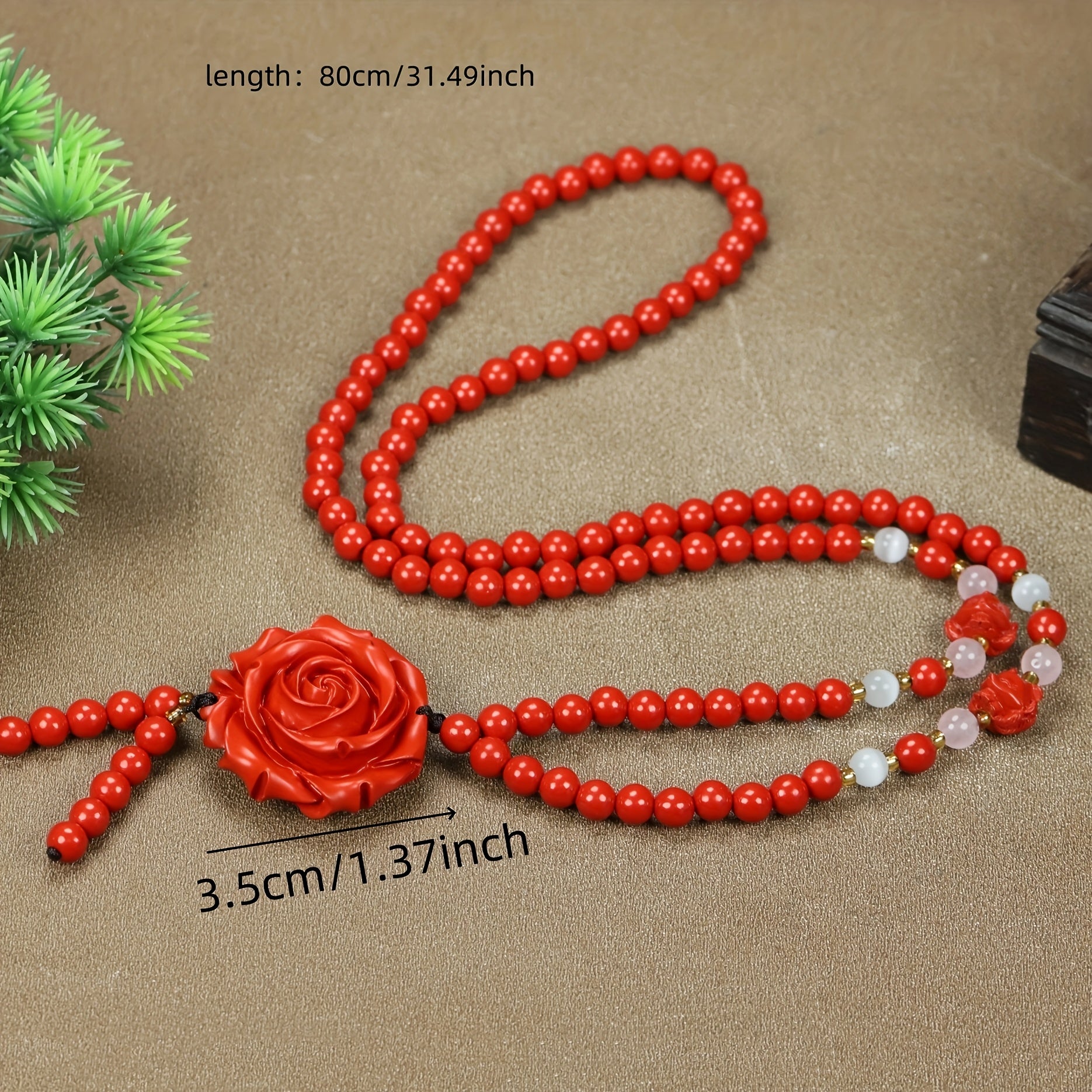
Organic Flow: The 80cm length and beaded design create a flowing, dynamic line that moves with the body. This contrasts with rigid, geometric jewelry forms, symbolizing flexibility, natural movement, and freedom from constraint.
Layering and Texture: Boho aesthetics celebrate visual and tactile richness. The mixed bead sizes, carved pendant, and metal charms create multiple textures that catch light differently and invite touch. This multisensory engagement is intentional—it keeps the wearer and observer physically connected to the piece's material reality.
Symbolic Focal Points: The rose pendant serves as a central focal point, while the fox charms provide secondary points of interest. This creates a visual hierarchy that guides the eye through the symbolic narrative: from the heart-centered rose to the clever, adaptable foxes.
Earthy Color Palette: While boho embraces color, it typically favors earthy tones—the deep red of cinnabar, natural browns and tans, muted metallics. These colors ground the spiritual symbolism in earthly reality, preventing it from becoming overly ethereal or disconnected from physical existence.
VI. Emotional & Social Significance: Jewelry as Identity and Community
Boho spiritual jewelry serves important emotional and social functions beyond mere adornment. Emotionally, it can act as what psychologists call an "externalized self-object"—a physical representation of internal states, values, or aspirations. For someone seeking protection, the cinnabar necklace becomes a tangible manifestation of that need and intention. For someone valuing creative freedom, the fox charms represent that identity.
Socially, such jewelry functions as identity signaling within like-minded communities. In settings where spiritual or alternative lifestyles are valued (festivals, workshops, certain creative or healing professions), boho jewelry communicates shared values without words. It can serve as a conversation starter, connecting people with similar interests or spiritual approaches.
This social function has become particularly important in the digital age, where physical gatherings of alternative spiritual communities (like festivals or workshops) provide rare opportunities for in-person connection. Wearing meaningful boho jewelry at such events helps individuals identify and connect with their "tribe"—a modern equivalent of traditional cultural or religious markers of identity.
The Psychology of Symbolic Adornment
Research in embodied cognition suggests that wearing symbolic jewelry can have measurable psychological effects:
Anchoring Effect: Physical objects can "anchor" abstract intentions or values, making them more psychologically accessible and actionable.
Priming Effect: Visual and tactile exposure to symbols can prime associated cognitive patterns (e.g., seeing/hearing the fox charm might prime creative problem-solving).
Placebo/Nocebo Effects: Belief in a symbol's power can create real psychological and even physiological effects—what we might call "ritual efficacy."
These effects don't require supernatural explanations; they demonstrate how meaning, when embodied in physical form, can influence thought, emotion, and behavior through established psychological mechanisms.
VII. Market Perspective & Future Outlook
The market for boho spiritual jewelry has evolved significantly. Initially a niche countercultural phenomenon, it now represents a substantial segment of the conscious consumer market. Market analysis shows consistent growth, particularly among Millennials and Gen Z consumers who value authenticity, sustainability, and personal meaning in their purchases.
Future trends likely to shape boho spiritual jewelry include:
- Hyper-Personalization: Technology allowing customers to select or even design their own symbolic combinations.
- Augmented Reality Integration: AR apps that provide information about symbols' meanings or suggest intentional uses.
- Blockchain Provenance: Verifiable tracking of materials from ethical sources.
- Intergenerational Design: Pieces designed to be disassembled and reconfigured, allowing symbolic meanings to evolve with the wearer's life journey.
- Therapeutic Applications: Collaboration between jewelry designers and mental health professionals to create pieces supporting specific therapeutic processes.
VIII. Environmental Sustainability & Social Impact
Contemporary boho spiritual jewelry exists within complex sustainability considerations. On one hand, its celebration of natural materials and artisan craftsmanship aligns with sustainable values. On the other, materials like cinnabar require careful ethical sourcing to avoid supporting destructive mining practices.
Leading boho jewelry brands are addressing these challenges through:
Ethical Sourcing: Partnering with small-scale miners or using recycled/reclaimed materials.
Artisan Partnerships: Working directly with craftspeople under fair trade conditions.
Cultural Collaboration: Consulting with cultural experts when using traditional symbols.
Circular Design: Creating pieces that can be repaired, reconfigured, or eventually returned for material recycling.
The social impact extends beyond material ethics. Meaningful boho jewelry can support mental and emotional well-being by providing tangible tools for self-expression, intention setting, and identity formation—particularly valuable in an era of increasing mental health challenges and social fragmentation.
IX. Conclusion: The Ongoing Alchemy
The Boho Style Cinnabar Stone Long Necklace with Rose Pendant and Fox Charms represents more than a beautiful accessory. It embodies a contemporary alchemical process that transforms:
- Materials into Meaning: Cinnabar, metal, and cord become protective talismans.
- Symbols into Stories: Discrete symbols combine into personal narratives.
- Wearers into Alchemists: Through intentional use, wearers participate in their own transformation.
This alchemical process isn't hidden in a medieval laboratory but is openly available through conscious design and intentional wearing. In a world often characterized by fragmentation, disenchantment, and mass production, boho spiritual jewelry offers a counter-narrative: that everyday objects can carry profound meaning, that personal adornment can be both artistic and spiritual, and that we can actively participate in shaping the symbols that shape us.
The true "gold" produced by this contemporary alchemy isn't material wealth but what we might call "symbolic wealth"—a richness of meaning, connection, and intentionality that enhances life's quality and depth. As boho jewelry continues to evolve, it will likely continue its alchemical work, transforming not just materials but potentially our relationships with self, community, and the sacred dimensions of everyday life.
Wear your transformation. Carry your story. Be your own alchemist.
