




The Enduring Legacy: A Deep Dive into the Cultural and Symbolic Significance of Jade
From Imperial Seals to Modern Talismans, the Timeless Allure of a Sacred Stone
In the vast tapestry of human history, few materials have captured our collective imagination with the same quiet power and enduring grace as jade. It is not a flashy gemstone that screams for attention with fiery brilliance; rather, its appeal is more profound, a deep, translucent green or a milky white that seems to hold an inner light. This stone, revered for millennia, is more than just a mineral. It is a cultural artifact, a philosophical symbol, and a spiritual conduit. To understand jade is to understand a significant portion of human civilization's values, aspirations, and its perpetual search for meaning, beauty, and connection to the cosmos. Its journey from a simple river stone to the centerpiece of empires and modern spiritual practices is a testament to its unparalleled symbolic weight.
A Stone of Heaven: The Ancient Origins in China
The story of jade is inextricably linked to China, where its history spans over 7,000 years. Unlike any other culture, the Chinese elevated jade from a decorative material to a cornerstone of their spiritual and ethical systems. Early Chinese societies, particularly the Liangzhu culture (c. 3400-2250 BCE), were already crafting intricate jade artifacts, including ritual objects (cong tubes and bi discs), that suggest a deep cosmological significance. These objects were not merely ornamental; they were believed to be conduits between the earthly and the divine, connecting humanity to the powers of heaven and earth.
The Chinese character for jade, 玉 (yù), is one of the most beautiful and fundamental characters in their language. It is used as a radical in many other characters related to value and virtue, such as 寶 (bǎo), meaning treasure or precious. This linguistic integration reveals the stone's core identity: jade is value. It was considered the most precious of all materials, more valuable than gold or silver, because it embodied qualities that transcended material wealth. The ancient Chinese believed that jade was the "essence of heaven and earth," a petrified form of divine energy that had fallen to earth. This belief gave rise to its five cardinal virtues, a concept articulated by the great philosopher Xu Shen during the Han Dynasty:
"Jade has five virtues. Its warm, moist luster is like benevolence (仁 rén). Its fine, compact texture reveals wisdom (智 zhì). It does not cut sharp, representing righteousness (義 yì). It hangs down in a curve, like propriety (禮 lǐ). Its clear, resonant sound when struck signifies faith (信 xìn)."
This philosophical framework transformed jade into a moral compass. To wear jade was to constantly be reminded of these virtues and to aspire to embody them in one's own life. It was a symbol of a noble character, an object that connected the outer person to their inner moral landscape.
The Imperial Seal: Power, Immortality, and the Mandate of Heaven
As Chinese dynasties rose and fell, the status of jade only grew. It became the exclusive domain of the emperor and the highest echelons of the aristocracy. The Emperor's authority was legitimized by the "Mandate of Heaven," and jade was the physical manifestation of this divine right to rule. The most potent symbol of this power was the Imperial Seal, a masterpiece of carving that was passed from one dynasty to the next. Carved from the finest quality jade, often a translucent white or a deep green, the seal was not just a stamp; it was the heart of the empire's administration, a sacred object that represented the Emperor's divine connection and absolute authority.
Beyond politics, jade was deeply intertwined with the quest for immortality that obsessed many Chinese emperors. The alchemists of the court believed that jade possessed life-giving properties. They would grind it into a fine powder and mix it with elixirs, believing that consuming it would grant longevity or even physical immortality. While this practice was ultimately futile, it underscores the profound belief in jade's potent life force, or qi. Tombs of emperors and nobles were filled with jade suits (jinyi), meticulously crafted from thousands of pieces of jade strung together with gold or silver thread. These suits were designed to preserve the body for eternity, protecting the deceased's spirit and ensuring their continued status in the afterlife. The jade would prevent decay and nourish the spirit, allowing it to transcend the physical realm.
More Than Just Green: The Spectrum of Jade Colors and Their Meanings
While the vivid emerald green of "Imperial Jade" is the most famous, jade occurs in a stunning array of colors, each with its own unique symbolism and energetic properties. The value and meaning of a piece of jade are determined by its color, transparency, texture, and the skill of its carving. The most highly prized jade is known for its translucency; when held up to the light, it seems to glow from within, a quality that reinforces its association with spiritual light and purity.
- Imperial Green: This rich, deep green is the classic color of jade. It is associated with the heart chakra and represents harmony, balance, and vitality. It is a color of growth, renewal, and abundance, mirroring the lushness of nature.
- Lavender/Lilac: A rarer and more mystical shade, lavender jade is connected to the crown and third eye chakras. It enhances spiritual awareness, intuition, and connection to higher realms. It is a stone of deep meditation and psychic insight.
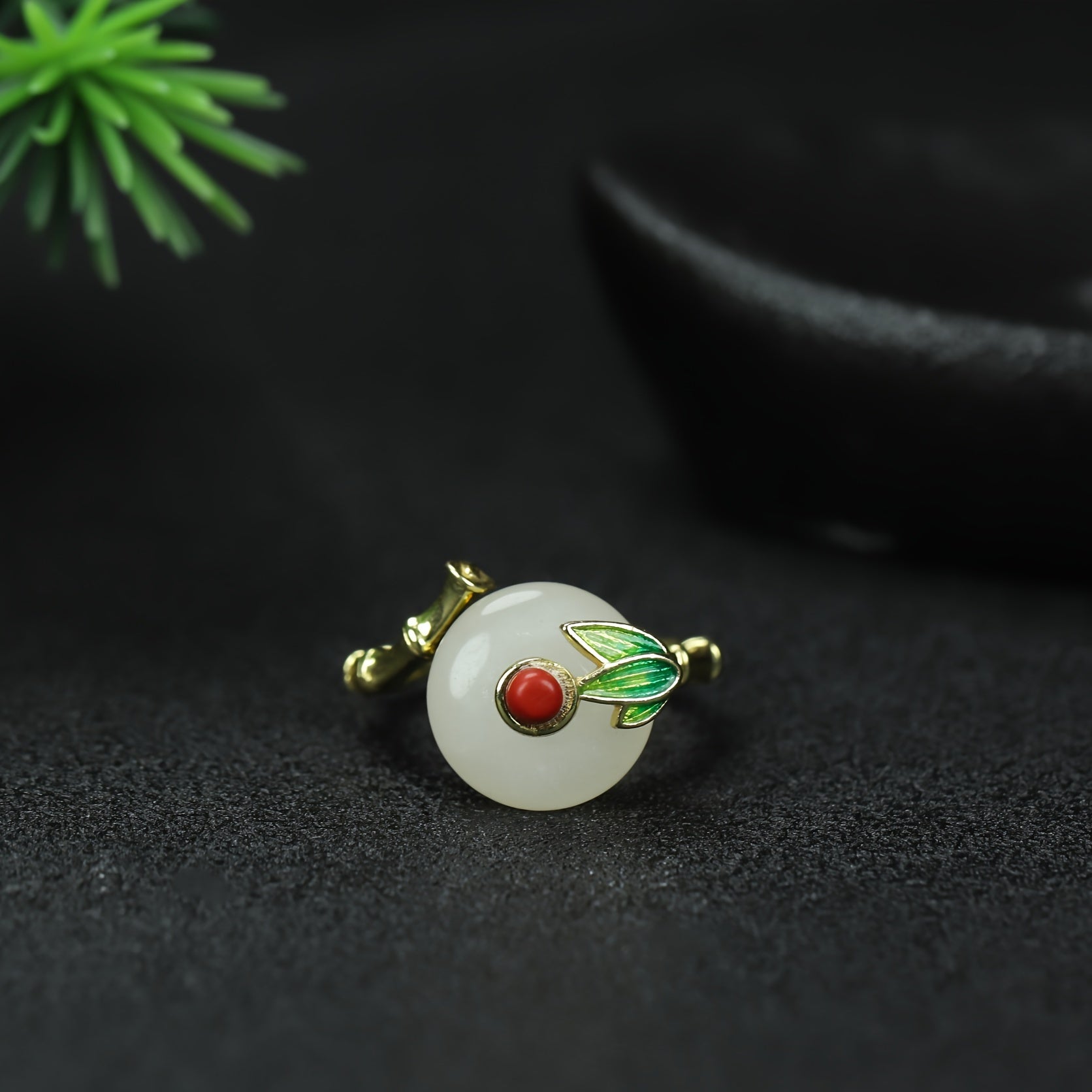
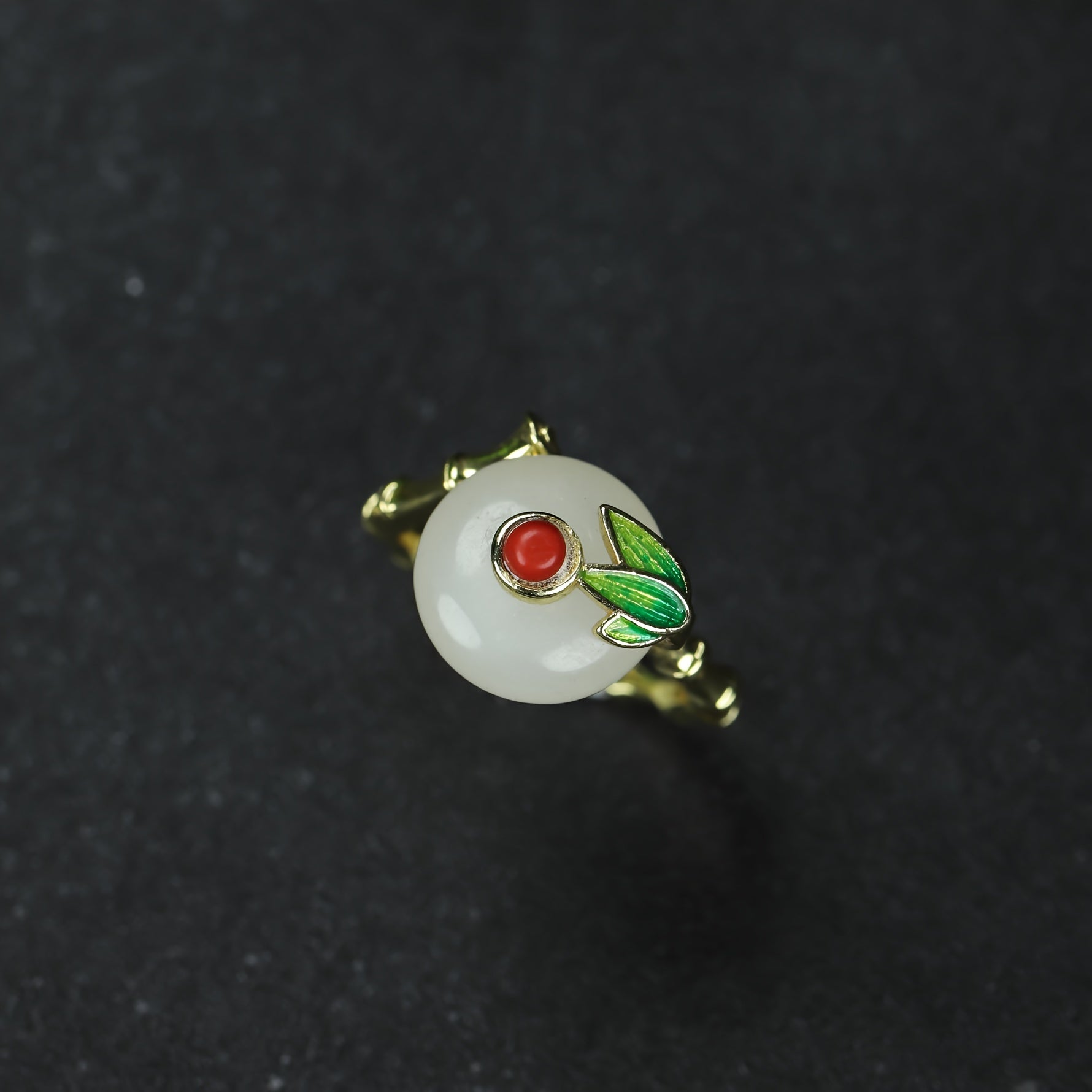
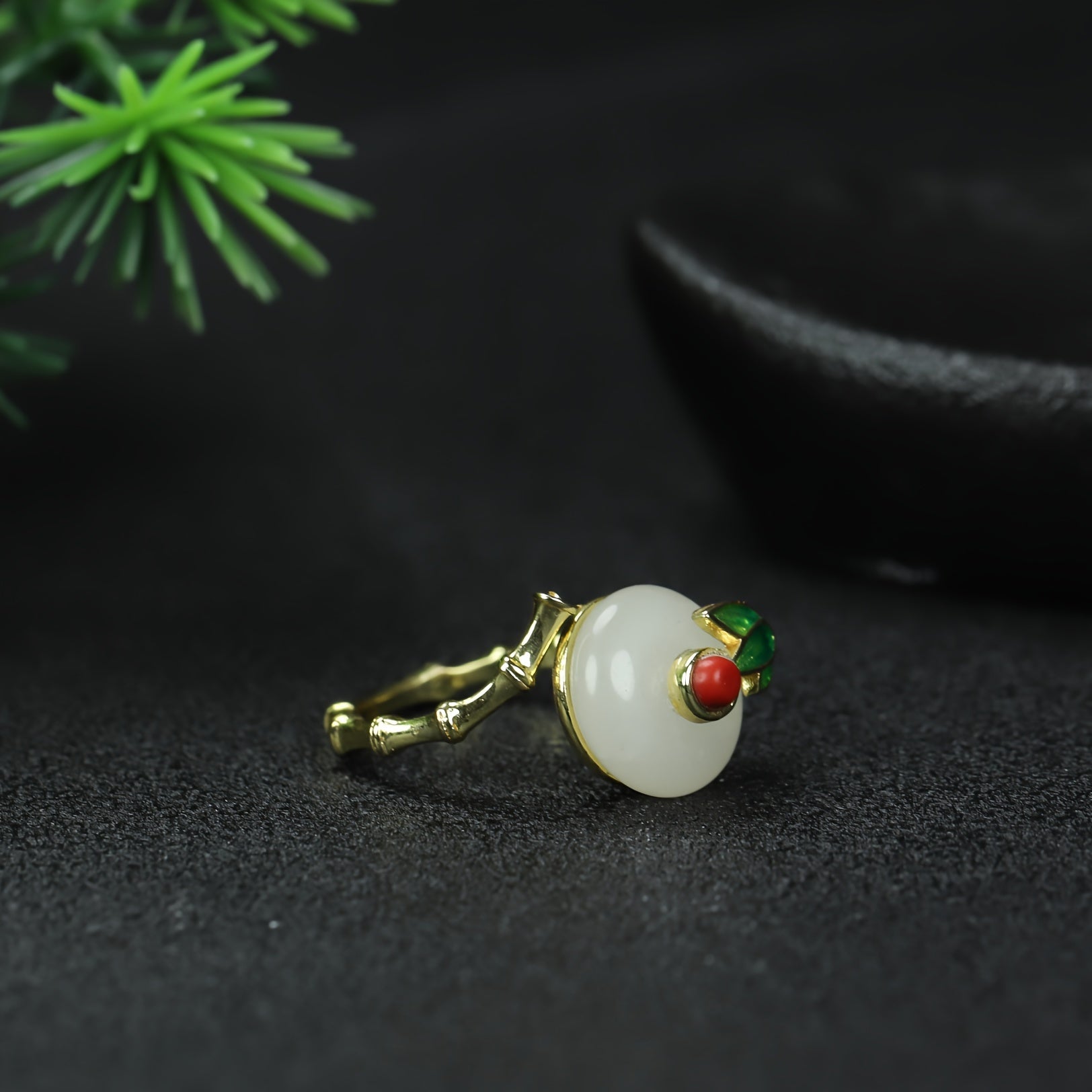
- White: As seen in the court-style ring, white jade is a powerful symbol of purity, innocence, and peace. It is deeply connected to the crown chakra and is used to calm the mind, cleanse the aura, and promote a sense of wholeness and connection to the divine. It represents the potential of the unformed, the void from which all creation springs.
- Yellow/Orange: These warm, sunny colors are associated with the solar plexus chakra. They represent confidence, creativity, joy, and personal power. Yellow jade is a stone of manifestation and success, while orange jade stimulates emotional warmth and connection.
- Black: Often called "Black Nephrite," this variety of jade is a powerful protective stone. It is grounding, shielding the wearer from negative energies and fear. It is used for deep healing and for exploring the shadow self.
The color of a jade piece is not merely an aesthetic choice; it is a deliberate selection of the specific energy one wishes to invite into their life. A gift of green jade wishes the recipient health and prosperity, while a piece of white jade offers a blessing of peace and wisdom.
The Art of Carving: Unveiling the Spirit Within the Stone
A raw piece of jade is beautiful, but it is the art of carving that truly unleashes its soul. Jade is an exceptionally tough material, harder than steel, which made carving it in ancient times a monumental task. Artisans would use abrasive sands and slow, patient techniques to shape the stone, a process that could take a lifetime to master. The goal of a jade carver is not to impose a form upon the stone, but to reveal the form that already exists within it. They work with the stone's natural inclusions, colors, and texture, allowing its inherent beauty to guide the final design.
The subjects of jade carvings are rich with symbolism. Dragons represent imperial power, strength, and good fortune. Phoenixes symbolize rebirth, grace, and high virtue. Fish, particularly koi, signify abundance and perseverance. But perhaps the most significant recurring motif is the pi (璧), a flat disc with a hole in the center. This simple shape is a profound cosmological symbol, representing the roundness of heaven and the squareness of the earth (in some interpretations, the hole is square). It is a gateway, a meditative tool, and a symbol of the eternal cycle of life. Another common form is the ruyi (如意), a stylized scepter or fungus that means "as you wish." It is a powerful talisman for granting one's heart's desires and achieving success in all endeavors. Each carved object, from a tiny pendant to a massive ceremonial bowl, is a piece of philosophy made manifest.
Jade in the Modern World: A Bridge Between Ancient Wisdom and Contemporary Life
Today, the cultural significance of jade remains as potent as ever, both in East Asia and across the globe. In China, it is still a traditional gift for newborns, symbolizing a wish for a long and healthy life. It is exchanged between business partners to ensure a prosperous and harmonious relationship. It is worn as jewelry not just for its beauty, but for its protective and beneficial energies, in a practice that seamlessly blends ancient belief with modern wellness trends.
In the West, jade has been embraced by the spiritual and New Age communities. It is widely used in crystal healing for its calming and balancing properties. Meditation with a jade stone is believed to facilitate a connection to higher consciousness and promote emotional release. The rise of mindfulness and holistic health practices has brought this ancient stone to a new audience, who are drawn to its tangible sense of history and its gentle, nurturing energy. Fashion designers also continue to be inspired by jade, incorporating it into high jewelry collections that celebrate its timeless elegance.
The modern jade ring, with its "court style" design, gold accents, and adjustable band, is a perfect symbol of this cultural fusion. It honors the historical reverence for jade while adapting it to a contemporary aesthetic. The gold setting adds a layer of prosperity and luxury, while the adjustable nature makes this ancient wisdom accessible to everyone. It is a piece that can be worn to a formal event or with everyday attire, a constant, quiet reminder of the virtues of benevolence, wisdom, and grace. The enduring legacy of jade lies in this very adaptability—its ability to be at once an imperial seal of power, a philosopher's tool, a lover's gift, and a modern talisman for peace. It is a stone that truly bridges worlds, connecting us to our past, our inner selves, and the timeless quest for a life of meaning and beauty.
