





The Quiet Power of Minimalism: How Simple Designs Enhance Spiritual Connection
In a world saturated with sensory overload and ornamental excess, a quiet revolution is unfolding in spiritual jewelry design. Minimalism—once associated primarily with Scandinavian furniture and architectural austerity—has emerged as a profound spiritual practice in wearable form. This exploration examines how simple geometric shapes, intentional material choices, and restrained aesthetics are creating deeper spiritual connections than their more elaborate counterparts ever could.
The Philosophy of Spiritual Minimalism
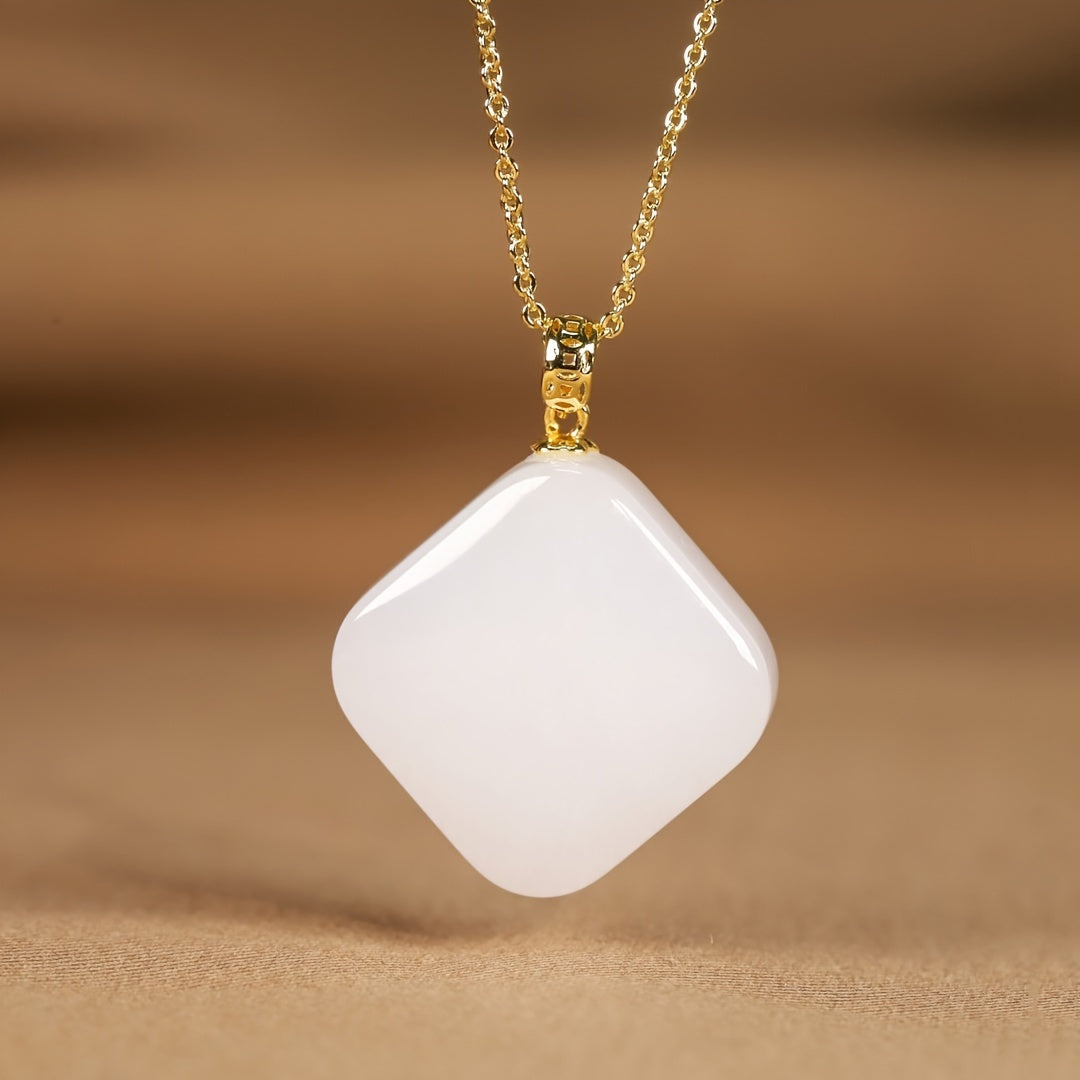
Spiritual minimalism represents more than an aesthetic preference—it's a conscious response to contemporary life's complexities. At its core lies the understanding that true spiritual connection often requires subtraction rather than addition. Where traditional spiritual jewelry might feature intricate symbols, multiple gemstones, and elaborate metalwork, minimalist spiritual jewelry operates on the principle that less visual noise creates more space for inner resonance.
This philosophy finds roots in multiple spiritual traditions. Zen Buddhism's emphasis on emptiness (sunyata) and essential nature informs minimalist aesthetics. The Quaker testimony of simplicity values plainness as a spiritual discipline. Even in the opulent traditions of Hinduism or Orthodox Christianity, we find minimalist expressions in simple prayer beads or plain crosses worn as personal, unadorned reminders of faith. Contemporary spiritual minimalism synthesizes these influences into a practice particularly suited to our times—where attention is our most precious resource and distraction our constant companion.
Psychological Foundations
Research in environmental psychology reveals that cluttered spaces increase cognitive load and stress responses. The same principle applies to what we wear. A minimalist piece of spiritual jewelry creates a "cognitive sanctuary"—a point of visual rest that counterbalances the complexity of modern life. Neuroscientific studies suggest that simple geometric shapes activate different neural pathways than complex patterns, potentially facilitating meditative states and focused attention.
Sacred Geometry in Minimalist Form
The Square: Foundation and Stability
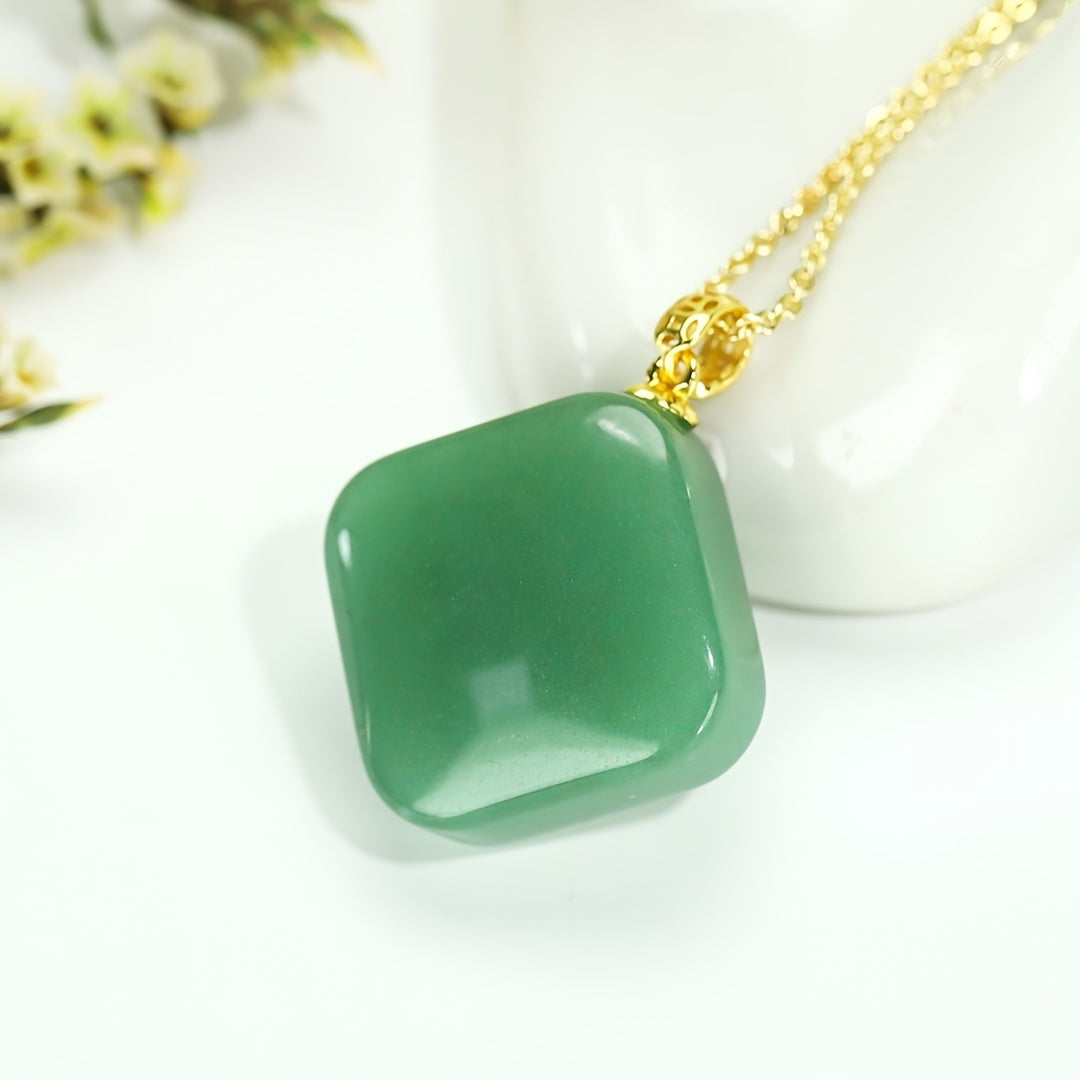
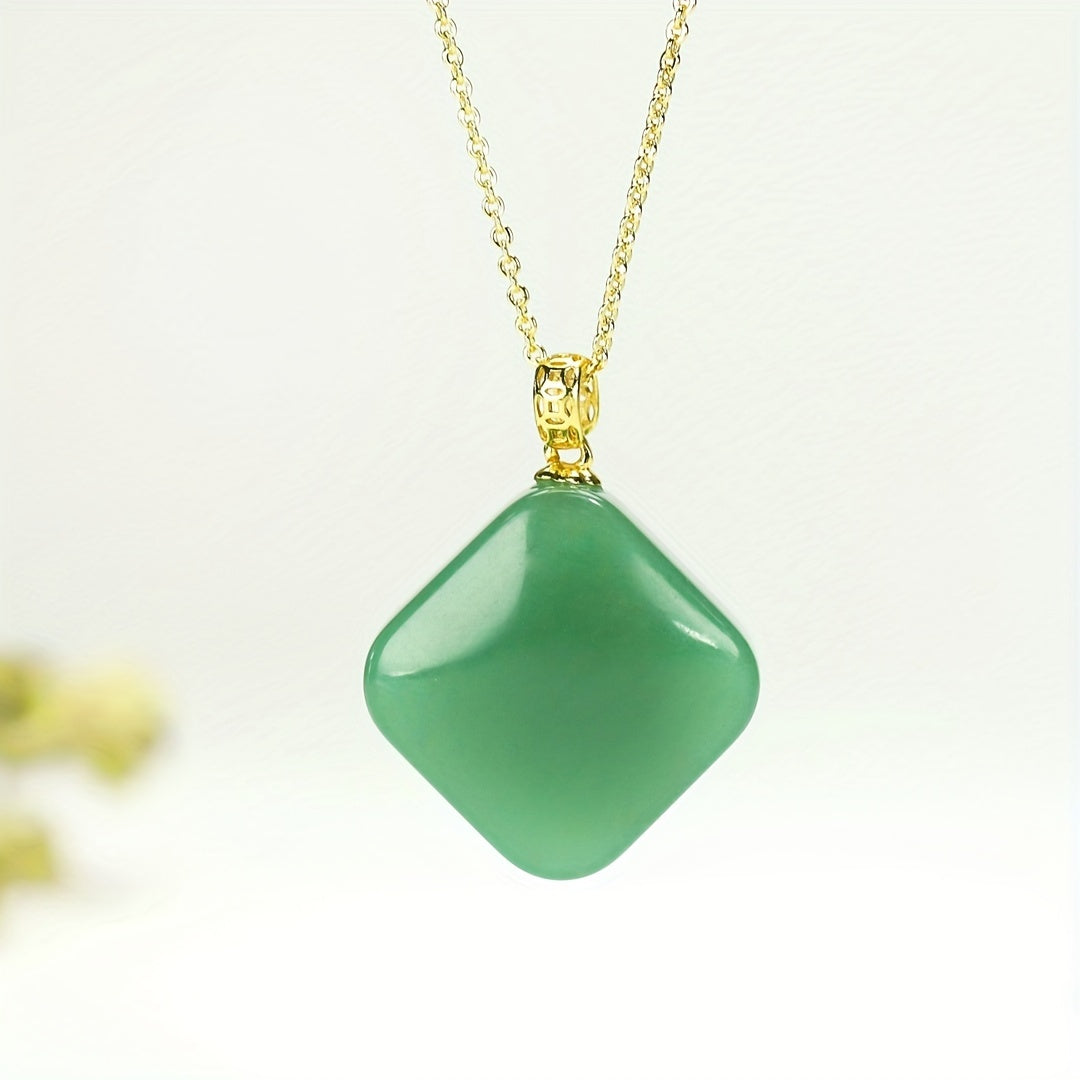
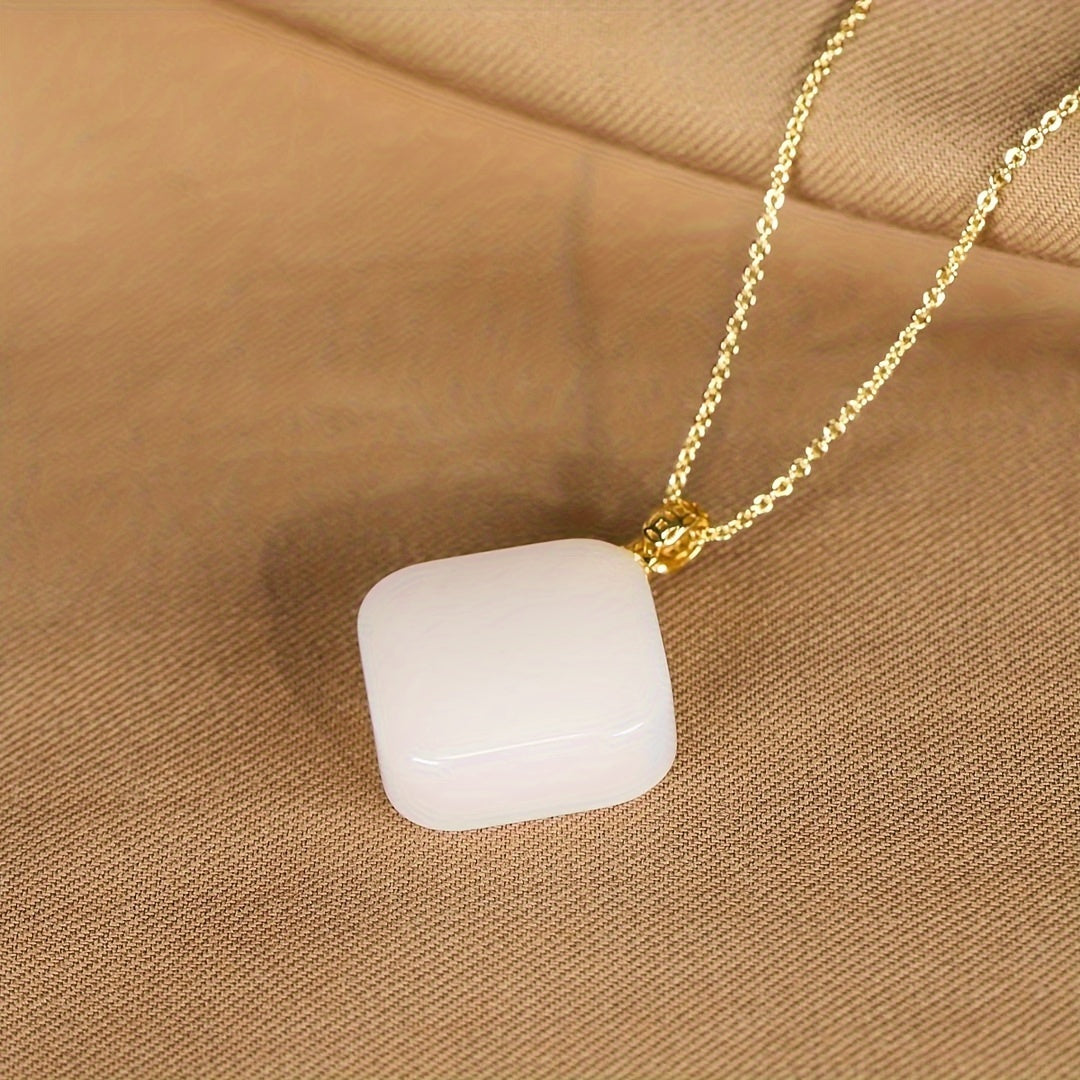
Among geometric forms, the square holds particular significance. Representing the four elements, four directions, and four seasons, it creates a complete system within its simple boundaries. In minimalist spiritual jewelry, the square becomes a portable altar to stability—a reminder that spiritual practice needs a solid foundation in daily life.
The Circle: Wholeness and Continuity
Minimalist circle pendants and hoops represent unity, eternity, and the cyclical nature of existence. Their simplicity allows wearers to project multiple meanings while maintaining a clean aesthetic that works in any context.
The Line: Connection and Direction
Simple bar or line pendants symbolize connection between realms, spiritual pathways, and intentional direction. Their straightness represents clarity of purpose—a visual metaphor for the spiritual journey.
The Triangle: Balance and Ascent
Equilateral triangles in minimalist design represent the balance of mind, body, and spirit. Their upward orientation suggests spiritual aspiration while their geometric perfection offers visual harmony.
What makes these geometric forms particularly powerful in minimalist expressions is their purity. Without decorative elaboration, the geometric essence speaks directly to our innate understanding of form and proportion. This aligns with the Platonic concept of ideal forms—the belief that simple geometric shapes represent fundamental truths of the universe. When worn as jewelry, these forms become constant, subtle reminders of these universal principles.
Historical Precedents for Spiritual Minimalism
While contemporary minimalist spiritual jewelry feels distinctly modern, its roots extend deep into human history. Ancient Egyptian broad collars gave way to simple scarab amulets. Elaborate Byzantine reliquaries coexisted with plain wooden crosses. Japanese Shinto tradition uses simple ofuda (paper talismans) alongside elaborate temple architecture. What unites these historical examples is the understanding that spiritual potency doesn't require visual complexity—sometimes simplicity enhances sacred power by removing barriers between the wearer and the divine.
Material Consciousness in Minimalist Design
Minimalist spiritual jewelry elevates material choice from aesthetic consideration to spiritual statement. With fewer design elements, each material carries greater significance and must align perfectly with the piece's intention.
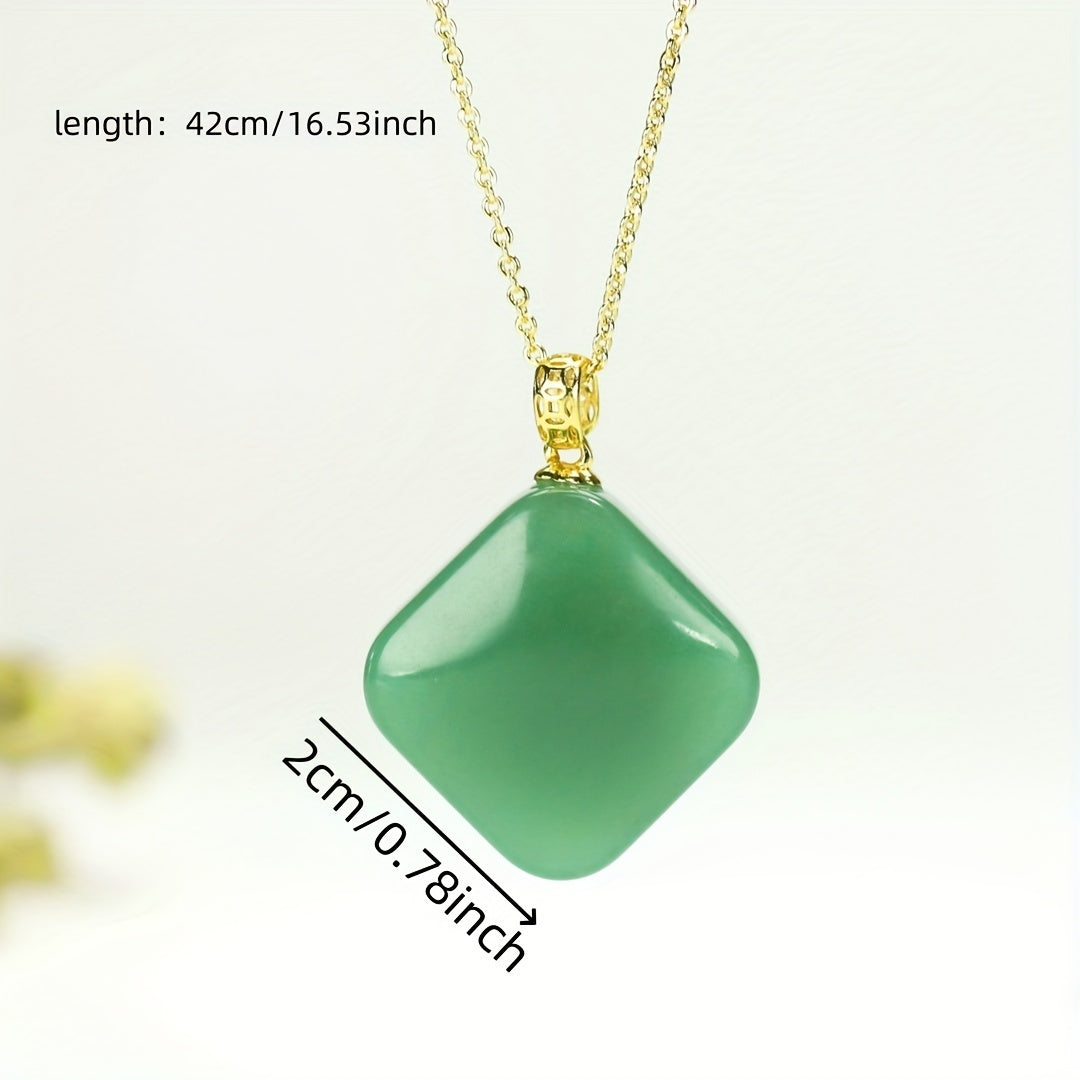
In minimalist design, natural stones are selected not just for color but for energetic properties and texture. A single, well-chosen stone becomes the entire focal point, requiring careful consideration of its origin, formation process, and energetic signature. The stone's natural imperfections become features rather than flaws—reminders of earth's authenticity.
Metal chains and settings in minimalist pieces serve multiple functions: structural support, aesthetic complement, and energetic conductor. The choice between gold, silver, or oxidized finishes becomes a spiritual consideration—gold for solar energy and spiritual illumination, silver for lunar connection and intuition, oxidized finishes for grounding and shadow work.
Minimalist spirituality often extends to ethical considerations. Designers increasingly prioritize recycled metals, ethically sourced stones, and transparent supply chains. This material integrity becomes part of the piece's spiritual value—knowing that one's spiritual practice doesn't harm the earth or its people.
With fewer visual elements, the tactile experience becomes paramount. The weight of the pendant, the smoothness of the stone, the movement of the chain—all become part of the meditative experience. This haptic dimension turns the jewelry into a mindfulness tool, bringing awareness to physical sensation as a gateway to spiritual presence.
The Energy of Absence
Perhaps the most radical aspect of minimalist spiritual jewelry is what it doesn't include. The deliberate absence of decoration creates what Japanese aesthetics calls "ma"—the space between things that gives them meaning. This negative space becomes energetically active, allowing the wearer's own energy to interact with the piece more directly. Without competing visual elements, the jewelry becomes a clearer channel for intention and a more responsive companion to personal energy shifts.
The Spiritual Psychology of Wearing Less
Choosing and wearing minimalist spiritual jewelry involves distinct psychological processes that differ from more elaborate spiritual adornment. Understanding these processes reveals why this aesthetic resonates so deeply with contemporary spiritual seekers.
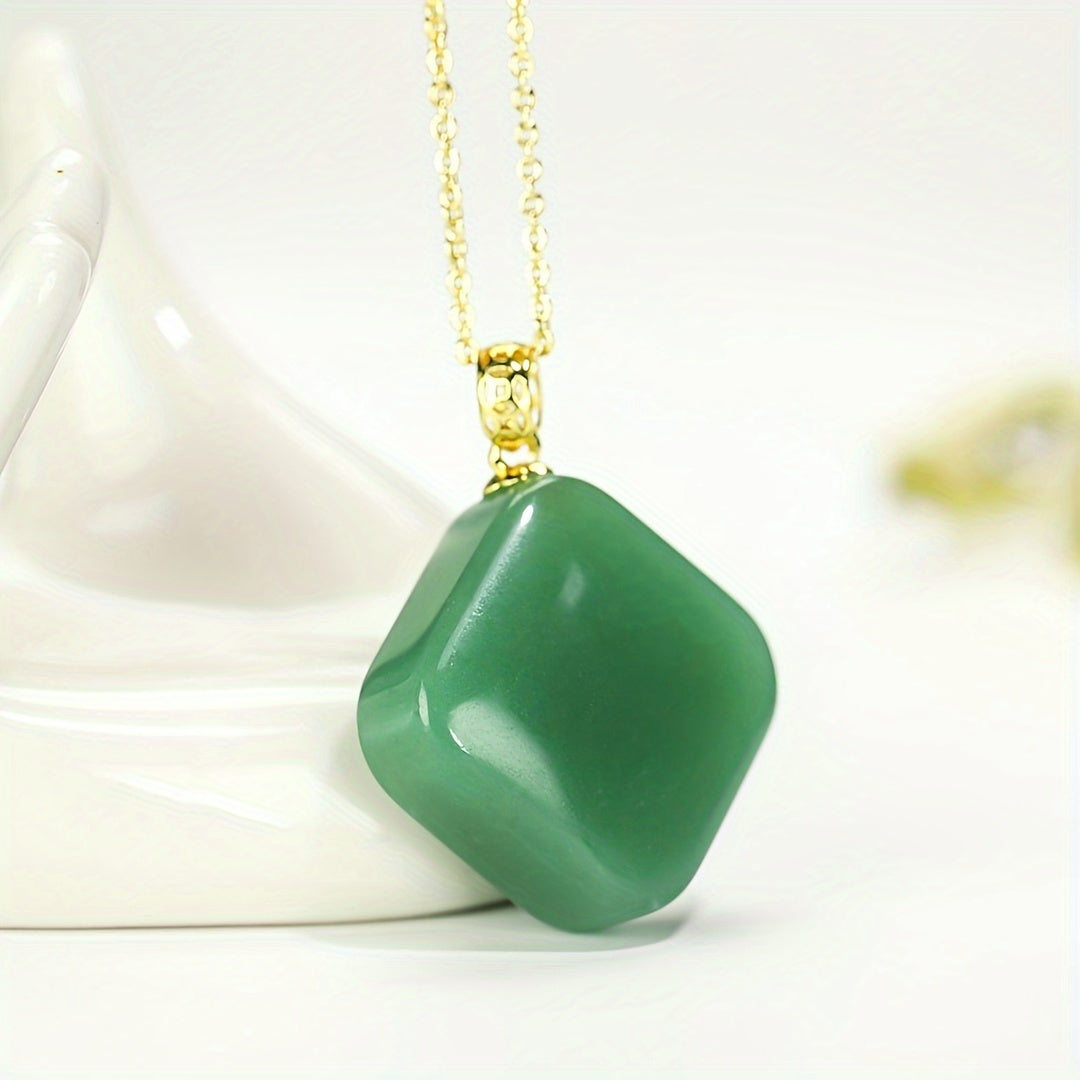
This psychological efficiency translates to spiritual efficacy. When a piece of jewelry contains multiple symbols, stones, or decorative elements, the wearer's attention—and by extension, their intention—divides among these elements. A minimalist piece concentrates that attention, creating what meditation teachers call "one-pointed focus." This concentrated attention becomes particularly valuable in our distraction-filled lives, where sustained focus on spiritual intention represents a radical act of resistance.
The Paradox of Invisibility
Interestingly, the very subtlety of minimalist spiritual jewelry contributes to its power. Because it doesn't announce itself as "spiritual jewelry" to observers, it becomes a private practice—a secret between the wearer and their intention. This privacy paradoxically deepens the personal connection, removing performative aspects that can dilute genuine spiritual practice. The jewelry becomes less about how one appears spiritually and more about how one experiences spirituality.
Market Evolution and Cultural Significance
The rise of minimalist spiritual jewelry corresponds with broader cultural shifts. As mainstream fashion embraces minimalism through brands like Celine, The Row, and Jil Sander, spiritual seekers are finding that minimalist aesthetics align with contemporary values of sustainability, authenticity, and mindful consumption.
Demographic Drivers
Market research identifies several overlapping demographics driving this trend:
The Mindful Millennial: Raised during economic uncertainty and environmental crisis, this demographic values authenticity over ostentation. Minimalist spiritual jewelry represents their values—conscious consumption, subtle self-expression, and integrated spirituality that doesn't require separate "spiritual" and "everyday" identities.
The Professional Seeker: Individuals in corporate or professional environments who want spiritual support that aligns with workplace dress codes. Minimalist pieces provide subtle spiritual connection without conflicting with professional image expectations.
The Spiritual but Not Religious: This growing demographic seeks spiritual tools without traditional religious affiliation. Minimalist designs offer spiritual functionality without specific religious symbolism, allowing for personal interpretation and meaning-making.
Economic and Environmental Considerations
The minimalist approach aligns with both economic mindfulness and environmental responsibility. Smaller pieces require less material, reducing environmental impact. Their timeless design ensures longer wearability, countering fast fashion's disposability. This sustainability becomes part of their spiritual value—a recognition that true spirituality honors the earth that provides our materials.
Future Directions and Evolving Practice
As minimalist spiritual jewelry continues to evolve, several emerging trends suggest its growing sophistication and deepening integration into spiritual practice.
Technological Integration
Some designers are exploring subtle technological integrations—minimalist pendants containing discreet vibration mechanisms for mindfulness reminders, or NFC chips linking to personalized meditation tracks. These innovations maintain minimalist aesthetics while adding functional layers to spiritual practice.
Personalization Within Simplicity
The paradox of minimalist design is that it creates space for personalization. A simple square pendant can be engraved with a single meaningful character on its reverse side, creating a completely private affirmation. This balance between universal form and personal meaning represents the future of spiritual jewelry—pieces that are both archetypal and intimately individual.
Multi-Faith and Cross-Cultural Design
Minimalism's geometric language transcends specific religious traditions, making it ideal for interfaith or cross-cultural spiritual practice. A square pendant might represent the four noble truths to a Buddhist, the four elements to a pagan, and the four gospels to a Christian—all while maintaining aesthetic cohesion. This inclusive potential positions minimalist spiritual jewelry as uniquely suited to our increasingly pluralistic spiritual landscape.
"What we're witnessing is the maturation of spiritual jewelry from symbolic representation to experiential tool. Minimalist pieces aren't just depicting spiritual concepts; they're facilitating spiritual states. Their simplicity reduces cognitive load, their geometry organizes energy, their materials ground intention. They've moved from being about spirituality to being spiritual technology."
Exhibitions and Cultural Recognition
Recent years have seen museum exhibitions dedicated to minimalist spiritual design. The 2023 "Essential Forms" exhibition at the Museum of Contemporary Craft featured an entire section on minimalist spiritual jewelry, examining how designers distill complex spiritual concepts into simple wearable forms. Such recognition validates minimalist spiritual jewelry as a significant cultural and artistic movement, not merely a fashion trend.
Conclusion: The Enduring Resonance of the Essential
The quiet power of minimalist spiritual jewelry lies in its recognition that sometimes the most profound spiritual tools are the simplest. In an age of information overload and sensory saturation, these pieces offer visual respite, energetic clarity, and focused intention. Their geometric forms speak an ancient language of sacred proportion. Their material choices honor earth's gifts. Their restrained aesthetics create space for personal meaning.
As spiritual practice evolves to meet contemporary challenges, minimalist jewelry provides a bridge between ancient wisdom and modern life. It allows spirituality to integrate seamlessly into daily routine, professional environments, and diverse cultural contexts. Its subtlety protects the intimacy of personal practice while its universality connects wearers to timeless principles.
The square pendant, the circle, the simple line—these are more than design choices. They are invitations to deeper seeing, to conscious wearing, to spiritual practice through aesthetic discipline. In their restraint, they ask us to consider what is truly essential in our spiritual lives. In their simplicity, they remind us that sometimes the most direct path to the sacred is the straightest line, the clearest form, the quietest presence.

"Minimalist spiritual jewelry operates on what I call the 'principle of resonant subtraction.' Each element removed amplifies the remaining elements' significance. A single square pendant on a simple chain focuses intention more powerfully than multiple symbols because it eliminates cognitive competition. The brain isn't deciding which symbol to engage with—it's engaging fully with the one present element. This creates a more direct neural pathway between the visual stimulus and the associated spiritual concept."