





The Art of Dichotomy: How Green and Yellow Agate Symbolizes Balance in Modern Jewelry Design
Exploring the profound symbolism of complementary colors in natural stone jewelry and their significance in contemporary spiritual and fashion contexts
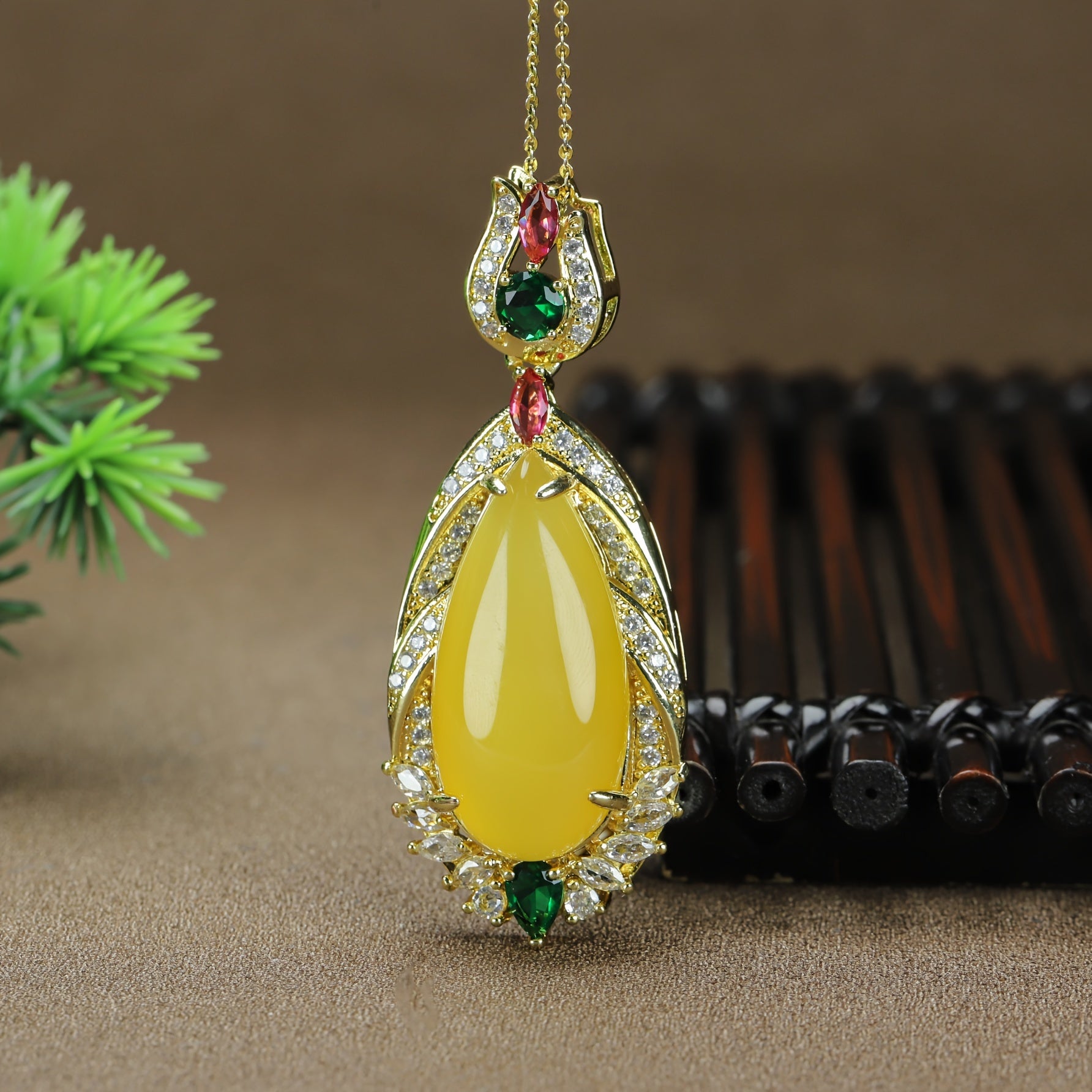
Introduction: The Language of Layered Stones
In the realm of natural stone jewelry, few materials speak as eloquently about balance as banded agate with its distinct green and yellow layers. Each piece tells a geological story millions of years in the making, while simultaneously offering a visual metaphor for the human experience of integrating opposing forces. This article explores how this particular color combination in agate has moved from geological curiosity to powerful symbolic statement in contemporary jewelry design.
The featured Elegant Agate Pendant Necklace serves as a perfect case study in what we might term "chromatic philosophy"—the intentional use of color relationships to convey deeper meaning. Green and yellow, while adjacent on the color wheel, represent fundamentally different energies in both color psychology and spiritual tradition. Their harmonious coexistence within a single stone creates what designers call "productive tension"—a visual and energetic dynamic that is both stimulating and harmonizing.
Historical Significance: From Geological Formation to Cultural Symbol
The history of agate appreciation spans millennia and continents. Named after the Achates River in Sicily where it was first discovered, agate has been treasured since Neolithic times. What makes banded agate particularly significant is how different cultures interpreted its layered patterns. In ancient Mesopotamia, banded agate was believed to contain captured lightning, with the different colors representing different celestial energies. Greek and Roman civilizations valued it for protective qualities, often carving cameos from layers that contrasted sharply.
The specific combination of green and yellow bands carries particular cultural weight. In Chinese tradition, green jade represents eternal life and virtue, while yellow (imperial yellow) symbolizes power, prosperity, and the center of the universe. When these colors appear together naturally in stone, it was historically considered exceptionally auspicious—a sign of heaven's favor. Similarly, in Mesoamerican cultures, green stones represented water, fertility, and life, while yellow signified the sun, corn, and sustenance—the fundamental pairing that supported civilization.
This historical context helps explain why contemporary pieces like our featured necklace resonate across cultural boundaries. They tap into deep, archetypal associations that predate modern spiritual movements, connecting wearers to ancient understandings of balance between earthly (green) and solar (yellow) energies.

Material Science: The Geology Behind the Beauty
From a geological perspective, banded agate represents a remarkable story of mineral deposition. Agate itself is a variety of chalcedony (microcrystalline quartz) that forms in concentric layers within volcanic or metamorphic rock cavities. The distinctive banding occurs as silica-rich groundwater percolates through rock, depositing microscopic quartz crystals in layers over millions of years.
The green coloration typically comes from chlorite inclusions or chromium impurities, while yellow bands result from iron oxides (specifically limonite or goethite) or organic compounds. What makes green and yellow banded agate particularly special is the chemical environment required to produce these specific colors in alternating layers—often indicating changes in groundwater chemistry, oxidation states, or mineral content over geological time.
This scientific understanding adds another layer of appreciation for the necklace's design. Each band represents a different chapter in Earth's history—a physical record of environmental changes that occurred long before humans walked the planet. Wearing such a piece becomes not just a fashion statement or spiritual practice, but a connection to deep geological time and planetary processes.
