





The Observer Archetype: Wearing Symbols Without Needing to Explain Them
You meet them at parties, though they're rarely in the center of the room. They're the ones by the bookshelf, noticing the way light falls through the window, or how a particular conversation pattern develops and dissolves. They're not antisocial—they might engage warmly—but there's a quality of watching, of taking things in before participating.
This isn't shyness. Shyness wants to participate but fears judgment. The Observer simply prefers to understand first. They move through the world collecting data: how people gesture when lying, how certain colors affect mood, how silence sits differently in various rooms.
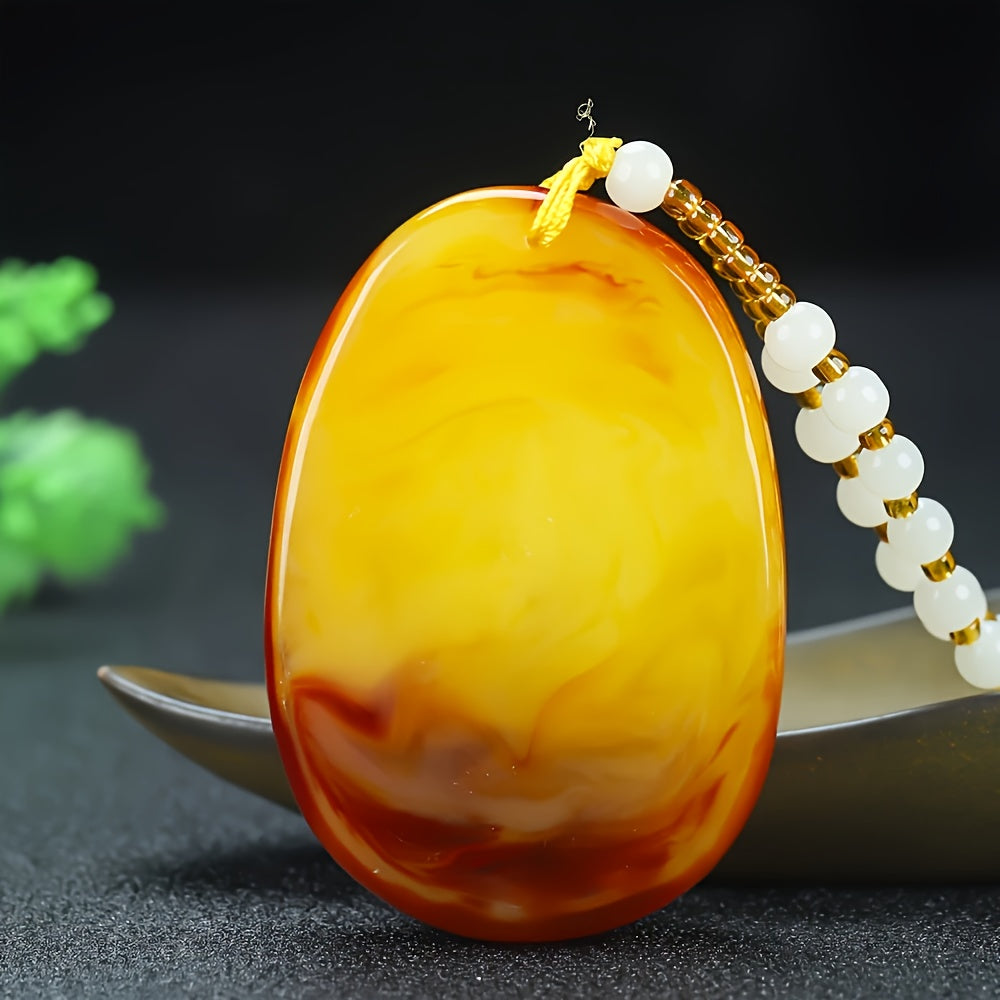
The Observer archetype recognizes certain objects not because they're trendy or expensive, but because they contain quiet complexity. A pendant that mimics a water drop suspended mid-fall? That's not just jewelry—it's a physics problem, a poetic image, a question about time. The Observer sees all these layers at once.
Observer Characteristics
Primary Mode: Perception before expression
Communication Style: Asks questions more than makes statements
Decision Process: Collects data, sits with it, decides quietly
Social Role: The noticer, the rememberer, the one who sees patterns others miss
Stress Response: Withdraws to process, not to escape
In a culture that values quick opinions and confident declarations, Observers often feel out of step. They're the ones who, when asked "What do you think?" might genuinely respond, "I'm still thinking." This isn't indecision—it's integrity. They won't formulate an opinion until they've observed enough to have one worth sharing.
When an Observer chooses jewelry, they're not asking "What does this say about me?" but "What does this ask of me?" A loud, bold piece demands attention, creates a narrative, performs identity. A quiet piece like the water drop pendant does something else: it creates space for private meaning.
This distinction matters. For the Observer, the most meaningful things are often the ones that don't need to be explained. In fact, explanation can feel like a violation. If you have to tell people what your symbol means, hasn't it failed at being a symbol?
True symbols work like dreams: they communicate through resonance, not translation. The Observer understands this intuitively. They wear the water drop not to signal "I'm spiritual" or "I appreciate nature," but because the shape itself holds a certain truth about existence: everything is in motion, even what appears still.
Consider how Observers move through social spaces. They're the ones who remember what you were wearing three meetings ago, who notice when you change your phrasing patterns, who sense shifts in group dynamics before they're visible to others. This perceptual sensitivity isn't a party trick—it's their primary way of engaging with reality.
When such a person chooses an object to wear daily, they're choosing a companion for their observational practice. The pendant swings slightly with movement, catching light differently throughout the day. It's not demanding attention; it's offering tiny moments of noticing. A flash of gold in peripheral vision, the cool weight against skin, the rhythm of beads when turning your head.
These sensory details aren't distractions from important thoughts—for the Observer, they're the texture of thought itself. Perception isn't separate from cognition; it's its foundation.
This raises an interesting question about visibility. Our culture assumes that if you wear something meaningful, you want it to be noticed. But what if the meaning exists precisely in its privacy? What if the power of a symbol is that it communicates something to you, and only incidentally to others?
The Observer understands that some truths are diluted by exposure. Like a photograph that fades in sunlight, some meanings weaken when examined too publicly. They choose objects that maintain their integrity in private, that don't require an audience to validate their significance.
This isn't about secrecy. It's about appropriate boundaries. The Observer knows that not everything needs to be shared, that some experiences are richer when kept close. They wear the pendant under a shirt collar sometimes, feeling its presence without displaying it. The meaning isn't diminished by this concealment—it's protected.
Now consider the social dimension. Observers often struggle in environments where everyone is performing certainty. Business meetings, networking events, social media—these spaces reward quick answers and confident personas. The Observer's natural inclination to pause, consider, observe before speaking can be misinterpreted as hesitation or lack of expertise.
But what if we've misunderstood what expertise looks like? The person who speaks first isn't necessarily the one who sees most clearly. Sometimes the deepest understanding comes from watching longer, noticing more, speaking only when observation has matured into insight.
The water drop pendant becomes, in this context, a subtle reminder of this alternative way of being. Its very form—suspended, neither falling nor rising—represents the value of the in-between state. Not knowing yet, but watching closely. Not deciding yet, but gathering data. Not speaking yet, but listening.
This isn't passivity. Active observation requires immense energy and attention. It's just that the energy is directed inward toward processing, rather than outward toward performing.
When an Observer wears such a symbol, they're not making a statement to the world. They're creating a small pocket of permission for themselves: permission to notice, to process slowly, to value depth over speed, to trust that some things reveal themselves only to patient attention.
This has practical implications for daily life. An Observer might:
- Touch the pendant during meetings as a reminder to listen more than speak
- Notice its swing when walking as a meditation on rhythm and pace
- Feel its coolness in stressful moments as a sensory anchor
- Observe how light interacts with it differently throughout the day
These aren't rituals in the mystical sense. They're simply ways of staying connected to an observational mindset in a world that constantly pulls toward reaction.
The Observer archetype isn't better than others—just different. Where the Expresser needs to articulate, the Observer needs to absorb. Where the Performer needs an audience, the Observer needs solitude. Where the Activist needs to change things, the Observer needs to understand them first.
These different modes aren't in competition; they're complementary. A healthy culture needs all of them. But in our current moment, observational qualities are often undervalued. We celebrate the quick take, the hot take, the decisive action. We're less comfortable with patient watching, with ambiguity, with not-knowing.
Perhaps that's why objects like the water drop pendant resonate with certain people. They're not just jewelry; they're quiet endorsements of a different way of engaging with reality. They suggest that meaning might emerge from watching something closely over time, rather than defining it quickly.
This brings us to the question of authenticity. For the Observer, authenticity isn't about expressing everything you feel immediately. It's about allowing your external expression to emerge naturally from your internal observation. The gap between noticing and speaking isn't dishonesty—it's respect for the complexity of reality.
When you ask an Observer "What do you think?" and they pause, that pause isn't empty. It's full of consideration, of weighing different angles, of recalling relevant observations. Their eventual answer, when it comes, will often be more nuanced, more grounded, more true than quicker responses.
The pendant swinging gently as they think might be helping this process. Not magically, but physically. The tactile feedback, the rhythmic motion, the sensory distraction—these can create mental space for deeper processing.
This isn't to say only Observers appreciate such pieces. But they're particularly drawn to objects that:
- Have layered meanings rather than single messages
- Reward extended observation rather than immediate impact
- Function privately as well as publicly
- Connect to natural phenomena or abstract concepts
- Don't demand explanation or defense
The water drop pendant checks all these boxes. Its meaning is fluid (literally and figuratively). It reveals different qualities in different lights. It works as well under clothing as over it. It references a universal natural phenomenon. And it doesn't come with a instruction manual for what it "means."
For someone who spends their life noticing subtleties, such an object isn't just decorative—it's companionable. It speaks their language: the language of implication rather than declaration, of suggestion rather than statement, of questions held open rather than answers delivered.
In a noisy world, the Observer's quiet way of being can feel lonely. Wearing a symbol that understands this—that doesn't shout but whispers, that doesn't explain but suggests—can feel like finding a friend who speaks your native tongue in a foreign country.
The pendant doesn't solve the loneliness. But it acknowledges it. It says, through its very design: some things are better felt than said, some meanings are richer when private, some truths emerge only to patient attention.
For the Observer, this isn't a philosophical position. It's simply how they experience reality. The world comes to them first through perception, then through understanding, then (sometimes) through expression. Objects that honor this sequence feel right in a deep, almost pre-verbal way.
So when you see someone wearing the water drop pendant quietly, without fanfare, you might be looking at an Observer. Or someone learning to observe more. Or simply someone who appreciates that not everything needs to announce itself.
The pendant doesn't discriminate. It swings for whoever wears it, catches light for any eye that notices, cools and warms for any skin that touches it.
But for the Observer archetype, it might swing with particular resonance. Like a pendulum keeping time with their internal rhythm. Like a water drop suspended at exactly the moment between falling and rising. Like a companion who understands that sometimes, the deepest conversations happen in silence.
If this archetype reflection resonates, you might recognize yourself in the Water Drop Pendant.
View the Jewelry Piece →Final observation: Archetypes aren't boxes to fit into, but lenses to see through. You might be an Observer in professional settings but an Expresser with close friends. You might observe visually but express verbally. Human patterns are fluid, like water.
Perhaps that's why the water drop shape works: it holds the tension between pattern and fluidity, between archetype and individual, between what we are and what we're becoming.
The Observer knows this tension well. They live in it daily, watching the world flow by while finding patterns in the current. The pendant is simply a physical echo of that existential position.
Not a solution. Not an answer. Just a companion for the watching.
