





The Observer: The Archetype Who Values Quiet Presence Over Dramatic Expression

Some people understand immediately. They see a sandalwood medallion—simple, unadorned, quiet—and something clicks. Not excitement, exactly. More like recognition. A quiet "yes" that feels more like coming home than discovering something new.
These people tend to be the ones who notice the pause between sentences. Who remember what wasn't said. Who find crowded parties exhausting not because of the people, but because of the competing performances. They're often the last to speak in meetings, not because they have nothing to say, but because they're watching how the room breathes, how power flows between voices, how unspoken agreements form and dissolve.
1. Recognition Moment: "I've Always Been This Way"
The Observer archetype often recognizes itself in childhood memories. Not dramatic memories, but quiet ones:
"I remember sitting under the dining table during family gatherings, listening to conversations happening above me. The wood grain against my fingers felt more real than the laughter."
"In school, I preferred watching playground games from the edge. I could see the patterns—who would be chosen last, who would cheat, who would make peace after arguments."
"My favorite objects were always the ones I could hold in my pocket. Smooth stones, a particular coin, a carved bead. Things I could touch without anyone knowing."
These aren't stories of shyness or social anxiety (though Observers are sometimes misdiagnosed as such). They're stories of a different orientation to reality: one that values witnessing over participating, depth over breadth, private meaning over public performance.
Observer Self-Recognition Checklist
You might be an Observer if:
- You notice environmental details others miss (light patterns, texture variations, temperature shifts)
- You prefer one-on-one conversations to group gatherings
- You often know what people are feeling before they say it
- You enjoy activities that involve watching without participating (people-watching, bird-watching)
- Your most meaningful moments often happen in solitude or quiet companionship
- You feel drained by performative social situations but energized by deep observation
2. Historical Examples: Observers Across Cultures
The Observer appears throughout history, though rarely as the hero of dramatic tales. They're more often the chroniclers, the witnesses, the keepers of quiet wisdom:
Japanese Court Ladies (Heian period, 794-1185): Women like Sei Shōnagon and Murasaki Shikibu, who documented court life in The Pillow Book and The Tale of Genji. Their genius wasn't in political power but in observational precision—noticing which sleeve color a lady wore on which occasion, how a particular scent evoked specific memories, the unspoken rules governing seemingly trivial interactions.
Desert Fathers and Mothers (3rd-5th century CE): Christian ascetics who withdrew to Egyptian deserts. Their wisdom came not from grand visions but from observing their own thoughts, the patterns of scorpions, the quality of silence at different hours. Their sayings are remarkably observational rather than theological: "Abba Moses said, 'Sit in your cell and your cell will teach you everything.'"
Naturalists like Gilbert White (1720-1793): Author of The Natural History of Selborne, who spent decades observing a single English parish. His contribution wasn't dramatic discovery but meticulous observation—noting which birds arrived on which dates, how weather affected animal behavior, the subtle changes in plant life through seasons.
What these figures share isn't personality type but orientation: they believed truth revealed itself to patient attention rather than aggressive seeking.
3. Observer vs. Performer: Two Modes of Being
Modern culture primarily values and rewards the Performer archetype. To understand the Observer, contrast these two orientations:
The Performer:
• Expresses to be understood
• Acts to create impact
• Occupies center stage
• Measures success by visibility
• Learns by doing
• Values boldness
• Thrives on external validation
The Observer:
• Observes to understand
• Waits to receive insight
• Occupies the edge
• Measures success by depth of understanding
• Learns by watching
• Values discernment
• Thrives on internal coherence
Neither is superior. They're complementary poles. A healthy culture needs both. But contemporary Western culture has so overvalued performance that observation often gets pathologized as "social anxiety," "introversion," or "lack of confidence."
4. How Observers Process Information Differently
Brain imaging studies reveal actual neurological differences in how people process social and sensory information. While we should avoid simplistic "brain type" categorizations, some patterns emerge:
Default Mode Network (DMN) activity: Observers often show more active DMN—the brain network associated with internal reflection, memory, and future planning. This doesn't mean they're "in their heads" in a disconnected way, but that they're actively processing experience internally rather than reacting externally.
Sensory processing sensitivity: Many Observers score high on measures of sensory processing sensitivity. They notice subtler sensory details—faint scents, slight temperature changes, subtle textures. This isn't hypersensitivity as pathology, but enhanced perceptual capacity.
Pattern recognition timing: Observers often recognize patterns more slowly but more accurately. Where Performers might quickly identify obvious patterns, Observers wait for subtler, deeper patterns to emerge.
These neurological tendencies create the Observer's unique value: they see what others miss because they're looking longer, listening more carefully, processing more deeply.
5. The Observer's Relationship with Objects
This brings us to material culture—specifically, why Observers are drawn to certain kinds of objects.
Observers tend to prefer objects that:
- Speak quietly: Subtle textures over shiny surfaces, natural materials over synthetic
- Reveal slowly: Patinas that develop over time, scents that appear unexpectedly
- Hold private meaning: Personal significance over public recognition
- Anchor without demanding: Presence without performance, companionship without conversation
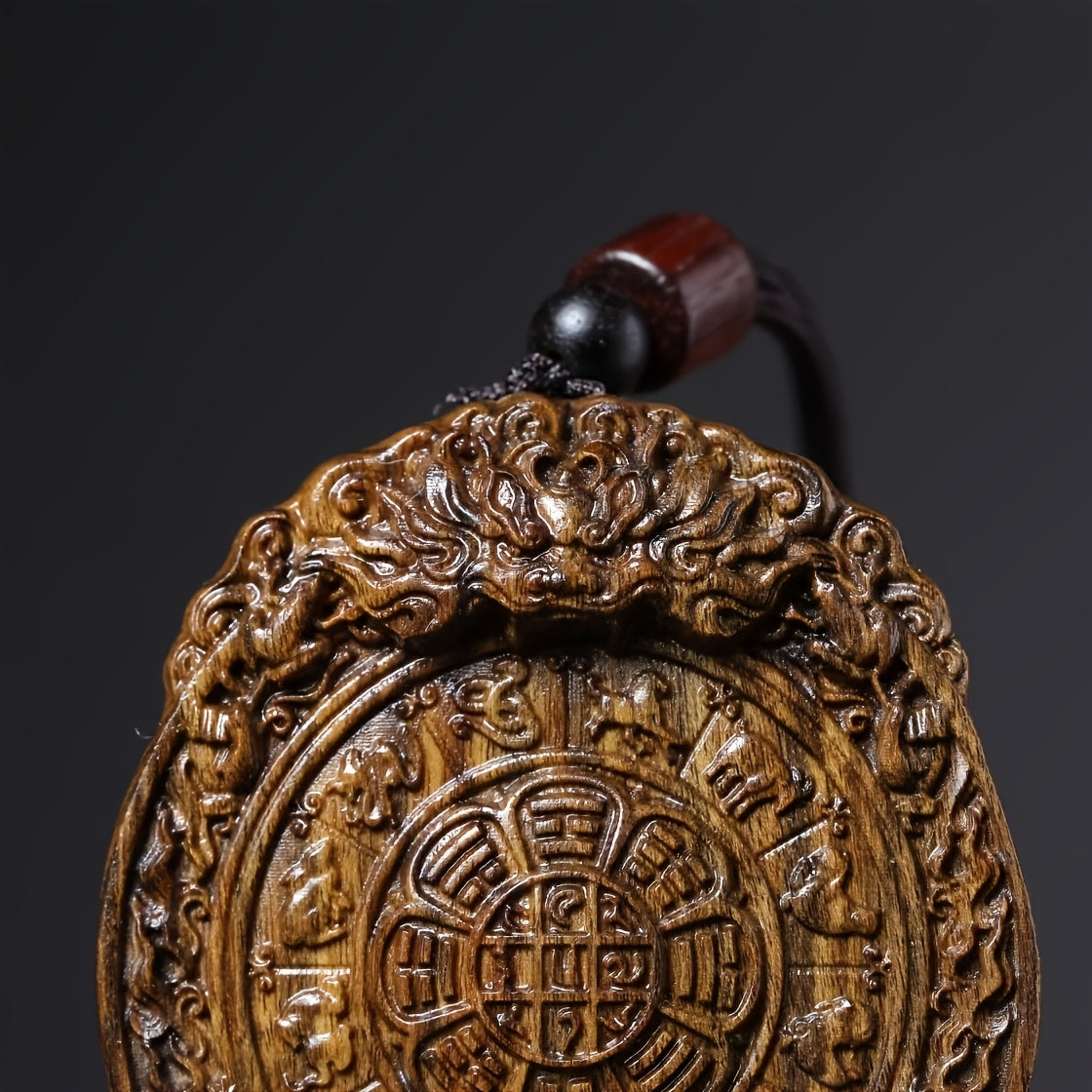
A sandalwood medallion exemplifies these qualities. Its scent appears only in warmth. Its patina develops through months of wear. Its meaning is personal rather than cultural. It's an object for private companionship rather than public declaration.
Explore objects designed for quiet companionship rather than dramatic expression
View the Jewelry Piece →6. Modern Workplaces and Observer Strengths
Contemporary office culture often disadvantages Observers. Open-plan offices, constant collaboration, emphasis on "speaking up"—these favor Performers. But Observer strengths are exactly what many organizations need:
Strategic insight: Observers see underlying patterns in market shifts, organizational dynamics, customer behavior.
Conflict mediation: Because they notice unspoken tensions and understand multiple perspectives, Observers can navigate conflicts with unusual sensitivity.
Quality control: Observers spot errors and inconsistencies others miss because they process information more thoroughly.
Innovation through observation: Many breakthroughs come not from brainstorming but from observing existing systems with fresh eyes.
The challenge isn't for Observers to become Performers, but for organizations to create space for observation as a legitimate mode of contribution.
7. Observer Relationships: Depth Over Breadth
In relationships, Observers manifest particular patterns:
Fewer, deeper connections: Observers typically have smaller social circles but more intense, meaningful relationships within them.
Non-verbal communication: They're often attuned to body language, tone, and what's left unsaid.
Comfort with silence: Observers don't feel pressured to fill quiet spaces with conversation.
Long-term loyalty: Once committed, Observers tend to maintain relationships through difficulties.
These relational patterns reflect the Observer's core orientation: quality of attention over quantity of interaction.

8. Challenges and Shadow Aspects
Like all archetypes, the Observer has potential shadow aspects when out of balance:
Detachment: Observation can slip into disconnection, watching life rather than living it.
Passivity: Waiting for understanding can become avoidance of necessary action.
Overwhelm: High sensory sensitivity can lead to burnout in stimulating environments.
Misunderstanding: Observers are often misread as cold, distant, or uninterested when they're actually deeply engaged but internally.
The healthy Observer learns to balance observation with appropriate participation, to discern when to watch and when to act, to honor their need for quiet without disappearing completely.
9. Nurturing the Observer Archetype
If you recognize Observer tendencies in yourself, here are ways to nurture rather than suppress them:
Create observation rituals: Dedicate regular time to pure observation—bird-watching, people-watching in cafes, studying light patterns.
Choose environments wisely: Seek workplaces and social settings that value depth over performance.
Carry observation tools: Keep a small notebook, camera, or meaningful object (like a sandalwood piece) that helps you stay in observational mode when needed.
Practice articulation: Develop the skill of putting observations into words when it matters—not to perform, but to contribute unique insights.
Honor quiet time: Protect regular periods of solitude as essential rather than indulgent.
10. Observer Contributions to Culture
What would be lost if the Observer archetype disappeared from our collective psyche?
We would lose:
Depth perception: The ability to see beneath surfaces, to understand complex systems, to recognize subtle patterns.
Cultural memory: Observers are often the keepers of traditions, the recorders of details that others consider trivial but that actually preserve cultural continuity.
Quality standards: The insistence on excellence that comes from noticing what others overlook.
Contemplative wisdom: Insights that emerge from patient attention rather than aggressive analysis.
Counterbalance to hype: A necessary skepticism toward trends, a preference for substance over style.
In a culture obsessed with speed, noise, and visibility, the Observer represents an essential alternative: the possibility that some truths reveal themselves only to quiet, patient attention.
11. Sandalwood as Observer Object
This brings us full circle to why certain objects resonate with Observer consciousness.
Sandalwood doesn't announce itself. Its scent appears only when warmed. Its beauty emerges through patient wearing rather than immediate impact. Its meaning develops through personal relationship rather than cultural assignment. It's an object that rewards observation—both of itself and with itself.
When an Observer wears sandalwood, several things happen:
Tactile grounding: The wood's texture provides a subtle anchor during overwhelming stimulation.
Scent as signal: The occasional appearance of fragrance can become a reminder to return to observational presence.
Patina as progress: The slow development of wear patterns mirrors the Observer's preference for gradual, meaningful change over dramatic transformation.
Private companionship: The object exists as a quiet companion rather than a public statement.
In this sense, the sandalwood medallion isn't just an object Observers might like. It's an object that embodies Observer consciousness—that makes tangible a particular way of being in the world that often feels intangible, invisible, undervalued.
12. Integration: Embracing Observer Strengths
The final invitation isn't to identify as an Observer or Performer exclusively, but to recognize and honor Observer capacities within ourselves—even if we live in a Performer-dominant culture.
Maybe you notice how light changes in your room throughout the day. Maybe you sense shifts in a friend's mood before they mention anything. Maybe you prefer objects that whisper rather than shout. These aren't quirks to overcome. They're capacities to cultivate.
The Observer archetype reminds us that not all wisdom comes from speaking. Not all contribution requires visibility. Not all strength looks like force. Sometimes the deepest understanding comes from watching how dust motes dance in sunlight, how a conversation unfolds without words, how wood slowly warms to match skin temperature.
And perhaps most importantly: that being fully present to reality as it is—without immediately trying to change it, explain it, or perform within it—is itself a profound form of participation.
The Observer doesn't stand outside life watching. They stand at life's center, understanding that true center isn't where the noise is loudest, but where the seeing is clearest.
