




The Sovereign and The Dragon: Which Archetype Wears Strength as a Question, Not an Answer?
Not all strength is loud. Discover the Sovereign archetype, drawn to symbols of power worn inwardly. Are you managing an inner force or seeking an external one?
There's a particular way of wearing a dragon. Not as a chest-pounding declaration, not as armor against the world, but as something else entirely. A quiet weight. A private reference. If you've ever seen someone with a subtle dragon pendant barely visible under their collar, or noticed a ring with a coiled serpent worn on the inside of the finger, you've glimpsed this pattern.
These people aren't trying to tell you they're powerful. They're engaged in an ongoing conversation with the idea of power itself. The symbol serves as a touchstone in that conversation—a physical anchor for a psychological process.
This is where we meet the Sovereign archetype. Not the ruler on a throne, but the internal governor. The part of us—or the person—who understands that true sovereignty begins with self-governance. Who knows that the most important territory to rule is one's own inner landscape.
The Sovereign isn't opposed to power. Quite the opposite. They're deeply engaged with it. But their relationship is managerial, not identificatory. They don't say "I am the dragon." They say "I have a dragon within, and my job is to relate to it consciously."

Contained power: the Sovereign's relationship with potent symbols is one of conscious containment, not unleashed display.
Recognizing the Sovereign Pattern
How do you know if you—or someone you know—operates from this archetype? Sovereigns aren't always obvious. They might not be the loudest in the room or the most assertive. But they have distinct behavioral and psychological patterns:
Sovereigns consult an internal council. They feel the pull of different inner forces (the passionate advocate, the cautious protector, the logical analyst) and make decisions by consciously mediating between them. They wear the dragon pendant not to make decisions for them, but to remind them of the need for this internal mediation when facing difficult choices.
They tend to de-escalate rather than confront. Not out of weakness, but because they recognize that most external conflicts mirror internal ones. Before addressing an external disagreement, they'll often check which of their own inner "dragons" is being triggered—fear, pride, insecurity. The square frame around the dragon symbolizes this conscious containment of reactive impulses.
Understated but intentional. Their clothing, accessories, and personal space are curated not for maximum impact, but for accurate representation of their internal state. Every visible choice has an invisible counterpart. The dragon pendant's UV-reactive quality—hidden in ordinary light—perfectly represents this: there are depths not immediately apparent.
They experience emotions as data about their internal state, not as commands to act. Anger isn't "I must attack" but "Something here is violating my boundaries." Joy isn't "I must celebrate" but "This aligns with my core values." The dragon represents these potent emotional energies, while the square represents the conscious processing framework.
The key distinction: Sovereigns see themselves as managers of internal forces, not as those forces themselves. They wear the dragon because they recognize they have dragon-like energies within (passion, power, ferocity), but their identity is in the relationship to those energies, not in being consumed by them.
This is the crucial misunderstanding. Containment is not repression. Repression denies the dragon exists. Containment acknowledges it, studies it, gives it appropriate space. The Sovereign's square frame isn't a prison; it's a habitat. A place where the dragon can exist without destroying everything around it.
Think of a master gardener with a prized, potentially invasive plant. They don't deny its nature. They give it a specific bed with boundaries, tend it carefully, appreciate its beauty while preventing it from overrunning the garden. That's the Sovereign's relationship with their own potent energies.
The Dragon Within: Three Variations
Not all Sovereigns have the same "dragon" to manage. The specific form the inner force takes varies by individual. Recognizing which variation resonates can clarify one's particular Sovereign pattern:
| Dragon Type | Manifests As... | Sovereign's Task | How the Pendant Serves |
|---|---|---|---|
| The Guardian Dragon | Protective instincts, boundary-setting, defensive aggression | To discern real threats from perceived ones; to protect without becoming fortress-like | Reminds that boundaries should be conscious choices, not automatic reactions |
| The Creative Dragon | Artistic fire, visionary energy, compulsive creating | To channel creative energy without being consumed by it; to balance inspiration with discipline | Symbolizes the need to frame creative chaos within sustainable structures |
| The Justice Dragon | Moral outrage, fairness drive, corrective impulse | To pursue justice without becoming judgmental; to correct without destroying | Represents the containment of righteous anger within ethical frameworks |
| The Transformative Dragon | Change impulses, rebirth energy, pattern-breaking force | To allow necessary change without creating unnecessary chaos; to discern what to transform | Embodies the paradox: transformation requires both the breaking force and the containing vessel |
Pattern Recognition Exercise
Which dragon feels most familiar? When you feel a strong internal "surge"—of anger, creativity, protectiveness, or change-energy—how do you typically respond? The Sovereign's approach is to pause, acknowledge "Ah, my Guardian/Creative/Justice/Transformative dragon is active," and then choose a conscious response rather than being carried by the surge.
The pendant, when worn, can serve as a physical cue for this pause. Feeling its weight against your chest becomes a signal: "Check which dragon is awake, and remember you are its sovereign, not its servant."
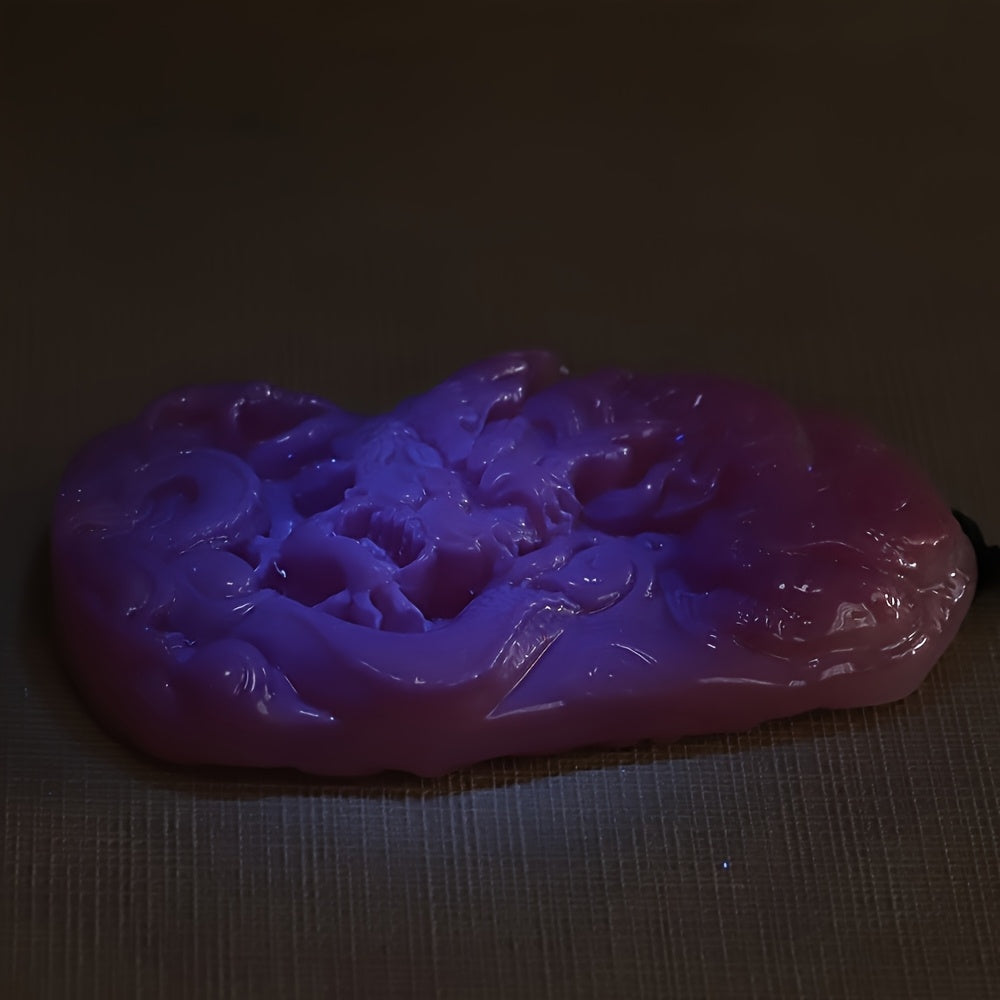
Intricate detail within clear boundaries: the Sovereign's approach to complex internal landscapes.
Counter-Archetypes: What the Sovereign Is Not
To better understand the Sovereign, it helps to contrast with other patterns people might mistake for it:
The Warrior identifies with their strength. "I am powerful." They wear the dragon as a banner, a declaration. Their relationship to power is direct, externalized. The Sovereign's relationship is reflective, internalized: "I have power, and my task is to relate to it wisely."
Warrior energy is necessary in moments of direct challenge. Sovereign energy is necessary for the long-term governance of a complex internal kingdom. One is a specialized tool; the other is an ongoing practice.
The Sage seeks understanding, detachment, perspective. The Sovereign seeks governance, engagement, responsibility. The Sage might observe the dragon from a distance, analyzing its nature. The Sovereign lives with the dragon, manages its habitat, ensures it doesn't burn down the village.
One is primarily cognitive (understanding); the other is primarily executive (managing). They can complement each other—a Sovereign benefits from Sage-like perspective—but they're distinct patterns.
The Rebel's dragon is directed outward—against systems, norms, authorities. The Sovereign's dragon is primarily an internal reality to be managed, though it may inform external actions. The Rebel wears the dragon as a challenge to the world. The Sovereign wears it as a reminder to themselves.
Importantly, a Sovereign might occasionally need to access Rebel energy (to challenge unjust external structures), but it's a temporary role, not their primary pattern.
The Square Frame: Boundary as Practice
The square framing the dragon in the pendant isn't incidental to the Sovereign archetype—it's central. It represents the practice of conscious boundary-setting, which is the Sovereign's core discipline.
Boundaries for the Sovereign aren't walls to keep things out. They're definitions that allow things to exist in relationship. The square says: "This is where the dragon lives. This is its domain. Beyond this is other territory that must be respected."
Internal Boundaries: Distinguishing between "this is my feeling" and "this feeling is me." The dragon of anger arises; the Sovereign boundary says "I am experiencing anger" not "I am anger."
Temporal Boundaries: Allowing intense states their time without letting them become permanent. "The creative dragon can have this afternoon, but tonight is for rest."
Relational Boundaries: Knowing which parts of the inner landscape to share with whom. The UV-reactive quality of the pendant perfectly captures this: some aspects are visible to all, others only under specific conditions of trust.
Ethical Boundaries: Containing power within moral frameworks. The dragon's force directed by conscious choice, not unleashed indiscriminately.
When a Sovereign wears the square-framed dragon, they're wearing a miniature model of their psychological practice. The pendant becomes a tactile reminder: Remember your boundaries. Remember that you are the one who sets them. Remember that boundaries aren't limitations but definitions that allow things to exist in healthy relationship.
At first, yes. Like any skill, conscious boundary-setting requires effort. But with practice, it becomes more automatic—not unconscious, but efficiently conscious. The Sovereign develops what we might call "boundary fluency": the ability to quickly discern what boundaries are needed in a given situation and implement them with minimal drama.
The pendant aids this fluency. Its physical presence serves as an anchor, a shortcut back to the Sovereign mindset when one has drifted. Running your fingers over the square edges can be a two-second reset: "Ah yes, boundaries. I am the one who sets them."
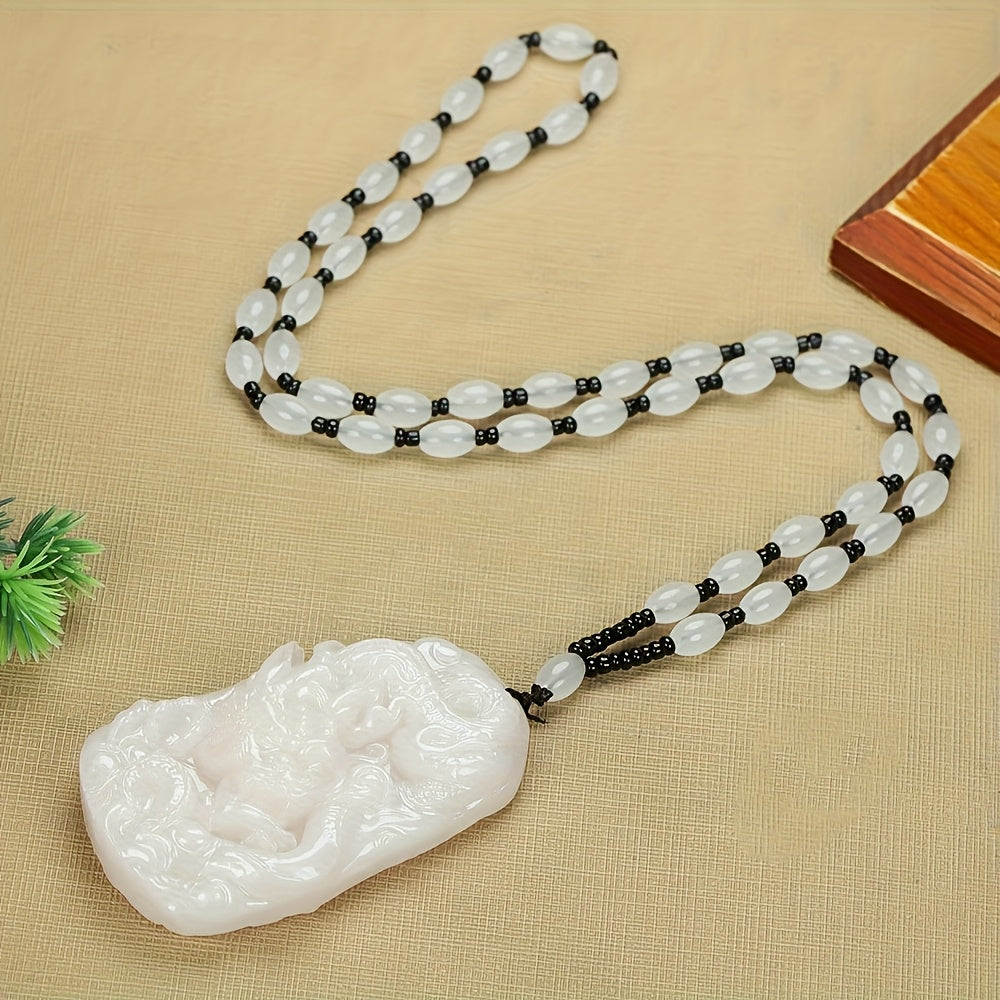
The square as conscious container: not a prison, but a defined habitat for potent energies.
Modern Relevance: Why This Archetype Matters Now
In a culture that often confuses assertiveness with strength, and self-expression with authenticity, the Sovereign archetype offers a crucial corrective. It suggests that true strength includes the capacity for restraint, and that authentic self-expression requires knowing what to express when, to whom.
Consider our digital age: we're encouraged to share everything, immediately. To react instantly to every stimulus. To let our emotional dragons roam free across social media landscapes. The result is often chaos, misunderstanding, and emotional exhaustion.
The Sovereign pattern offers an alternative: the digital equivalent of the square frame. Consciously deciding: This thought belongs in my journal, not on Twitter. This feeling I'll discuss with one trusted friend, not broadcast. This creative impulse I'll develop privately before sharing. This outrage I'll process before deciding if and how to express it.
Digital Sovereignty Practice
Before posting anything online today, pause. Ask: "Which of my dragons wants to post this? Is it the Guardian (protective/defensive)? The Justice (outraged/corrective)? The Creative (excited to share)? And is this the right habitat for that dragon right now?" The simple act of asking creates the square frame around the impulse.
In professional contexts, Sovereign energy allows for leadership that doesn't rely on domination. A Sovereign leader manages the organization's various "dragons" (ambition, competition, innovation, tradition) by giving each appropriate boundaries and channels, rather than letting one consume the others.
In personal growth, the Sovereign approach avoids the extremes of both repression ("I have no dragons") and identification ("I am my dragons"). It offers a middle way of conscious relationship: "I have these energies, and I'm learning to live with them wisely."
Wearing the Archetype: Integration, Not Identification
If the Sovereign pattern resonates, how might one consciously cultivate it? And what role does the dragon pendant play in that cultivation?
No more than wearing a crown makes someone a king. The pendant isn't a badge of achievement; it's a tool for practice. It serves those who recognize they have Sovereign work to do—who sense they have inner dragons needing conscious relationship—and want a physical anchor for that work.
Wearing it can be a commitment to the practice of self-governance. A reminder that when the dragon of anger, passion, creativity, or transformation stirs, your task isn't to be its slave or its slayer, but its sovereign—the one who provides habitat, sets boundaries, and ensures its energy serves the greater good of your inner kingdom.
We all contain multiple archetypes. The question isn't "Am I a Sovereign?" but "When do I operate from Sovereign energy, and when would it serve me to access it more?" The pendant can be worn during times when Sovereign consciousness is particularly needed: during difficult decisions, conflicts, creative projects, or periods of intense emotion.
It becomes a costume for a role—but not an artificial one. A role we need to play for our own well-being and effectiveness. We "put on" the Sovereign when we need to govern our inner landscape consciously.
When you wear the dragon pendant, try this three-part practice:
1. Morning Intentionality: As you put it on, name one "dragon" you anticipate encountering today. "Today, I'll likely feel the Creative dragon as I work on my project. I'll give it focused time within clear boundaries."
2. Midday Check-in: When you feel its weight, ask: "Which dragon is active now? Are my boundaries holding? Am I being carried by the dragon or consciously relating to it?"
3. Evening Reflection: As you remove it, review: "How did I relate to my dragons today? Where was I Sovereign? Where did I lose sovereignty? What did I learn?"
This turns wearing from decoration to discipline—from accessory to practice.
Conclusion: The Sovereignty of Questions
The Sovereign archetype's greatest power might be its capacity to hold questions without rushing to answers. To wear strength not as a declaration but as an inquiry.
The dragon pendant, in this context, becomes less a symbol of power and more a symbol of the question of power. How do I relate to my own strength? How do I contain it without repressing it? How do I channel it without being consumed by it? How do I wear it without needing to prove it?
These aren't questions with final answers. They're ongoing practices. The Sovereign isn't someone who has mastered their dragons, but someone who has committed to the practice of relating to them consciously, day after day.
When you see someone wearing a dragon quietly—or when you choose to wear one yourself—consider what question they might be wearing with it. Not "Am I powerful?" but "How shall I be with power?" Not "Do I have a dragon?" but "How shall I live with my dragon?"
The square-framed dragon pendant, then, is a map of this psychological territory. The dragon: your potent inner forces. The square: the conscious frameworks you build to relate to them. The wearer: the one who commits to this ongoing practice of inner governance.
It's not an easy pattern. It requires constant attention, subtle adjustments, and the humility to recognize that sovereignty is always provisional, always being negotiated. But for those drawn to this work, wearing the symbol can be both a reminder of the practice and a companion in its difficulty.
The dragon remains. The square holds. The Sovereign chooses, again today, to wear the question.
This article is part of DARHAI's Archetypes & Human Patterns series, exploring psychological patterns through symbolic objects. These archetypes are descriptive frameworks, not prescriptive identities.
