




Choosing the Unfinished: how you move through the world, what story you're willing to wear on your body?
You've been looking at them for a while now. Returning to the page, scrolling through the images, reading descriptions. There's something about these earrings that holds your attention, but also something that gives you pause. It's not the price, exactly. It's not whether they'll suit you. It's something subtler, harder to name.
You might call it hesitation. But hesitation about what, precisely? About whether to buy them? Or about something the earrings seem to ask of you—something about how you see yourself, how you move through the world, what story you're willing to wear on your body?
This isn't a buying guide. This is a conversation about that hesitation. About what might be happening in the space between seeing something and choosing it—or not choosing it. About why some objects feel like questions before they feel like possessions.
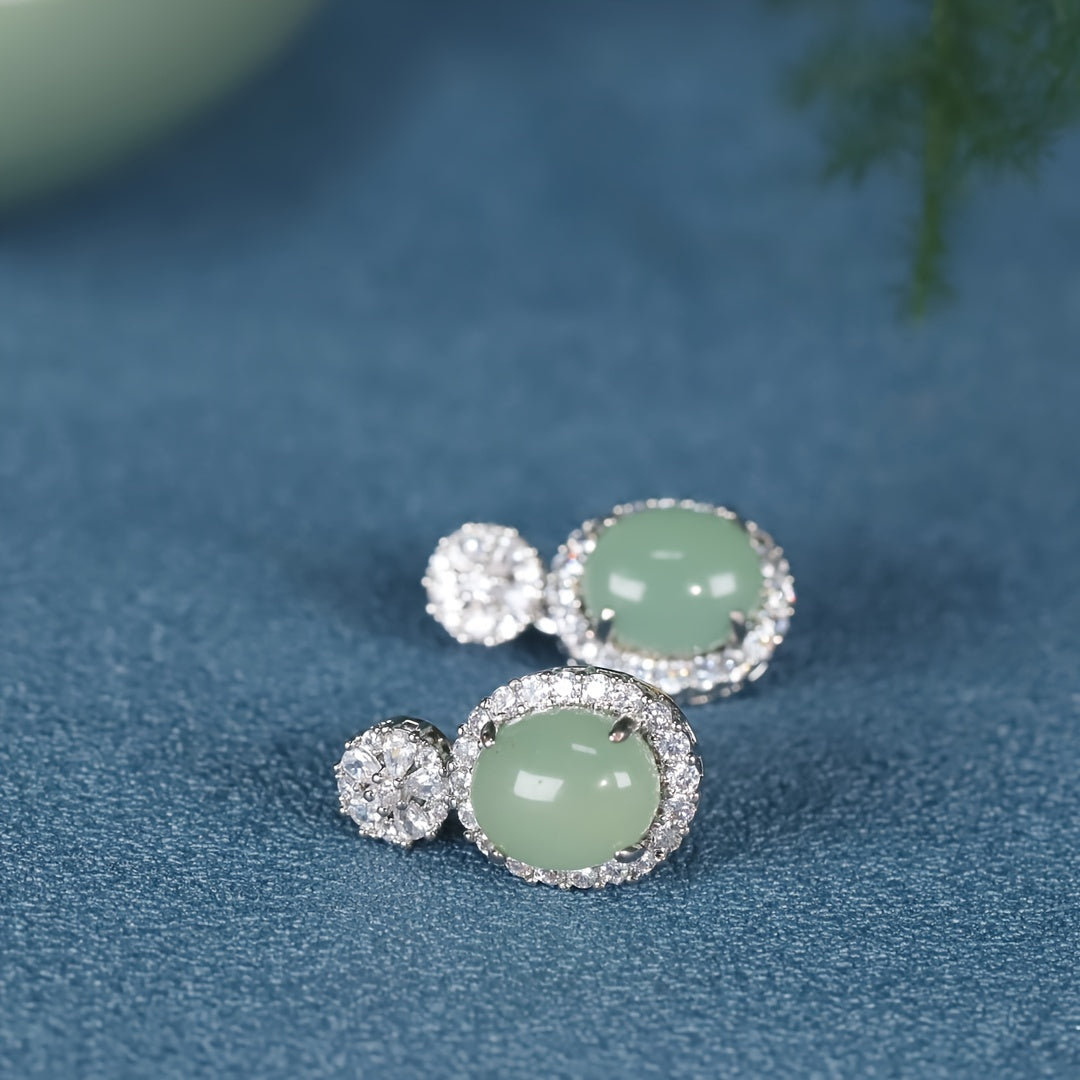
It's easy to reduce the question to its practical dimensions. You're choosing a pair of earrings. Green stone, silver, a certain weight, a particular design. But if that were all, the hesitation wouldn't feel so layered.
Perhaps what you're really choosing is a relationship with a particular kind of symbolism. The open circle. The unfinished form. The deliberate gap. This isn't neutral imagery. It makes a quiet statement about completeness, about closure, about how things are meant to be.
To wear an open circle is to wear a question about wholeness. To suggest that perhaps wholeness doesn't require closure. That perhaps we can be complete without being finished. That our gaps and openings aren't flaws, but features.
Is that a statement you're ready to make? Not necessarily to others, but to yourself? Every morning when you put these on, you'd be reminding yourself of this particular perspective on completeness. That's a different kind of commitment than simply accessorizing.
The Fit Question: Not Size, but Resonance
Most jewelry questions focus on fit in the physical sense: Will these suit my face shape? My skin tone? My personal style? Those are valid considerations. But with symbolic pieces, there's another kind of fit: emotional, philosophical, psychological.
The resonance test: When you look at these earrings, what do you feel? Not what do you think about them—what do you feel? Is there a quiet recognition, like meeting someone you already know? Or is there more distance, like observing something interesting but foreign?
Resonance is subtle. It's not the same as liking something. You can like many things that don't resonate with you deeply. Resonance feels more like: "This speaks my language." Even if you can't articulate what that language is.
Some people encounter the open circle symbol and feel an immediate sense of recognition. It makes visual sense to them in a way that closed circles don't. The gap feels necessary, right, true.
Others feel unsettled by it. They prefer completion, closure, finished forms. The open circle feels like something's missing, like it needs to be fixed.
Neither response is right or wrong. They're just different orientations to form and meaning. The question is: which orientation feels like yours? Not which one you think you should have, but which one you actually have.
This isn't about whether you "understand" the symbol intellectually. You can understand the philosophical background of the open circle and still not resonate with it. Or you can have no knowledge of its history and feel deeply connected to it.
The body often knows before the mind does. When you imagine wearing these, how does your body respond? Is there a feeling of ease? Of alignment? Or is there a slight tension, a sense that you'd be wearing someone else's idea of meaningful form?
This is where hesitation can be helpful rather than problematic. It might be pointing you toward an important distinction: between what appeals to you aesthetically and what resonates with you existentially.
The Visibility Question: How Seen Do You Want to Be?
Symbolic jewelry operates on two levels: what it means to you, and what it communicates to others. Even if you never explain the symbolism, people will notice the form. They'll see the open circle. They'll register it, consciously or not.
Some people worry: "Will others misunderstand what this means?" But perhaps a more useful question is: "Am I comfortable with being slightly misunderstood?"
All symbolism is subject to interpretation. The same symbol can mean different things to different people, across cultures, across time. When you wear a symbolic piece, you're inevitably inviting interpretations that may not match your own.
This isn't necessarily a problem unless you need control over how you're perceived. If you need people to understand exactly what the symbol means to you, symbolic jewelry might create friction. If you're comfortable with multiple interpretations coexisting—yours and others'—then the conversation becomes richer.
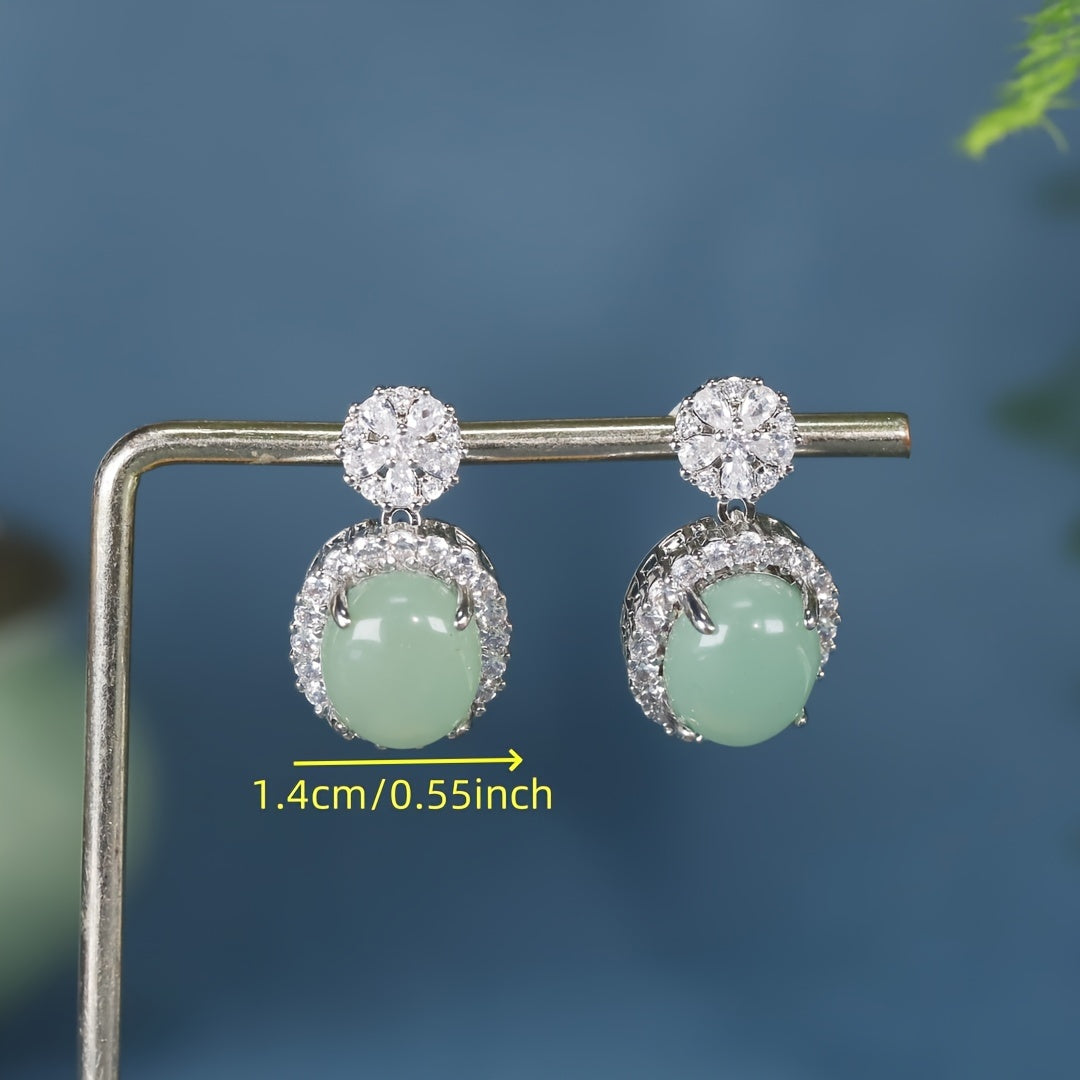
The green jade earrings are relatively subtle. They're not loud statements. But they're not invisible either. The open circle form is distinctive. The green stone draws the eye. People who notice jewelry will notice them.
Is that appealing or uncomfortable? There's no right answer, only your answer. Some people want their meaningful objects to be private, barely visible. Others enjoy when objects become conversation starters. Most of us are somewhere in between.
This question cuts through social considerations to the core of personal value. It asks: Is the meaning primarily for you, or for how you're perceived?
With these earrings, the physical experience—the coolness of the stone, the weight, the texture—is inherently private. No one else feels what you feel when you wear them. The sensory aspect exists purely for you.
The visual aspect, of course, is public. But even there, you have control over how much you share. You can wear them without explanation. If someone asks, you can say, "I just like them." You're not obligated to explain your personal symbolism to anyone.
The hesitation around visibility often comes from a deeper place: How much of my inner world am I willing to make visible? And to whom? These are valid questions. They deserve consideration.
The Transformation Question: What Am I Expecting?
Here we come to perhaps the most subtle layer of hesitation. When we choose symbolic objects, there's often a quiet hope—sometimes conscious, often not—that they might do something for us. That they might remind us of something important. That they might help us become something we want to be.
A gentle check: Are you hoping these earrings will make you feel more complete? More centered? More connected to something? There's nothing wrong with these hopes. But it's useful to notice them.
Objects can remind, but they can't transform. They can point, but they can't deliver. They can accompany, but they can't carry.
The open circle is particularly interesting here because it symbolizes non-completion. It's literally a form that refuses to close. If you're hoping for completion from a symbol of non-completion, there might be an interesting tension there worth exploring.
Perhaps the hesitation comes from recognizing this paradox. From sensing that these earrings won't "complete" you in any way—that in fact, they gently question the very idea of completion.
This might be disappointing or liberating, depending on your relationship with your own becoming. If you're comfortable with process, with growth, with being unfinished, then the symbol feels true. If you're longing for completion, for finality, for arrival, then the symbol might feel like it's highlighting exactly what you don't have.
This question gets to the heart of why we choose certain objects at certain times in our lives. Sometimes we choose things that represent who we want to become. Other times we choose things that reflect who we already are, but perhaps haven't fully acknowledged.
The open circle can work both ways. It can be an aspiration: "I want to be more comfortable with process, with unfolding, with not having all the answers." Or it can be a recognition: "I am already someone who values openness over closure, possibility over certainty."
Your hesitation might be helping you discern which of these is true for you right now. Are these earrings a step toward something, or an acknowledgment of something already present?
The Time Question: What Kind of Relationship Do You Want?
Some jewelry is for moments. Special occasions, particular outfits, specific moods. Other jewelry is for the long term. Daily wear, years of companionship, gradual patina.
The materials and construction of these earrings suggest longevity. Sterling silver develops character over time. Natural stone has already lasted millennia. The design is simple enough not to date quickly.
But more than physical longevity, there's the question of symbolic longevity. Will the open circle still resonate with you in a year? In five years? Or is it answering a current question that might eventually be resolved?
Symbols often meet us where we are. A symbol that feels deeply meaningful during a period of transition might feel less relevant during a period of stability. That doesn't make it less valuable; it just means it served its purpose for a season.
The interesting thing about the open circle is that it's a symbol about process itself. So even as your specific circumstances change, the underlying theme—life as unfolding, identity as becoming—might remain relevant.
Or not. You might reach a point where you want symbols of closure, completion, arrival. That would be a different kind of truth.
Your hesitation might be sensing this temporal dimension. Not just "Do I want this now?" but "What kind of relationship do I want with this object over time?"
Some people prefer jewelry with flexible meanings—symbols that can mean different things at different life stages. The open circle has this quality. Today it might mean "I'm okay with uncertainty." Tomorrow it might mean "I'm open to what comes." In five years it might mean "My story continues."
This is perhaps the most beautiful question these earrings invite. Most symbolic objects come with fixed meanings: this means love, this means protection, this means strength. But what about objects that hold meaning without fixing it? That allow meaning to change and evolve?
The open circle is literally a form that holds space. It doesn't prescribe what fills that space. It creates a container for meaning rather than imposing a particular meaning.
This might be why you're hesitating. Fixed meanings are easier. They tell you what you're getting. Flexible meanings require more from you. They ask you to bring your own meaning, to participate in creating the significance.
That can feel like a responsibility. Or like an invitation.
Returning to the Beginning
After all these questions, we return to where we started: you, looking at these earrings, feeling that hesitation.
Maybe now the hesitation has more texture. Maybe it's not just an obstacle to decision, but valuable information about what this choice actually involves.
Choosing symbolic jewelry is never just about choosing an object. It's about choosing a relationship with certain ideas, with certain ways of being in the world. It's about what you're willing to carry with you, literally and metaphorically.
The hesitation might not be telling you "don't choose." It might be telling you "choose consciously." It might be asking you to notice what's at stake, what's being invited, what's being questioned.
Or it might be telling you that this isn't your symbol, not right now. That there's another symbol, another form, another material that would resonate more deeply with where you are.
Both are valid outcomes. The goal isn't to overcome hesitation, but to understand it. To let it clarify rather than confuse.
So perhaps the next time you look at these earrings, instead of asking "Should I buy them?" you might ask: "What conversation do I want to have with myself about completeness, about process, about being unfinished?"
The earrings won't answer that question. But they might help you ask it more clearly. They might give you a physical form to hold the question in your hands, to wear it on your body, to live with it day by day.
Or they might remind you that you already have your answers, and they don't require silver or stone to be real.
Either way, the hesitation has done its work. It has slowed things down. It has created space for reflection. It has turned a simple choice into a meaningful conversation with yourself.
And perhaps that's the most valuable outcome of all—whether you choose the earrings or not.
