





"Do I Need Permission to Need Something Steady?" A Dialogue on Emotional Anchors and the Fear of Dependency
The hesitation isn't about the object. It's about what admitting the need might say about you. What if needing an anchor doesn't mean you're weak, but that you're honest about how gravity works?
There's a particular quality to this hesitation. It's not the usual "does this suit me?" or "can I afford this?" It's quieter, more internal. "Do I have the right to need something this simple?"
You notice it in your hand first. Fingers reaching for something solid during a video call that's going in circles. The instinct is immediate, physical. Then the thought arrives: "Wait. Shouldn't I be able to handle this without props?"
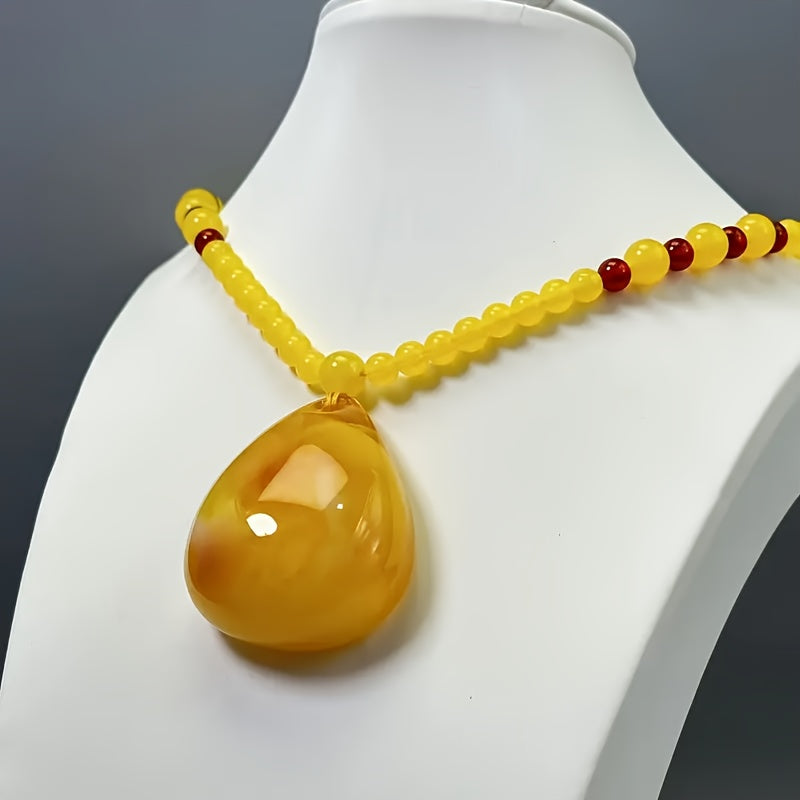
The question isn't whether amber looks good with your skin tone. The question is whether it's permissible to admit that texture helps. That weight matters. That sometimes, a physical object can hold what your mind keeps dropping.
The Fear of Becoming Dependent
This is where the real hesitation lives. Not in aesthetic uncertainty, but in philosophical anxiety. What if I start relying on this? What if I become someone who "needs" a stone to feel grounded? Isn't that a kind of failure?
One woman described it this way: "I've worked so hard to be emotionally independent. To not need constant reassurance from others. Now I'm considering buying a piece of jewelry that would essentially be self-reassurance. It feels like cheating."
But what if we've misunderstood dependency? What if some dependencies aren't weaknesses, but wise allocations of resources?
You don't consider yourself dependent on your winter coat. You consider it sensible preparation for cold weather. You don't think you're dependent on your umbrella. You think you're responding rationally to rain.
What if the amber pendant is just a coat for certain emotional weather? Not a magical solution, but practical equipment?

The Permission You Didn't Know You Needed
Here's the unspoken rule many of us carry: You should be able to handle your inner world with your inner resources alone. If you need external help—therapy, medication, conversation—that's one thing. But an object? That feels like admitting you can't even manage your own attention.
But consider this: every culture in human history has created objects to help manage attention. Prayer beads. Worry stones. Komboloi. Rosaries. Meditation malas. These weren't considered crutches. They were tools for a specific kind of work.
The work of returning. Of remembering. Of locating yourself when you've drifted.
Maybe the question isn't "Do I need this?" Maybe the question is: "What kind of relationship do I want to have with my own attention?"
If your attention is a bird that keeps flying into windows, maybe giving it a perch isn't dependency. Maybe it's kindness.
The Honesty of Simple Needs
There's something beautifully honest about admitting: "Sometimes I forget I have a body. Sometimes I need to touch something to remember."
This isn't spiritual seeking. It's physiological fact. Our nervous systems are designed to respond to tactile input. When we're anxious, we often self-soothe through touch: stroking our own arms, playing with hair, tapping fingers.
The amber pendant simply makes this instinct more intentional. It says: "Yes, touch helps. Let's acknowledge that and work with it rather than pretending it doesn't matter."
One man who overcame his hesitation said: "I realized I was spending more mental energy resisting the need than I would spend just accepting it. The pendant isn't heavy, but my resistance was."
The Questions Beneath the Question
When you find yourself hesitating over an object like this, you might listen for the quieter questions underneath:
"Am I allowed to need help staying present?"
We live in a world designed to scatter attention. Needing help gathering it isn't weakness. It's recognition of reality.
"Will this make me less resilient?"
Actually, the opposite might be true. Resilience isn't about never using resources. It's about knowing which resources help and using them wisely.
"What if I outgrow it?"
Then you'll have had a companion for a season. Objects don't need to be forever to be meaningful.
"Is this self-indulgent?"
Only if you believe your own wellbeing isn't worth simple investments.
The Unresolved Ending
There's no answer here. Only the observation that the hesitation itself is interesting. That moment when your hand reaches and your mind questions—that's where the real dialogue happens.
Maybe the amber pendant isn't the point. Maybe the point is practicing permission. Permission to notice what helps. Permission to use simple tools. Permission to have a body that responds to touch, weight, temperature.
One woman eventually bought the pendant. She said: "I wear it on days when I know I'll be pulled in multiple directions. I don't expect it to solve anything. But when I touch it, I remember: Oh right. I'm here. In this body. In this room. The meeting/article/task will end, and I'll still be here."
That might be all it is: a reminder that you're here. Not dramatically. Not magically. Just physically. Eight grams of fossilized sunlight against your skin, saying what you already know but sometimes forget: you occupy space. You have temperature. You can be touched and touch back.
Maybe that's not dependency. Maybe that's just being alive in a way that acknowledges aliveness requires anchors sometimes.

The Permission Object
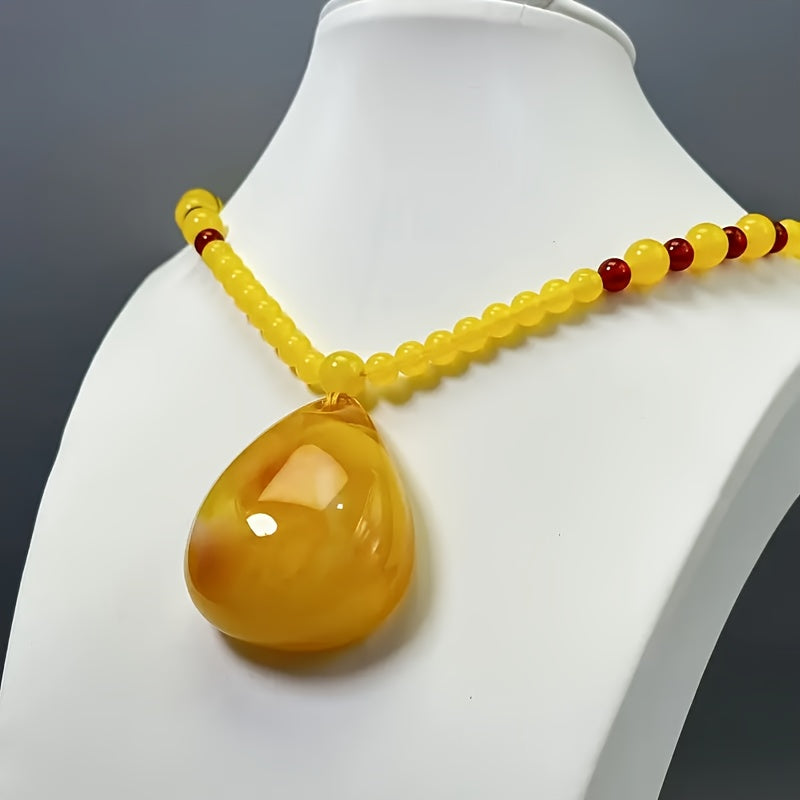
Natural Baltic amber on a 65cm chain. For when you need permission to need something steady.
Consider the Companion →