





The Weight of Resin: Cold Touch, Warm Memory, and the Feeling of Time Held
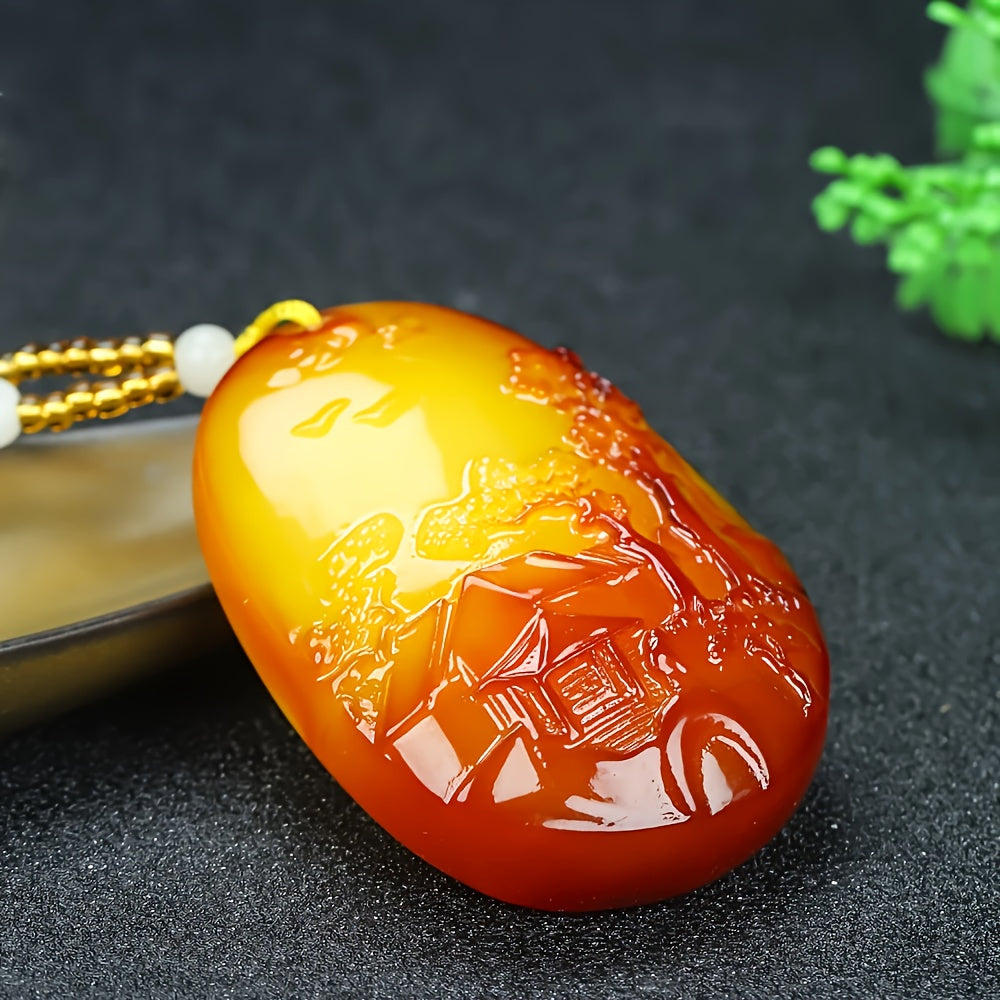
It comes out of the package cool to the touch. Not cold like metal left on a winter windowsill, but cool like river stone in shadow. You hold it in your palm, feeling that initial temperature difference—your skin at 37 degrees, the resin perhaps 22. That fifteen-degree gap is the first conversation.
Some materials announce themselves immediately. Gold is heavy, silk is slippery, wool is warm. Resin is quieter. It feels solid but not dense, smooth but not slick. Run your thumb over the water drop shape and you'll notice something: it warms where you touch it, but slowly. The heat transfers gradually, as if the material is considering whether to accept your temperature or maintain its own.
Historically, resin meant something specific: amber, the fossilized tree sap that preserved insects for millions of years. Ancient traders carried it along routes that would become the Silk Road, valuing it not just as ornament but as a container of time. An insect caught mid-motion, a leaf preserved at its peak—these weren't decorations but museums. Small, wearable museums.
Modern resin is different chemically but similar conceptually. It starts liquid, poured into molds. The artisan watches as bubbles rise—some intentionally left, some popped with precise tools. These bubbles are tiny captured moments of air from that particular day, in that particular workshop. They're not flaws but diaries. Each pendant contains the atmospheric conditions of its creation: the humidity, the temperature, the pressure in the room when it set.
When you wear resin against your skin, something subtle happens over weeks. The surface develops a slight patina—not tarnish like silver, but a softening of the shine. Your body oils interact with the material at a molecular level. The resin that was once uniformly cool begins to have warmer spots where it rests against your collarbone, cooler spots on the back curve that touches fabric.
This thermal map is unique to you. Another person wearing the same pendant would create different warm and cool zones based on their body temperature, their daily movements, even their circulation patterns. The object becomes a physical record of your specific existence.
I once met a woman who had worn the same resin pendant for seven years. She showed me how one edge was slightly more matte than the rest. "That's where I touch it when I'm thinking," she said. "During meetings, while reading, when I'm paused at a traffic light. My thumb has polished that one spot without me noticing."
That's the peculiar quality of resin: it accepts our unconscious gestures. Metal might develop a patina, leather might soften, but resin seems to remember. It holds the memory of touch in its very surface, not as wear but as transformation.
Consider the white beads on either side of the pendant. Ceramic, matte finished. They don't reflect light so much as absorb it gently. When you run your fingers along the necklace, these beads create a rhythm: smooth resin, textured bead, smooth resin, textured bead. It's a tactile sentence with punctuation.
The golden accent isn't gold at all, but brass with a thin plating. This matters because brass conducts heat differently than gold. It warms faster, matches body temperature more readily. That small metal detail becomes the warmest part of the piece, a tiny sunspot against the skin.
Now think about weight. The entire necklace weighs perhaps 25 grams—less than a handful of coins. But weight perception is strange. On some days, when you're tired, it might feel heavier. On light days, you might forget it's there entirely. The actual mass hasn't changed, but your sensitivity to it has.
This variability is part of the relationship. An object that always feels the same becomes background noise. But something that feels different depending on your state? That invites noticing.
There's a practice some people develop with such pieces: the morning touch. Not putting it on ritualistically, but simply noticing its temperature as it first meets the skin. Is it cool from the night air? Has it retained some warmth from yesterday? That initial sensory data becomes a quiet check-in, like feeling a child's forehead for fever but for your own state of being.
Over months, the relationship deepens in unexpected ways. You might develop favorite angles—the way the pendant catches light at 3 PM as you work near a window. You might notice it swinging differently depending on your posture. These aren't spiritual insights; they're physical observations. But in a world that rushes past the physical, observation itself becomes a kind of meditation.
The question isn't whether the material has meaning. The question is whether we allow ourselves to notice the conversation happening at the boundary between our skin and the object. That thin line where body ends and world begins is where meaning either emerges or gets missed.
Some people will never feel this. They'll wear the pendant as decoration, appreciating its look but not its texture. That's fine—the object doesn't demand attention. It simply offers the possibility.
Others will find themselves, months in, tracing the curve absentmindedly during difficult conversations, finding comfort in its solidity. They won't be able to explain why it comforts them, and that's appropriate. Some companions are better felt than explained.
The material doesn't heal. It doesn't transform. It doesn't promise anything. But it does one thing reliably: it exists in time alongside you. It cools when you're not wearing it, warms when you are, accepts your touch patterns, changes almost imperceptibly over seasons.
This might sound trivial until you consider how few things in modern life have this quality of gradual, gentle change. Most objects either break or stay the same. Resin does something else: it ages with you, not for you.
That distinction matters. Something that ages for you—like anti-aging cream promising to preserve you—creates anxiety. Something that ages with you creates companionship.
I think of the ancient amber traders again. They weren't selling beauty; they were selling captured time. A mosquito that buzzed during the Jurassic period, now suspended forever. We've lost that sense of time-as-object. Our time is digital, abstract, measured in notifications.
Wearing resin is a small reclaiming of time as physical. The bubbles inside were captured on a Tuesday afternoon in a workshop. The warmth it holds right now is your body's heat from this morning. The slight matte spot developing is from your specific nervous habit.
None of this is magical. It's simply material science meeting human habit. But in that meeting, something quiet happens: we remember we're physical beings in a physical world. Not avatars, not profiles, not concepts—but warm-blooded creatures who leave marks on things and are marked by them in return.
So when you first touch the pendant and feel its coolness, you're not just feeling temperature. You're feeling the beginning of a conversation that will continue as long as you wear it. The material will speak in terms of heat transfer, texture change, weight perception. You'll speak in terms of attention, memory, association.
Neither language is superior. They're just different ways of describing the same shared existence.
After a year, the pendant will be unmistakably yours. Not because it has your name on it, but because it bears the physical record of your year. The warmth patterns of your particular skin, the polish from your specific touch habits, the tiny scratches from your specific daily life.
Another person could wear it, and it would eventually become theirs too. The material is democratic that way—it doesn't hold loyalty, only history.
This might be the most honest relationship we can have with objects: not ownership, but temporary stewardship. We borrow them for a while, exchange warmth and texture, then pass them along. The resin will outlive us by centuries, carrying the faint memory of our brief touch among all the others.
That thought isn't sad; it's grounding. We're part of a chain of touch, a lineage of warmth transfer. The artisan's hands shaped it, your skin wears it, someday perhaps someone else will find it and continue the conversation.
The material doesn't care about this narrative. It simply is. Cool in the morning, warm by afternoon, solid against uncertainty, patient with inattention.
Maybe that's enough. Maybe an object that reliably exists, that changes gradually and honestly, that asks nothing but offers its simple physicality—maybe that's the kind of companion we need in a world of digital promises and emotional demands.
Touch it now. Notice the temperature. Notice the texture. Notice the weight. These aren't just material properties; they're invitations to be here, in your body, in this moment. The resin will wait if you're not ready. It has time.
If this material reflection resonates, you might experience the Water Drop Pendant differently.
View the Jewelry Piece →Final thought, left open: Can an object hold meaning without fixing it? Resin suggests yes—by being a container rather than a conclusion. It holds your warmth temporarily, releases it slowly, accepts new warmth tomorrow. The meaning isn't in the material; it's in the exchange.
That exchange happens whether you're paying attention or not. But if you do pay attention, you might notice something: you're not just wearing jewelry. You're participating in a slow, quiet conversation between your living body and a material that remembers time differently than you do.
Both of you will be changed by it. Neither of you will be able to say exactly how.
And perhaps that's exactly as it should be.
