





The Weight of Light: How UV-Reactive Resin Changes Our Perception of Presence
What happens when a material holds a secret color? Exploring the psychology of UV-reactive resin, its unexpected reveal, and how this hidden layer mirrors our own unseen depths.
The First Touch: Cold, Smooth, and Deceptively Simple
It begins with the fingertips. Before any symbolism, before any cultural weight, there is the sheer physical fact of the object in your hand. The resin pendant is cool to the touch—not with the deep cold of metal, but with the mild, ambient coolness of a morning stone. Its surface is smooth, polished to a gentle gloss that catches the light without glaring. The edges of the square frame are crisp but not sharp; they've been rounded just enough to feel intentional, not aggressive.
You run your thumb over the dragon's relief. Here, the texture changes. The coiled form rises from the flat background, its scales carved with meticulous detail. Your fingertip traces the ridges and valleys, mapping the creature's form not with your eyes, but with your skin. This is the tactile introduction: the moment when the body begins its conversation with the material, long before the mind assigns meaning.
What is resin, in this first encounter? It is weight without heft. It is color without depth—or so it seems. In ordinary indoor light, the pendant shows its design clearly: the dark outlines, the earthly tones of the dragon, the clean neutrality of the square background. It is handsome, detailed, but comprehensible. Your sensory assessment is complete. Or so you think.
This first touch establishes the baseline reality. The resin feels solid, inert, finished. It declares itself as an object of craft, not mystery. Your hand accepts this declaration. The material has told its first story: one of surface, of form, of visible intention. But materials, like good stories, often hold their real revelations for later.
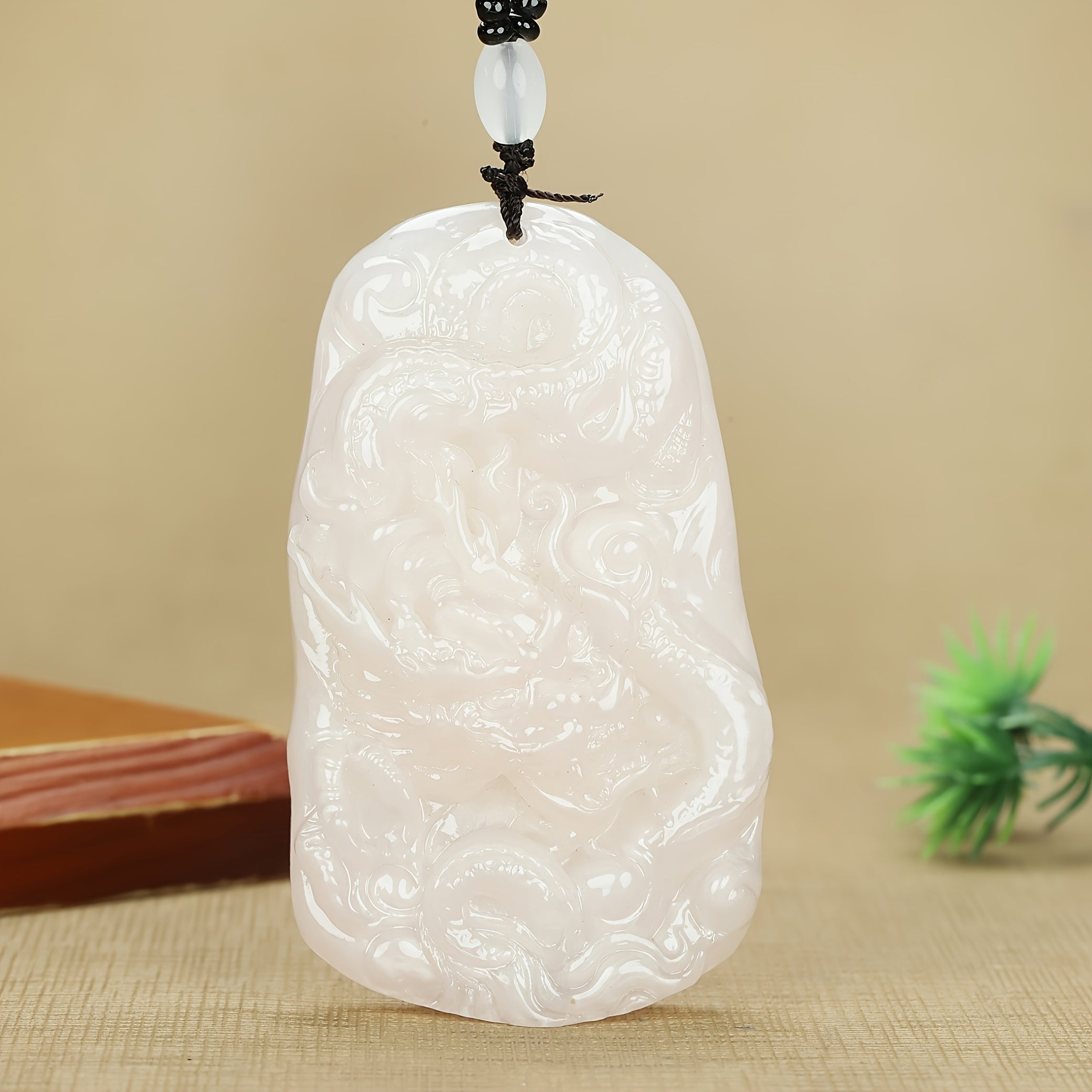
The daytime self: visible texture, clear form, comprehensible materiality.
The Chemical Soul: What Resin Actually Is
To understand the revelation that comes later, we must pause at the material's essence. Resin is not a natural stone hewn from the earth. It is not metal smelted from ore. It is, fundamentally, a modern alchemy: the transformation of liquid polymers into solid form through chemical reaction.
The specific resin used here begins as two separate liquids—a resin and a hardener. When mixed in precise ratios, a process called polymerization occurs. Molecules link together in chains, then networks, transforming from a viscous syrup into a rigid solid. This transformation is irreversible. The liquid memory is gone; a new, stable form has been born.
Into this liquid stage, before it sets, other elements are introduced: pigments for color, and crucially, UV-reactive compounds. These compounds have a unique property: their molecular structure absorbs ultraviolet light (invisible to human eyes) and re-emits it as visible light of a specific color. They are light-catchers, quiet until activated by the correct wavelength.
The Hidden Chemistry
The UV-reactive molecules (often derivatives of stilbene or coumarin) remain dormant in normal light. Their electrons sit at a baseline energy state. When UV photons (high-energy, short-wavelength light) strike them, the electrons absorb this energy and jump to an excited state. As they return to baseline, they release the extra energy as visible photons—creating the glow we see.
This isn't magic; it's quantum mechanics made tangible. The pendant literally contains trapped sunlight, waiting for the right conditions to release it as color.
The craftsmanship, then, is not just carving the dragon's form. It is the careful suspension of these light-catching molecules throughout the resin matrix, ensuring even distribution. It is the control of opacity so that UV light can penetrate deep enough to activate the compounds, but not so deep that the effect is lost. This is material science as artistry.
When you hold the pendant in daylight, you are holding this entire chemical history: the liquid transformation, the suspended light-catchers, the precise engineering of opacity. But none of this is perceptible to your senses. The material's deepest nature is hidden behind its polished surface.
The Threshold Moment: When Light Changes Everything
Now, imagine the transition. You're in a dim room, perhaps as evening falls. You've worn the pendant all day, grown accustomed to its weight against your chest, its texture when your fingers occasionally brush it. It has become familiar, its material reality settled in your perception.
Then, you step under a blacklight—at a museum exhibit, a certain club, or with a small UV flashlight you keep for this specific purpose. Or perhaps sunlight through a window contains enough UV to begin the transformation subtly.
Something shifts.
The pendant, which moments ago was earthy tones on neutral background, now glows. Not uniformly, but in specific areas where the UV-reactive pigments are concentrated. The dragon's scales might emit a soft violet light. The background might shimmer with an electric blue. The square frame might outline itself in neon green. The design you knew is still there, but it has been fundamentally altered—not in form, but in essence.
The pendant exists as a crafted object. Cool, smooth, visually detailed. Your perception is complete: this is what it is.
The first hint of change. A subtle shimmer at the edges. Your brain registers incongruity: the object is defying its established identity.
The hidden colors fully emerge. The pendant is now two objects simultaneously: the one you knew and this new, luminous version.
Your perception expands to contain both realities. The material is no longer just resin; it is resin-that-reveals.
This moment is more than visual spectacle. It is a perceptual event. Your brain, which had constructed a stable model of the object ("cool, smooth, earthy-colored resin"), must now revise that model entirely. The material has revealed a property you could not have deduced from your initial sensory exploration. It has shown you that your understanding was incomplete.
The psychological impact is subtle but profound. If this object could hold such a secret, what else might be hiding in plain sight? What other aspects of your world—or yourself—have dimensions visible only under specific conditions of perception?
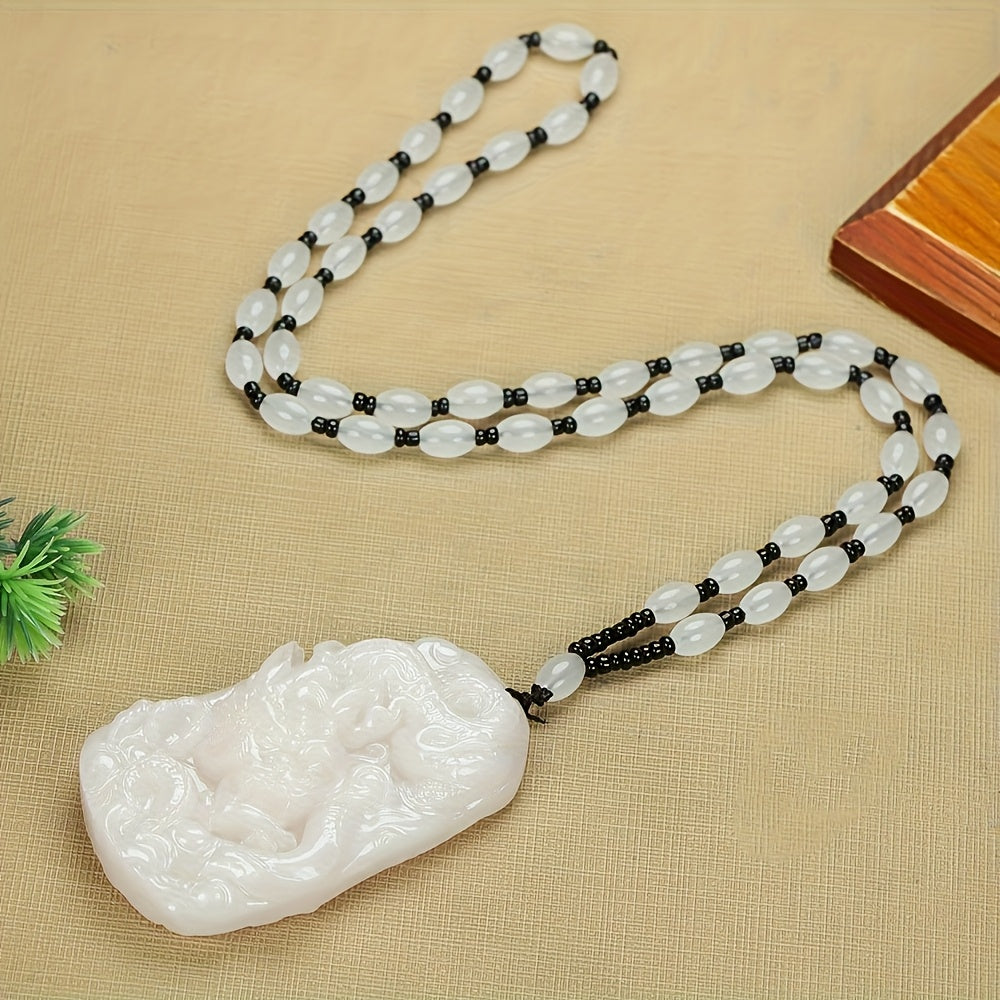
The revealed self: what was hidden becomes visible under specific conditions of perception.
The Psychology of Hidden Layers: Why This Matters
Why does this material property resonate so deeply? Beyond the novelty, UV-reactive resin taps into fundamental human experiences of revelation, identity, and the limits of perception.
First, it mirrors our own experience of self-discovery. We all have aspects of ourselves that remain hidden in ordinary circumstances—talents that emerge under pressure, qualities that surface only with certain people, depths of resilience we don't know we possess until tested. The pendant's transformation under UV light becomes a physical metaphor for this human reality: we contain multitudes, and our full spectrum is rarely visible all at once.
Second, it challenges our epistemic confidence—our belief that we can know things by their surface appearances. Modern life encourages quick assessments. We judge people by first impressions, products by their packaging, experiences by their Instagram filters. The UV-reactive material insists: Wait. Look again. Under different light. There is more here than you initially perceived. It cultivates what we might call "perceptual humility."
Third, it creates a temporal relationship with the object. The pendant isn't static; it exists in different states depending on environmental conditions. Your relationship with it must therefore also be flexible, adaptive. You learn to hold both its "day self" and its "UV self" in your mind simultaneously. This mirrors healthy relationships with complex people: we learn to hold multiple aspects of them at once, without reducing them to any single version.
Finally, there's the sheer joy of revelation. In a world where so much is instantly knowable via Google searches and product specifications, encountering something that genuinely surprises you—that reveals a property you couldn't have predicted—is increasingly rare. That moment of "Oh!" when the colors emerge is a small but meaningful re-enchantment of the material world.
Material Memory: How the Body Remembers the Revelation
Here is where the experience moves from visual to embodied. After you've witnessed the transformation once, something changes in your everyday handling of the pendant.
When you put it on in the morning, your fingers know its cool smoothness. But now, that tactile knowledge carries an additional layer: the memory of its hidden potential. The material feels different because you know it can be different. The weight on your chest isn't just the weight of resin; it's the weight of possibility.
This creates what cognitive scientists call a "dual representation" in your sensory memory. Your brain maintains two parallel models of the object:
- The Actual Model: What you're perceiving right now (cool, smooth, earthly tones).
- The Potential Model: What you know it can become under different conditions (glowing, luminous, transformed).
These two models exist simultaneously, creating a subtle cognitive tension. The object is never just itself; it is always itself-plus-its-potential-other-self. This tension is the essence of the material's psychological power.
When worn daily, over time, this dual representation begins to influence not just how you perceive the pendant, but how you perceive other things. You might find yourself looking at ordinary objects—a wooden table, a friend's face, your own hands—and wondering: What hidden dimension might this have? What would I see under different light? The material trains you in a certain kind of perceptual openness.
A Personal Practice
Try this: For one week, whenever you touch or notice the pendant, pause for three seconds. In that pause, hold two thoughts simultaneously:
1. "This is what I'm perceiving right now." (Notice the actual texture, weight, appearance.)
2. "This contains what I cannot perceive right now." (Remember its UV-transformed state, or simply the fact that your perception is always incomplete.)
This simple exercise, prompted by the material's properties, can gradually shift your default mode of perception from assuming completeness to acknowledging potential hidden depths.
The beads of the chain add another layer to this embodied experience. Their texture is repetitive, rhythmic—a steady counterpoint to the pendant's transformative potential. Running your fingers along them becomes a grounding gesture, a return to the tangible, knowable world even as you contemplate the hidden dimensions of the central symbol.
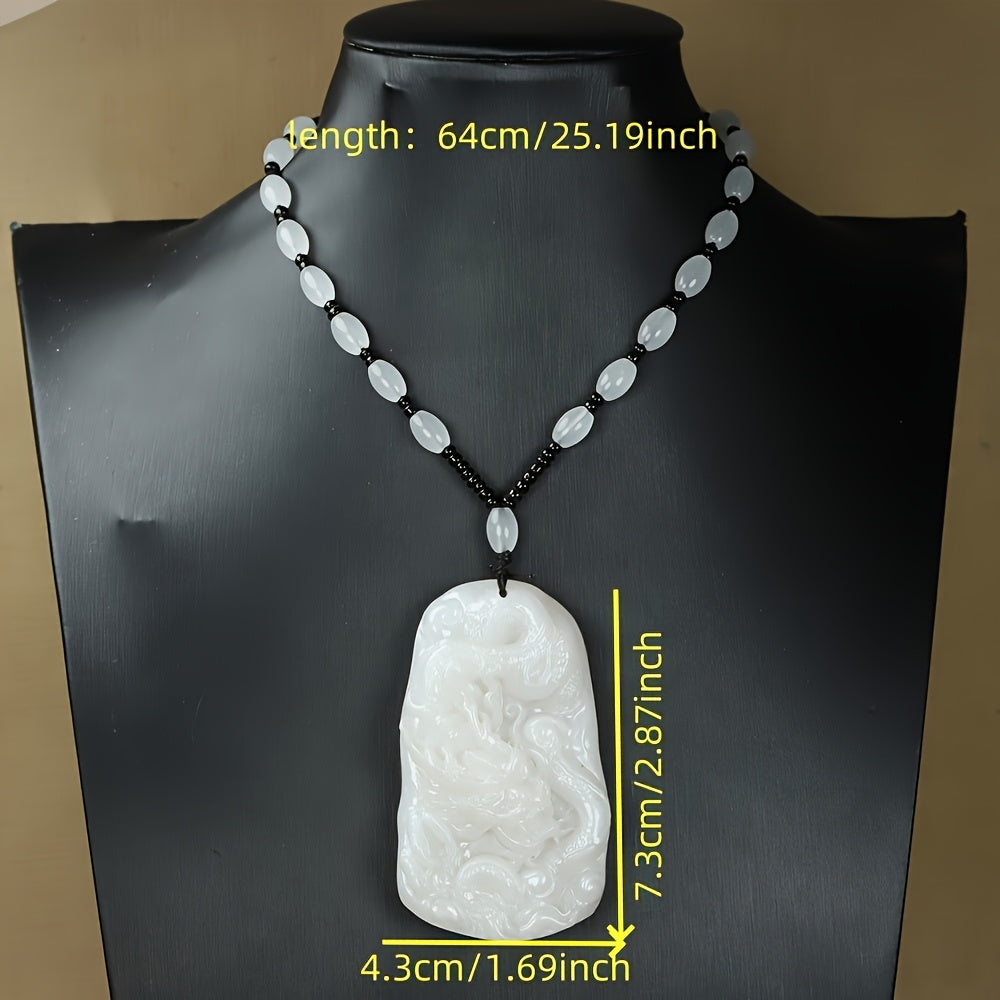
Material memory: the body remembers both the surface and what lies beneath it.
The Ethics of Artificiality: Resin vs. "Natural" Materials
A question inevitably arises in discussions of materiality: What about "natural" materials? Stone, wood, metal—materials with geological or biological histories that feel more "authentic"? Is resin, as a synthetic polymer, somehow less meaningful?
This is worth examining, as it touches on deep cultural biases. We tend to privilege materials that come from the earth over those that come from laboratories. We associate natural materials with authenticity, age, and "realness," while synthetic materials often carry connotations of artifice, cheapness, or inauthenticity.
But this binary breaks down under closer examination. All materials are, in a sense, transformations. Gold must be mined, smelted, refined. Wood must be cut, dried, shaped. Even a "natural" stone pendant has been polished by machine tools, its form decided by human intention. The difference is one of degree, not kind.
UV-reactive resin offers something unique precisely because of its synthetic nature: intentional hiddenness. Natural materials can have surprising properties (opal's play of color, labradorite's flash), but these are accidents of geology. The UV-reactivity in resin is deliberately engineered. It represents human intention not just in the form, but in the very essence of the material's behavior.
This makes it a particularly modern material—one that reflects our contemporary understanding that reality is not just discovered, but constructed. That we can design materials with specific psychological effects in mind. That authenticity might not be about origins, but about honest relationship to function and meaning.
When you choose to wear this pendant, you're not choosing between "natural" and "artificial." You're choosing to wear a material that embodies a specific idea: that surfaces can be deceiving, that revelation requires the right conditions, that what appears solid and finished might contain luminous secrets. That idea is the true "material soul" of this piece.
Beyond the Pendant: UV-Reactivity as a Metaphor for Attention
The ultimate significance of this material experience extends far beyond jewelry. UV-reactive resin becomes a working metaphor for a particular quality of attention we might cultivate in our lives.
Think of UV light as a metaphor for specific conditions of attention. Just as the material reveals its hidden colors only under specific wavelengths of light, people and situations reveal different aspects of themselves under specific qualities of our attention.
A friend might show their vulnerability only when they feel truly listened to, without judgment. A difficult task might reveal creative solutions only when approached with playful curiosity rather than grim determination. Your own mind might access insights only in certain states—while walking, showering, or just before sleep.
The pendant, with its dual material reality, becomes a physical reminder: Am I shining the right kind of light on this situation? Am I stuck in "ordinary light" perception when a shift in attention might reveal something new?
This isn't about positive thinking or forcing revelations. It's about recognizing that our perception is active, not passive. We choose, consciously or unconsciously, what "light" to shine on our experiences. The material teaches us that changing the light can change what we see—not by altering reality, but by revealing aspects of it that were always there, waiting for the right conditions to become visible.
Three "UV Lights" for Daily Perception
1. The Light of Curiosity: Approach familiar situations with genuine questions rather than assumptions. "What might I be missing here?"
2. The Light of Slowness: Allow more time with people and tasks than feels necessary. Hidden dimensions often reveal themselves only after the surface has been thoroughly perceived.
3. The Light of Different Context: Change your physical or mental context. Discuss a problem while walking. Consider a relationship dynamic at a different time of day. Shift the "wavelength" of your attention.
Worn in this spirit, the pendant ceases to be merely decorative. It becomes a training device for perception. Its material properties—the cool smoothness, the sudden glow under UV—are constant reminders that reality is richer than our default modes of seeing suggest.
In quiet moments, when you feel its weight, you might ask: What in my life right now might have hidden colors? What am I perceiving only in "ordinary light"? What would change if I shifted the wavelength of my attention? The questions themselves, prompted by the material's behavior, become the real value of wearing it.
Conclusion: The Material as Teacher
We began with a simple tactile encounter: cool, smooth resin. We end with a transformed understanding of both the material and our own capacity for perception.
UV-reactive resin teaches through its very being. It demonstrates that:
- Materials have behavioral dimensions beyond their static properties
- Our initial sensory assessments are always provisional
- Revelation requires specific conditions, not just more looking
- An object can embody a philosophical stance about reality itself
The "Dragon's Stillness" pendant, in this material context, becomes more than a dragon symbol. The dragon represents the content—ideas about power, sovereignty, containment. But the UV-reactive resin represents the process—how we come to understand anything at all. It reminds us that understanding is always conditional, always dependent on the quality of our attention.
When you wear it, you wear this dual lesson: the symbolic lesson of the dragon (how to relate to inner strength) and the material lesson of the resin (how to relate to perception itself). The two are inextricable. The dragon's meaning is framed by the square, but it's the resin's hidden light that shows us frames can be transcended.
Perhaps the most profound aspect of this material experience is its gentleness. The revelation isn't forced. The hidden colors don't shout; they simply appear when the conditions are right. They suggest that our own hidden depths might reveal themselves not through forceful introspection, but through creating the right conditions—of attention, of safety, of openness.
In the end, the weight you feel against your chest isn't just the weight of resin. It's the weight of possibility. The weight of knowing that what you see is never all there is. The weight of light, waiting to be transformed.
This article is part of DARHAI's Material Souls series, exploring how the physical properties of materials influence perception, memory, and meaning. The experiences described are subjective invitations, not prescriptive outcomes.
