





The Cool Weight of Remembering: Skin Against Polished Agate and Sterling Silver
An encounter with temperature and density. How the specific gravity of agate creates a subtle, grounding pull on the earlobe, and why that physical sensation can precede emotional clarity.
The First Touch: A Temperature Exchange
It arrives cool. Not with the sharp chill of metal left in a winter room, but with the deeper, slower cool of stone that has held a stable temperature for hours. When you pick up the earring for the first time, the sterling silver hook feels almost neutral—a quick conductor that soon matches the warmth of your fingers. But the agate drop retains its own climate.
This initial coolness is the material's first word. It says: I am other. I am not you. I come from a different place, a different pace. As you hold it, the heat begins to transfer. The stone warms, but slowly. It resists immediate assimilation. This slow warming is the beginning of the relationship—a negotiation of boundaries, a gentle reminder that some things cannot be rushed into familiarity.
Some people notice they hold their breath in this moment. There's a pause. The fingers explore the smooth, waxy polish of the cabochon, trace the sharp edge where it meets the silver wrap. The contrast registers: flawless surface, imperfect junction. Already, the object is teaching through touch before any thought forms.
Then you bring it to your ear. The hook slides in—familiar mechanics. But then comes the weight. It's not heavy, but it is present. A definite, downward pull that your earlobe hasn't felt before, or hasn't felt in this specific way. It's a weight with texture: the smooth agate rests against the skin just below the ear, a small, cool disk. The silver wire is a thin line of pressure against the curve of your ear.
This is the material encounter: not just seeing, but feeling an object claim its space on your body. It's a quiet colonization that requires your permission. And in that permission, something shifts.
The Semantics of Weight: What Gravity Asks
Weight is not just physics; it is psychology. A light earring can be forgotten. A heavy one can become a burden. This weight—approximately 6-7 grams per earring—occupies a middle ground. It is perceptible. You feel it when you turn your head quickly—a slight lag, a gentle sway. You feel it when you lean forward at a desk—a subtle reminder of its presence.
This perceptibility is the material's second lesson. In a world where so much of our experience is weightless—digital information, social media feeds, abstract anxieties—here is something with definite mass. It obeys gravity without apology. It pulls downward, toward the earth, toward the physical.
Over days, this weight begins to perform a function. It becomes a tactile anchor. On mornings when your thoughts are scattered, when you feel untethered, the simple act of putting on these earrings provides a small but definite point of orientation. Here is my body. Here is this weight. Here is now. The sensation precedes the cognition. The body understands before the mind articulates.
There's a reason why weighted blankets have become popular for anxiety. The deep pressure touch stimulates the parasympathetic nervous system, promoting calm. While an earring's weight is far lighter, the principle is related: a gentle, consistent pressure can be organizing. It provides a boundary—a literal line where your body ends and the object begins, and in defining that boundary, it helps define you.
The agate's specific gravity (around 2.6) means it is denser than most plastics, glass, or even many other stones. This isn't symbolic meaning; it's material fact. But in wearing it, that fact becomes experience. You are literally wearing density. You are carrying a small piece of the earth's patience.
A Dialogue of Temperatures: Silver and Stone
The materials are in conversation. Sterling silver is a conductor. It quickly adopts the temperature of its environment—and of your skin. The agate is an insulator. It holds its temperature longer, creating a subtle gradient: the hook is warm from your body heat, the stone below remains cooler.
This thermal contrast is another layer of the material dialogue. It prevents the object from becoming invisible through complete assimilation. There is always a point of difference, a slight coolness against the neck or cheek that reminds you it's there. It resists becoming mere background.
Some wearers notice this most in transitional moments: stepping from a warm room into cooler air, the agate seems to "wake up," its coolness becoming more pronounced. Or after hours of wear, when both metal and stone have fully warmed to body temperature, there's a moment of unity—a completed exchange. Then, when you remove them, they cool separately again, the silver faster, the stone slower, each returning to its material nature.
This cycle of warming and cooling mirrors the cycle of attention and forgetfulness that characterizes any long-term relationship with an object. Sometimes you notice it keenly; sometimes it fades into the background of sensation. The material doesn't demand constant attention; it simply persists, available when you return to it.
The polish of the agate is important here. A rough, unpolished stone would catch on clothing, demand attention through friction. The high polish allows it to glide, to be smooth against skin and fabric. It is designed for companionship, not confrontation. Its presence is a constant but gentle one.
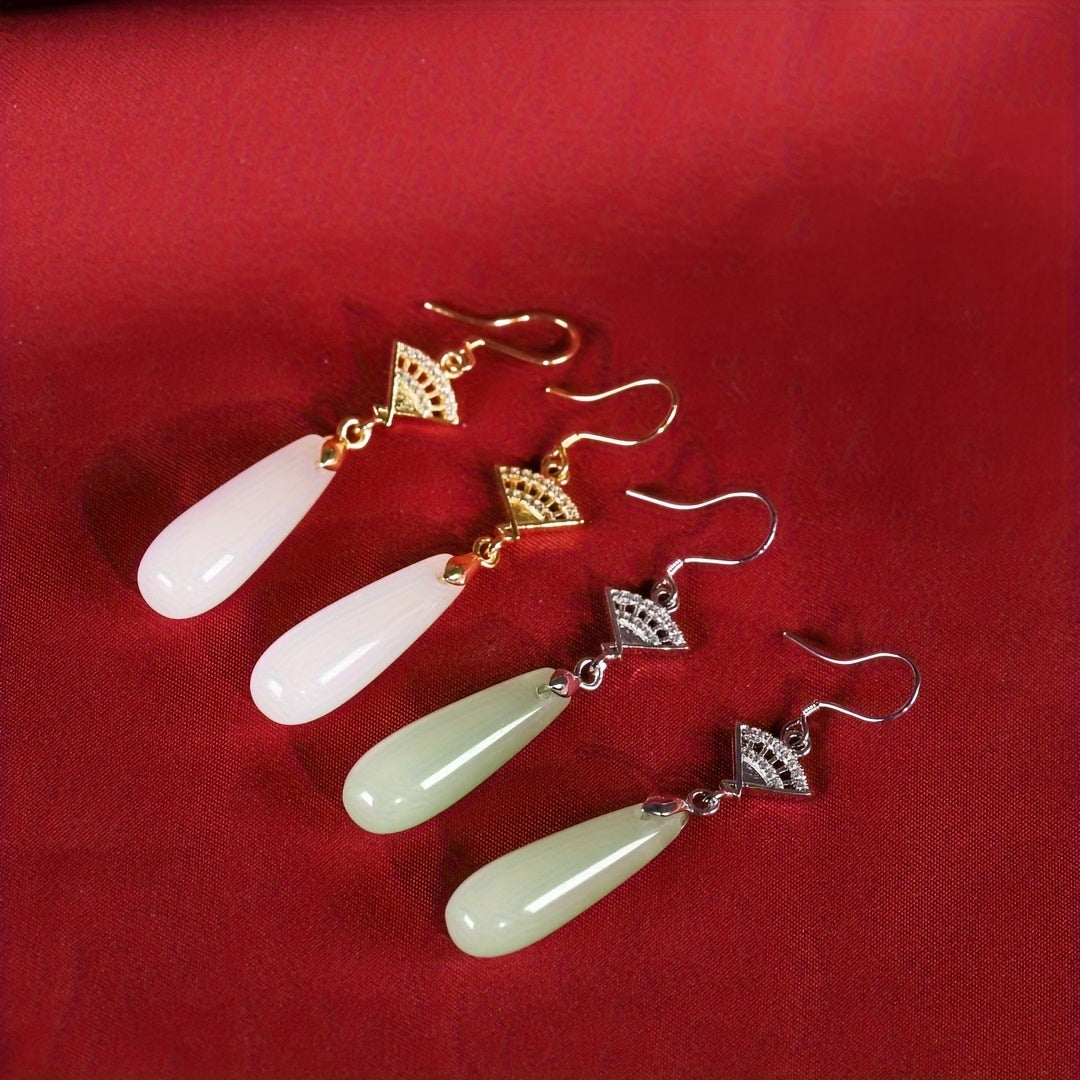
Experience the weight, temperature, and texture of the Red Agate Drop Earrings.
View the Jewelry Piece →