





Black Sandalwood: The Scent of Time and the Psychology of Patience
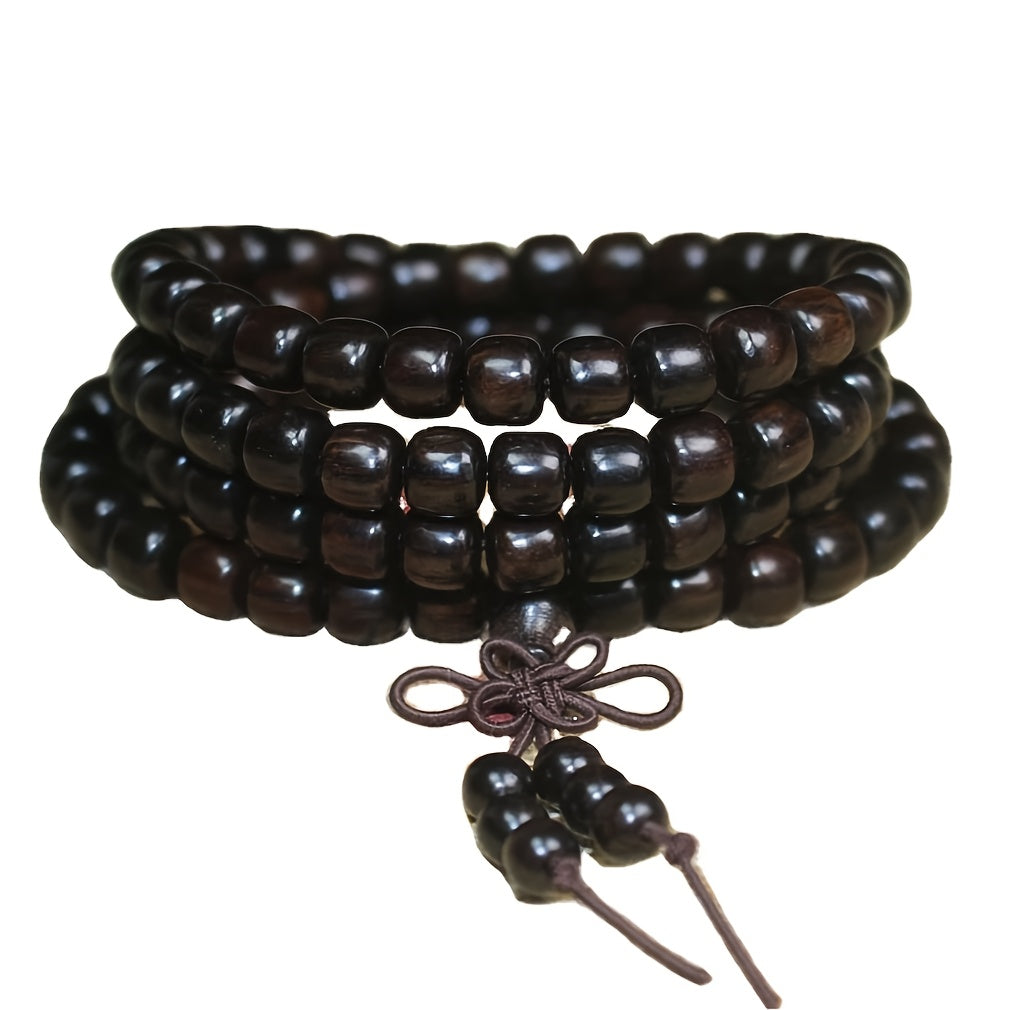
The first time your skin meets sandalwood, there is a quiet conversation. It doesn't happen with a shout, but with a whisper. Your fingers register a specific weight—dense, but not heavy. A particular warmth—not the cold of stone or metal, but a temperature that seems to equalize with your own almost immediately. Then, after a moment, it arrives: the scent. It doesn't flood the air; it rises slowly, coaxed forth by the heat of your touch. It is woody, creamy, slightly sweet, with an unmistakable character of antiquity. This is not the smell of a freshly cut plank. This is the smell of time itself—time spent growing, time spent hardening, time spent becoming.
This encounter is the starting point. We live in a world of materials designed for instant gratification: plastics that cool quickly, composites that feel eternally new, surfaces that repel the evidence of use. Sandalwood is the antithesis. It is an argument for slowness, made solid. To hold it is to hold an object that could not be rushed. Its very existence is a lesson in biological patience. Santalum album, the true sandalwood tree, is a hemi-parasite. It must sink its roots into the roots of a host tree to survive its first years. It grows slowly, often taking 20 to 30 years before its heartwood—the dense, fragrant core—is mature enough to harvest. This is not efficiency. This is interdependence and gradual accumulation.
Modern Reality: When We Experience Materials as Disposables
Consider the texture of your daily life. Your phone screen is smooth, hard, and cool. Your desk is likely laminate or manufactured wood—uniform, seamless. Your clothes are synthetic blends designed to wick, stretch, and resist wrinkles. These materials are marvels of engineering, optimized for performance, hygiene, and cost. But in this optimization, something is lost: the temporal signature.
Most modern materials hide their age. They are designed to look new for as long as possible, then be replaced. They don't patina; they degrade. They don't warm to us; they remain indifferent. Our sensory experience becomes one of interacting with surfaces that have no history and promise no future beyond their functional lifespan. This creates a subtle but pervasive psychological state: everything feels provisional, temporary, and disconnected from a longer timescale.
The Psychology of the "Soul" in Material
What do we mean when we speak of a material's "soul"? It is not a mystical essence. It is the sum of its physical properties plus the narrative of its origin and behavior over time. A material's soul is how it communicates with our senses and our memory.
Sandalwood's soul is deeply tied to time. Its density speaks of years of growth. Its fragrance is a volatile oil that developed as a defense mechanism and a preservative—chemistry forged over decades. Its warmth is a result of its cellular structure. When you hold it, you are not just holding wood; you are holding a process made tangible. This has a direct psychological effect. Engaging with such a material can trigger what psychologists call a "time dilation" effect in perception. It pulls you out of the frantic, micro-second pace of digital life and into a rhythm measured in seasons and years.
The Sensory Bridge: How Scent Bypasses Thought
The most profound dialogue with sandalwood happens through olfaction. Smell is the only sense directly wired to the limbic system, the brain's seat of emotion and memory. It bypasses the thalamus, the usual sensory relay station, and goes straight to the amygdala and hippocampus. This is why a scent can evoke a vivid memory or a feeling long before we can name it.
Sandalwood's scent, therefore, is not just a pleasant aroma. It is a direct neurological anchor. In Ayurveda, it is classified as "cooling" and "calming" to the mind. Modern aromatherapy studies suggest it can reduce physiological arousal. But beyond any bioactive effect, its primary psychological function is associative. Through repeated contact—wearing a mala, having a sandalwood object on a desk—the scent becomes linked to moments of pause, of touch, of intentional breathing. It begins to act as a conditioned trigger for a slower state of mind. The smell itself becomes the reminder: "You are in the presence of patience."
Material Encounter as Daily Practice
This is where the material moves from being an object of contemplation to a tool for practice. The practice is simple: conscious contact.
It is the act of picking up the sandalwood beads and rolling them between your fingers, feeling the slight imperfections of the hand-polish, noticing the shift from cool to warm. It is pausing with your wrist to your nose to catch the subtle fragrance that has been awakened by your body heat throughout the day. It is not about "charging" the object or asking it for something. It is about using its immutable physical properties—its weight, its texture, its scent—as a tether to the present sensory moment.
In a state of anxiety, our thoughts race to the future. In regret, they dwell in the past. The sandalwood bead is neither. It is unequivocally now. It is a datum of the present. To focus on its tangible reality is to perform a gentle, sensory override on the time-traveling mind.
Temporal Shift: The Material's Journey and Our Own
Over months and years, the sandalwood itself changes. The oils from your skin will darken it slightly, creating a patina. The polish will become even smoother. The scent, while enduring, may soften and meld with your personal environment. This is the temporal shift—the material's journey paralleling your own.
This is a crucial aspect of its psychology. Unlike a perfect, immutable crystal, sandalwood accepts the imprint of time and use. It records the history of your engagement. It becomes a diary not written in words, but in sheen and scent-memory. This can foster a sense of continuity and gentle evolution, a counter-narrative to the culture of disposability. The object becomes a companion in time, not a victim of it.
The Modern Dilemma and the Material Answer
Our modern mental dilemma is often one of temporal disorientation. We are pushed to think in quarterly results, weekly sprints, and daily metrics, while simultaneously being bombarded with news of century-scale climate change. Our sense of time is schizophrenic—both too fast and terrifyingly long.
A material like sandalwood offers a third scale: the human-biographical scale. It took a human generation to grow. It will last for generations if cared for. Its changes are visible over the course of a year of daily use. It operates on a timescale that our nervous systems can intuitively understand and find deeply grounding. It teaches patience not as a moral virtue, but as a simple, observable fact of its own existence.
Why This Awareness is Not Slow
There is a misconception that engaging with materials in this way is "slow living." That implies it is a separate, leisurely activity. But the awareness sandalwood cultivates is not slow; it is deep. It is the difference between skimming the surface of time and sinking into a moment of it.
This depth of sensory engagement can actually create a sense of expanded time. A two-minute pause spent feeling the beads and breathing with their scent can feel more restorative and "longer" than thirty minutes of distracted scrolling. The material helps compress psychological chaos into sensory clarity.
Returning to the Material Core
We end where we began: with the encounter. The sandalwood bead in the hand, the faint scent in the air. Its power lies not in belief, but in its stubborn, beautiful material reality. It is a piece of a tree that lived a long life. It is chemistry that evolved over decades. It is an object that will change with you.
In choosing to live with such materials, we are not rejecting the modern world. We are simply choosing to include within it reference points to a different tempo. We are giving our senses and our psyche an anchor in biological time, in growth time, in patience-made-solid. The sandalwood doesn't calm you; it reminds you that you contain the capacity for calm. It doesn't grant patience; it is proof that patience, in the end, creates substances of enduring beauty and quiet power.
Experience this material dialogue with the 108-Bead Black Sandalwood Mala, where each bead is an invitation to a sensory conversation with time.
View the Jewelry Piece →